Password fashion and home decor roundup

Bad password fabric

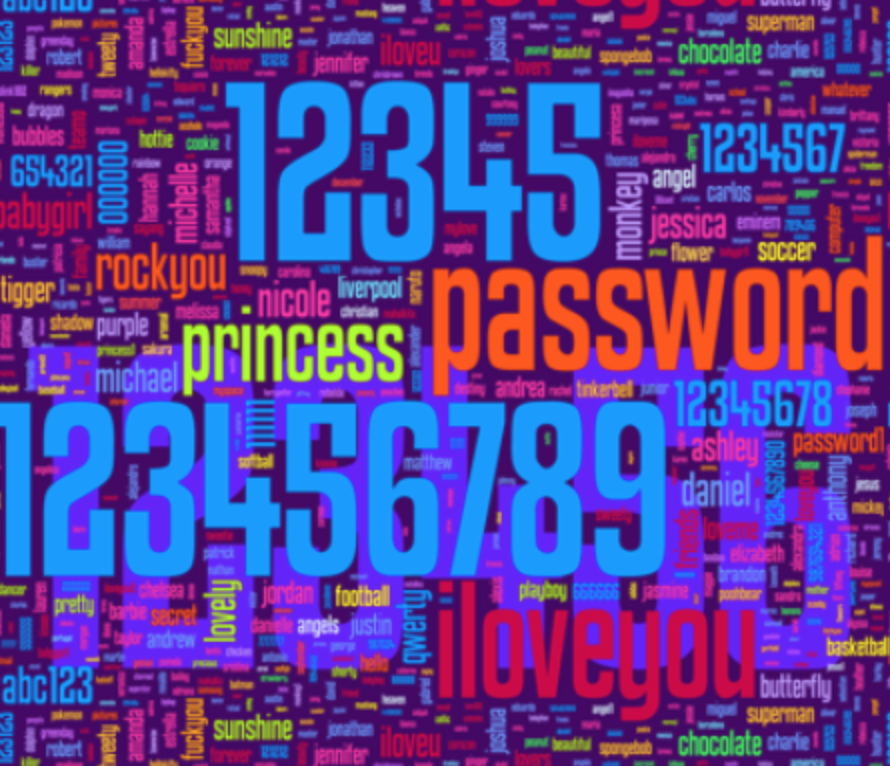
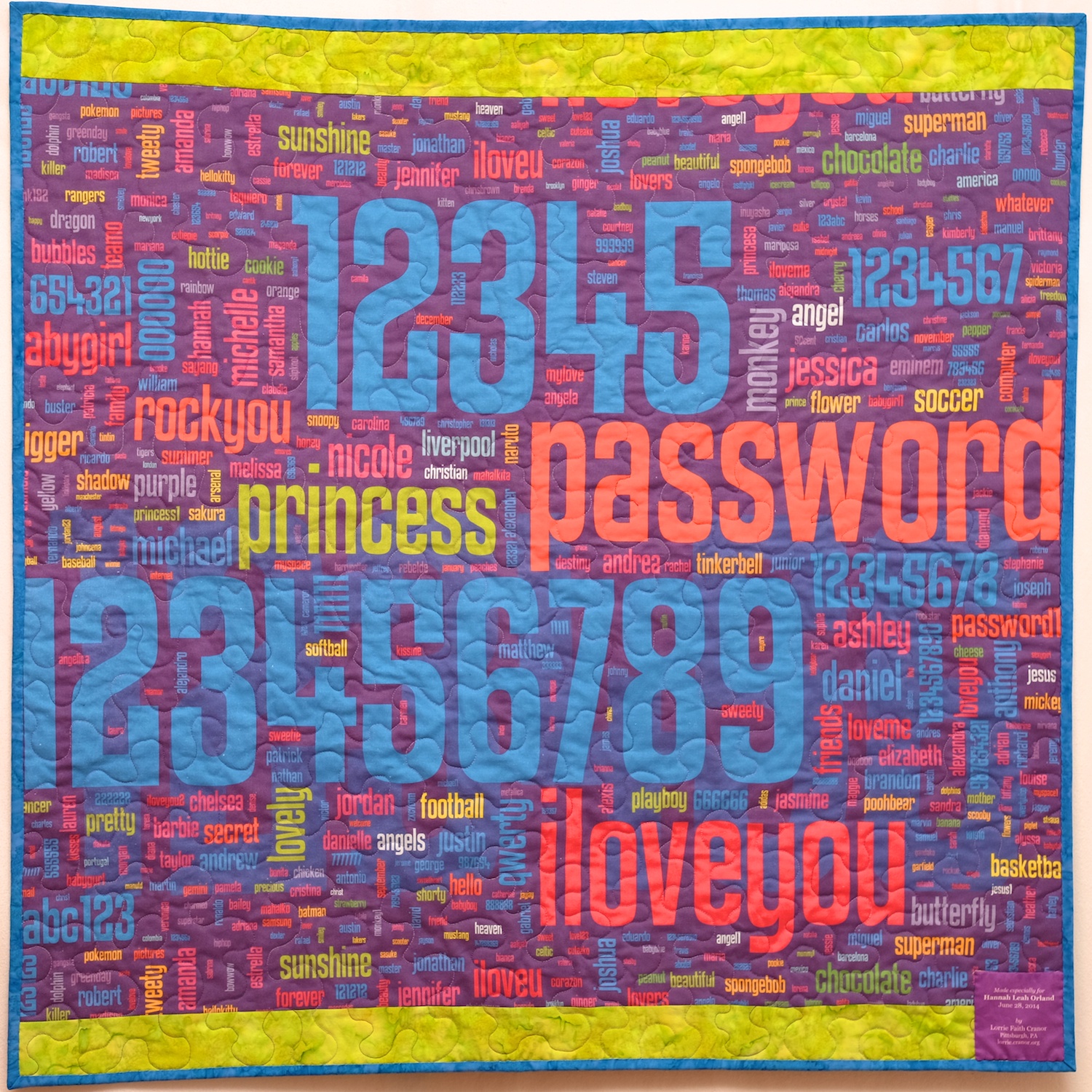
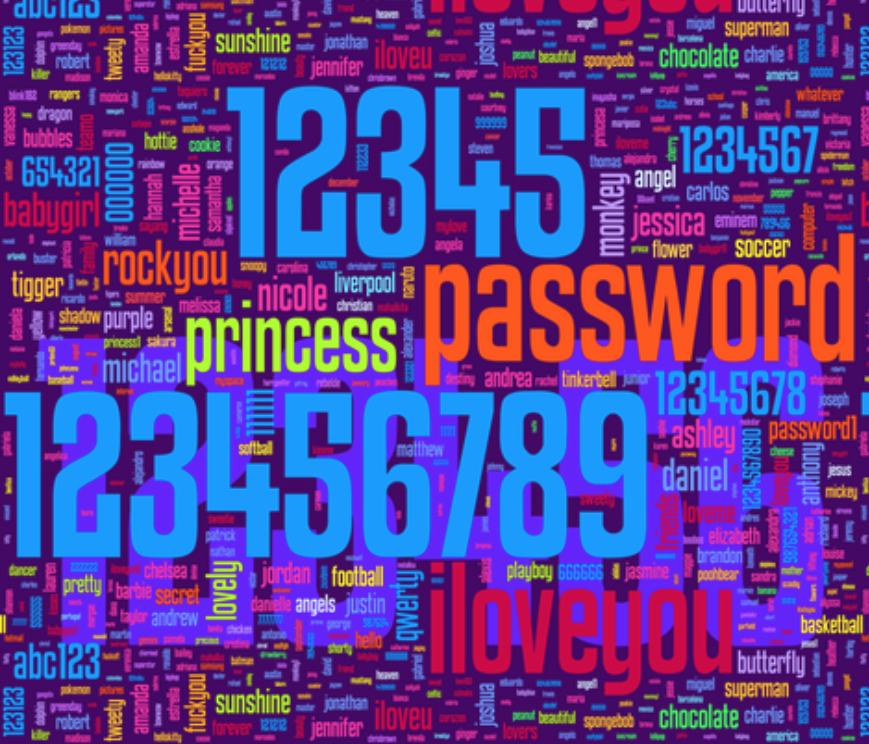
I’ve been collecting images of all the cool things that I and others have made with my bad password fabric. The fabric is available from Spoonflower in three size and both with and without the naughty words. It has a purple background and includes 501 passwords. Spoonflower offers a variety of different kinds of fabrics, including a performance knit, basic cotton, and faux suede. They also will print this design on wrapping paper and wall paper.

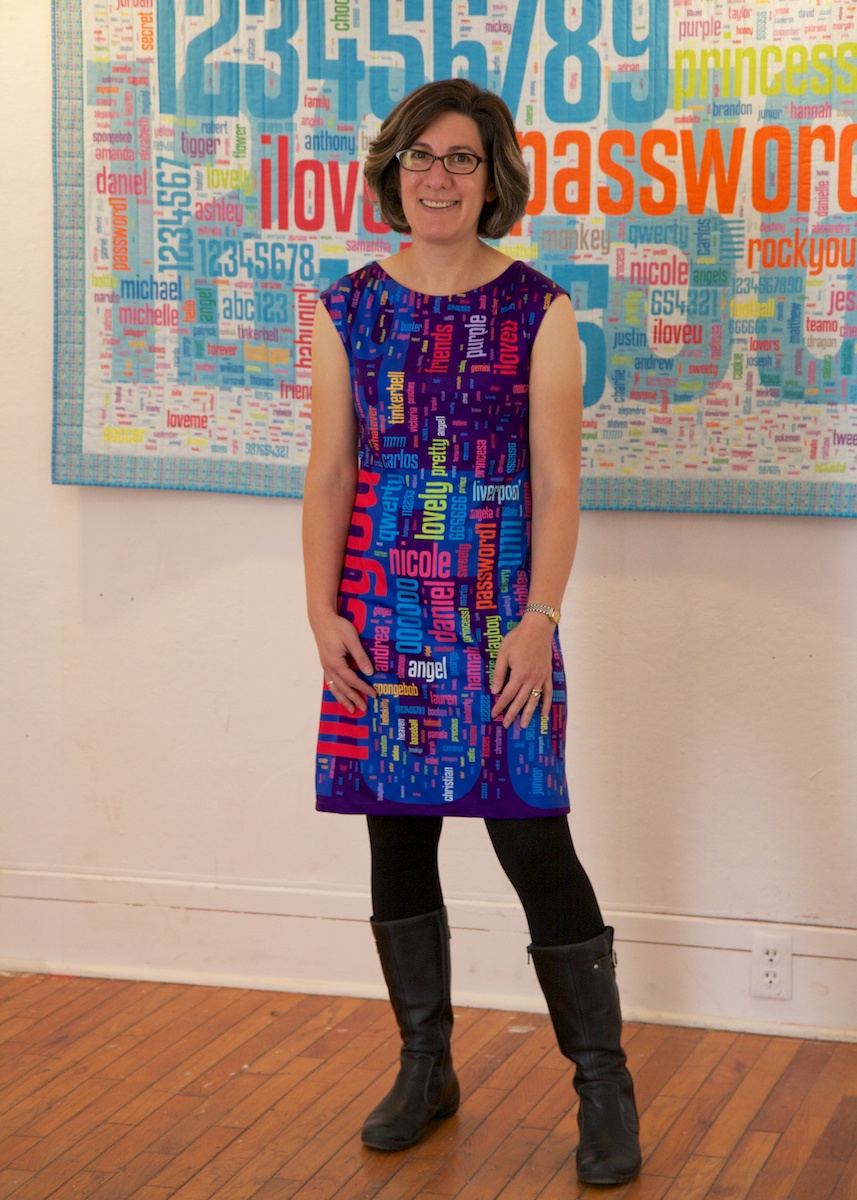
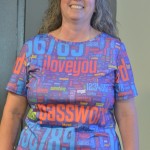
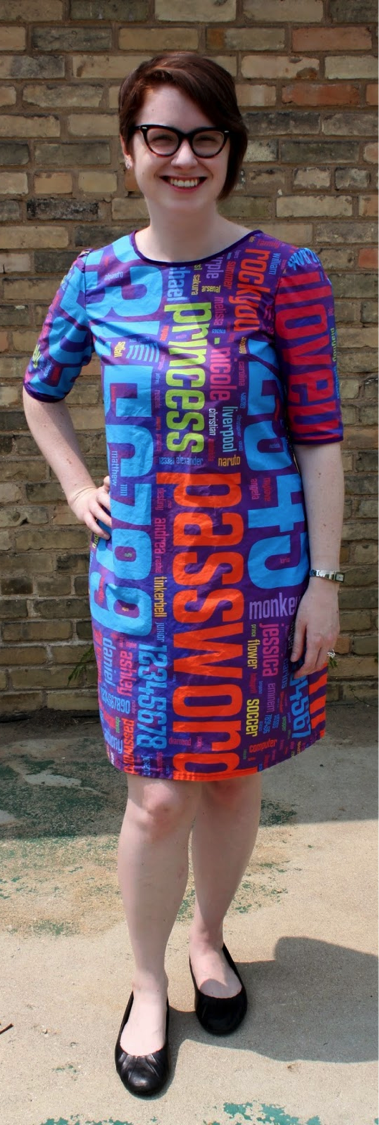
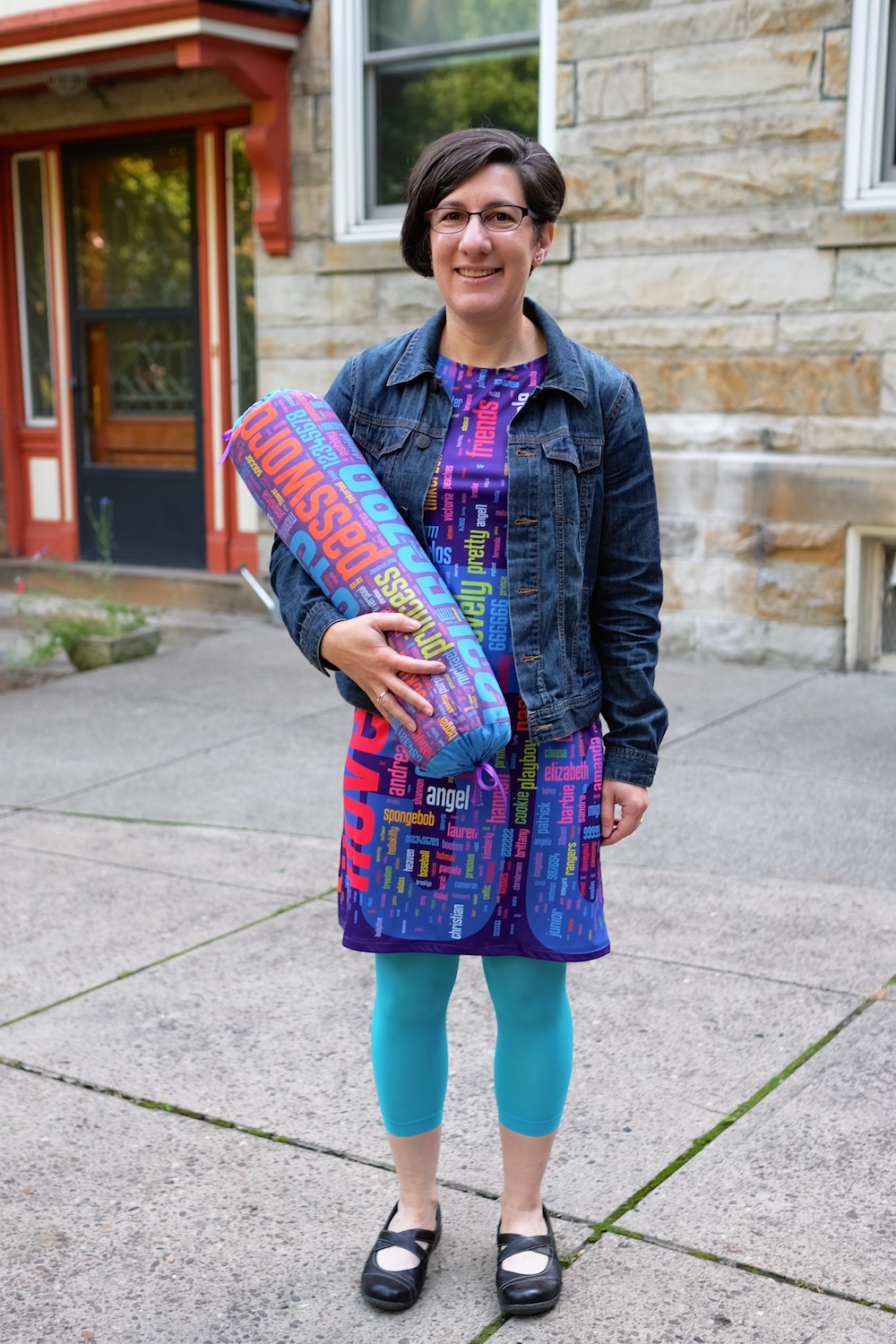
Bad passwords dress (Security Blanket quilt in background)

Recapping for those who are just seeing this, I designed a series of bad password fabrics based on the most popular passwords stolen in a Rockyou.com data breach. First I made a “Security Blanket” quilt printed on basic cotton fabric in pastel colors. This quilt appeared in Science Magazine and was on display at the residence of the Carnegie Mellon University president for most of last year. Then I designed a purple version of the fabric and made a password dress with performance knit fabric. The dress has gotten some nice press on CNET, the Trib, and the Women you should know blog.

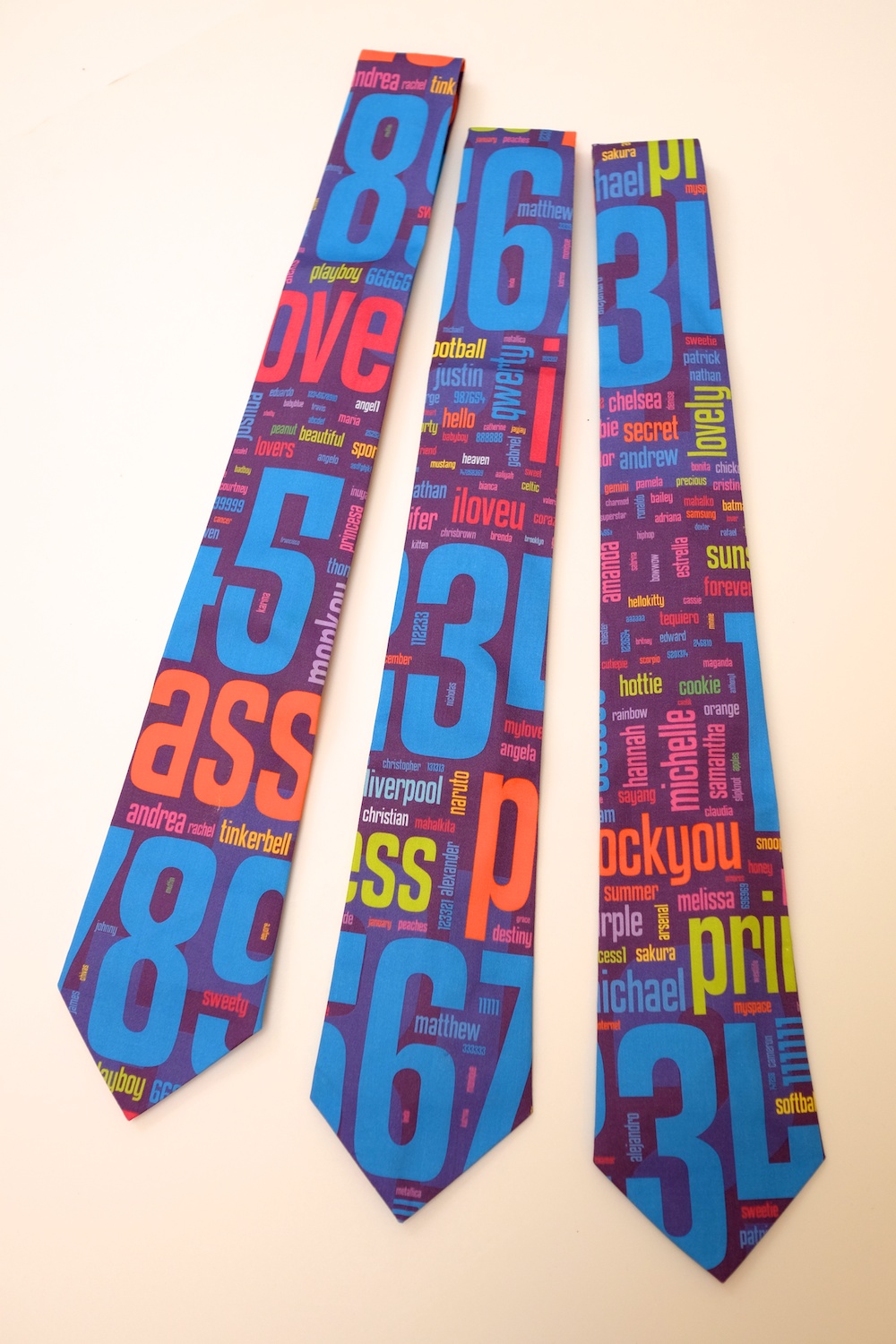
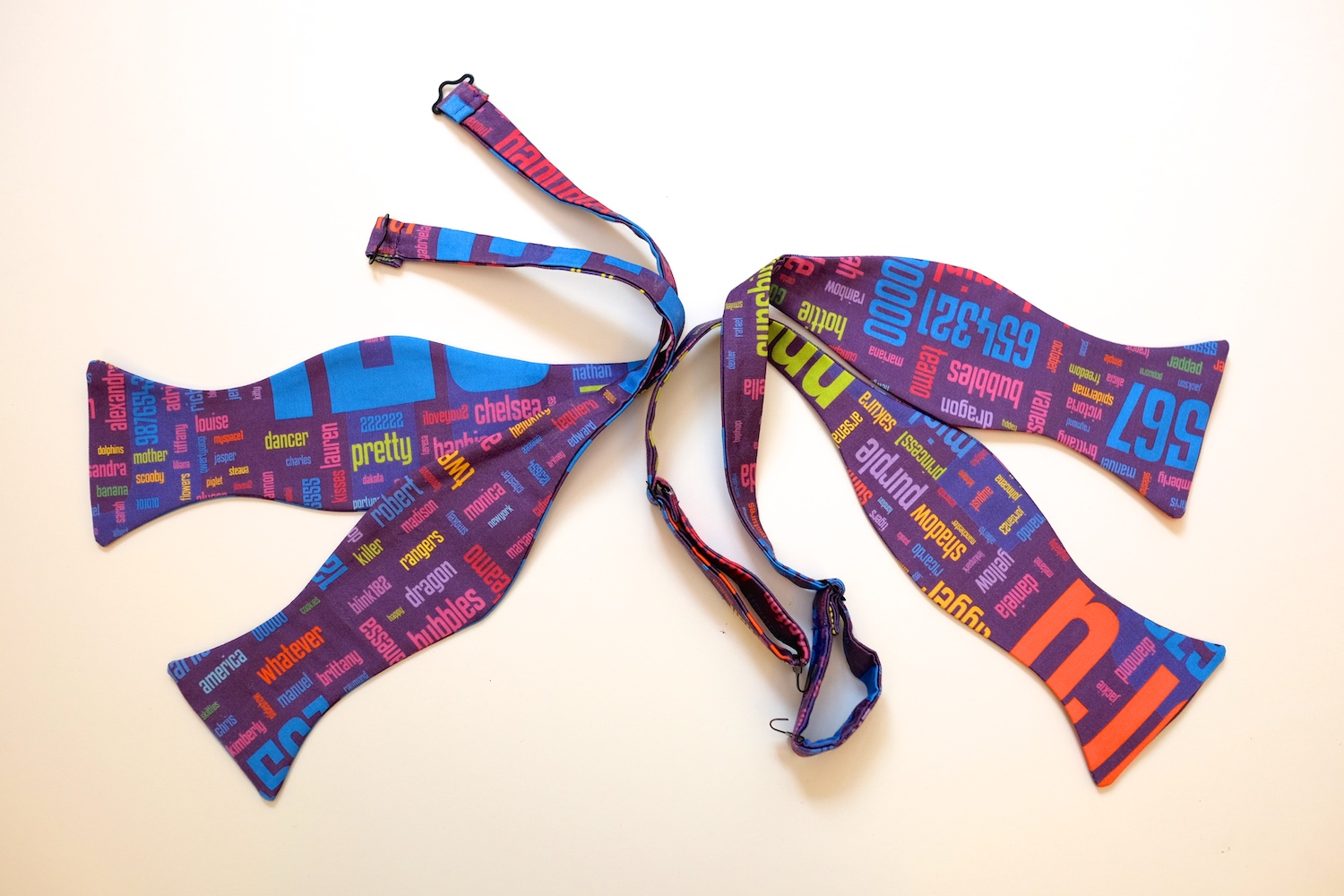
Then my friends started requesting other password apparel. Mary Ellen Zurko commissioned my friend Jen Primack of Upcycled Designs to make her a t-shirt from cotton knit fabric. Then Jeremy Epstein asked for ties, and we found Jen Knickerbocker of LoveCrushDresses and got her to offer regular ties and bow ties in her Etsy shop. The ties are made from cotton sateen.

Bad passwords t-shirtbad passwords tiesbad password bow ties (two)

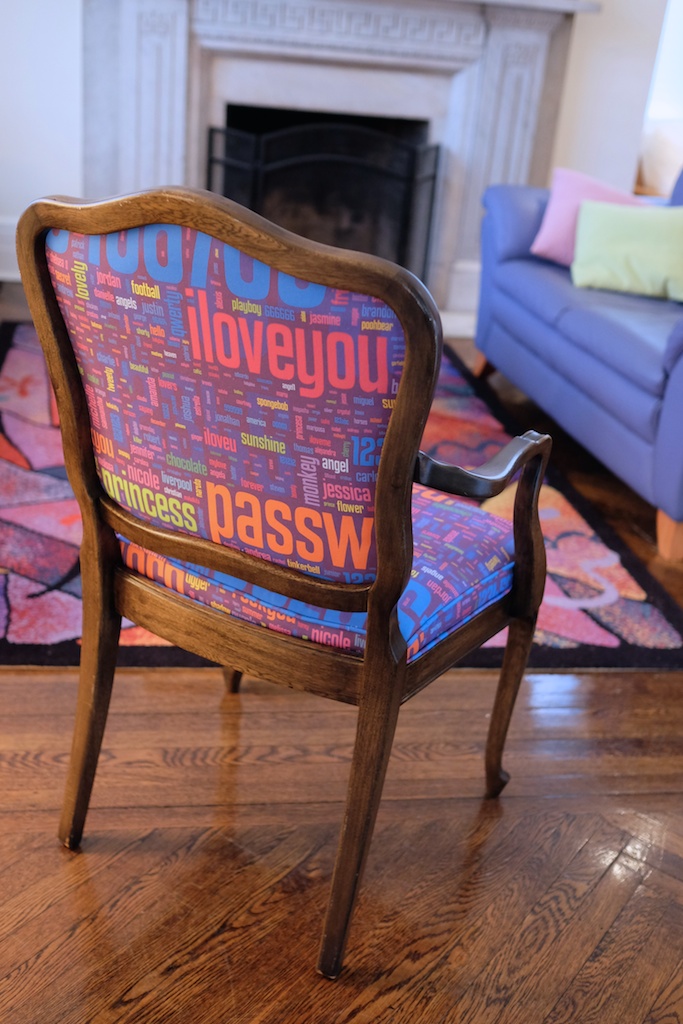
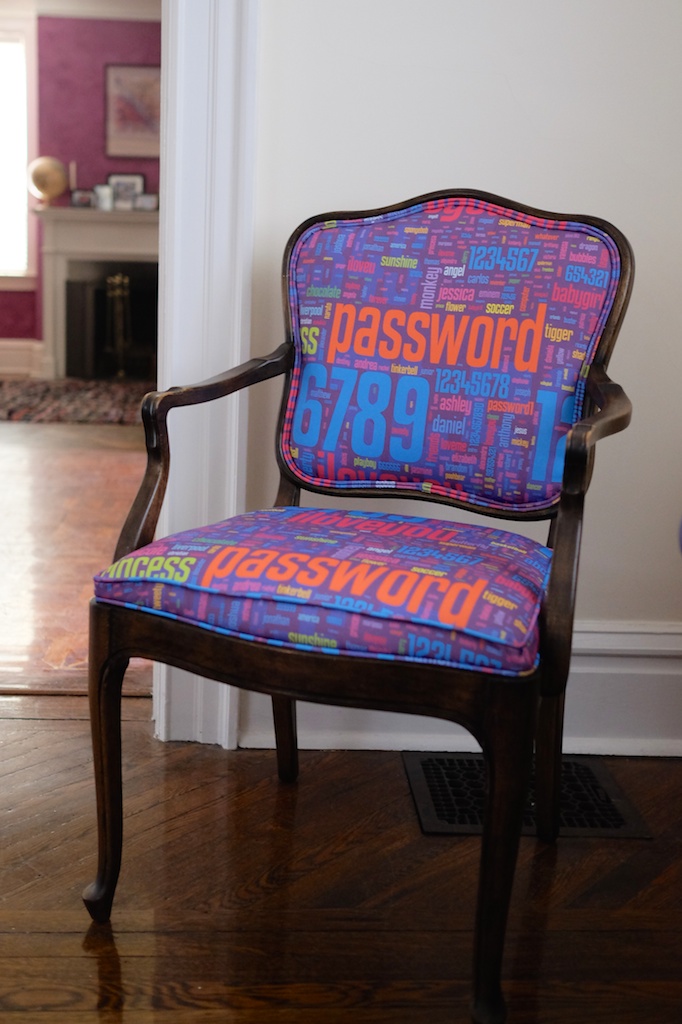
Then Jen Primack bought an old chair and reupholstered it with my passwords fabric in heavy cotton twill. Doesn’t it look great in my living room?

password chair upholstered by Jen Primack password chair upholstered by Jen Primack

Kristin Briney emailed me to tell me she had made a password dress from cotton poplin. And I just made a password infinity scarf from silky faille (a woven polyester).

Kristin Briney's bad password dresspassword infinity scarf

Password baby quilts and couch throws made out of kona cotton are coming soon….

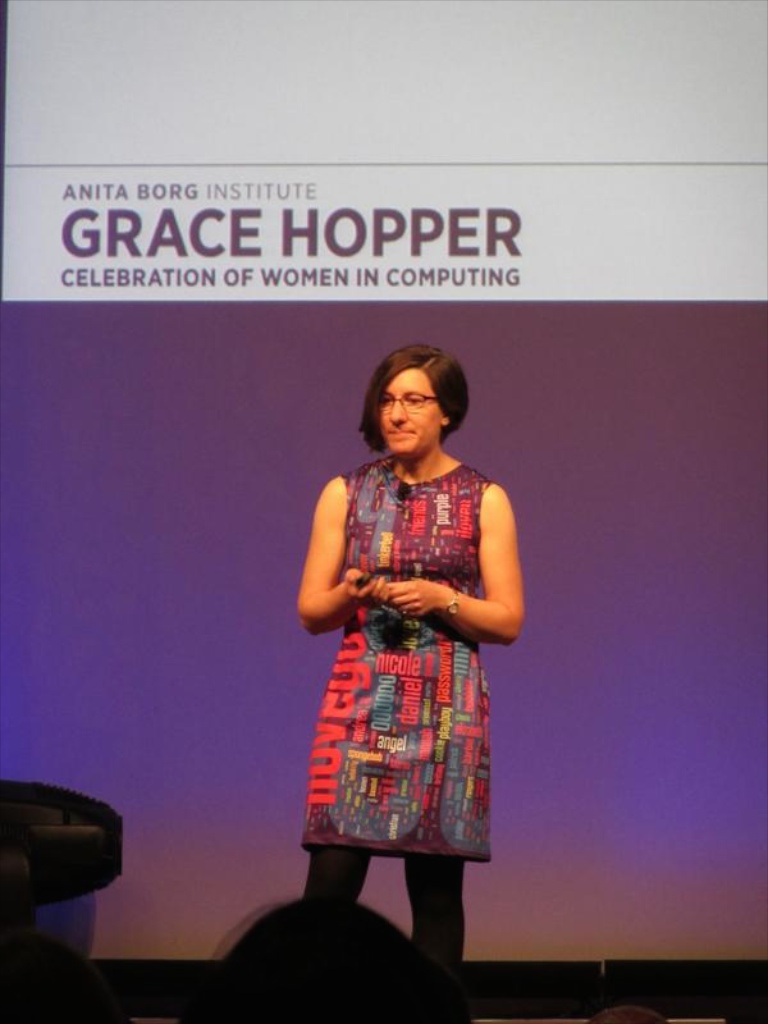
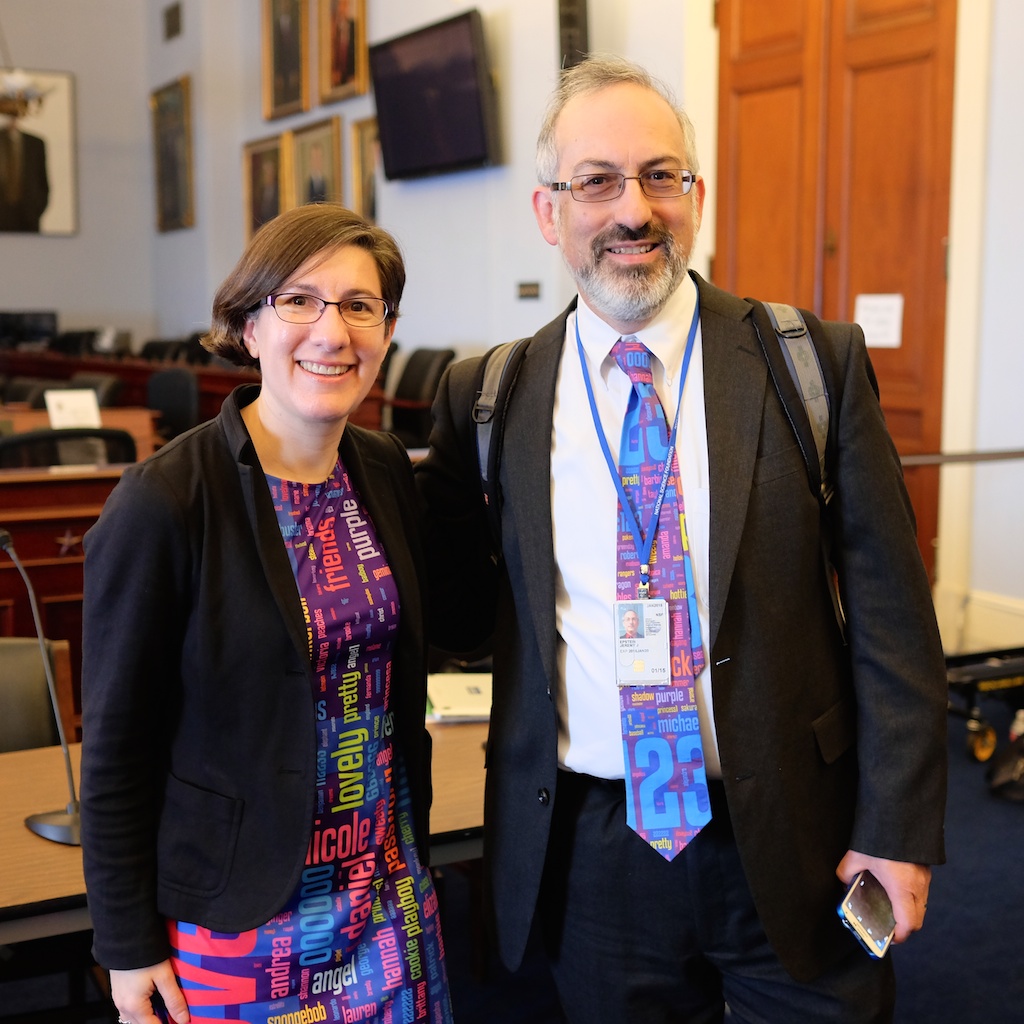
In the mean time, I’ve gotten many requests to wear the password dress to events. I wore it to give an invited talk at the 2014 Grace Hopper Celebration of Women in Computing (where I was referred to as a “password researcher and fashion idol“). I also wore it to a couple of briefings I gave to Congressional staff on Capitol Hill.

Lorrie speaking about passwords at Grace Hopper Celebration Lorrie with Jeremy Epstein wearing password apparel Susie, Lorrie, and Roxana at NSF Congressional briefing

And for those wondering about the different types of fabric. The polyester fabrics are much brighter than the cottons. They are all fairly consistently bright with nice saturated colors. My favorite is the performance polyester, which doesn’t wrinkle and has a little bit of stretch and a nice drape. But it’s not really what you want to use for a quilt or a tie. The kona cotton is a little disappointing because the colors print a little dull. The basic cotton (which is similar to the kona but slightly lighter weight and less expensive), cotton sateen, and the heavy cotton twill produce brighter colors. They aren’t as bright as the polyester, but they are noticeably brighter than the kona cotton. The cotton silk also does not produce bright colors. I think the polyester silky faille might work well for ties and some other applications where you might otherwise use a woven cotton but want brighter colors. It’s a little slippery and harder to work with than cotton though. I got samples of the polyester faux suede and polyester eco canvas. They are both lovely bright fabrics, but I haven’t made anything out of them yet.

1/22/15 update: Von Welch, Director of the Center for Applied Cyber Security at Indiana University Bloomington wore his Password tie for a local TV interview. The reporters loved the tie and commented on it at the end of the interview.

2/6/15 update: Baby quilt in kona cotton finished!

DSCF7245 DSCF7251

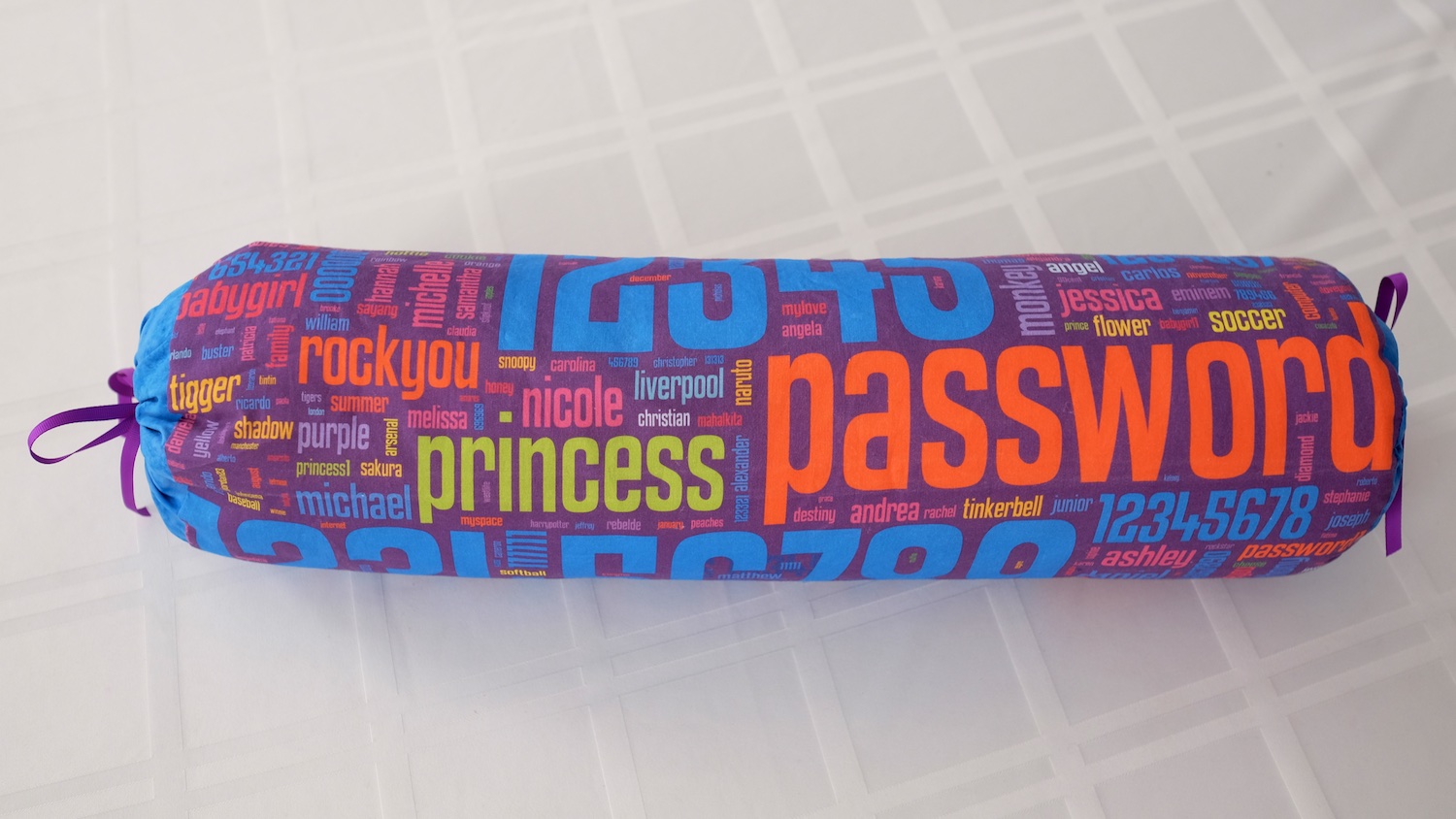
7/16/15 update: I made a password bolster pillow for the CMU ECE department head’s conference room.

DSCF0090 DSCF0097

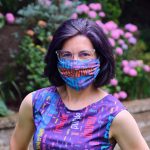
6/28/20 update: Given current circumstances, password masks were required! I printed my design XX small on cotton spandex jersey and lined the inside of the mask with fabric from an old cotton spandex t-shirt (outer layer and lining each cut 10.5 x 5.5 inches; sewn together at top and bottom; left and right sides folded in and stitched to make a casing on each side; long 1-inch strip of stretchy t-shirt fabric pulled through the two casings and tied to make 2 loops to go around the back of the head). Spoonflower also sells masks already made (and lots of other things) for those of you who don’t sew. This link at Spoonflower might work: https://www.spoonflower.com/en/products/2126447-bad-passwords-clean-edition-xxsmall-by-lorrietweet?product=homegoods-kitchen-dining. See also the images and links at https://www.secmeme.com/2020/06/bad-passwords-face-mask.html.

Interleave quilts from all around

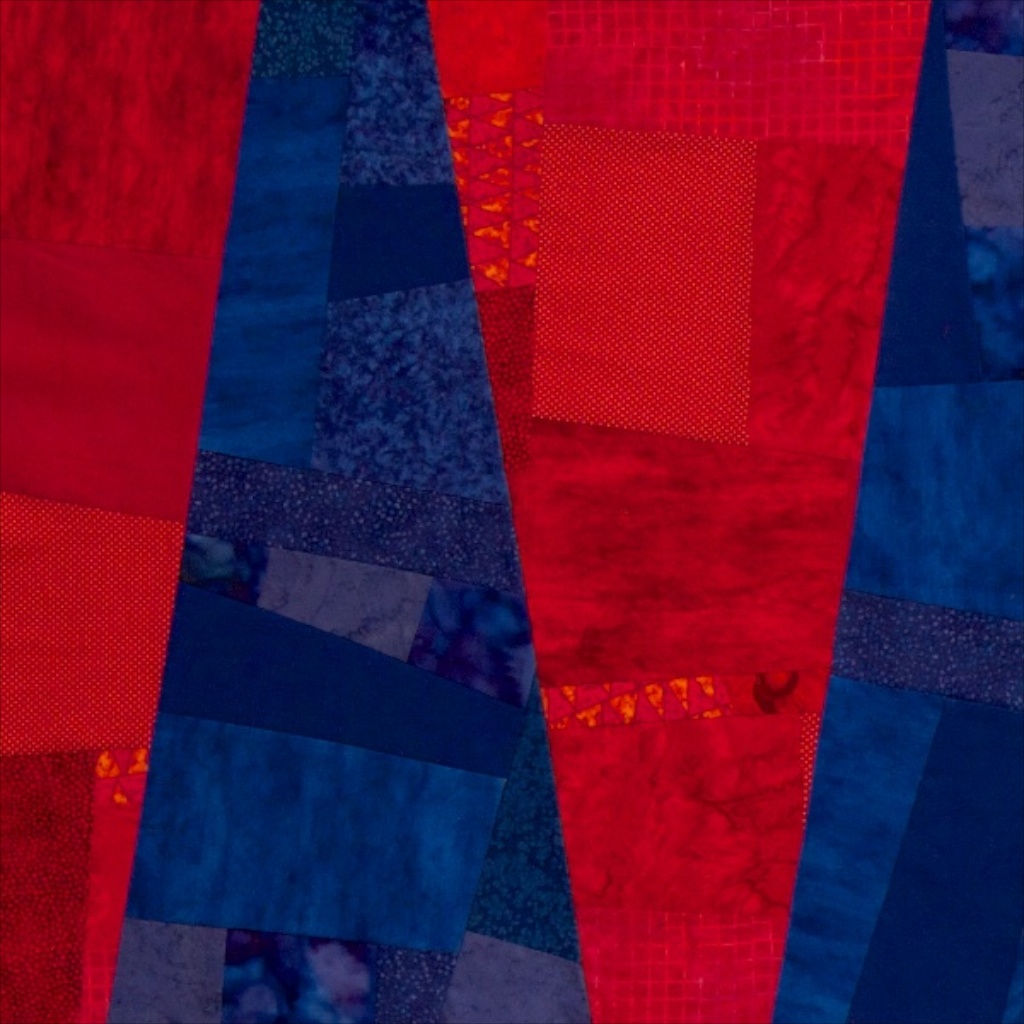
I haven’t had time to quilt in way too long, but I have been enjoying the photos of other people’s interleave quilts, based on my instructions.

First Monica emailed me to tell me she was experimenting with interleave quilts. She made some small ones that were lovely. Then she made a gorgeous interleave bed quilt using tartan fabric as a gift for her daughter, who graduated from CMU in May. She even taught a class on interleave quilts for a local quilt store.

Monika’s interleave bed quilt

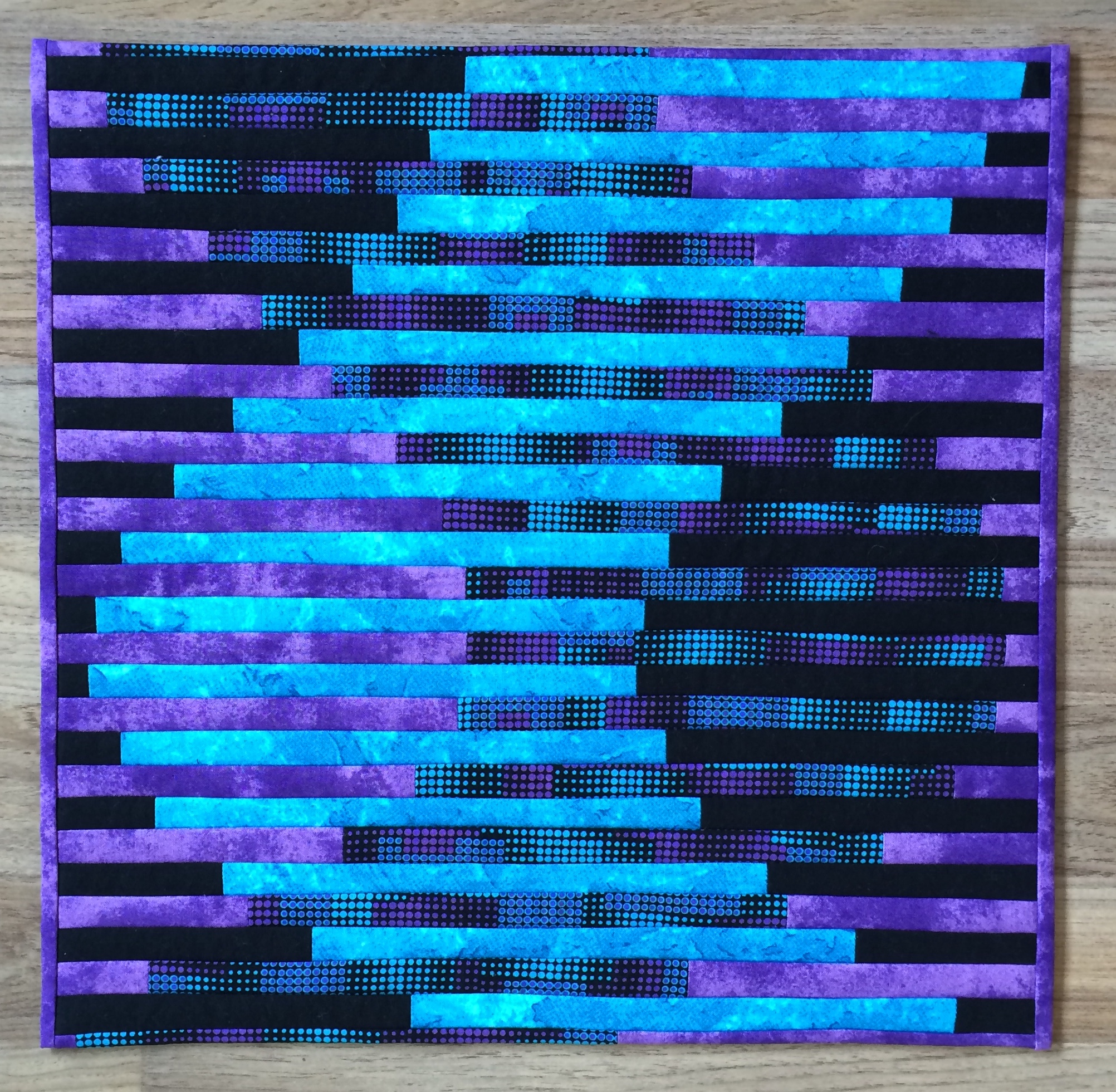
Then Melissa emailed me a pointer to photos of her beautiful quilts including an interleave quilt in blue, black, and purple. Melissa says, “I decided to use stabilizer to draw the lines on. It worked really well and I didn’t find it took long at all.”

Melissa's interleave quilt

Melissa’s interleave quilt

I wish I had more time to make more quilts myself. But the next best thing is looking at other peoples’ wonderful quilts! Thanks for sharing!

July 2015 update: Julie from South Australia emailed me, “A huge thankyou for your online tutorial on making an interleave quilt. I found your page today, and produced this small quilt, even finishing the binding!”

Interleave Quilt by Julie

Julie’s interleave quilt

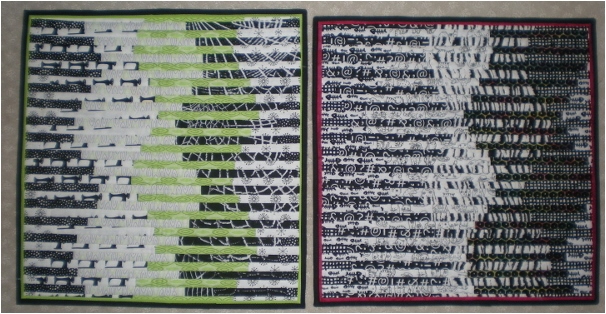
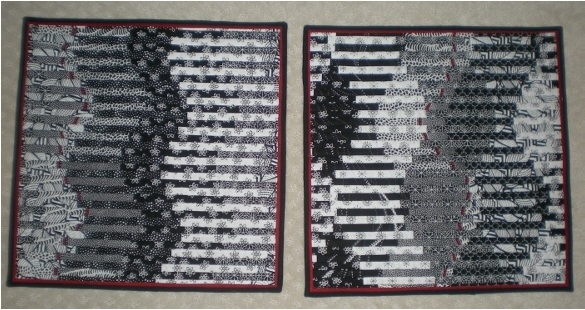
August 2015 update: Sandie emailed me: “I recently took a class on interleaves and got hooked experimenting in black and white with a slight touch of color.  It’s been interesting.” Sadie said she took the class from Mel Beach in a group with the Santa Clara Valley Quilt Association (check out the link above for lots of other quilts from this class).

3 & 4 crop 1&2 crop


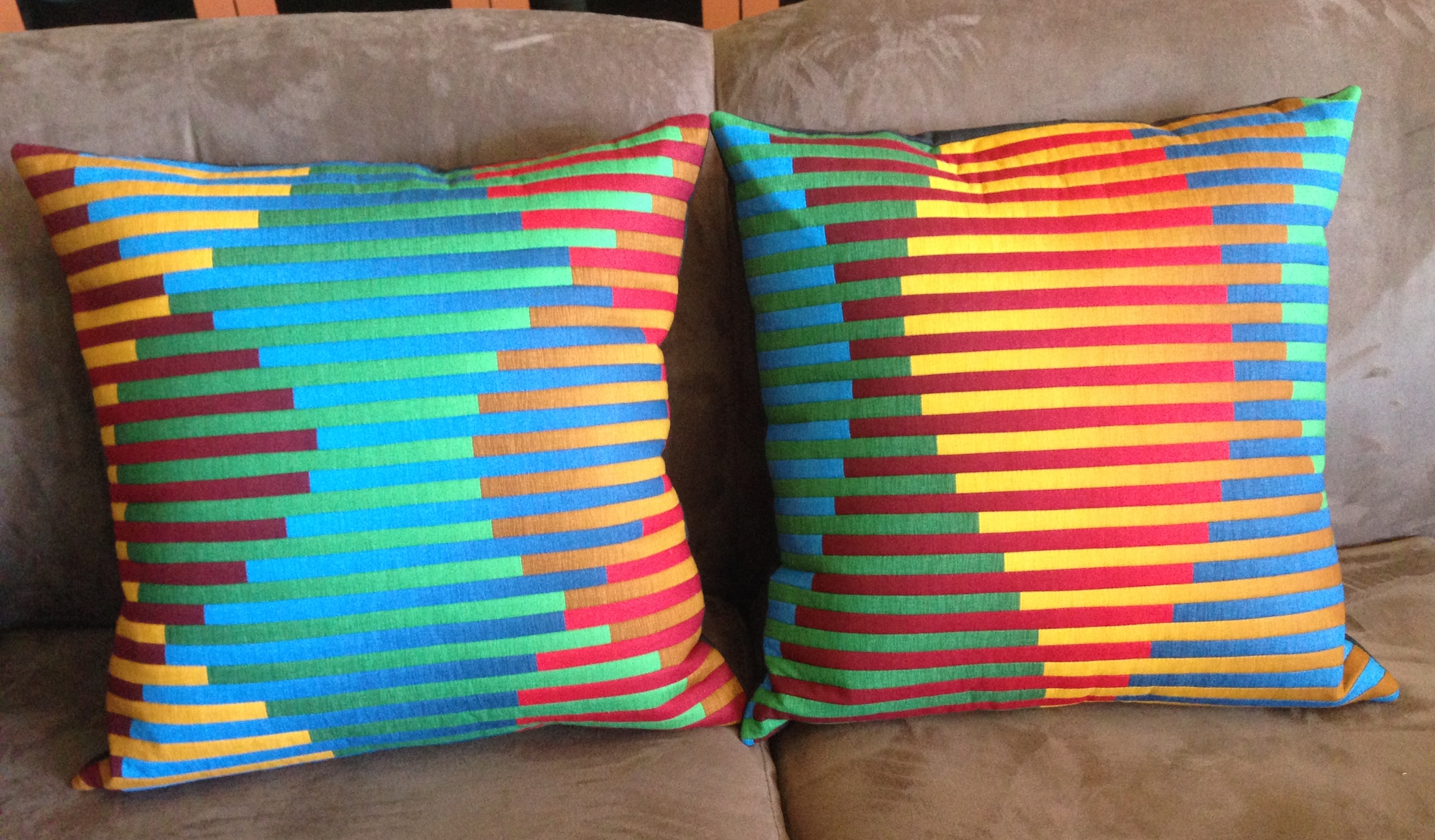
November 2016 update: Rosemarie Waiand from Houston, Texas emailed me: “I have now made several cushion sets, and am thoroughly enamored with this technique.In fact, my samples were quite the hit at my Houston Modern Quilt Guild meeting this weekend! I am especially fond of the ombre fabrics, as the gradation seems to impart an extra set of colors to the mix.”

IMG_3861


December 2016 update: This was posted in July but I just came across it. Mel Beach, who lives in San Jose, CA, made lots of “Intriguing Interleaves” including this one below.

MBeach_Moroccan+Inspired+Mandala


September 2017 update: Just saw this blog post from the Diablo Valley Quilters who made lots of cool interleave quilts for their 2015 show.


WWW Oatmeal Honey and Pumpernickel Breads

I have two more white whole wheat bread machine recipes to share today: a brown bread and a white bread.

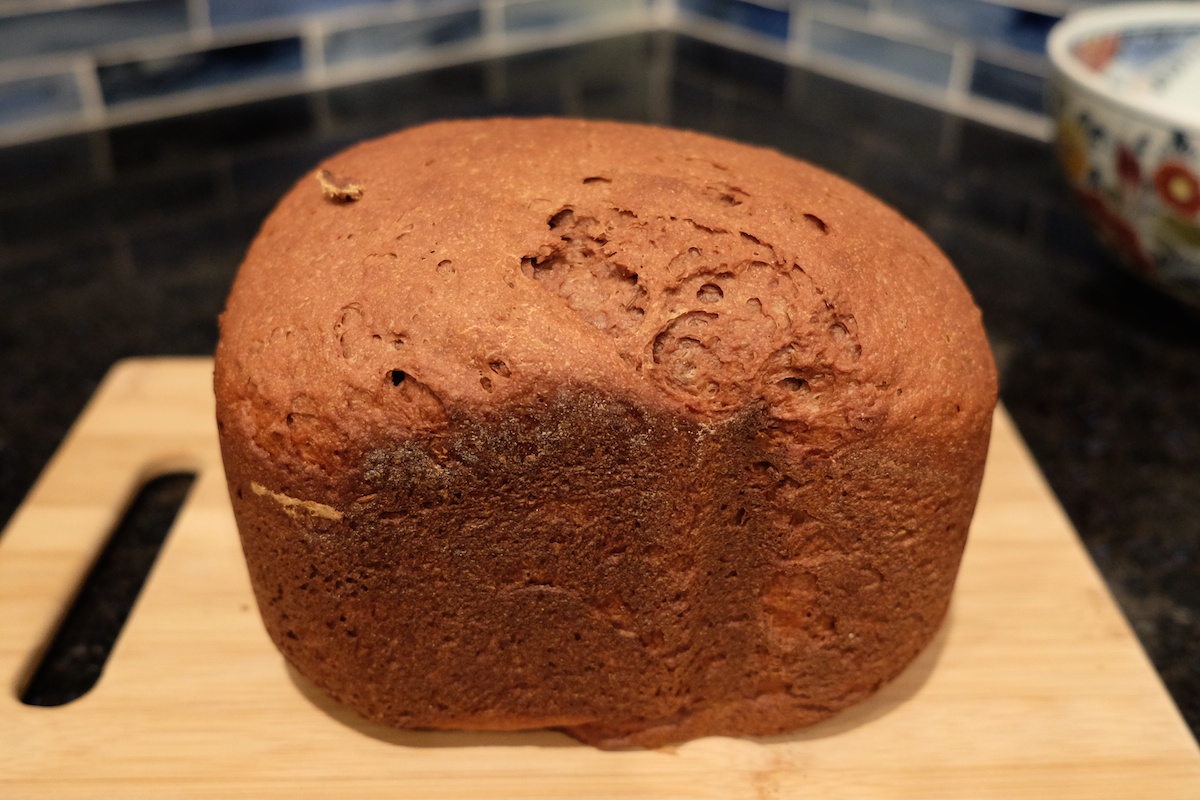
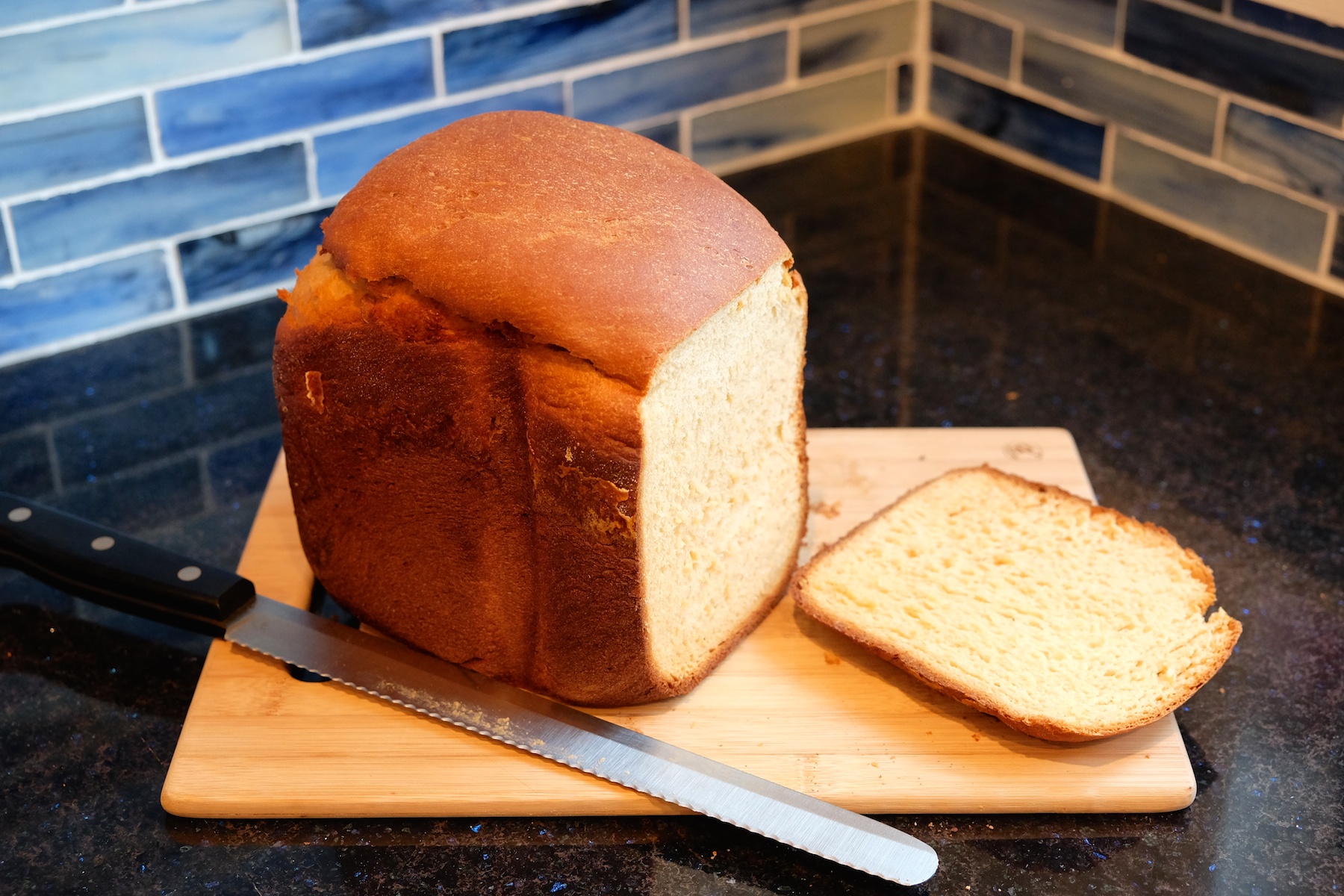
DSCF0439The brown bread is a pumpernickel bread based on one I found on the back of a bag of Arrowhead Mills Organic Rye Flour. The brown color comes from using cocoa powder. Most of us in my house liked the original recipe pretty well, with it’s nice tangy flavor. But some in my house are partial to sweeter breads, and liked it better when I used honey instead of molasses. One lone holdout does not like caraway seeds at all and would not eat it until I made the recipe with flax seeds instead of caraway. Sesame seeds would probably be nice too, or you could leave out all the seeds. Download the recipe for Whole Wheat Pumpernickel Bread here.

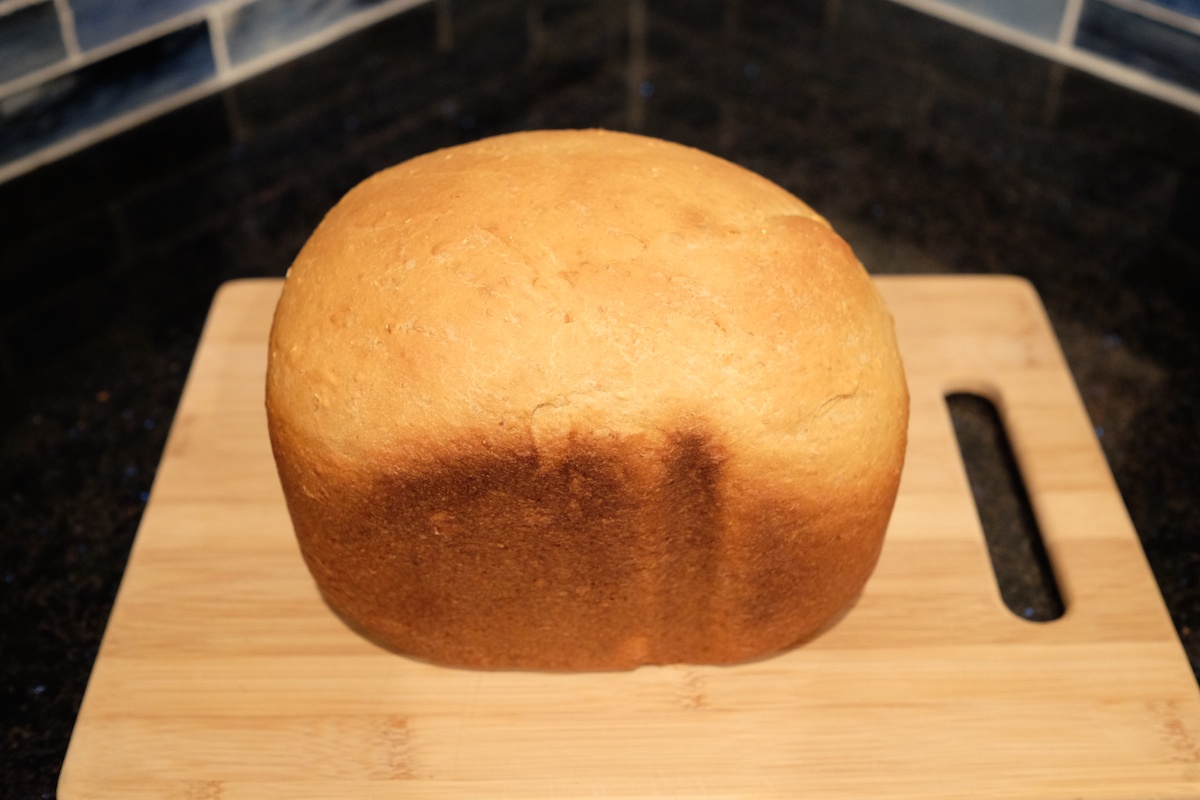
Whole Wheat Honey Oatmeal BreadThe white bread is an oatmeal honey bread. This is a basic bread that is simple, but really tasty. I add dry milk for some extra protein and a slightly softer texture, but you can omit the dry milk for a non-dairy version that isn’t much different. Download the recipe for Whole Wheat Oatmeal Bread here.

White whole wheat ricotta bread machine goodness

White whole wheat flour has all the health benefits of regular whole wheat flour, but it is made from a different kind of wheat that is softer and has a milder taste. While regular white flour has little nutritional value, white whole wheat flour is actually good for you!

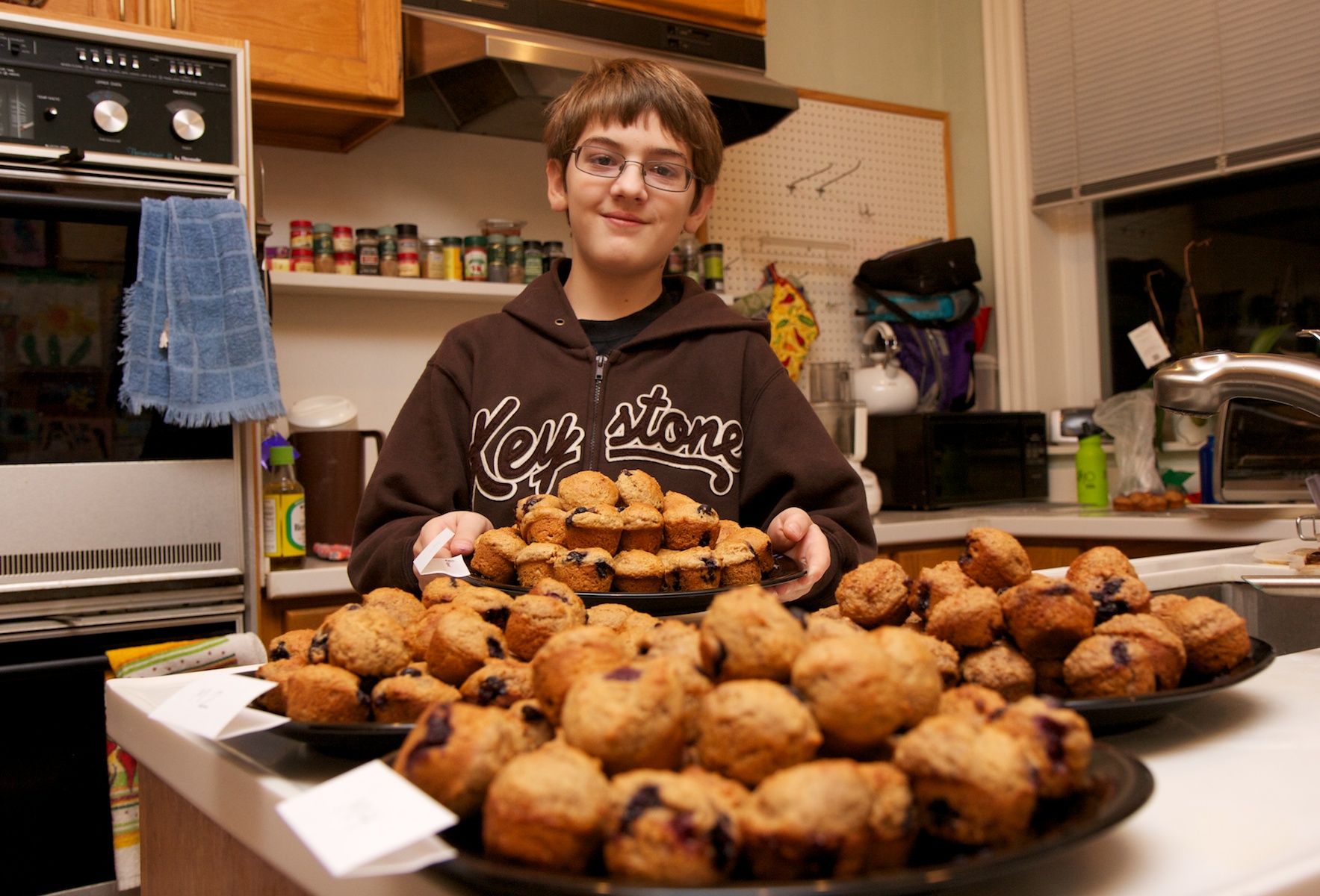
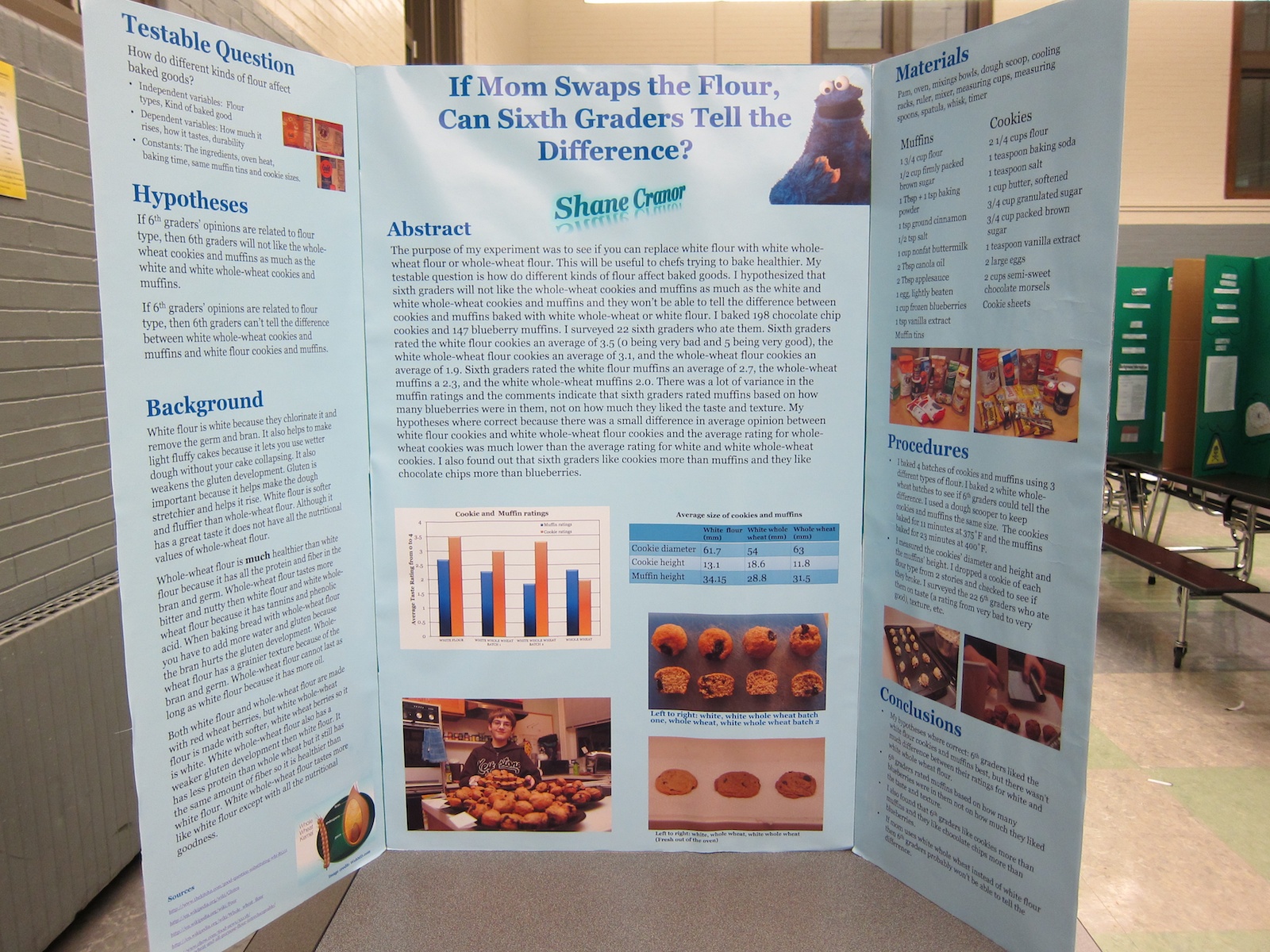
Shane with his muffin project Shane's science fair projectWhen white whole wheat flour started showing up in stores about 10 years ago, I was intrigued. I followed everyone’s advice and started swapping out a third or a half the white flour for white whole wheat to add whole grains to my baked goods. Nobody in my house seemed to notice. Tentatively, I started increasing the whole grain to white flour ratio, and nobody seemed to notice. Thanks to my son’s award-winning sixth grade science fair project I gathered conclusive, scientific evidence that swapping out all the white flour for whole wheat in chocolate chip cookies and in blueberry muffins makes no difference to a classroom full of hungry sixth graders.

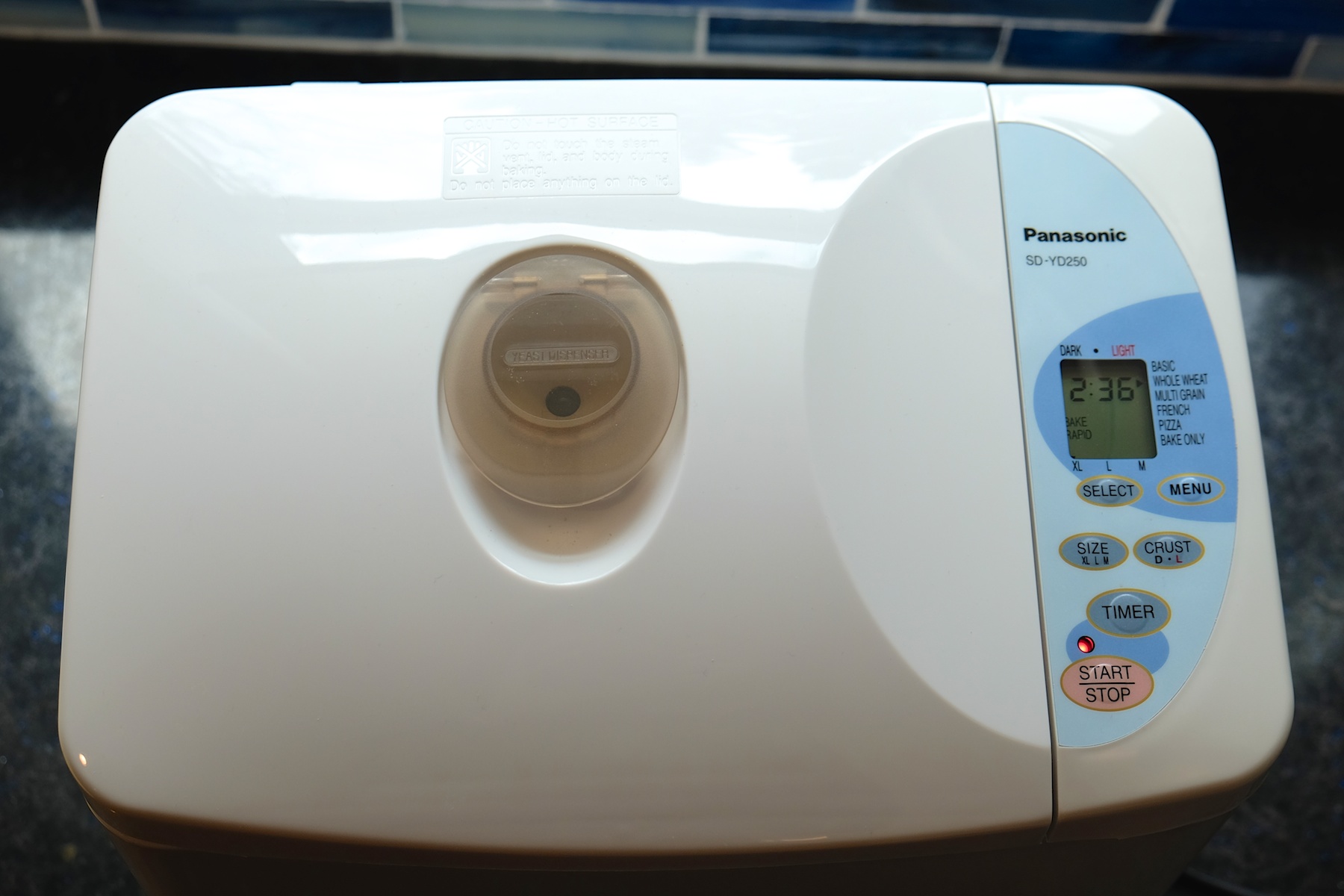
In January I decided to replace my family’s still functional, 20-year-old bread machine with a more modern model. It turns out that the era of bread machine baking has come and gone, and most bread machine manufacturers have not come out with any new models in years. So the Panasonic SD-YD250 we bought is actually the top model of the last decade, but it remains the #1 top seller on Amazon.com. And the new machine turns out to be a big step up from the machine it replaced because it has a bigger pan, warms the ingredients, and doesn’t add the yeast until it is time.

Panasonic bread machine, top view Since acquiring the new machine, I have baked bread 2 or 3 times a week, every week. And I have baked only 100% whole grain bread. Baking whole grain bread is trickier than swapping out the white flour in cookies and muffins, because whole grain flour has less gluten than bread flower, and this affects how much the bread will rise. If you are not careful, breads made with whole grain flour can end up pretty dense. There also aren’t that many bread machine recipes that have been tested with white whole wheat flour, because white whole wheat flour was not widely available back when new bread machine cookbooks were actually being published.

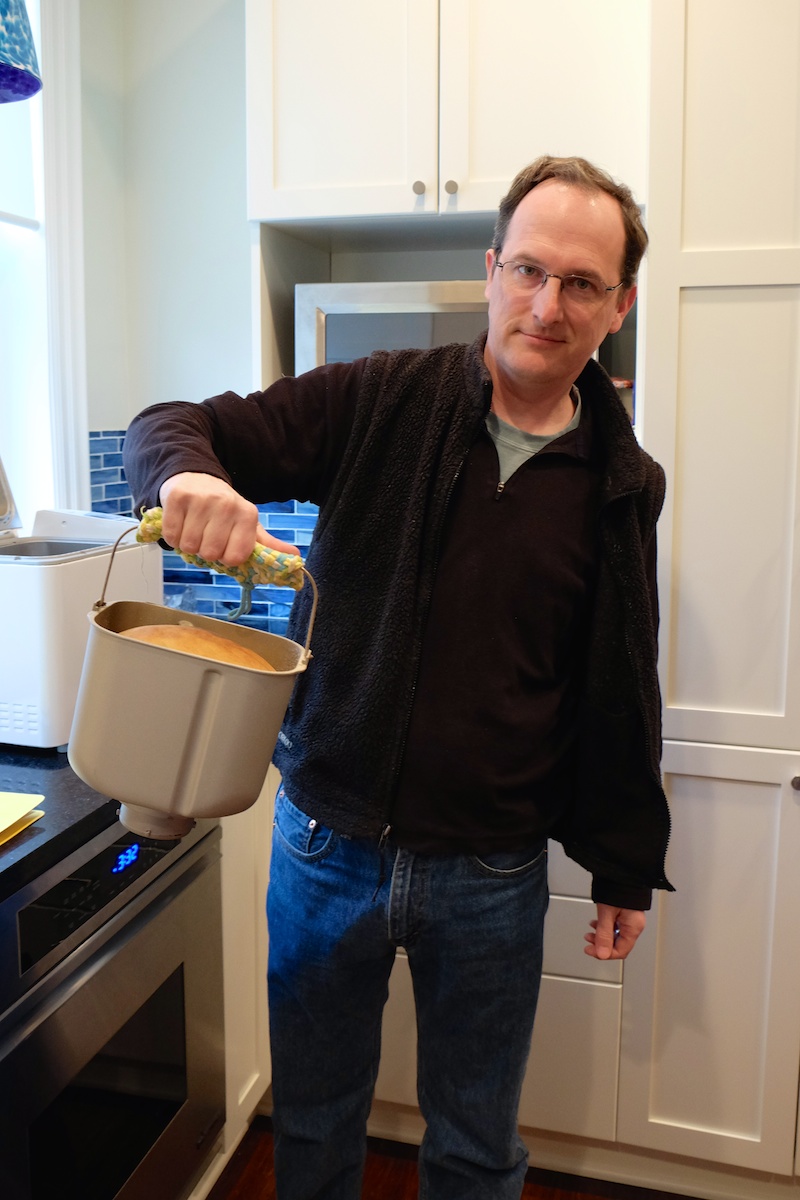
Chuck removing the Whole Wheat Ricotta bread from the bread machineI’ve tried some of the whole wheat recipes in the cookbook that came with my bread machine. We’ve enjoyed the 100% Whole Wheat, Honey Walnut, Whole Wheat Yogurt, and Seven Grain bread recipes from that cookbook. I have followed those recipes as written, except for using white whole wheat flour instead of regular whole wheat, and flax seeds instead of sesame seeds in the yogurt bread. I’ve also tried the 100% whole wheat with honey instead of molasses for a sweeter bread. So far I’ve found that any whole wheat bread recipe can be made with white whole wheat flour and the results are excellent.

I’ve also found some bread machine recipes online, and adapted some bread-flour recipes from some other cookbooks to work with white whole wheat, reduce the amount of fat, and work with my bread machine. In general, bread flour recipes seem to work with white whole wheat if you add gluten or if the recipe includes dairy products (yogurt, cottage cheese, ricotta cheese, or milk). I’ve also successfully removed the butter and oil in a number or recipes and replaced it with apple sauce. As I perfect these recipes, I will share them here.

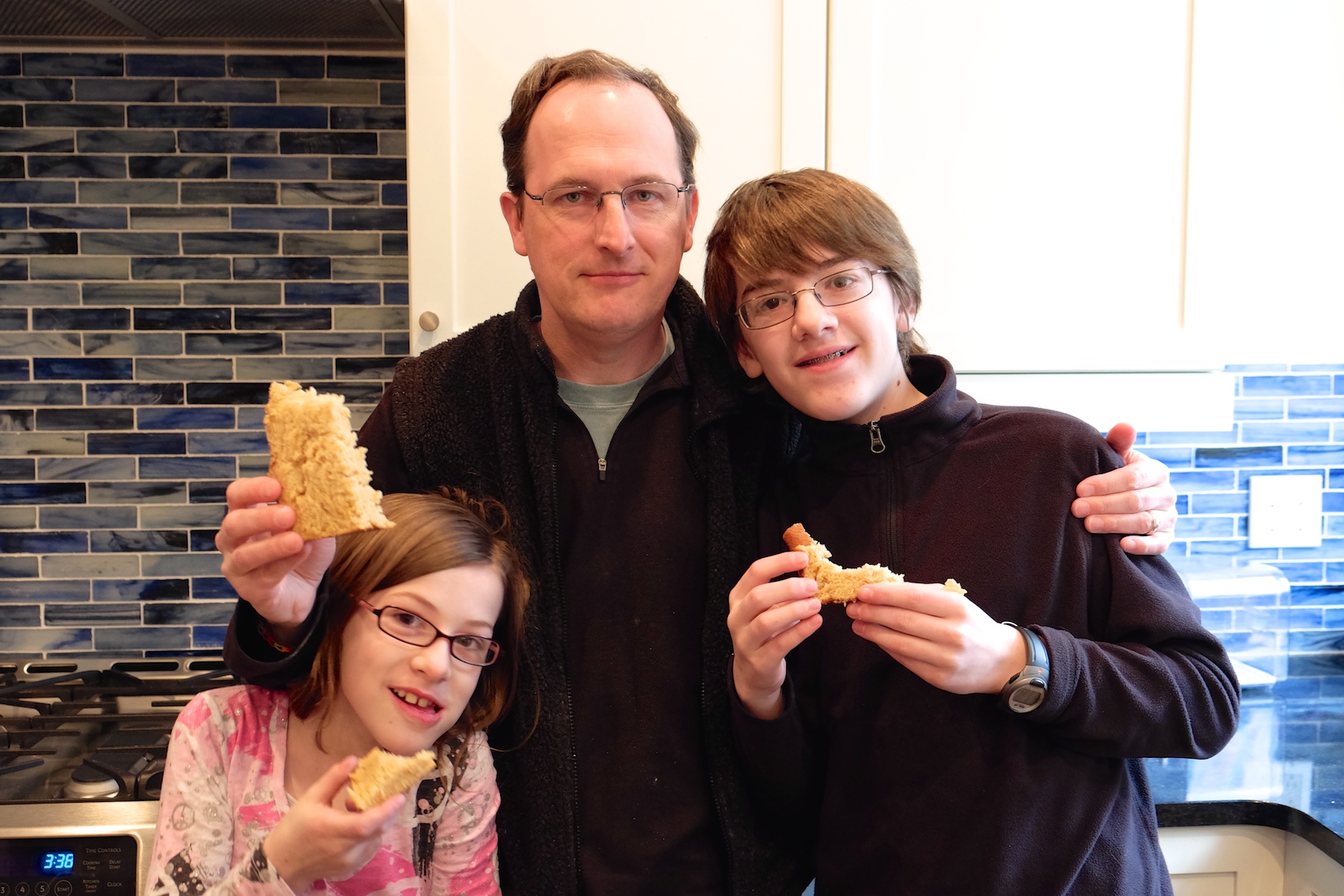
The first recipe I would like to share is a recipe for Whole Wheat Ricotta Bread that my family loves. Even when I bake the extra large size, it rarely lasts it more than 24 hours in my house. I baked this bread four times in the past couple of weeks to tweak the amount of liquid and experiment with two different kinds of ricotta cheese. Each time it disappeared very fast.

DSCF0210The key to this bread is the ricotta cheese, which makes this bread moist, slightly sweet, and very rich tasting. Use part-skim or low fat ricotta to cut the calories and fat considerably. In my experiments, I found that the part-skim ricotta I used causes the bread to rise a bit more than the low-fat ricotta (that contained less fat). But it is good either way. I haven’t been able to find fat-free ricotta at any of the stores I shop at. I’m guessing that will work well too, but might result in a little bit of a denser loaf. I also made this bread with non-fat greek yogurt instead of ricotta. This was also a lovely bread, but it was not as moist, and did not have the richness or flavor of ricotta bread.

You can download my recipe for Whole Wheat Ricotta Bread here.

Whole Wheat Ricotta Bread, size XL (made with part-skim ricotta)

My quilt in Science magazine

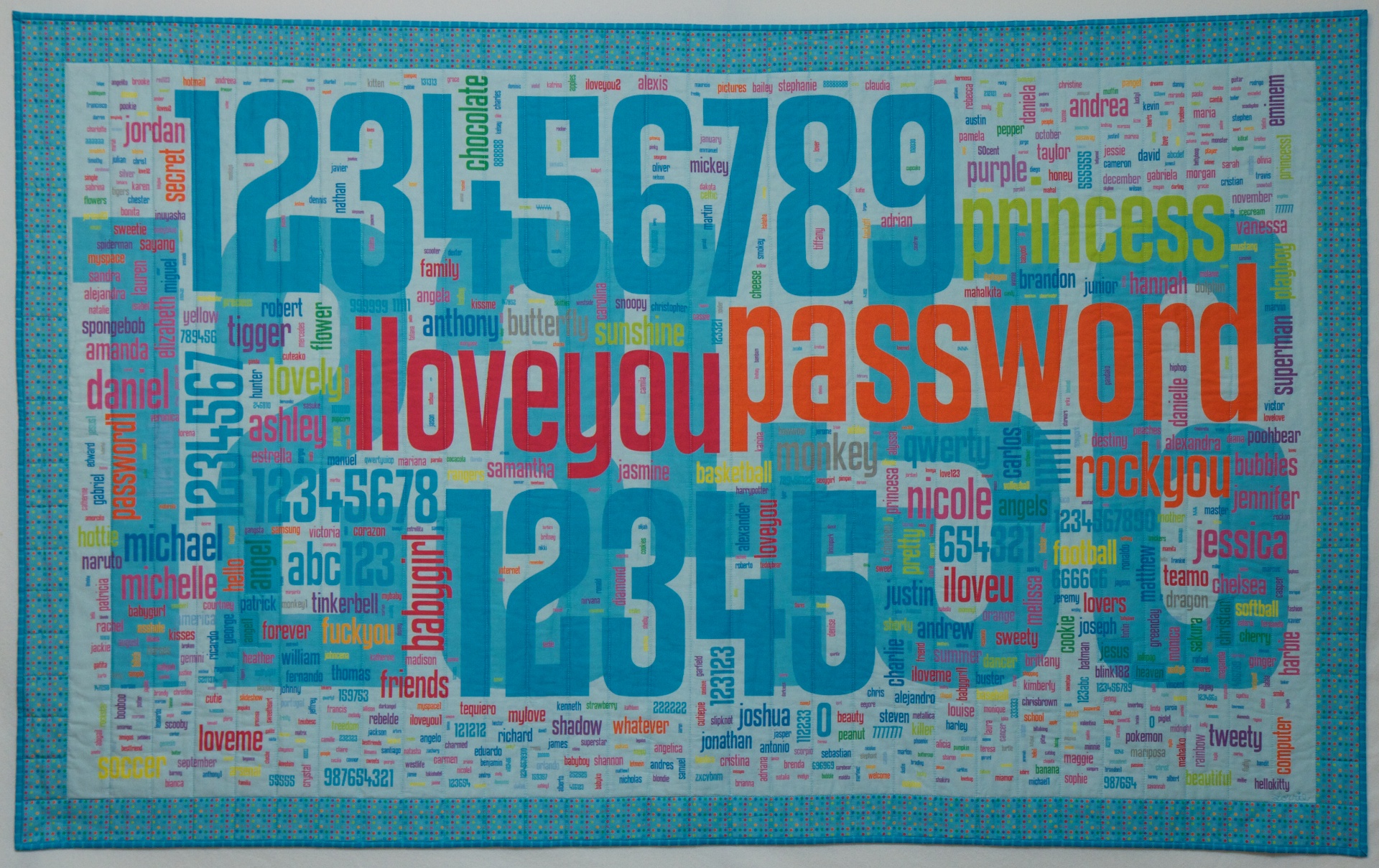
IMG_6002I’m really excited that my Security Blanket quilt won honorable mention in the International Science & Engineering Visualization Challenge and is featured in an article in the February 7 issue of Science magazine. No, they don’t have a category for quilts, but that didn’t stop me from entering (and winning).

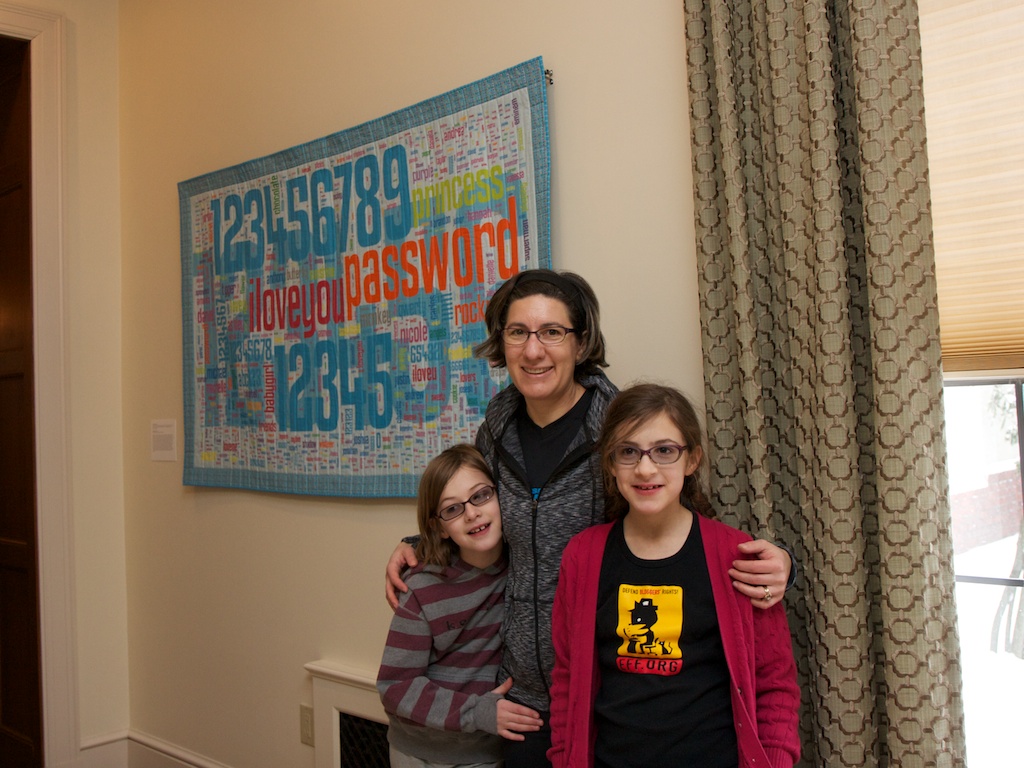
The quilt is currently on loan to Carnegie Mellon University, and is being displayed in the home of our university president. My daughters and I stopped by a couple of weeks ago to check it out.

Science also did a little profile of me in their Career Magazine.

badpasswordAnd for those of you who want to make your own security blankets, pillow, ties, curtains, or dresses, I now have a few different versions of purple “bad password” fabric available by the yard at Spoonflower.com (update: you can get ties made from this fabric too!). You can order it on wrapping paper or wall paper too. I have small and large versions of the print, with and without the naughty words. (The quilt includes all the naughty words for authenticity.)

Security Blanket, machine quilted, digitally printed cotton fabric, 63.5"x39"

Security Blanket, machine quilted, digitally printed cotton fabric, 63.5″x39″


How to make an Interleave quilt

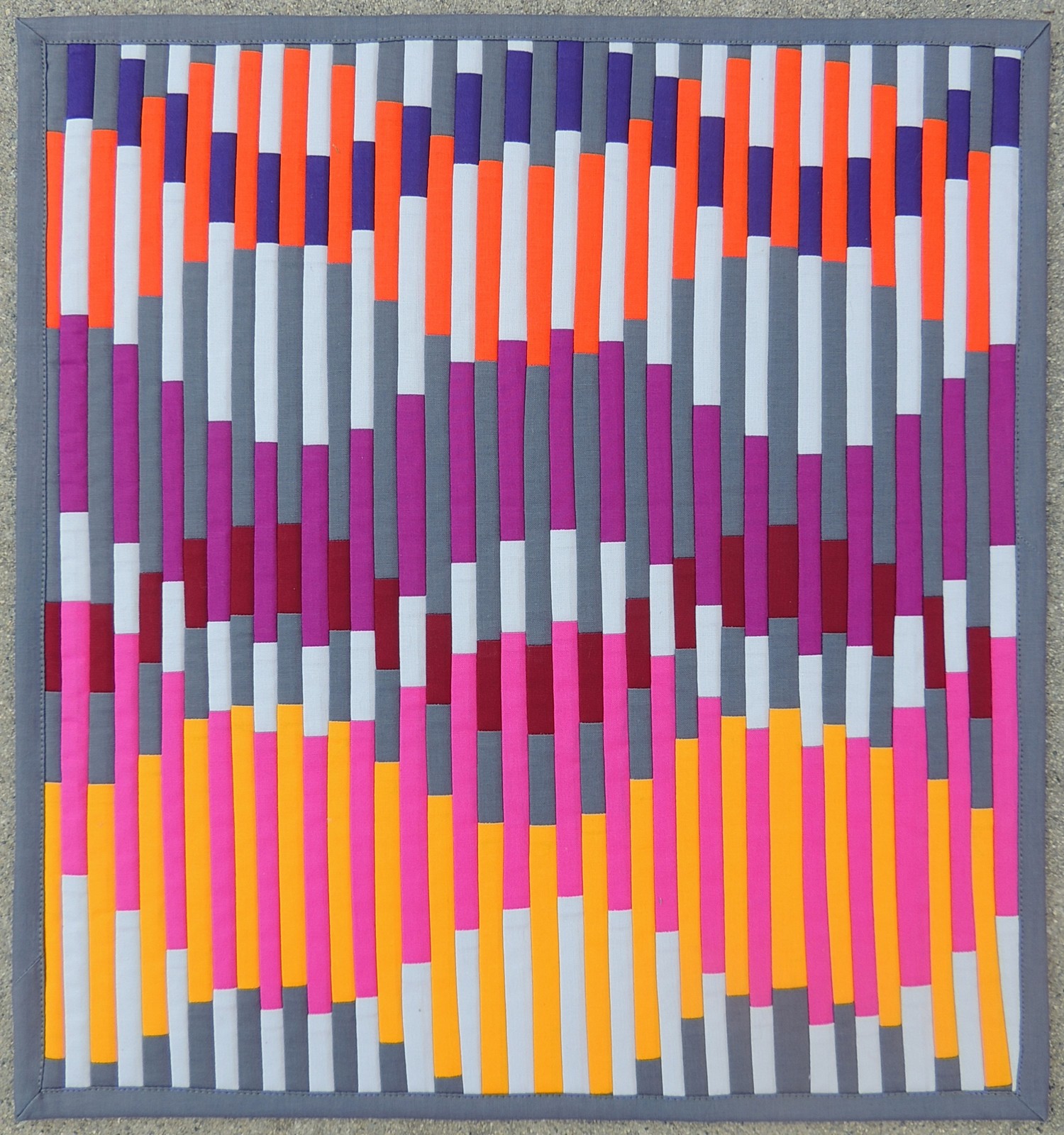
My Interleave quilts are pieced using a quilt-as-you-go technique in which thin strips of fabric are sewn to batting and backing. The interleave design results from cutting these strips from two panels of fabric and piecing alternate strips from each panel. In my quilts, some of the panels are pieced and some are photos printed on fabric. For added interest, I often shift my strips in a wave pattern. The result of this process is a complex-looking quilt that can be pieced quickly from thin strips sewn in straight lines.

Here is a quick tutorial on how I make a small Interleave quilt. I put this together for a 1-day workshop. We will be making a roughly 18 inch square interleave quilt with .5-inch stripes that can be used as a wall hanging, placemat, or pillow top. You can make a smaller sample if you prefer, but I would not suggest going any larger for the class project.

Materials

  • 5 fat quarters (or larger) of cotton quilting fabric – Select 4 fabrics that go well together for the top, and 1 backing fabric that can be whatever you want. There should be some contrast between the 4 top fabrics – if they all blend together too much the interleave design won’t stand out. You should have enough left over from the top fabric fat quarters to make a binding. But you are welcome to provide extra fabric for a binding or to turn the finished quilt into a pillow. You will probably be doing the binding at home after the workshop.
  • Gridded cutting mat, at least 18 inches long
  • Ruler, at least 18 inches long (you need a ruler that will allow you to easily cut 18-in long and 1-in wide strips)
  • Rotary cutter
  • Scissors
  • Iron
  • Ironing pad or towel
  • Sewing machine and needles with a ¼ in. foot (if you have a ¼ in foot with a guide, even better!)
  • Neutral cotton piecing thread (I recommend Aurifil 50/2 in grey, but whatever you like to piece with is fine)
  • Pencil and pen
  • Pins
  • Fat quarter of cotton/polyester fusible batting
  • Fat quarter of quarter-inch grid cotton fabric —  available at http://www.spoonflower.com/fabric/2046219
  • Instructions and templates

Instructions

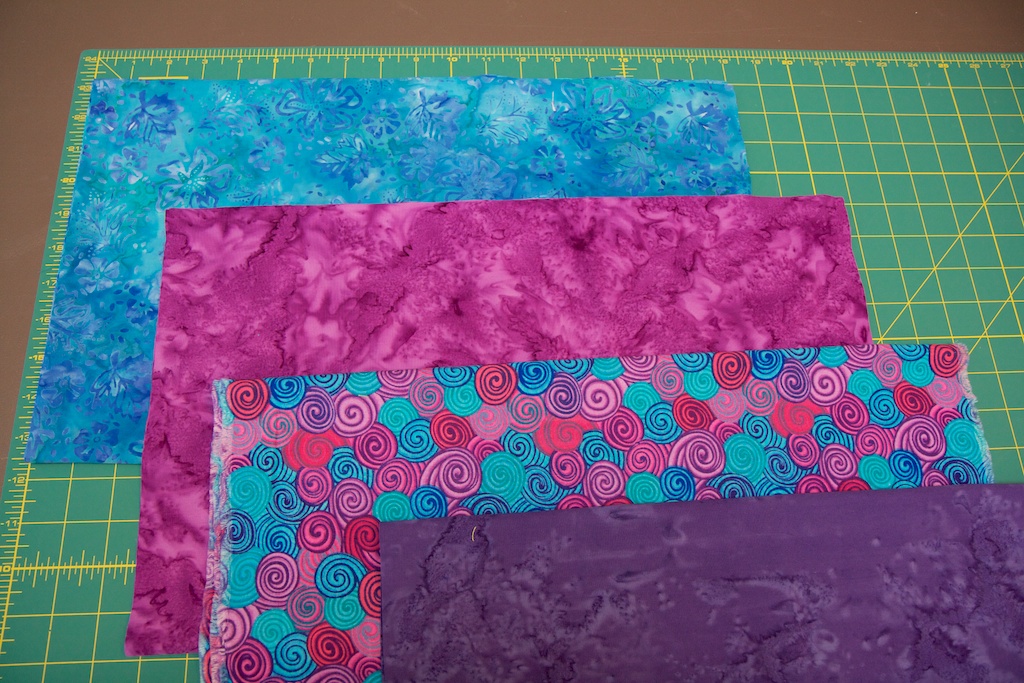
Select four fat quarters of four fabrics for the quilt top. They should be fabrics that go well together, but have some contrast between them.
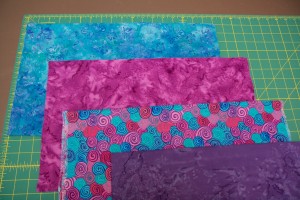
Select four fat quarters of four fabrics for the quilt top. They should be fabrics that go well together, but have some contrast between them.

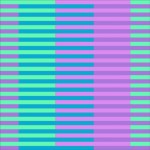
Interleave - straight

Next elect the style of interleave you want to try. The most basic shape would be straight, with no shifting. If you follow the instructions below and do not shift your fabrics, the result will be something like what you see here to the right. If you want to try this, just join your pairs of fabric on one edge rather than making tubes and skip the part about templates and cutting open the tube.
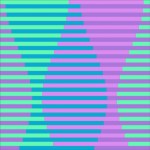
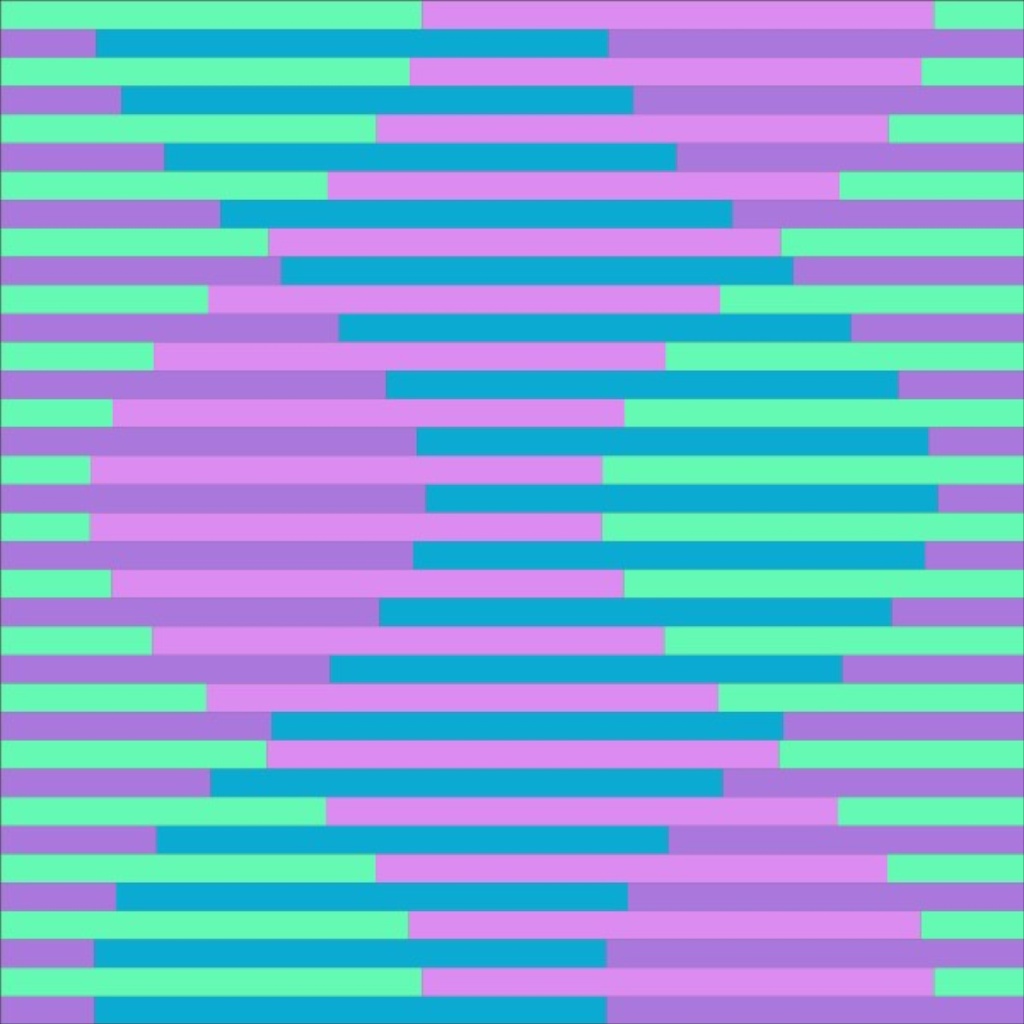
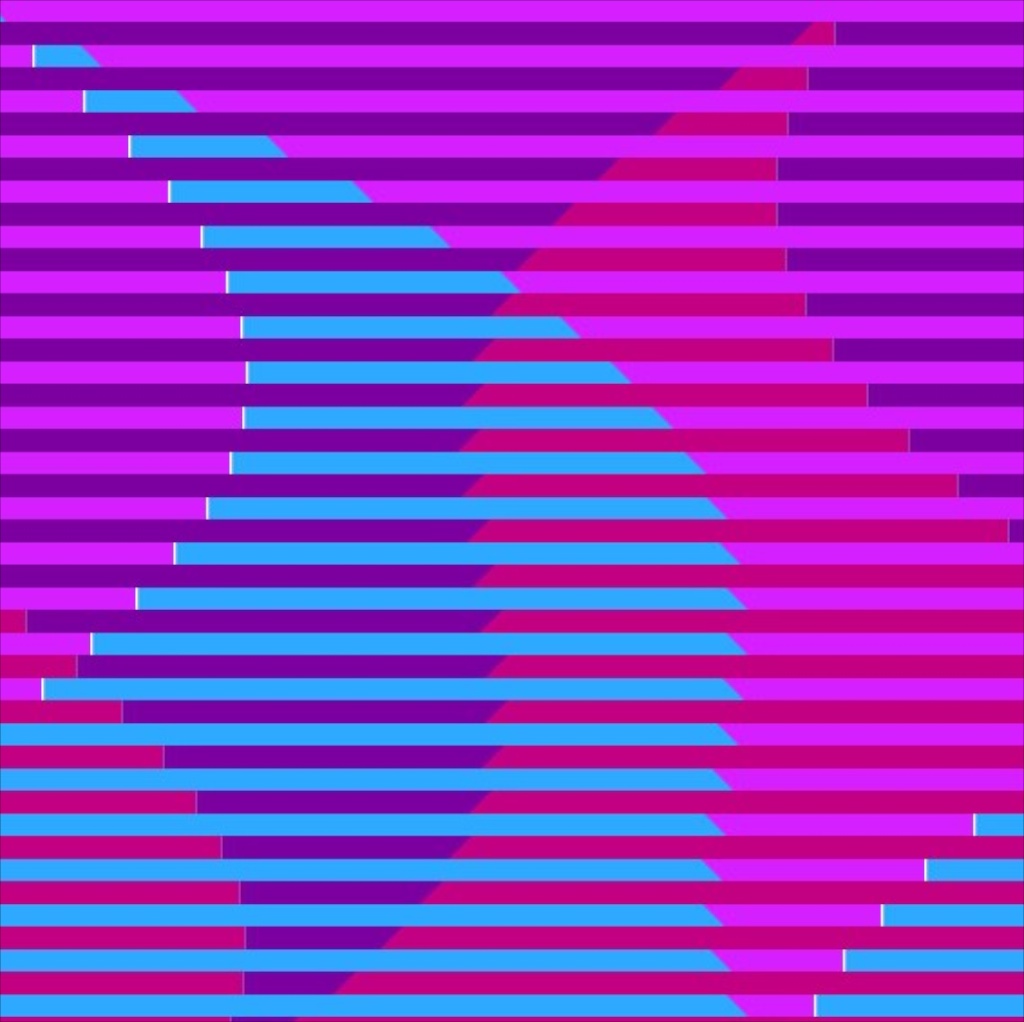
Interleave - vaseIn the instructions below I used a vase shape (shown here on the left) to shift my interleave design, but there are lots of other designs you might choose.

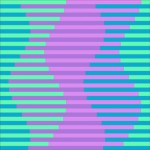
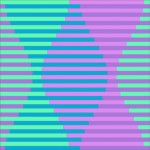
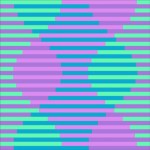
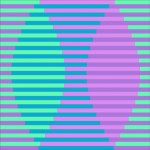
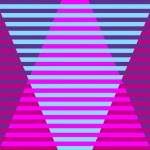
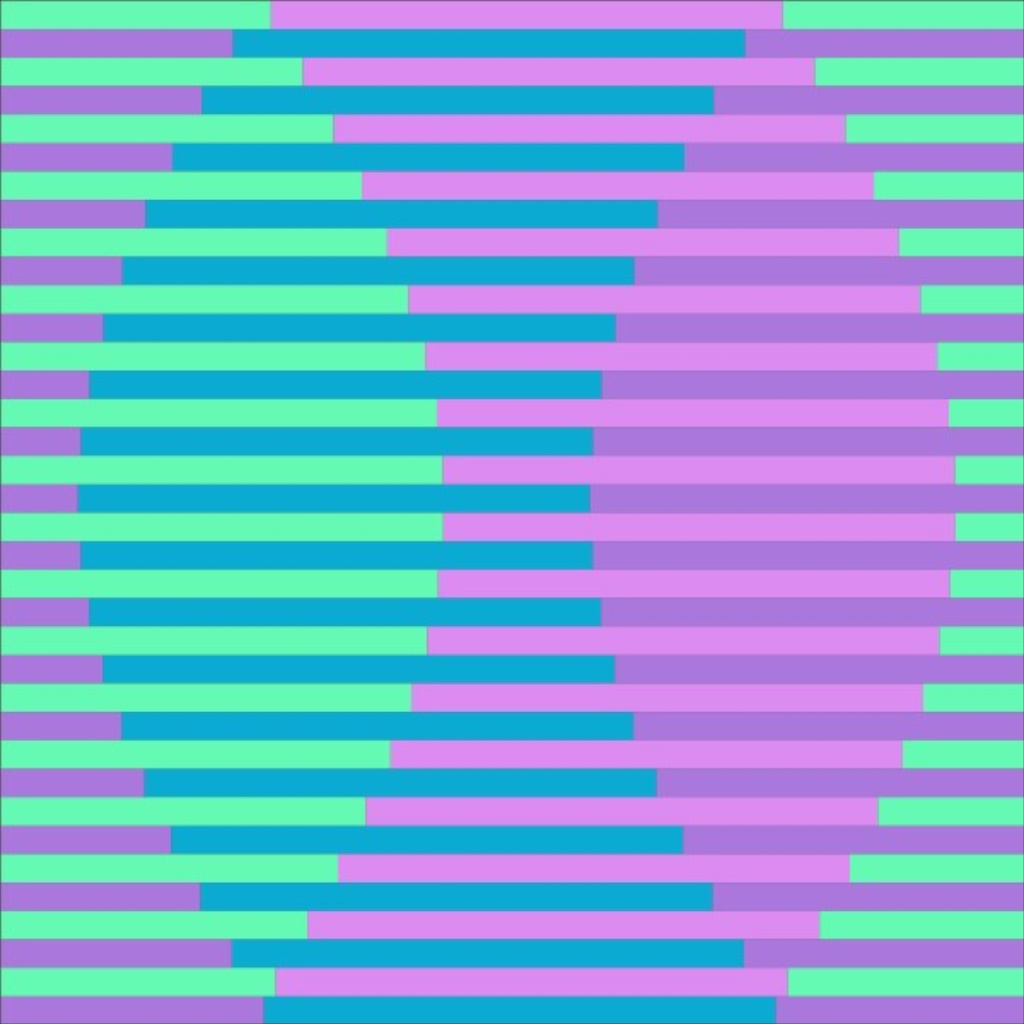
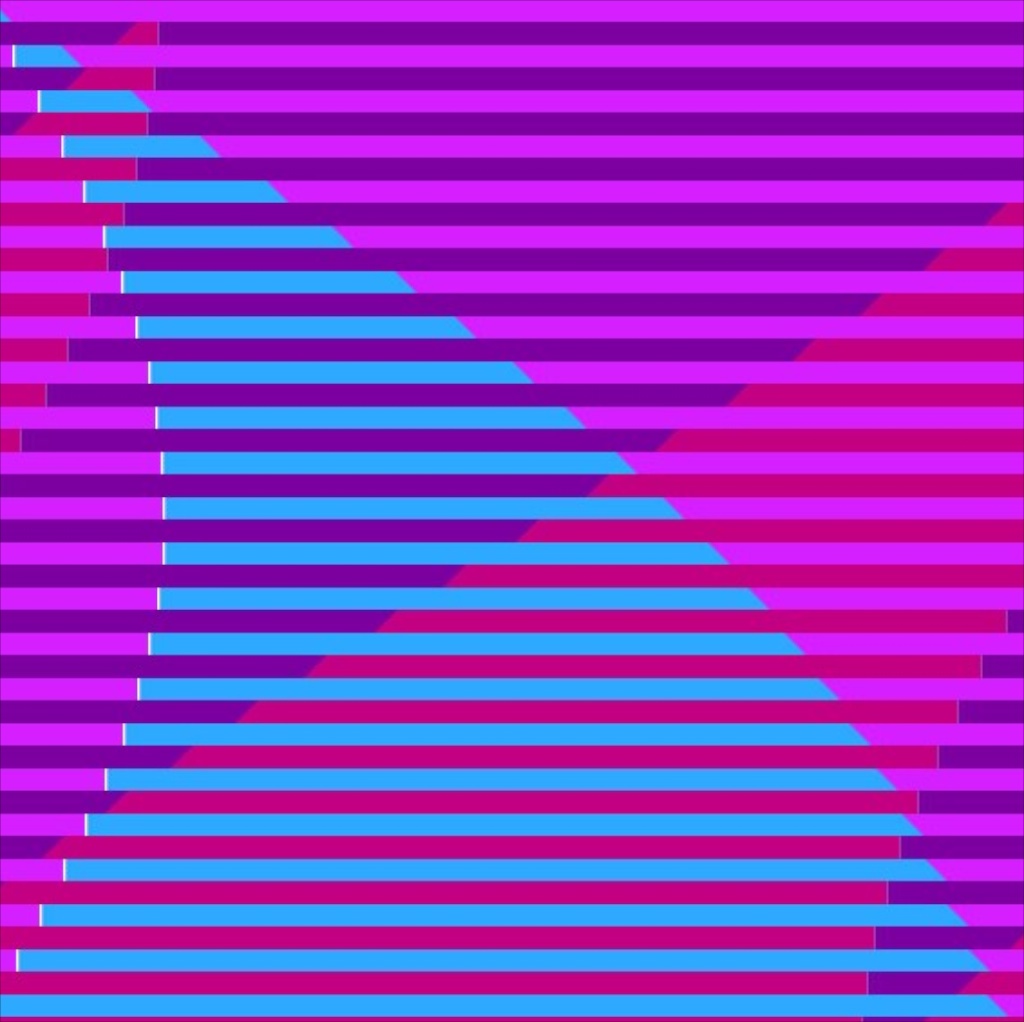
Below are example of the following shapes: sine wave, mirrored sine wave, skewed sine wave, hour glass, helix, and marquise. These shapes are all based on sine waves of differing frequencies and amplitudes. I generated them all using a computer program that I wrote. But once you have a feel for how this process works you can adapt these designs yourself without the aid of a computer.
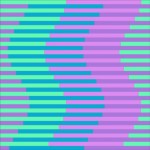
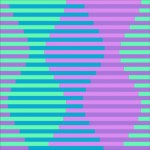
Interleave - sine wavesInterleave - mirrored sine wavesInterleave - DNA Interleave - hourglass Interleave - DNA Interleave - marquise

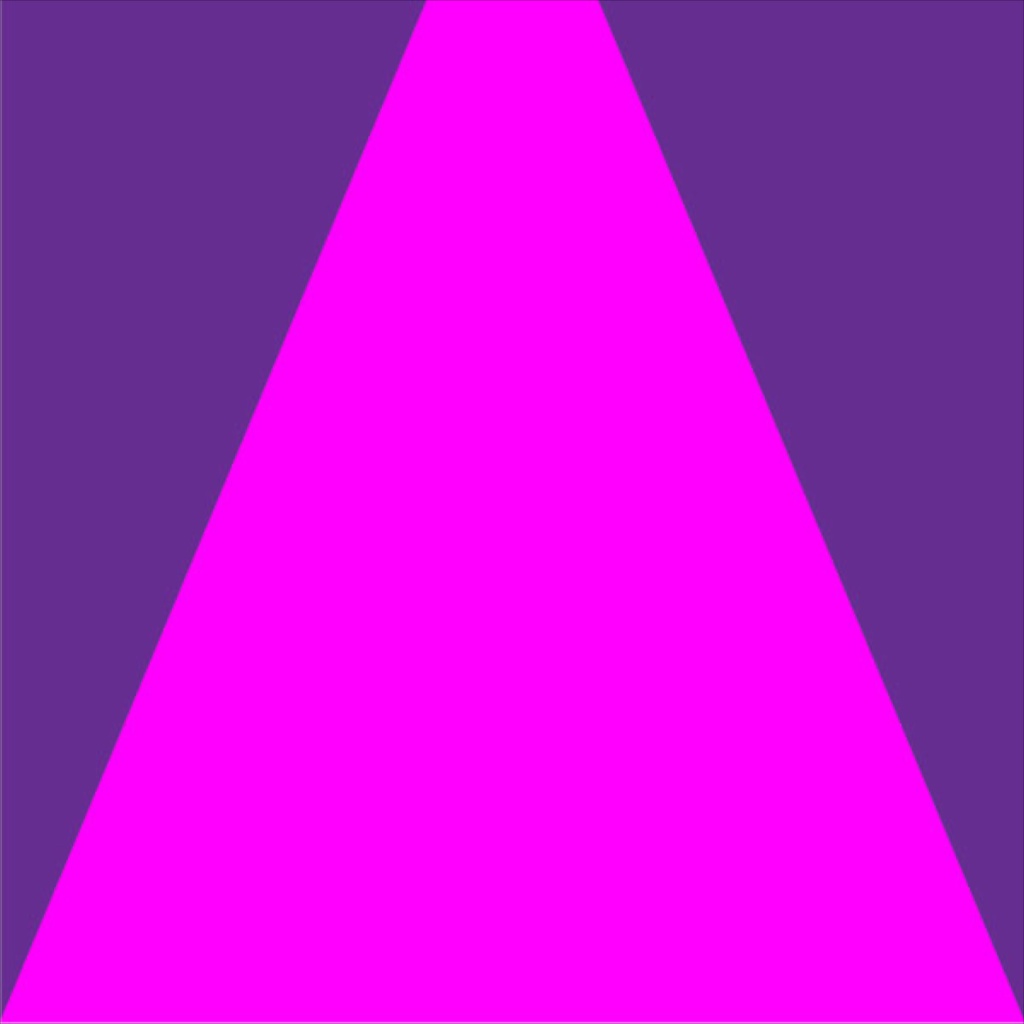
Once you select the shape you want to use, you will need to create a paper template. I have prepared templates for the designs you see here. You can enlarge, reduce, or adapt them to suit your needs. This template is a PDF file designed to print on 11×17 paper.

The next step is to prepare the foundation for your quilt. Since this is a quilt-as-you-go technique, we will be layering the batting with a backing and a foundation. I like to use a fusible batt so I don’t have to baste it. I also find it makes things easier if you mark your foundation fabric with parallel lines. After marking several foundations by hand with pencil, I designed a grid fabric and had it printed at spoonflower.com on basic combed cotton. I know it is a little pricey for fabric you will never see in the finished piece, but it does save a lot of time and effort. If you would prefer, you can use any white or light-colored fabric and mark it with parallel lines, .5-inch apart.
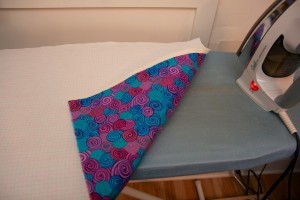
Layer backing, fusible batting, and grid fabric and fuse together.

Layer backing, fusible batting, and grid fabric and fuse together.

After your foundation is prepared, follow the instructions below to cut your fabric and assemble your quilt.
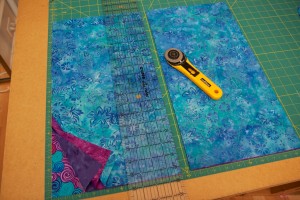
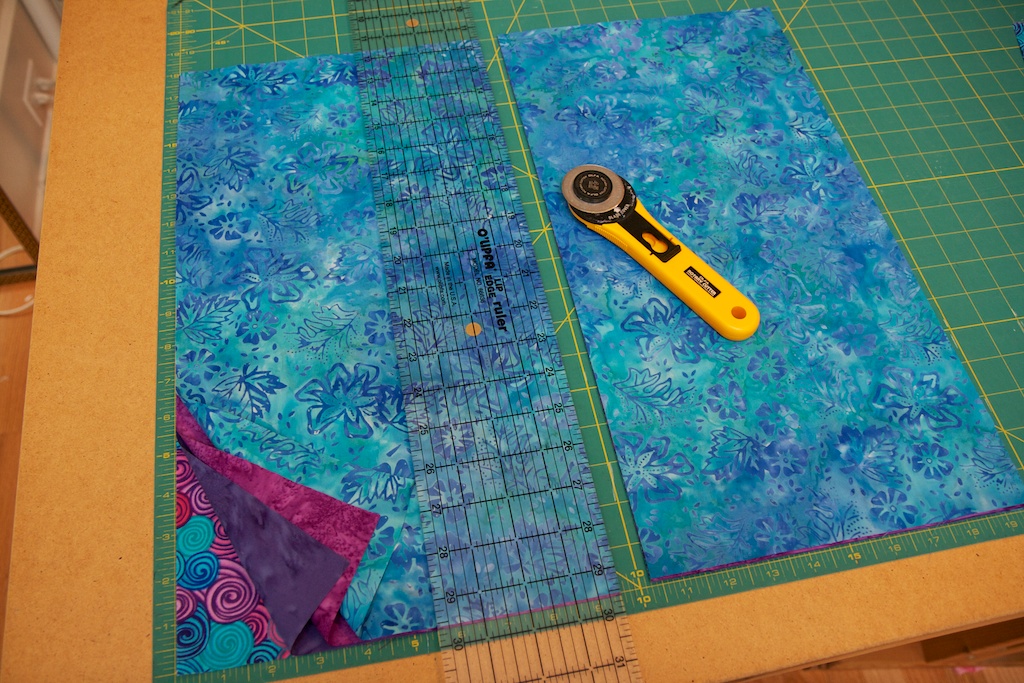
Cut a 18x9.5 inch strip from each fat quarter.

Cut a 18×9.5 inch strip from each fat quarter.
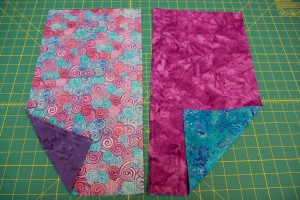
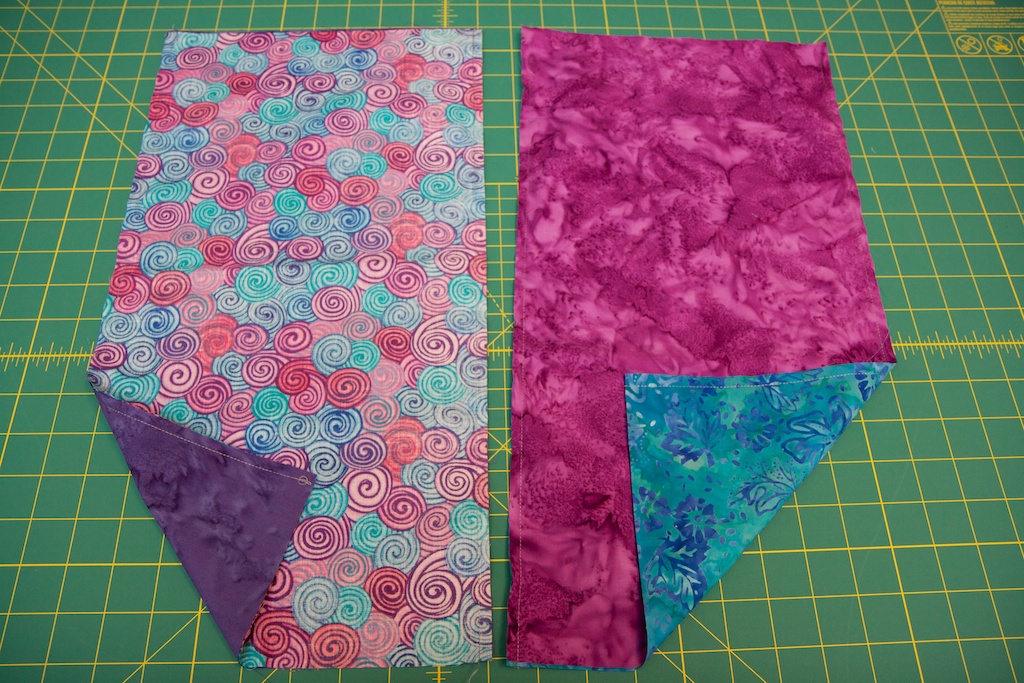
Decide how to pair your strips; I suggest pairing them so the strips with highest contrast are paired together. Place a pair of strips right sides together, and sew along both long edges with a 1/4-inch seam allowance to form a tube (leave the short edges open). Repeat for the other pair of strips.
Decide how to pair your strips; I suggest pairing them so the strips with highest contrast are paired together. Place a pair of strips right sides together, and sew along both long edges with a 1/4-inch seam allowance to form a tube (leave the short edges open). Repeat for the other pair of strips.

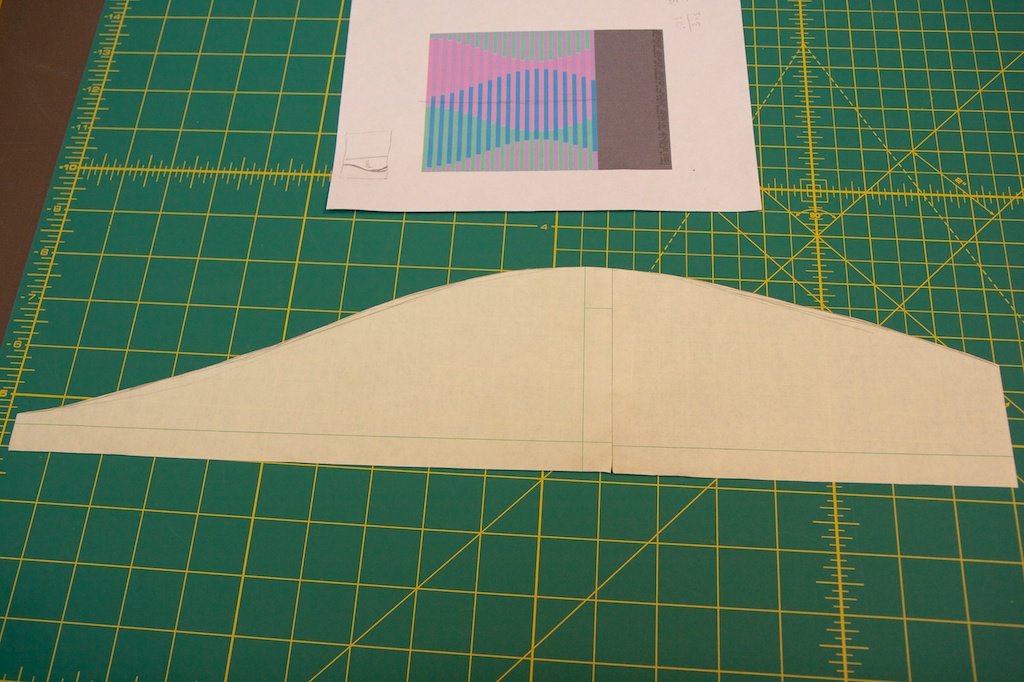
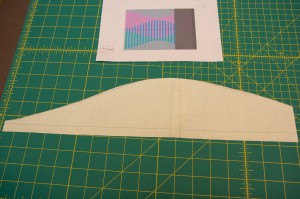
Cut out a paper template with shape you will use to shift your strips.
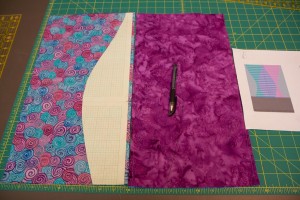
Cut out a paper template with shape you will use to shift your strips.

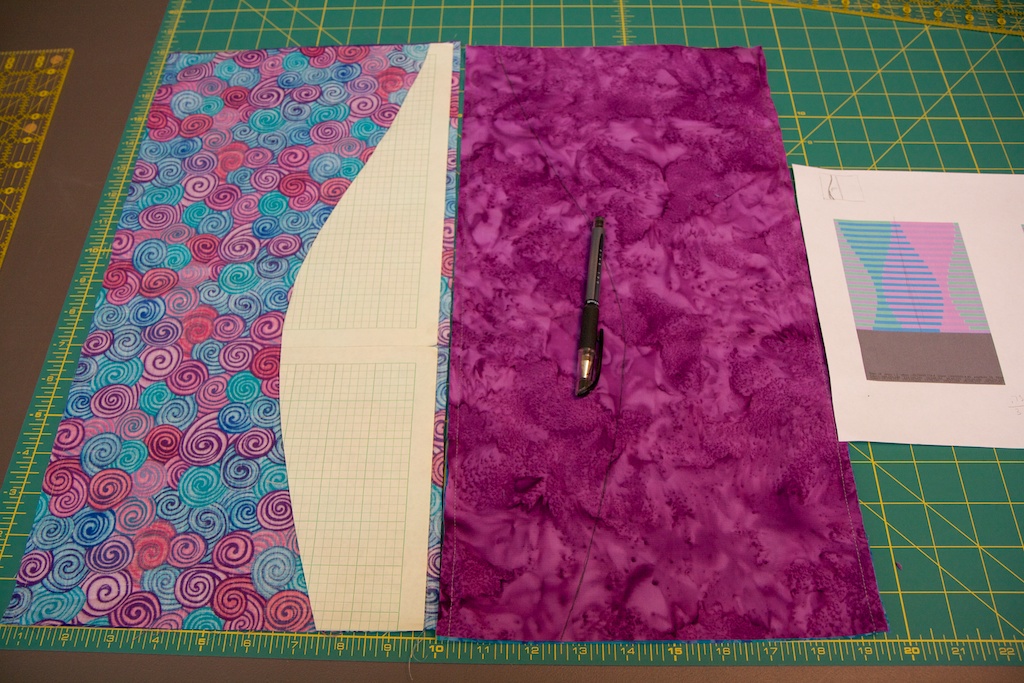
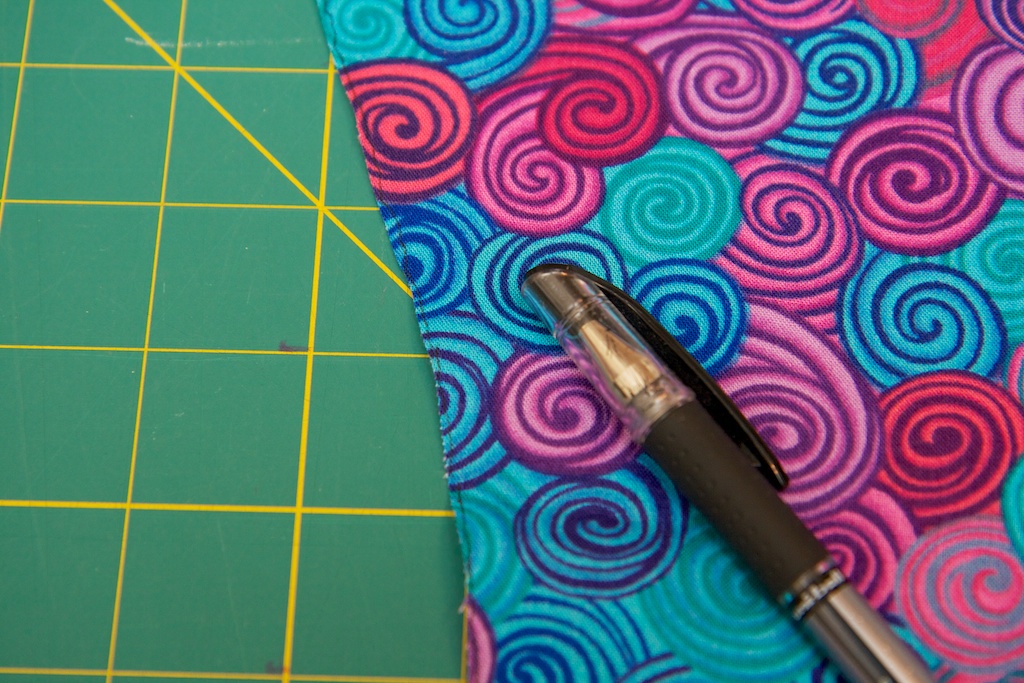
Lay the paper template on one of the fabric tubes and trace along the edge with a dark pen. Flip the template over and repeat on the other tube.
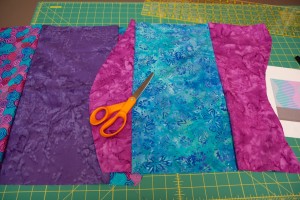
Lay the paper template on one of the fabric tubes and trace along the edge with a dark pen. Flip the template over and repeat on the other tube.

Cut both tubes open along the lines you just traced.
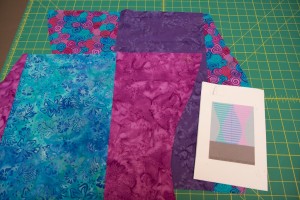
Cut both tubes open along the lines you just traced.

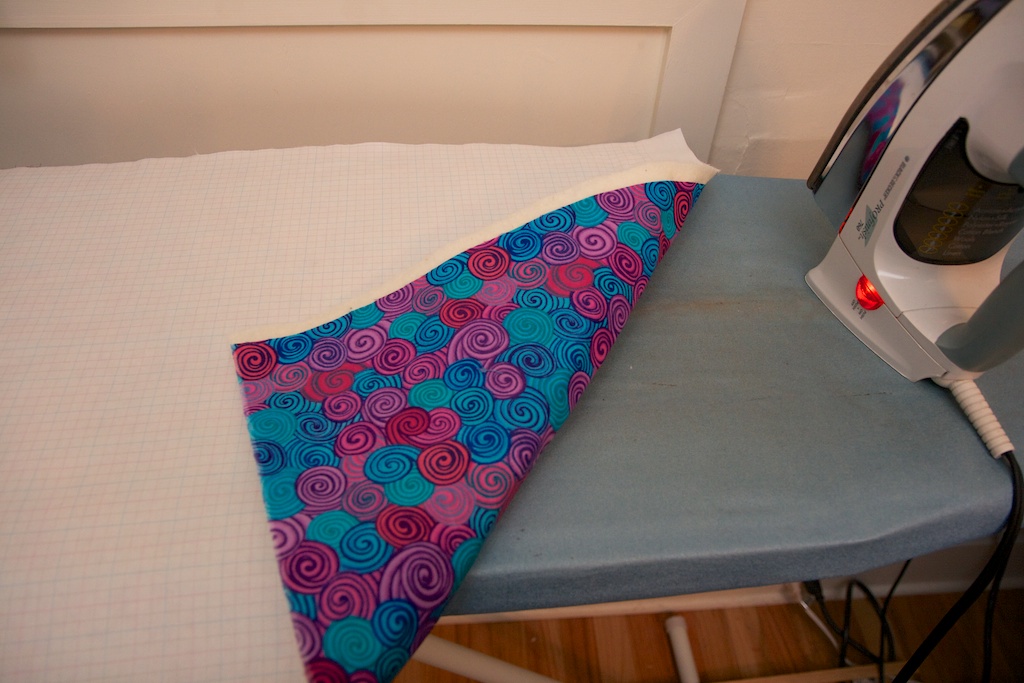
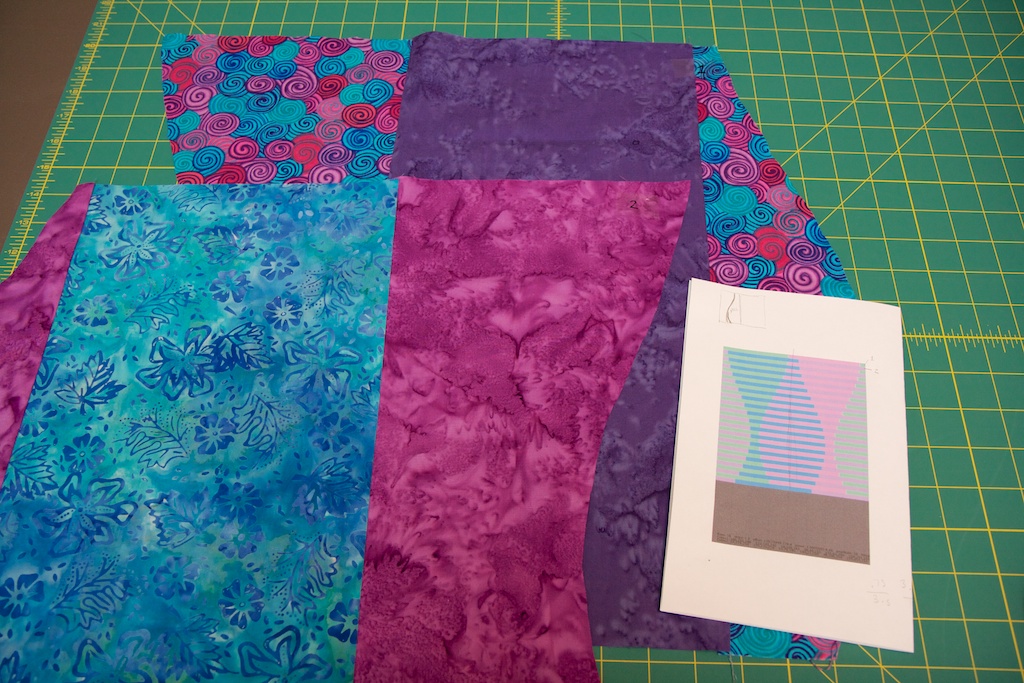
Press all the seams to one side. You should now have two panels that are cut to match the curves in your design. To make it easier to keep track of your panels, place a piece of tape on each panel and label them "1" and "2."

Press all the seams to one side. You should now have two panels that are cut to match the curves in your design. To make it easier to keep track of your panels, place a piece of tape on each panel and label them “1” and “2.”
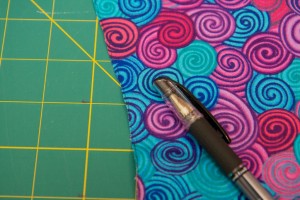
Using your dark pen, draw a line down the left edge of the front side of each panel. Remember "the Line is on the Left" so that you know how to orient your panels and strips when you sew them together.

Using your dark pen, draw a line down the left edge of the front side of each panel. Remember “the Line is on the Left” so that you know how to orient your panels and strips when you sew them together.
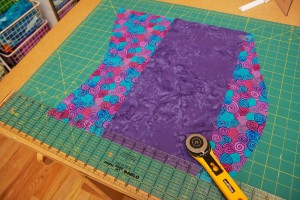
Starting at the bottom of each panel, use your ruler and rotary cutter to slice a 1-inch strip. You may want to slice several strips at a time, but if you do, I suggest numbering them along the edge so you can keep track of what order they are in.
Starting at the bottom of each panel, use your ruler and rotary cutter to slice a 1-inch strip. You may want to slice several strips at a time, but if you do, I suggest numbering them along the edge so you can keep track of what order they are in.

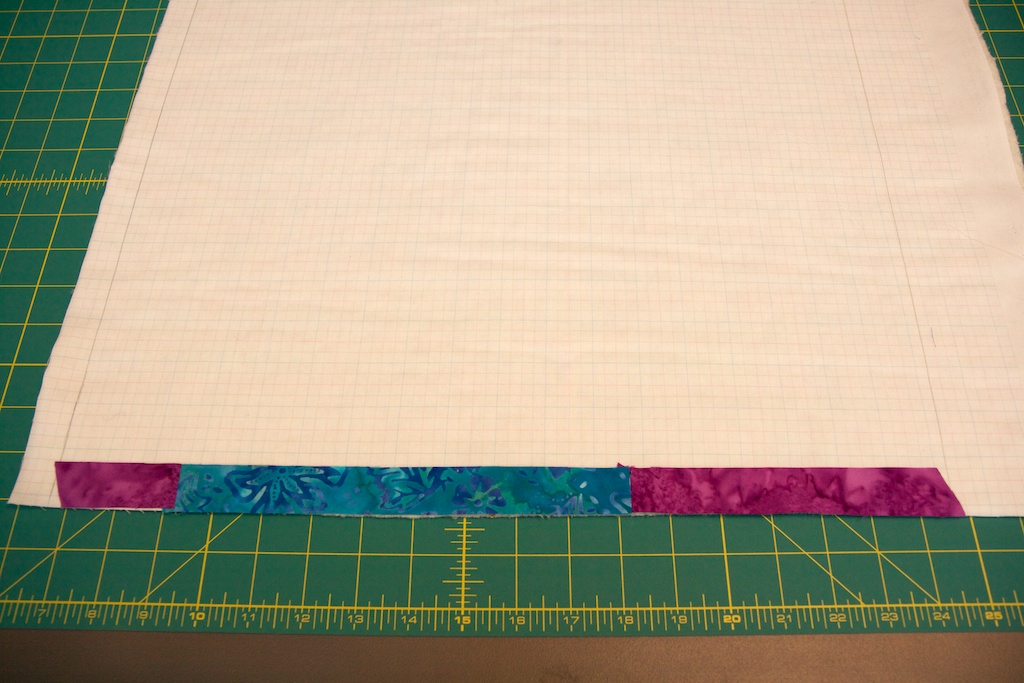
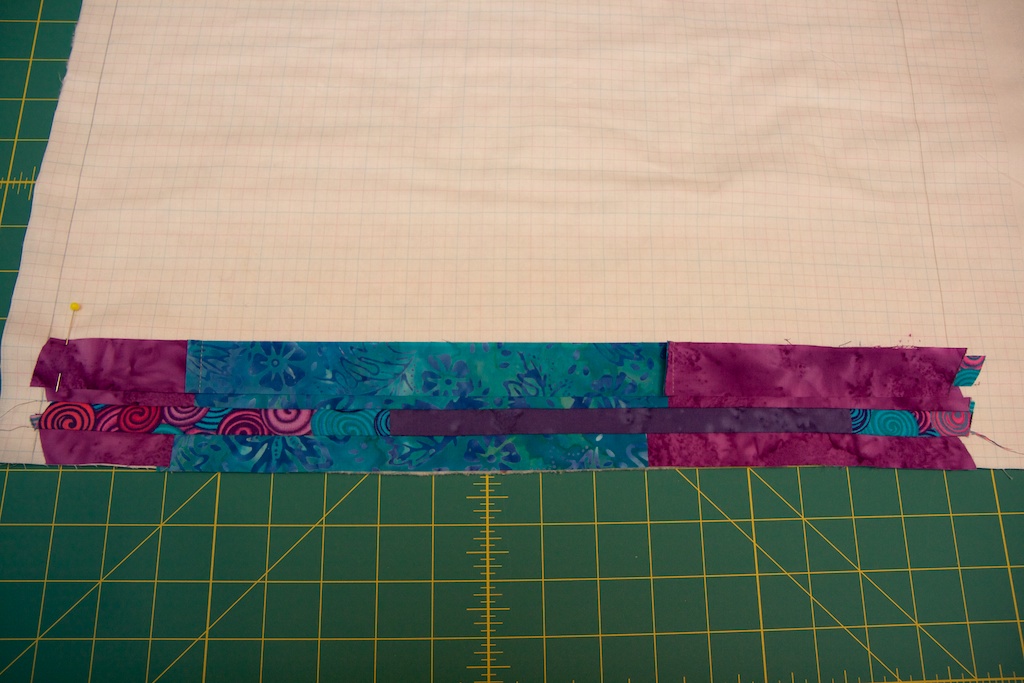
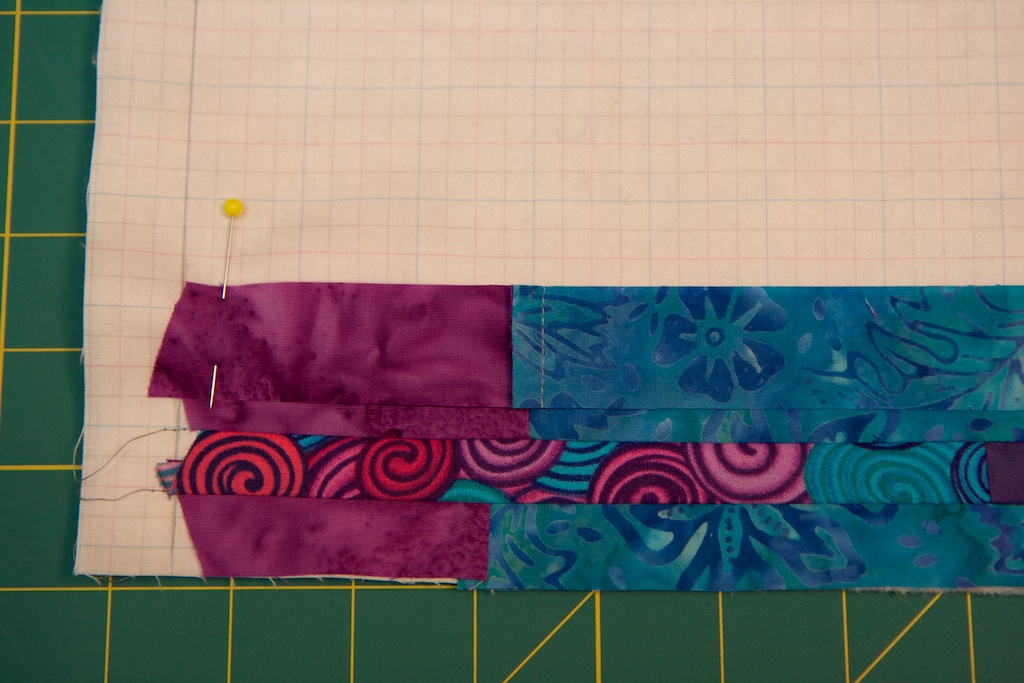
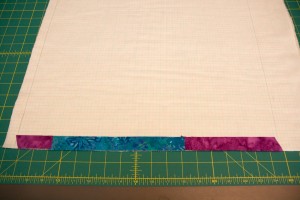
Line up the bottom strip from panel 2 on the bottom edge of your grid fabric, aligning with the line 1-inch from the bottom edge. The strip should be face up with the edge where you marked the line on the left side. Since the edges of the strip are not perpendicular the alignment with the left and right edges will be approximate.
Line up the bottom strip from panel 2 on the bottom edge of your grid fabric, aligning with the line 1-inch from the bottom edge. The strip should be face up with the edge where you marked the line on the left side. Since the edges of the strip are not perpendicular the alignment with the left and right edges will be approximate.

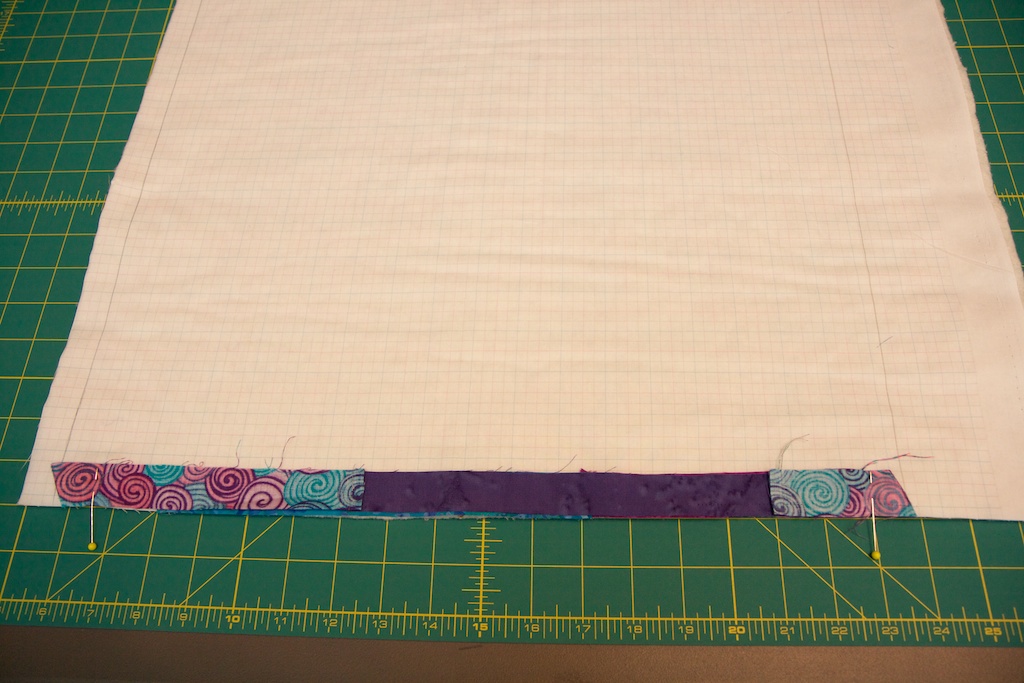
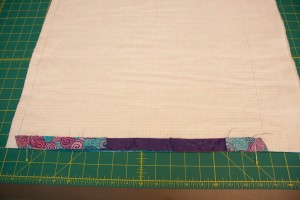
Line up the bottom strip from panel 1 face down on top of the strip from panel 2. Pin in place.
Line up the bottom strip from panel 1 face down on top of the strip from panel 2. Pin in place.

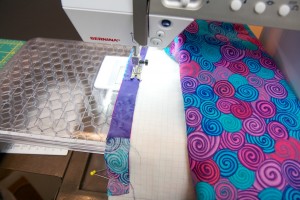
Using a 1/4-in foot sew along the top edge of your strips. A foot with a 1/4-in guide can make this easier. You may prefer to use a walking foot,
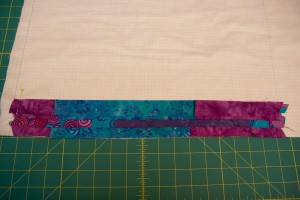
Using a 1/4-in foot sew along the top edge of your strips. A foot with a 1/4-in guide can make this easier. You may prefer to use a walking foot,

Press open your strips. Then cut another strip from the bottom of panel 2 and layer it face down on top of the previous strip you sewed. Sew the next strip in place.
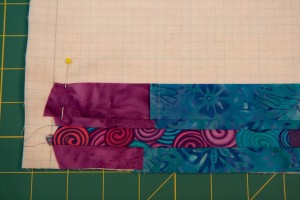
Press open your strips. Then cut another strip from the bottom of panel 2 and layer it face down on top of the previous strip you sewed. Sew the next strip in place.

If your strips are not precisely 1-inch thick, don't worry. You should line up the top of each new strip with the next grid line, even if the previous strip falls a little short of that line. In the even you have a strip that goes over the line, you may want to trim it so you can see the line or use a ruler to help with alignment. You can use pins to hold the strips in place, but you may find that after some practice they are not necessary.
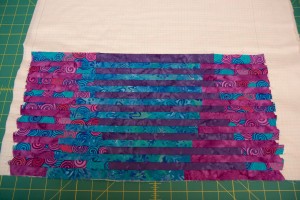
If your strips are not precisely 1-inch thick, don’t worry. You should line up the top of each new strip with the next grid line, even if the previous strip falls a little short of that line. In the even you have a strip that goes over the line, you may want to trim it so you can see the line or use a ruler to help with alignment. You can use pins to hold the strips in place, but you may find that after some practice they are not necessary.

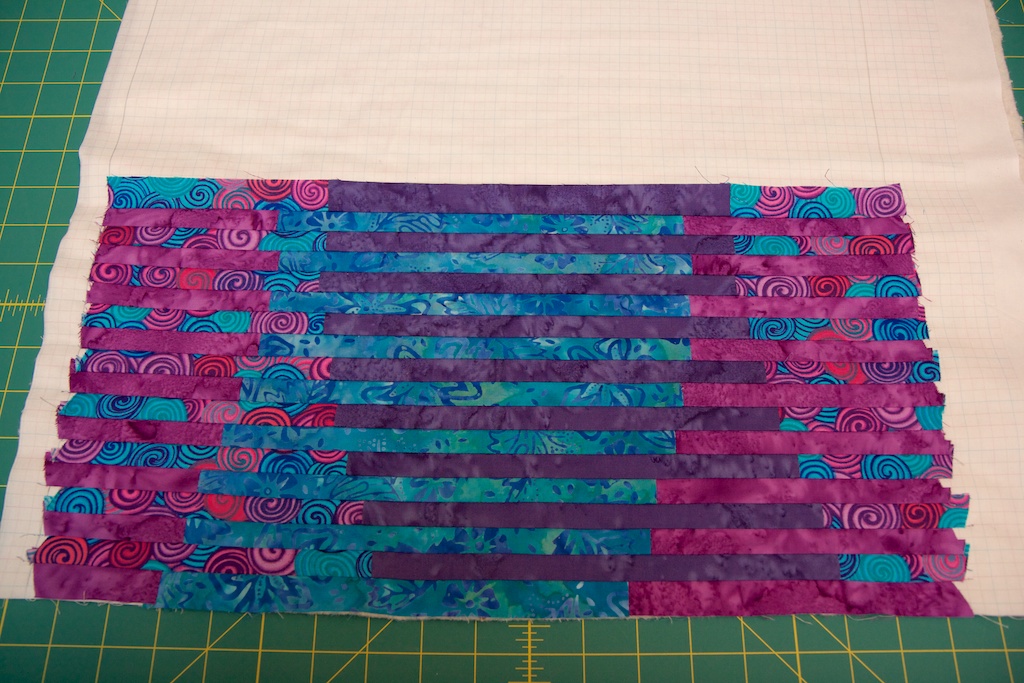
Continue alternating between panel 1 and panel 2 strips until you cover the grid. You may have a couple extra strips left over. (To avoid leftover strips, your grid fabric should be at least .5-inch taller than your fabric tubes.)
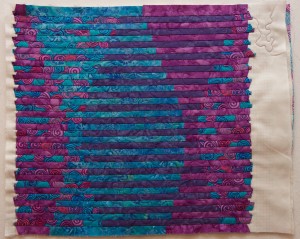
Continue alternating between panel 1 and panel 2 strips until you cover the grid. You may have a couple extra strips left over. (To avoid leftover strips, your grid fabric should be at least .5-inch taller than your fabric tubes.)

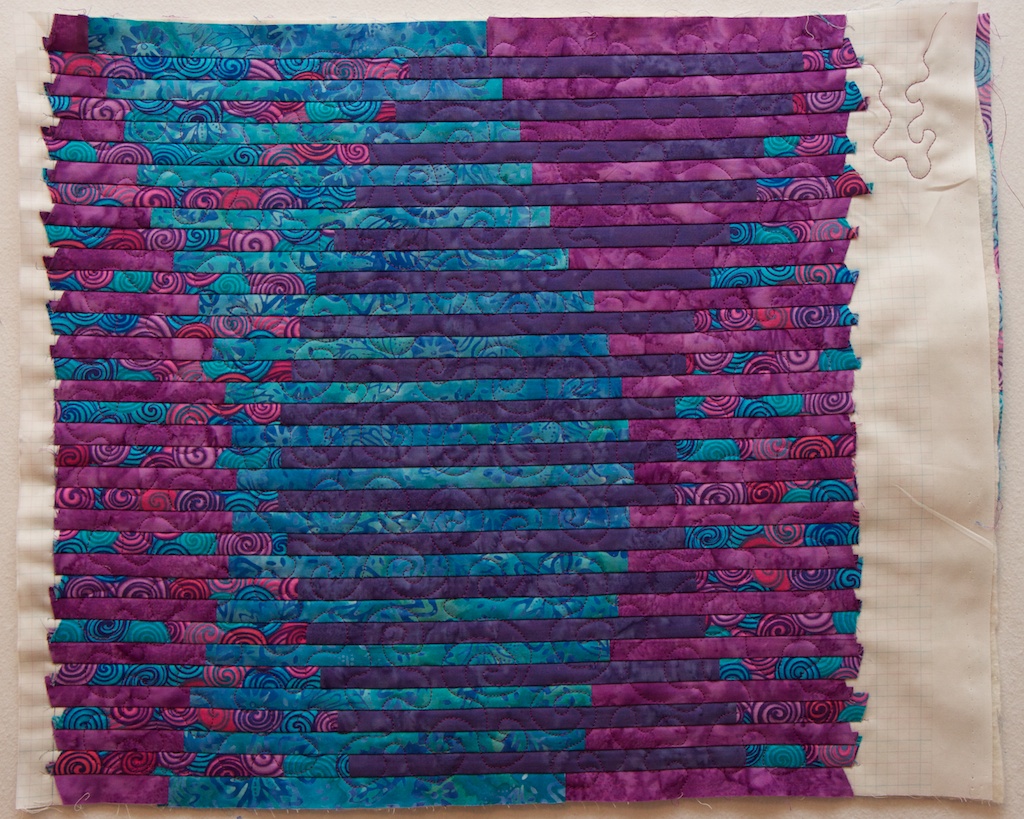
Once all your strips have been sewn down, your quilt is not only pieced, but also quilted.
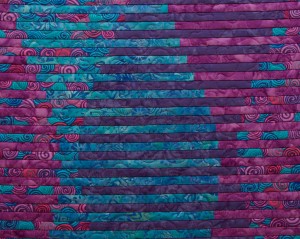
Once all your strips have been sewn down, your quilt is not only pieced, but also quilted.

For a little extra pizzaz you may want to do some free motion quilting  or other embellishments.

For a little extra pizzazz you may want to do some free motion quilting or other embellishments.

Variations

You can achieve some interesting effects by starting with fabric panels that include interesting shapes. For example, you might cut your fabric into right triangles instead of strips, and interleave them without shifting.
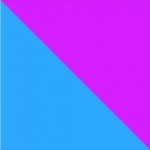

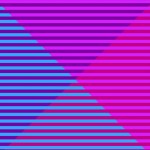
Right triangles Right trianglesInterleaved right triangles

You could use the same panels shown above, form them into tubes, cut them open on a curve, and produce one of the designs below, depending on the shape of the curve you use.

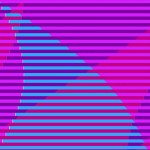
Interleaved and shifted right triangles Interleaved and shifted right triangles

You might also start with panels that have three or more shapes and interleave them as shown on the right below.


side triangles side trianglesinterleaved side triangles

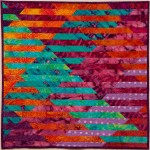
I used this approach to make Interleave #1.
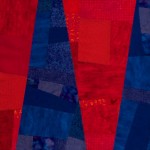
four colored panels, sliced and sewn back together four colored panels, sliced and sewn back togetherIMG_2531

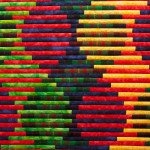
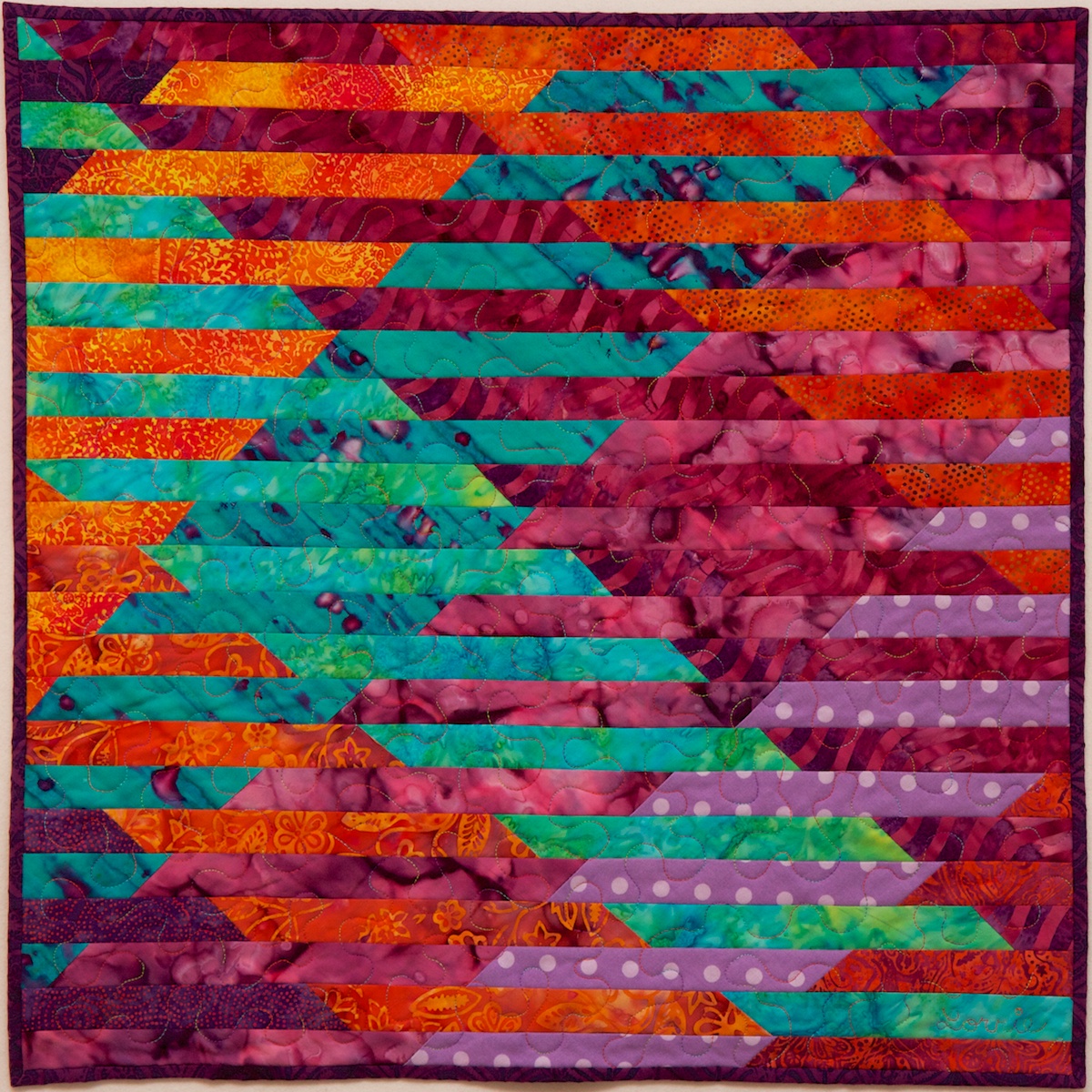
For Interleave #2 I assembled five diagonal strips on each panel. Instead of cutting 1-inch strips for interleaving, I used 1.5-inch strips so that they would end up 1-inch after accounting for seam allowances. In order to keep everything lined up nicely with proper spacing, I had to cut a .5-inch strip after cutting every 1.5-inch strip. These narrow strips are not actually used in the quilt, but they do make for some colorful ribbons. This approach requires more cutting, but a lot less sewing, so the quilt assembly goes faster.
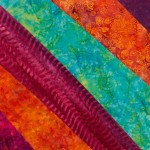
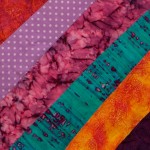
Panels ready to interleave for Interleave#2: Sunset over water Panels ready to interleave for Interleave#2: Sunset over water  Interleave#2: Sunset over water, 24x24" machine pieced and quilted

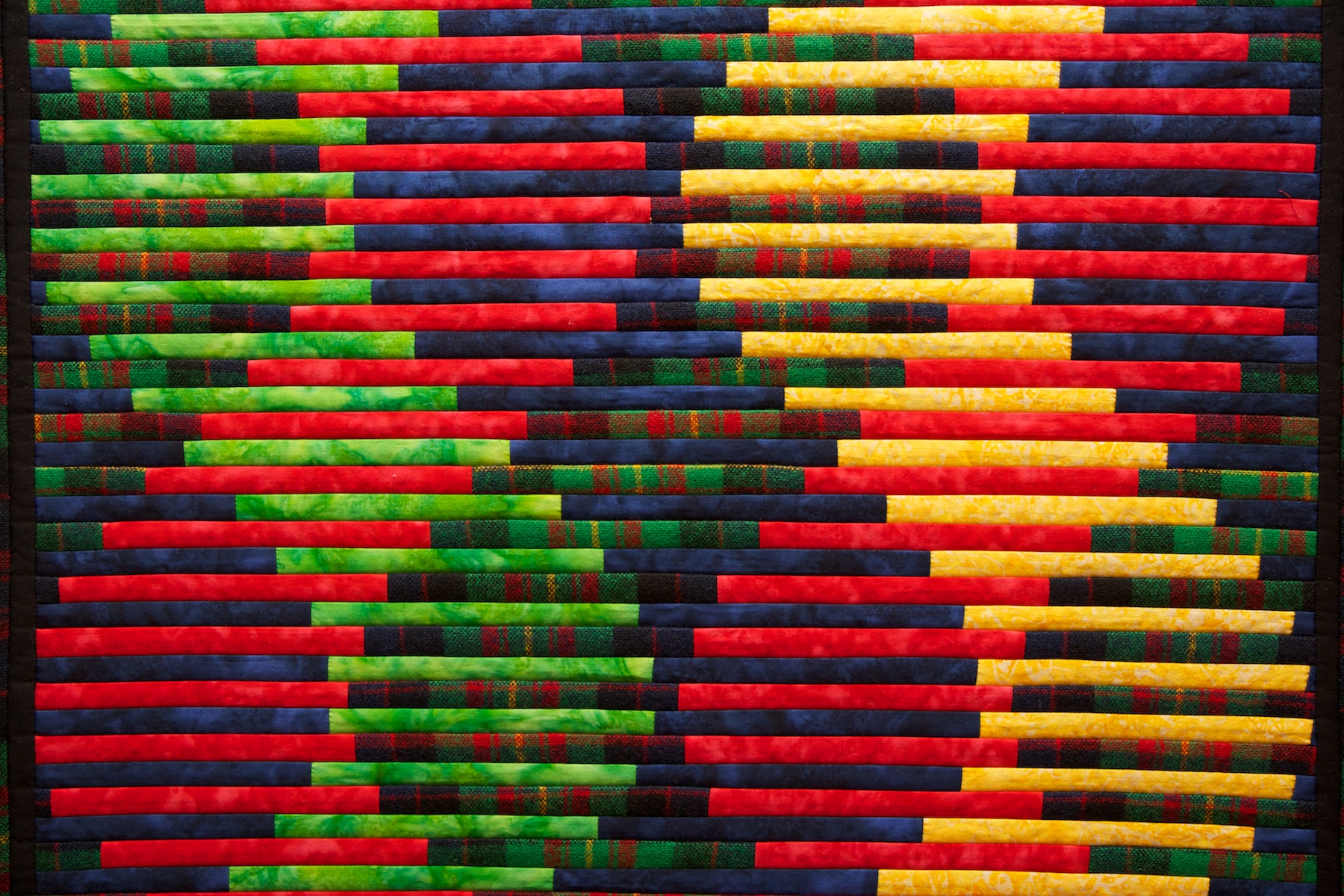
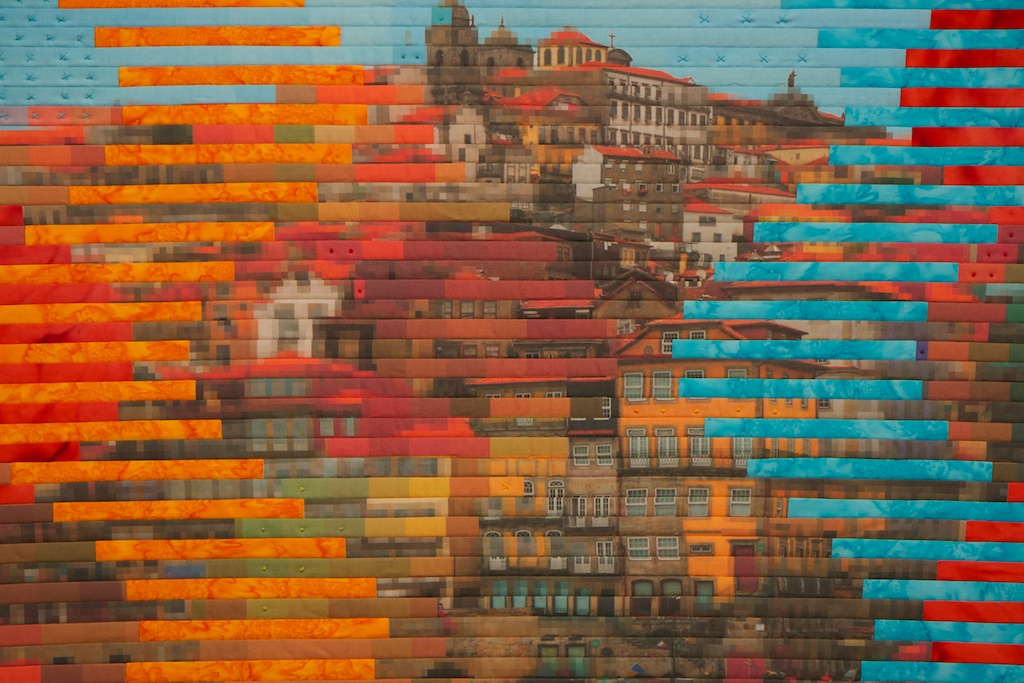
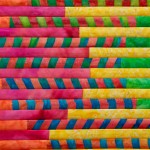
Finally, interleaving large prints or photos printed on fabric, results in all sorts of interesting possibilities. Below are examples of using wavy striped fabric in Interleave #4, plaid fabric in Interleave #5,  and photos printed on fabric in Interleave #6.
IMG_3421IMG_3527 IMG_4313

Have fun, and let me know how you use this technique!

February 17, 2014 Update!

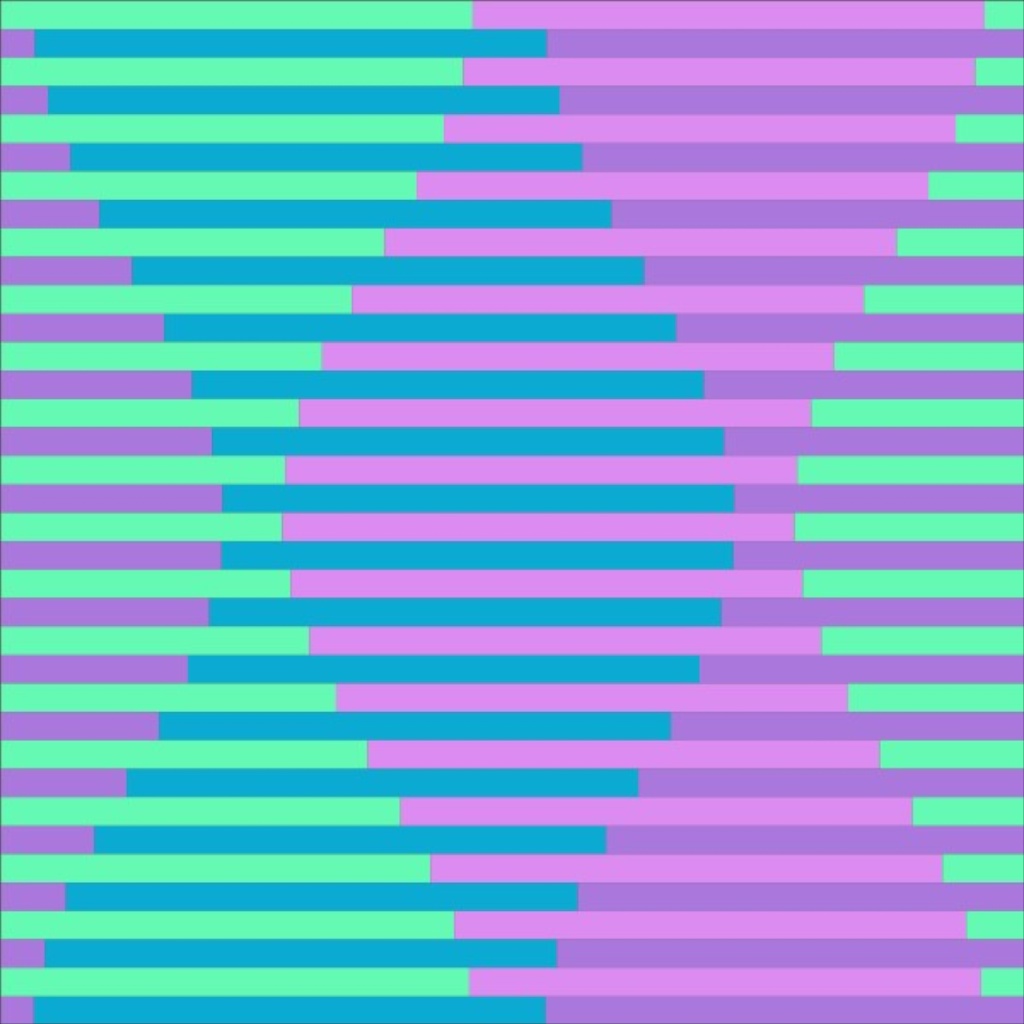
I’ve been so excited to see the quilts created by some of my workshop participants as well as by a quilter in the San Francisco area, Monica Tong, who found my blog post and followed the instructions to make two quilts. Monica adapted the instructions to use three fabrics in each panel instead of two — which is exactly the idea.
 

Quilt lecture and Interleave workshop

I will be giving a lecture and teaching a workshop for the Pittsburgh-area “Quilt Company East Guild” later this month. If you are interested in attending either of these events, please contact Sally Janis <SallyJanisQCE@verizon.net>.

Info on both events below from the QCE newsletter.

QCE Guild Meeting 
Monday, January 20, at 7:00 pm, Beulah Presbyterian Church
Lorrie Faith Cranor 
Engineering with Fabric

Question: What happens when you combine the mind of an engineer with the soul of an artist and turn them loose on fabric?

Answer: Magic!

Quilt artist Lorrie Faith Cranor has been exploring design, form, and color since she taught herself quilting as a distraction from her engineering and policy graduate studies in the mid-1990s. Her work is a treat for both the eye and the brain.

She is an Associate Professor of Computer Science and of Engineering and Public Policy at Carnegie Mellon University where she is director of the CyLab Usable Privacy and Security Laboratory (CUPS). During the 2012-2013 academic year she spent her sabbatical as a fellow in the Frank-Ratchye STUDIO for Creative Inquiry at Carnegie Mellon University where she worked on fiber arts projects that combined her interests in privacy and security, quilting, computers, and technology.

Lorrie has won a number of awards in local and national quilt competitions. Several of her quilts have been featured on the covers of books and journals. She had a solo exhibit at the Pittsburgh Children’s Museum in the Summer of 2013.

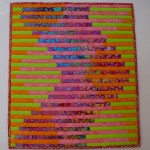
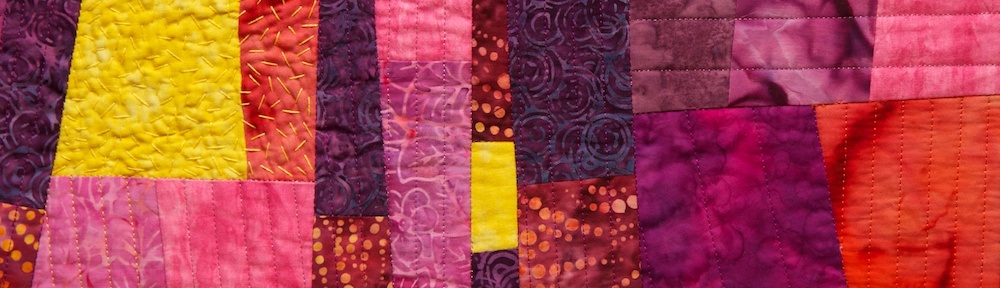
Interleave#2: Sunset over water, 24x24" machine pieced and quiltedInterleave#2: Sunset over water - detail

January Workshop 
Interleave Technique
Tuesday, January 21, 9:30—2:00, First Baptist Church in Monroeville 

Here’s a chance to learn Lorrie Cranor’s original Interleave technique. Lorrie’s Interleave quilts are pieced using a quilt-as-you-go technique in which thin strips of fabric are sewn to batting and backing. The images above show one of her finished quilts (left) as well as a close-up (right). The interleave design results from cutting these strips from two panels of fabric and piecing alternate strips from each panel. In Lorrie’s quilts, some of the panels are pieced and some are photos printed on fabric. For added interest, Lorrie shifts her strips in a wave pattern. The result of this process is a complex-looking quilt that can be pieced quickly from thin strips sewn in straight lines. In this workshop, Lorrie will break down her process into easy steps. Participants will create their own unique interleave wall hanging.

Non-member Workshop fee is $30 payable to QCE. There is also a $12 materials fee.

class-sample

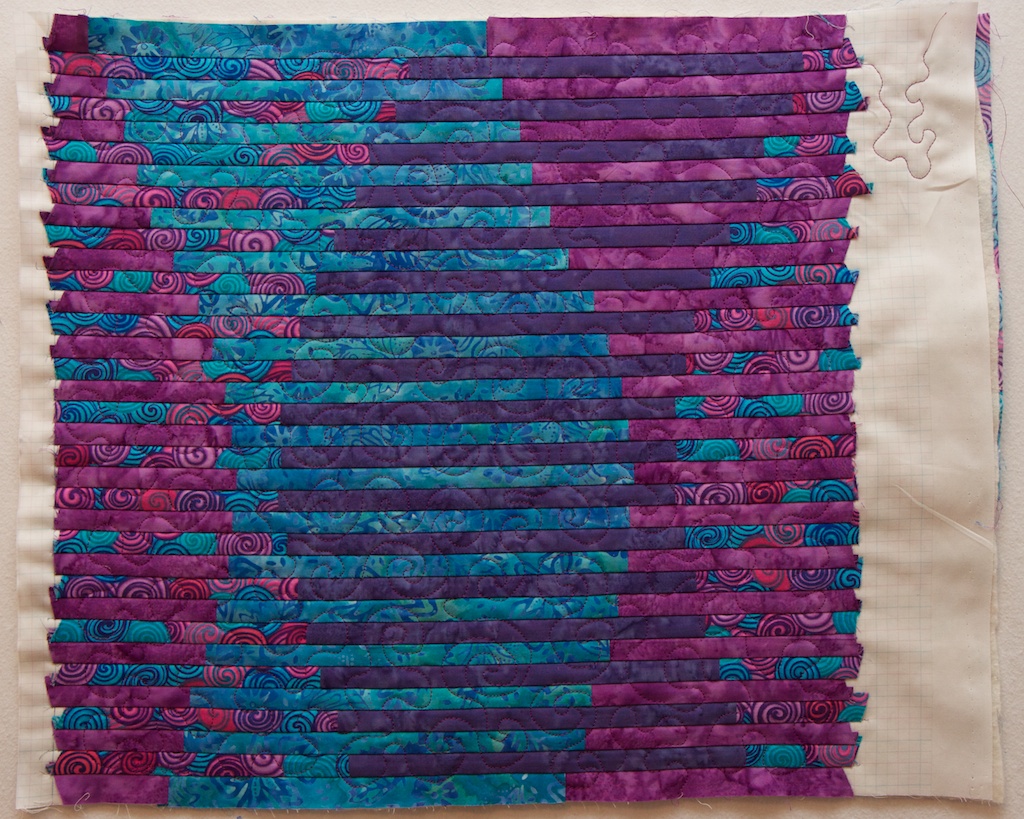
Here is a sample of a project for the Interleave workshop

For more information on Interleave quilts see the blog posts on Interleave 1, 2, 3, 4, 5, 6, and 7.