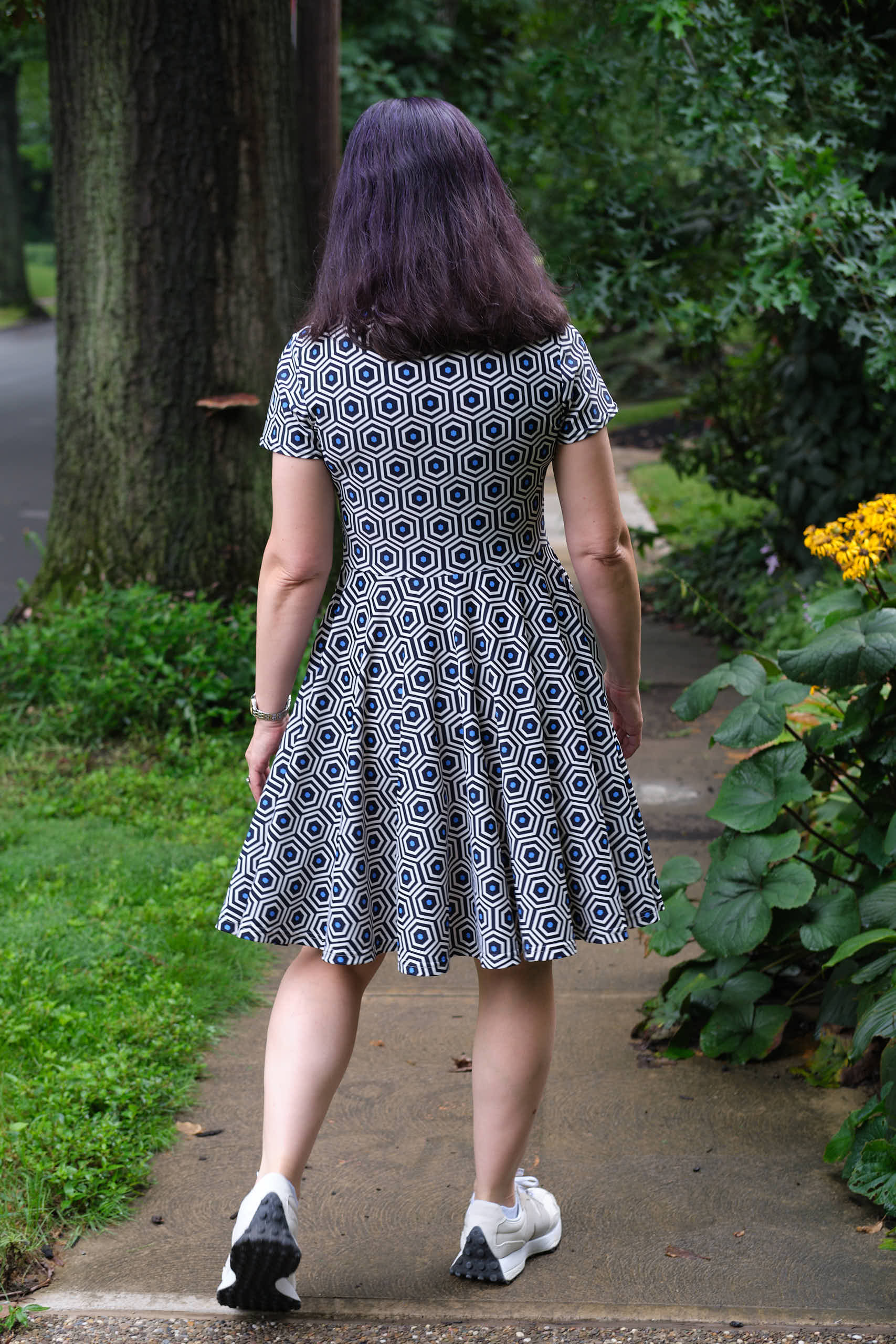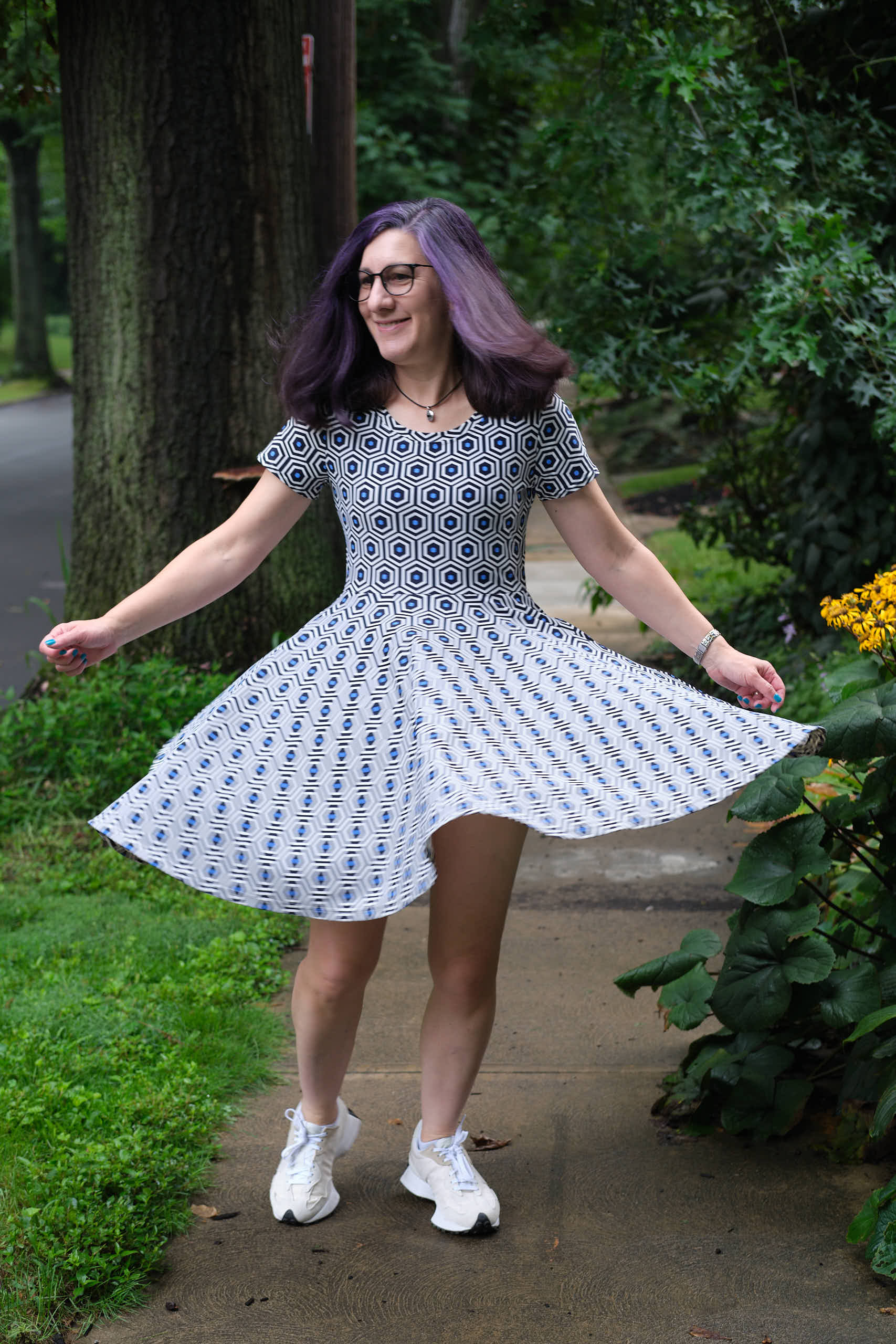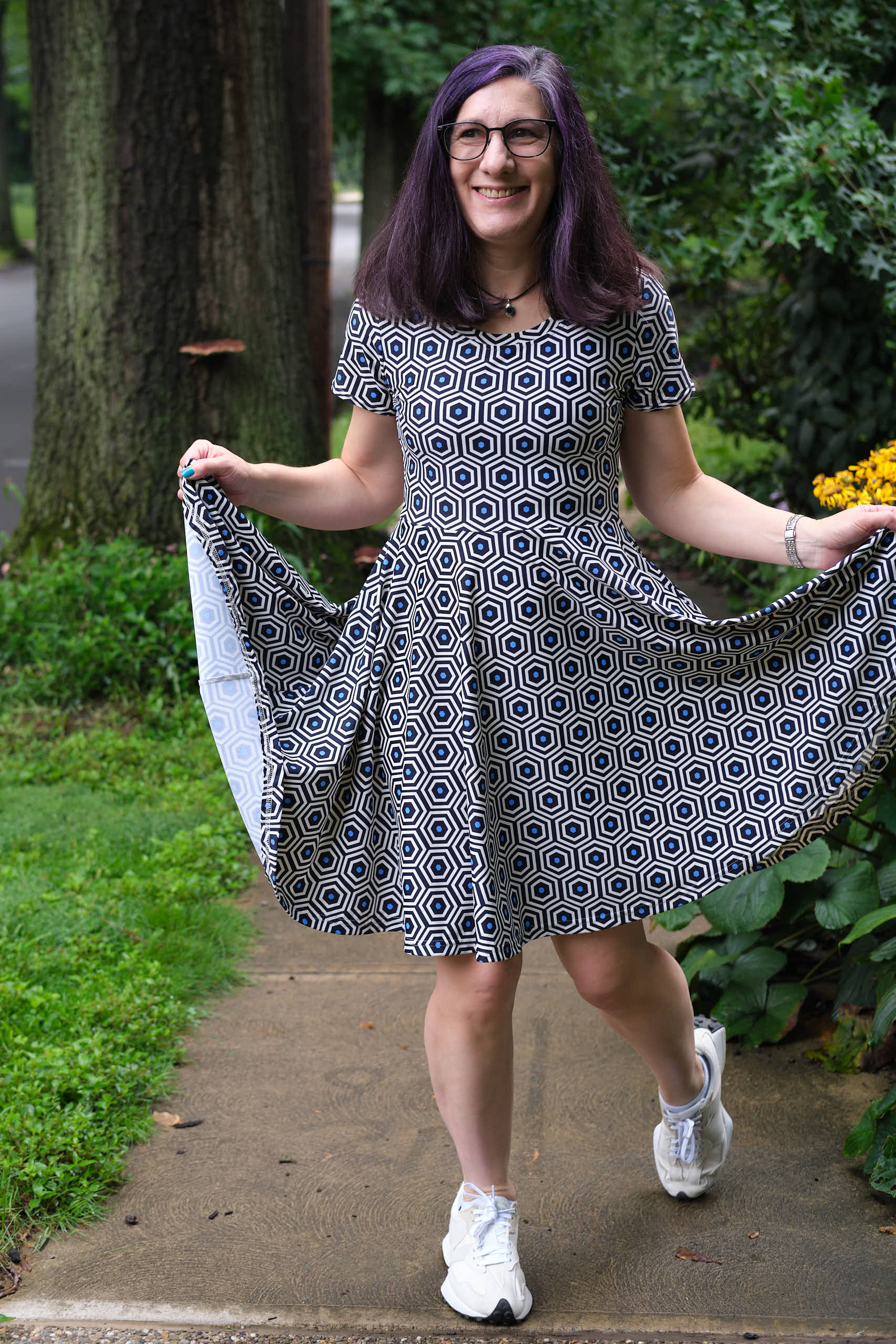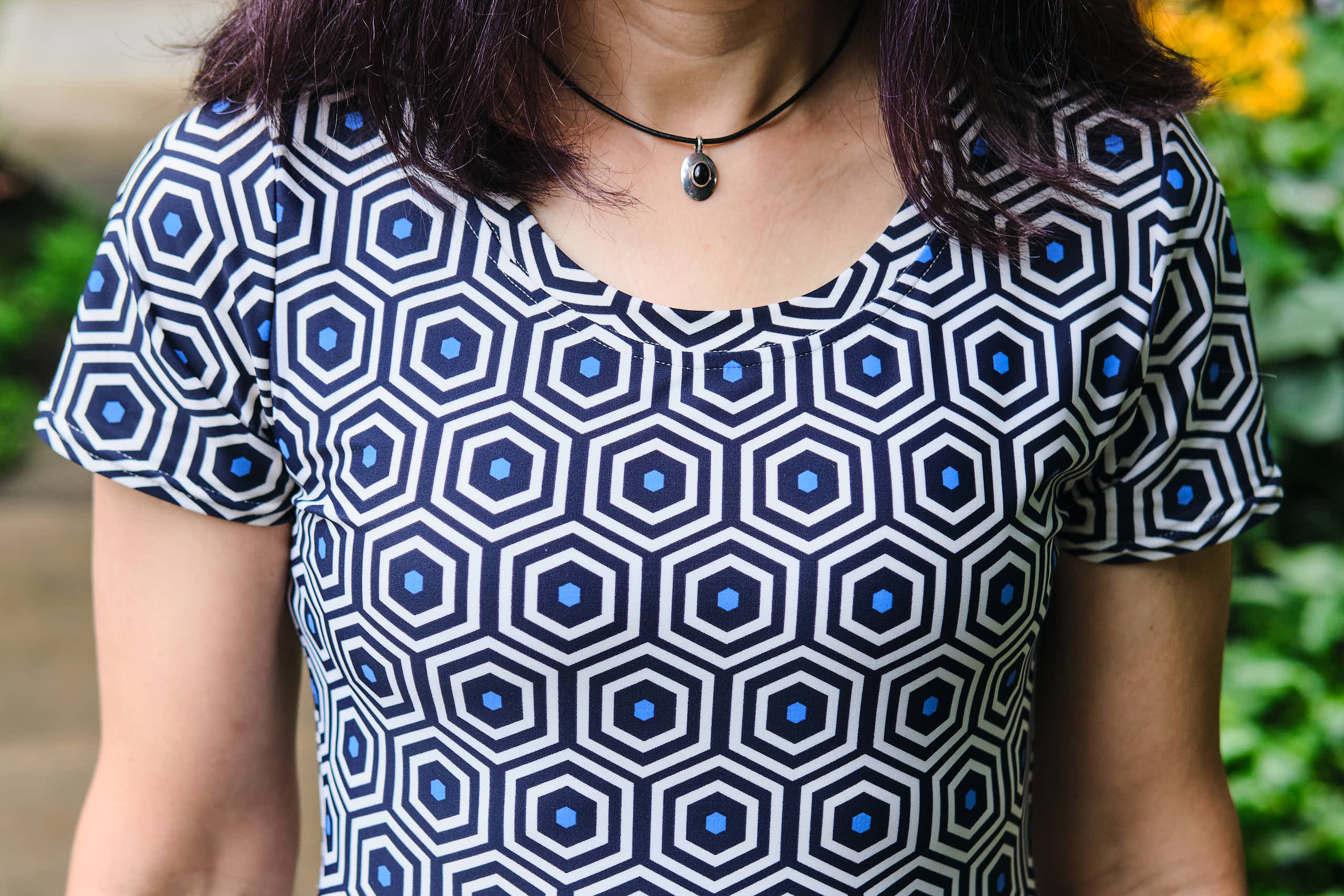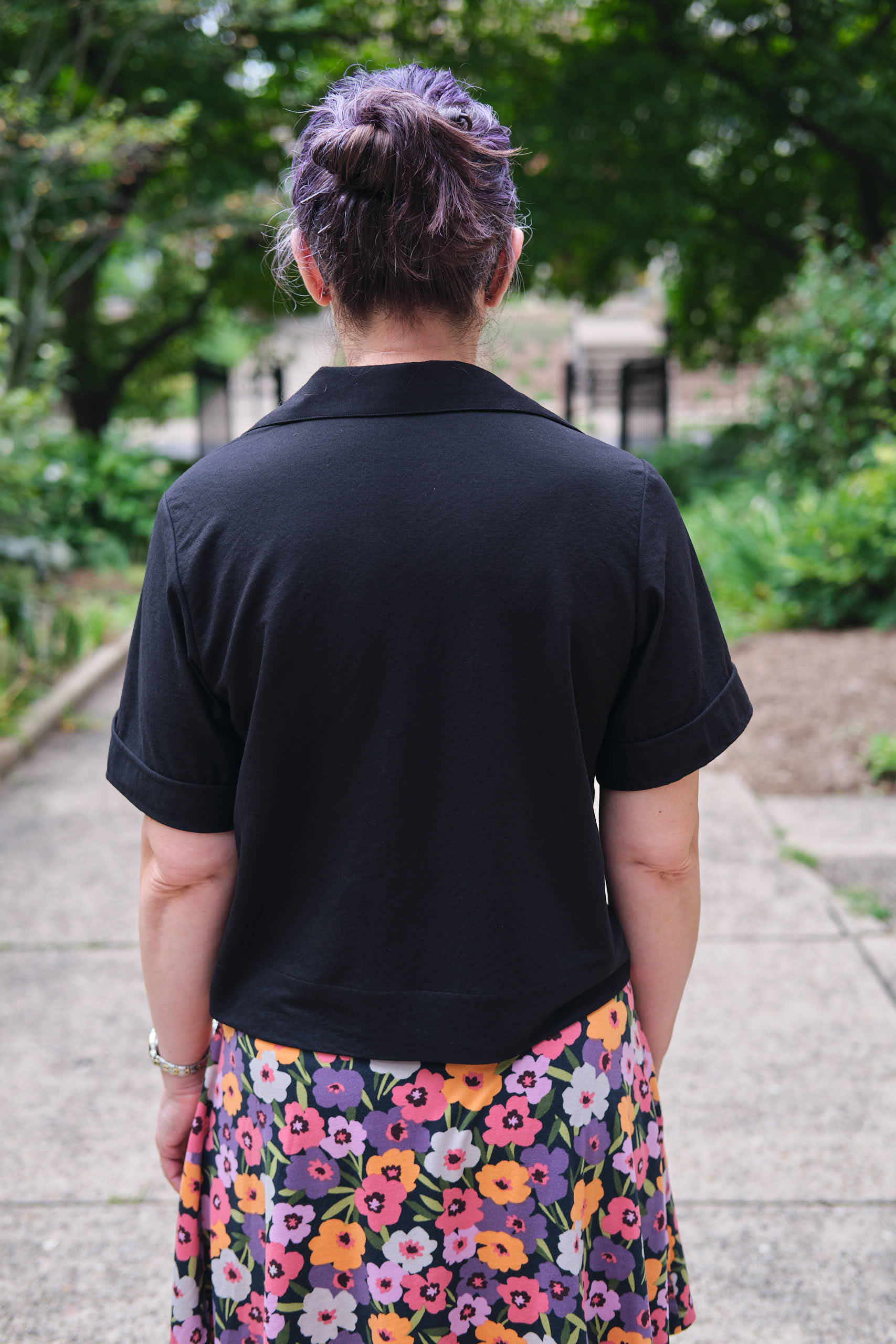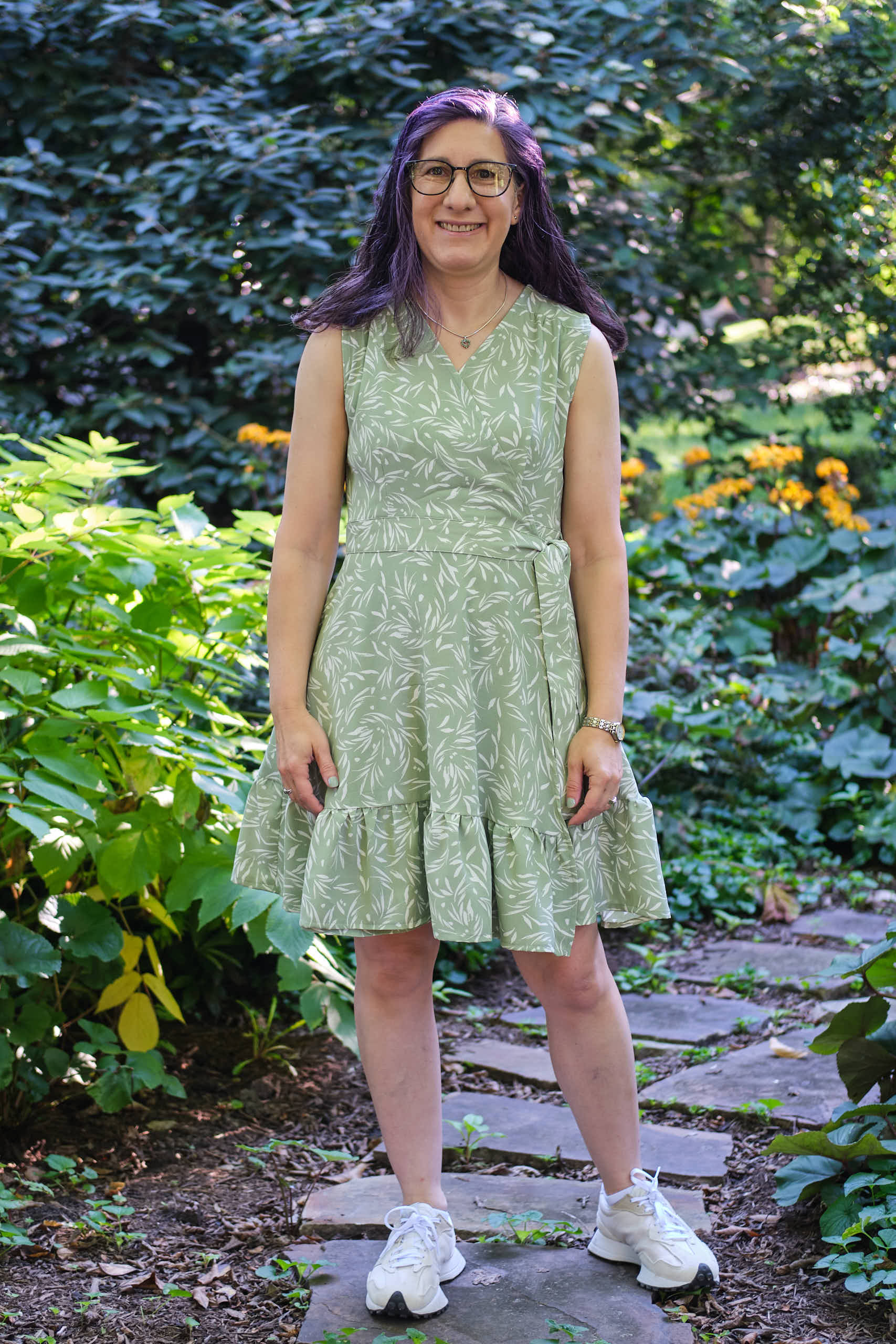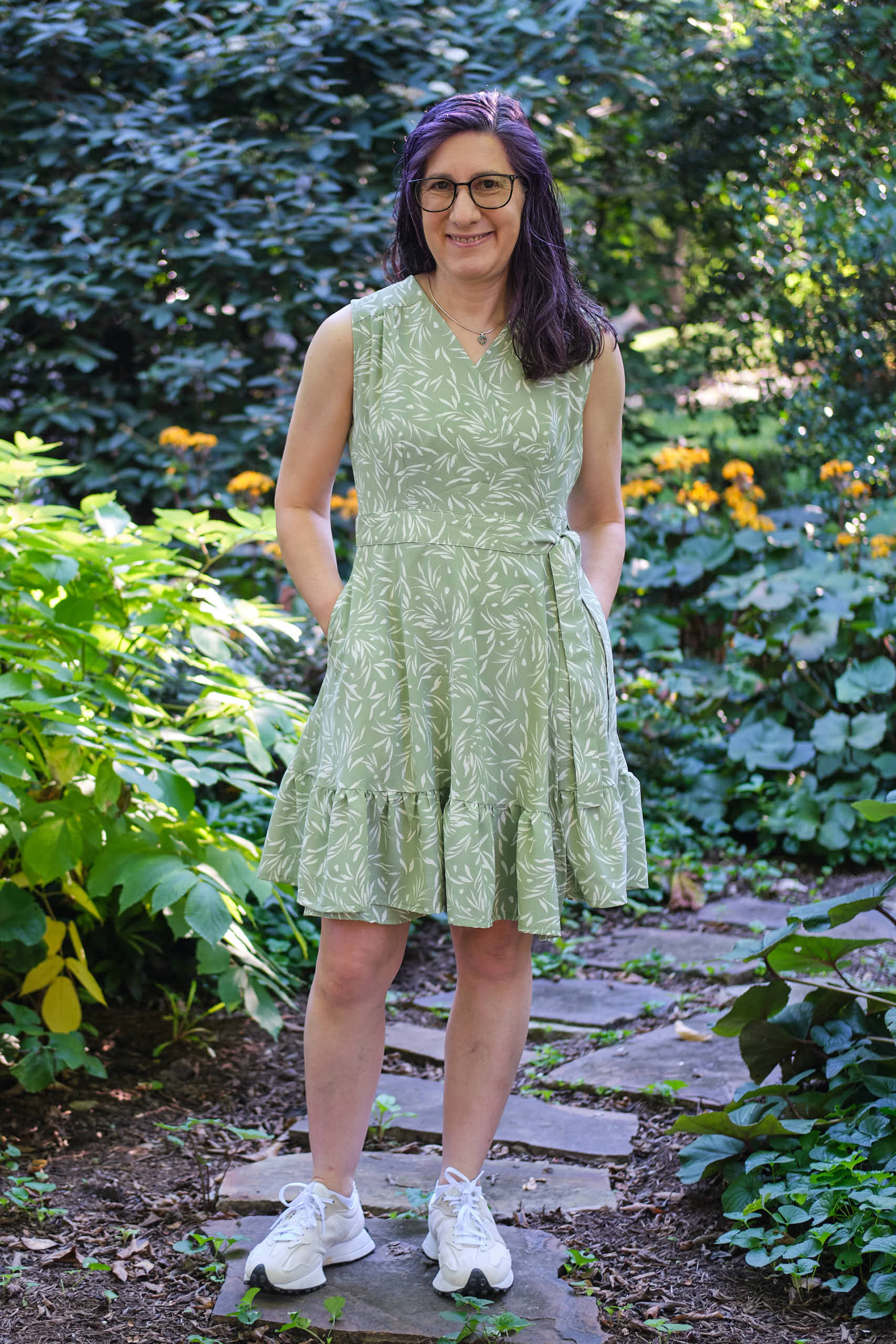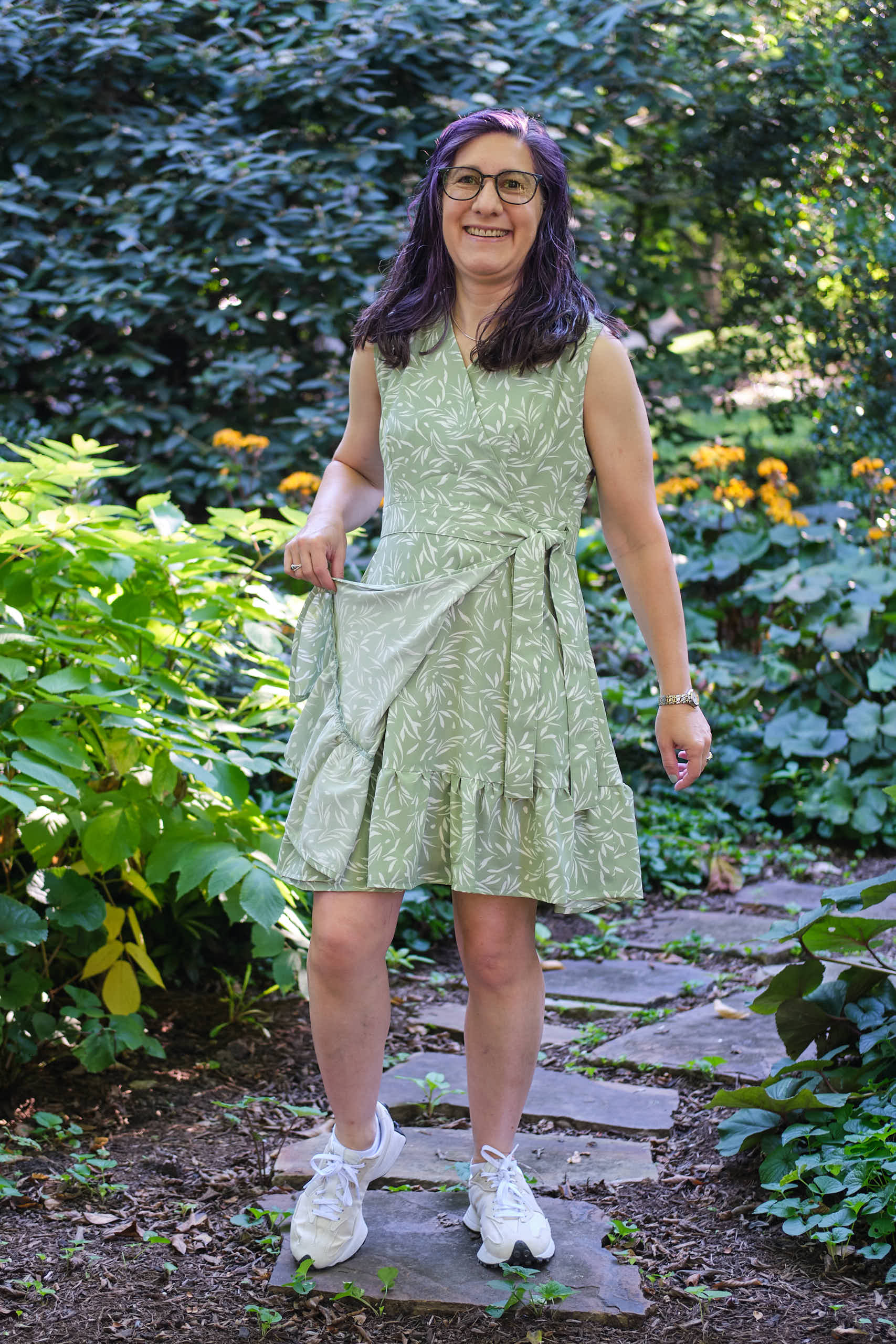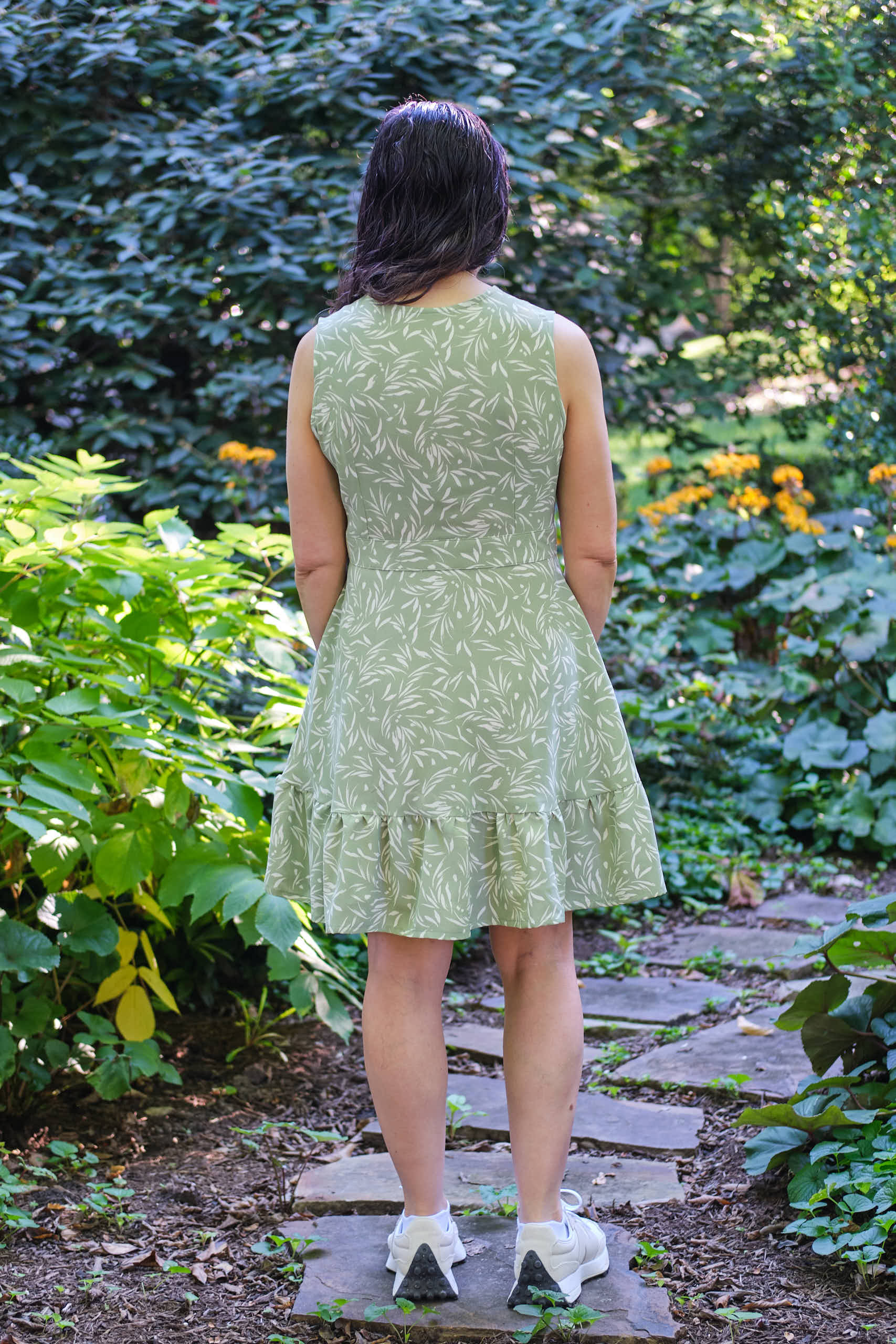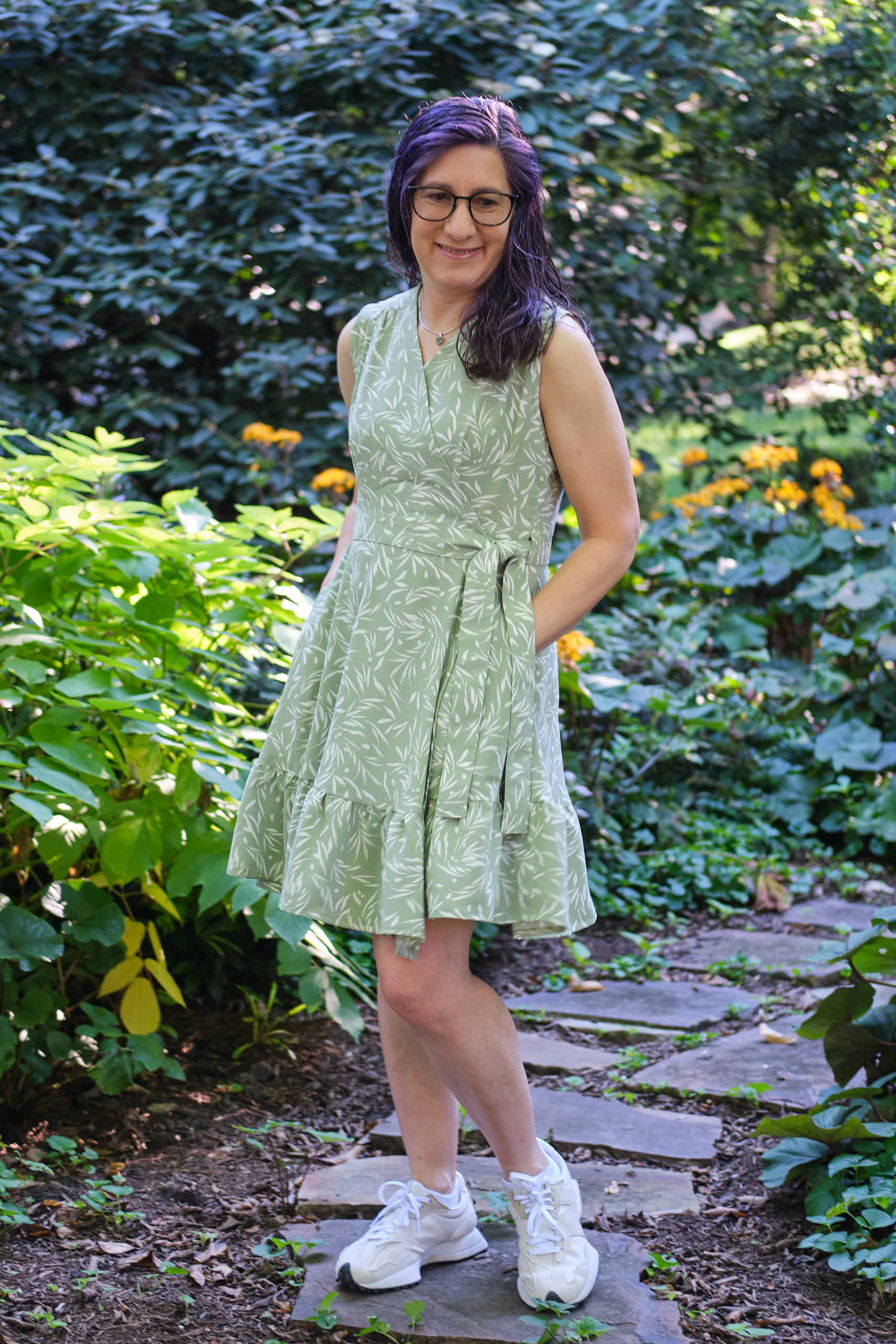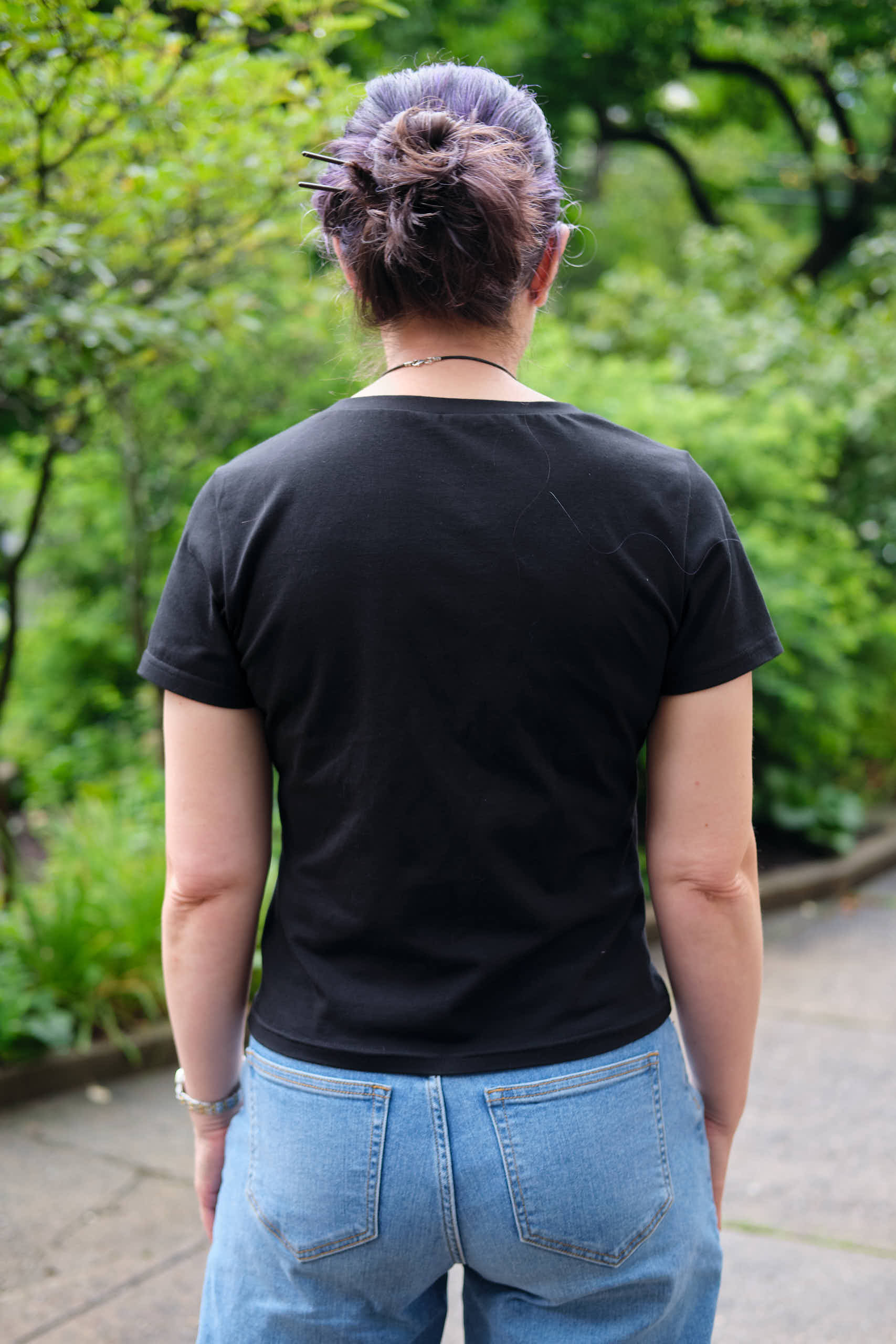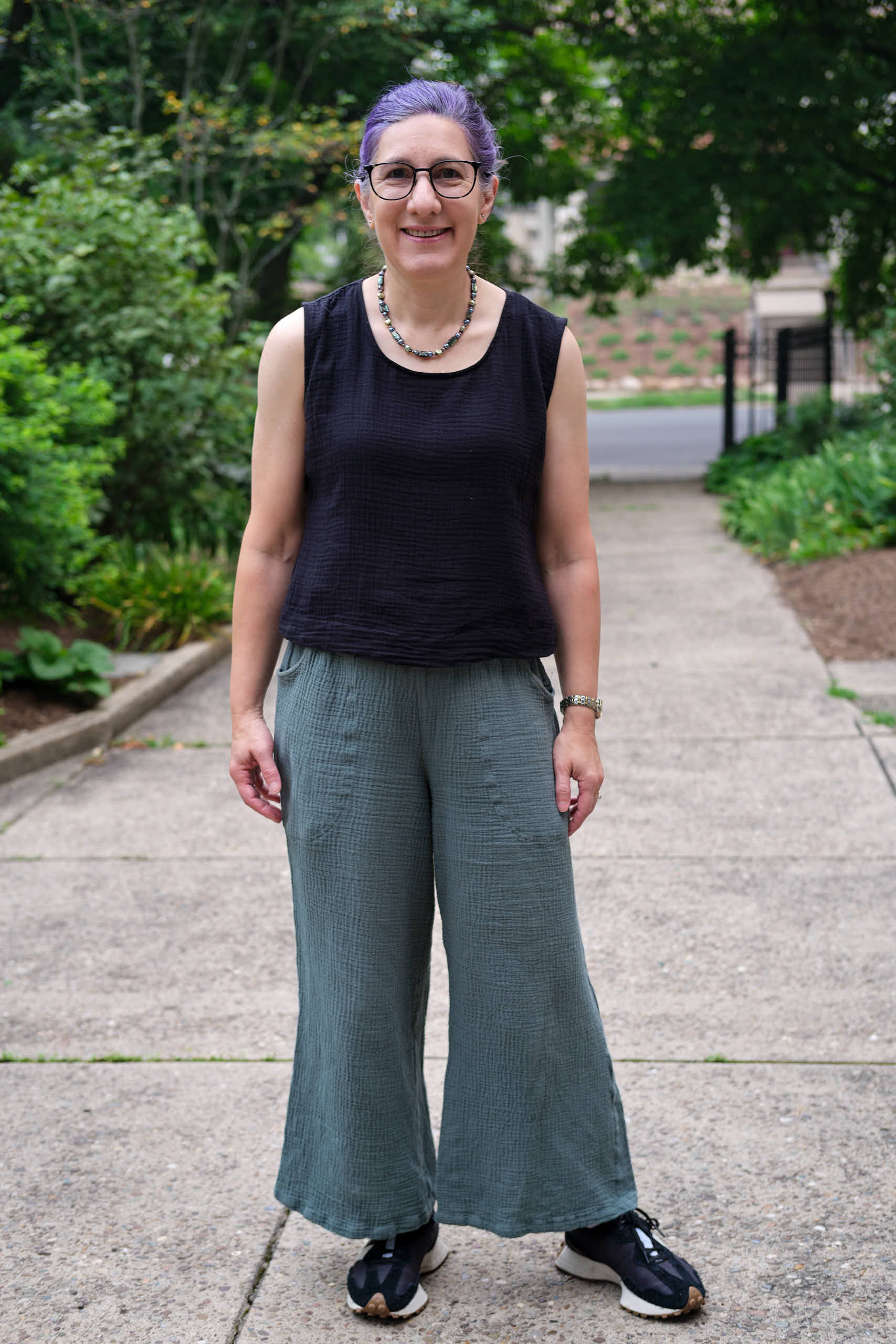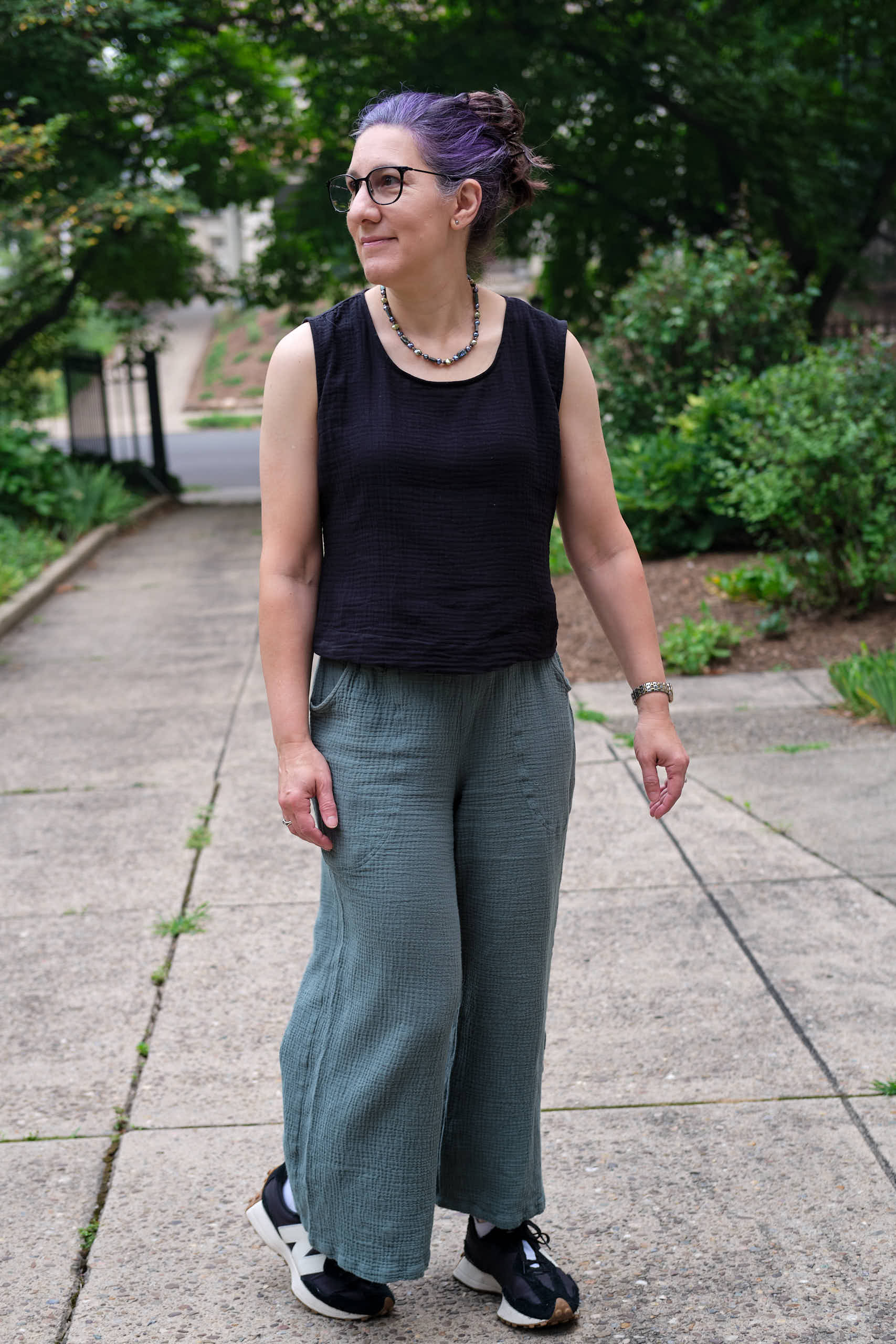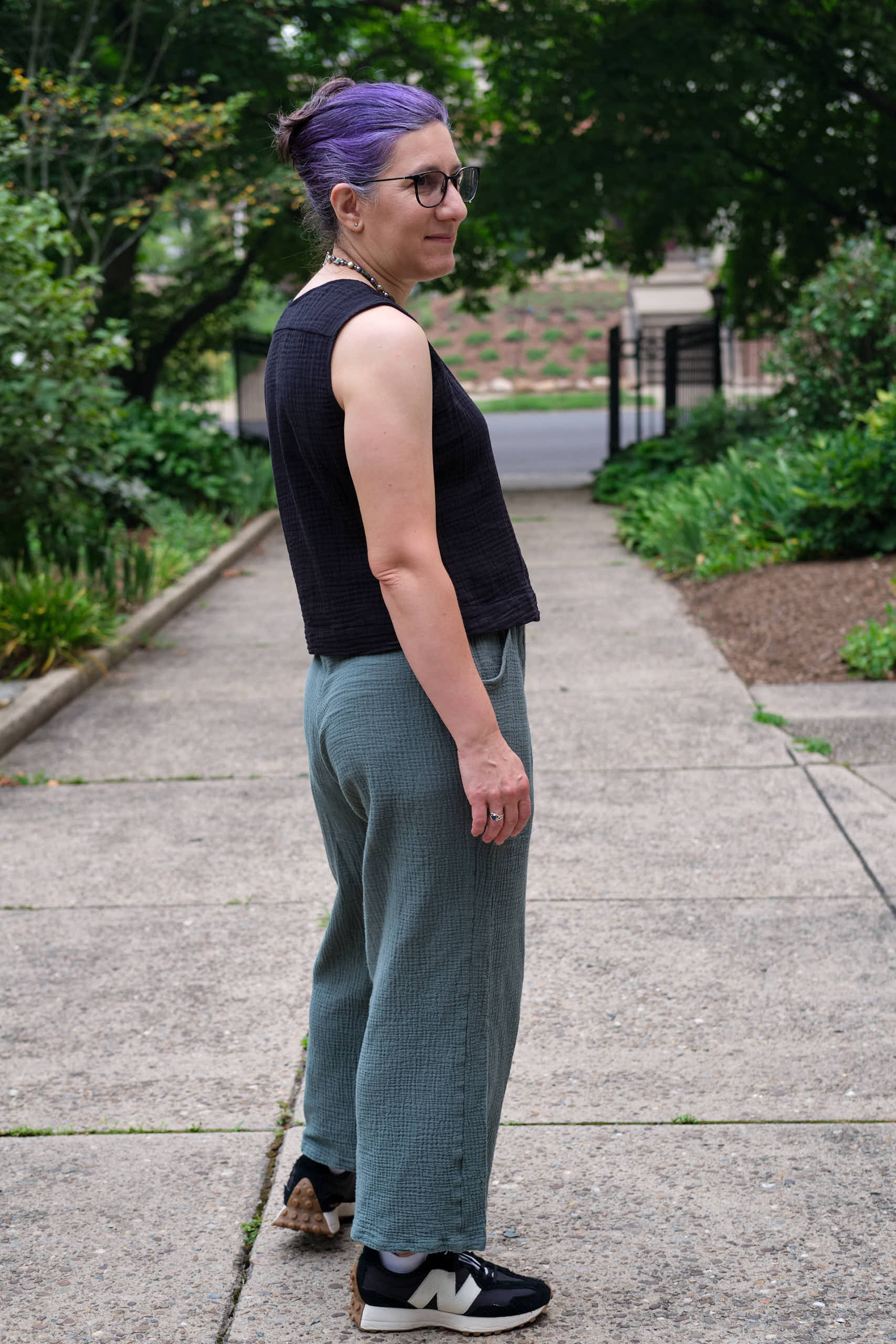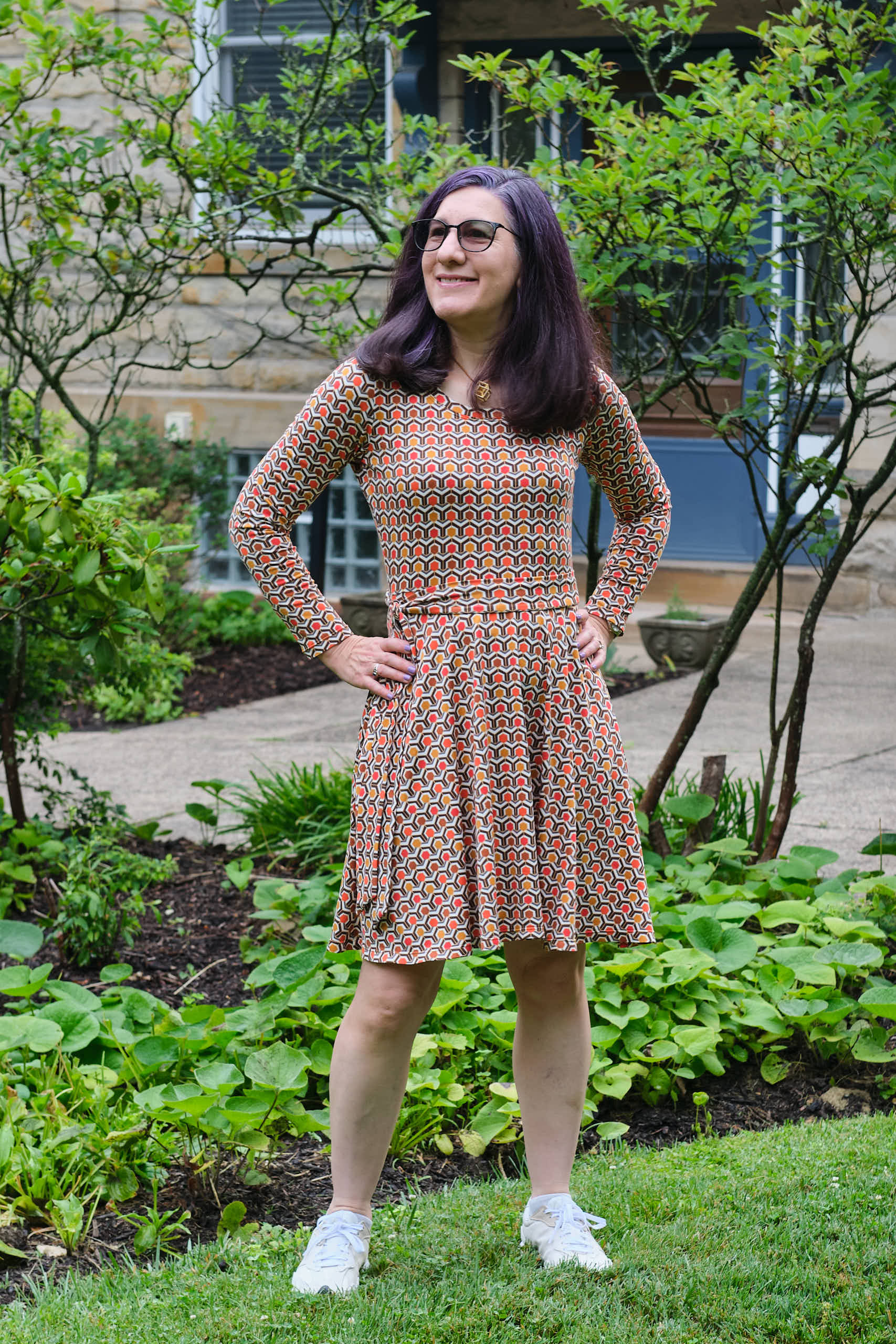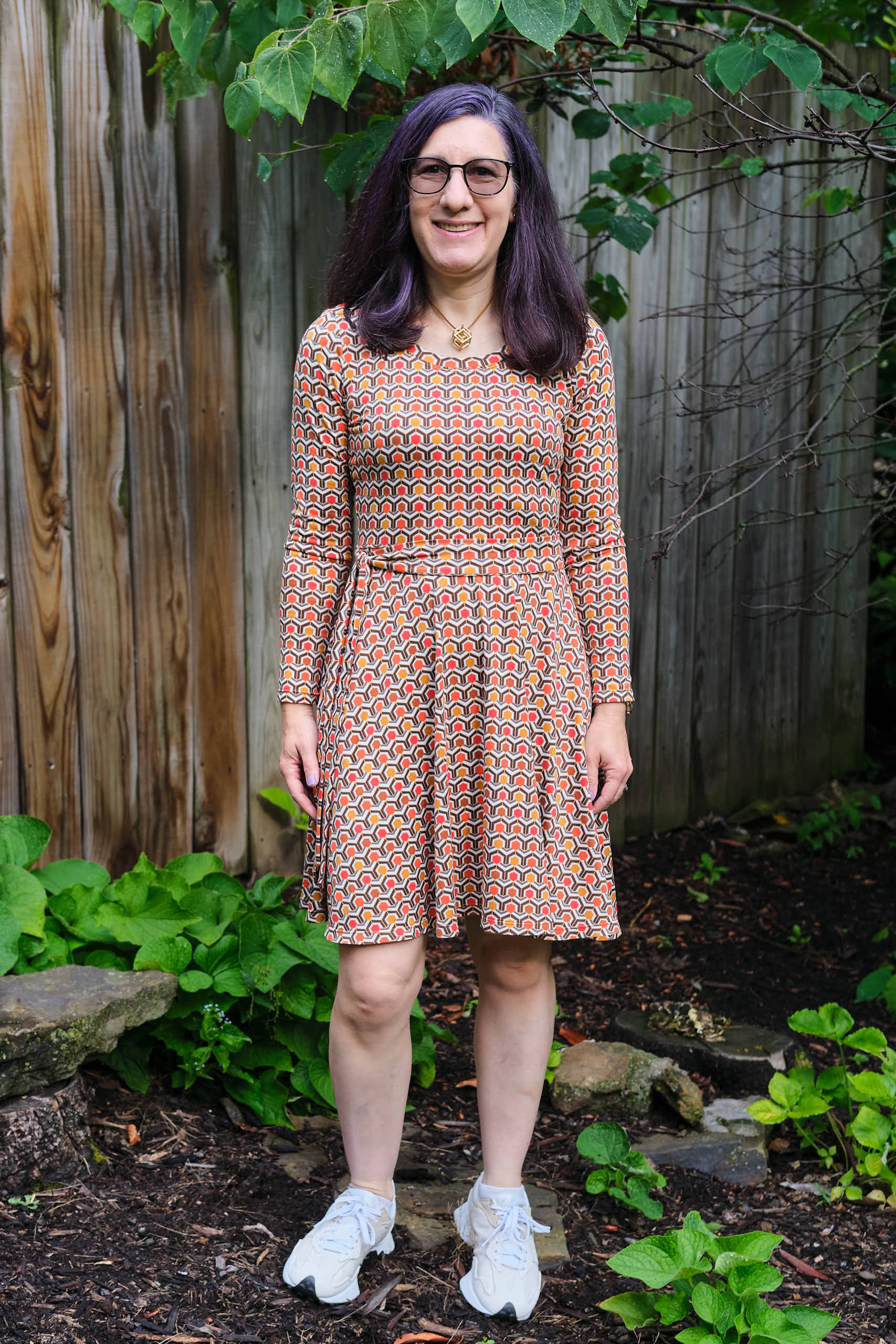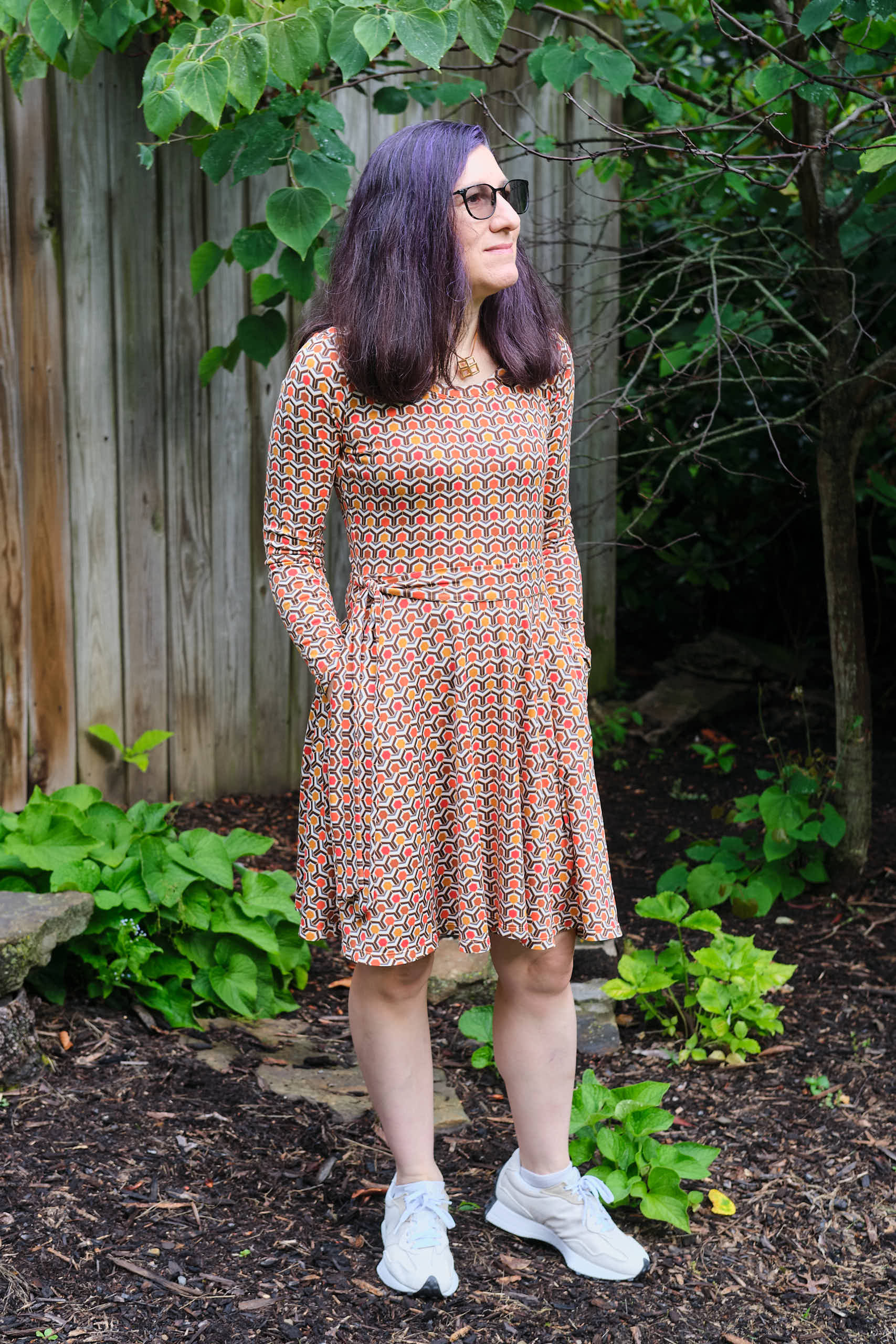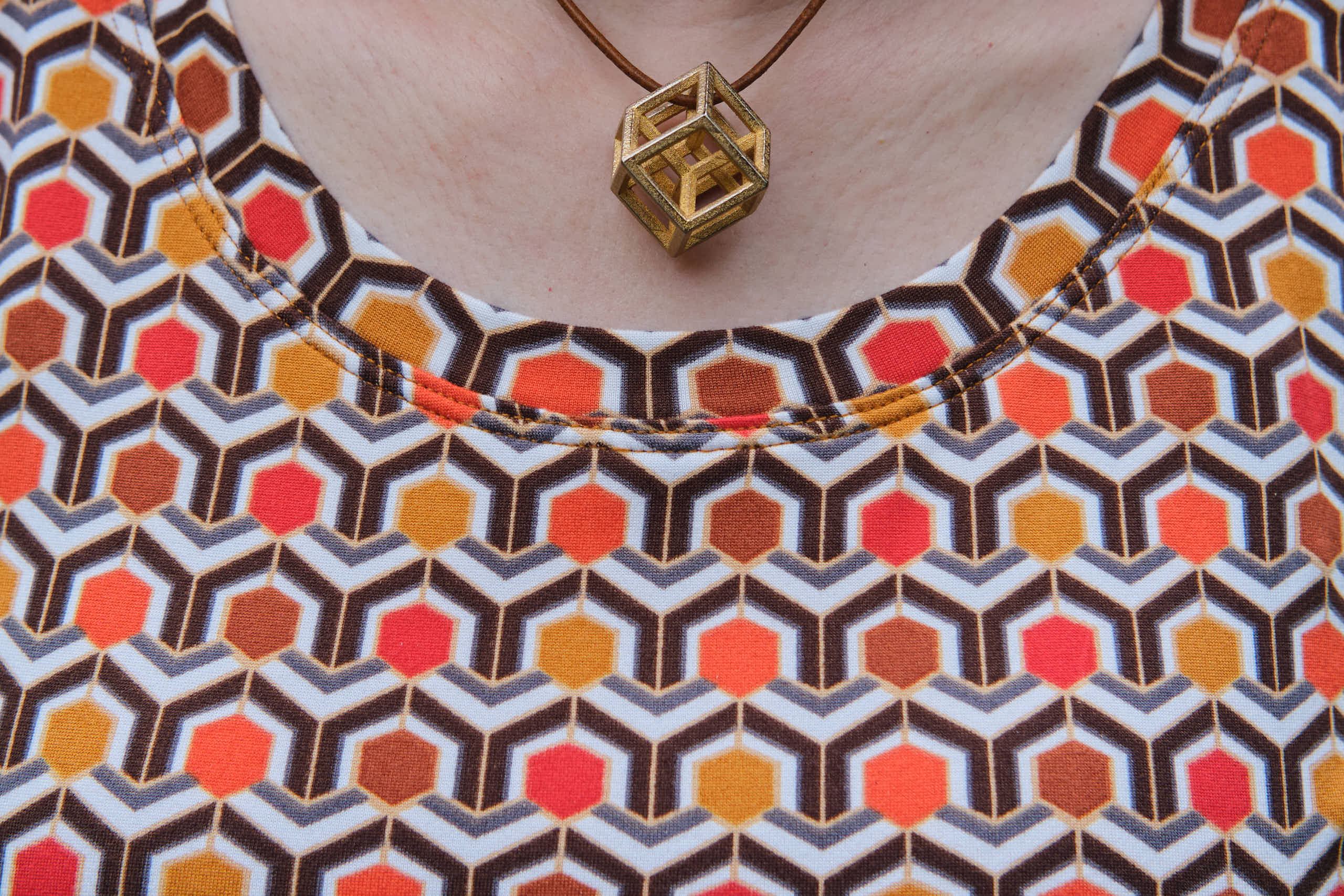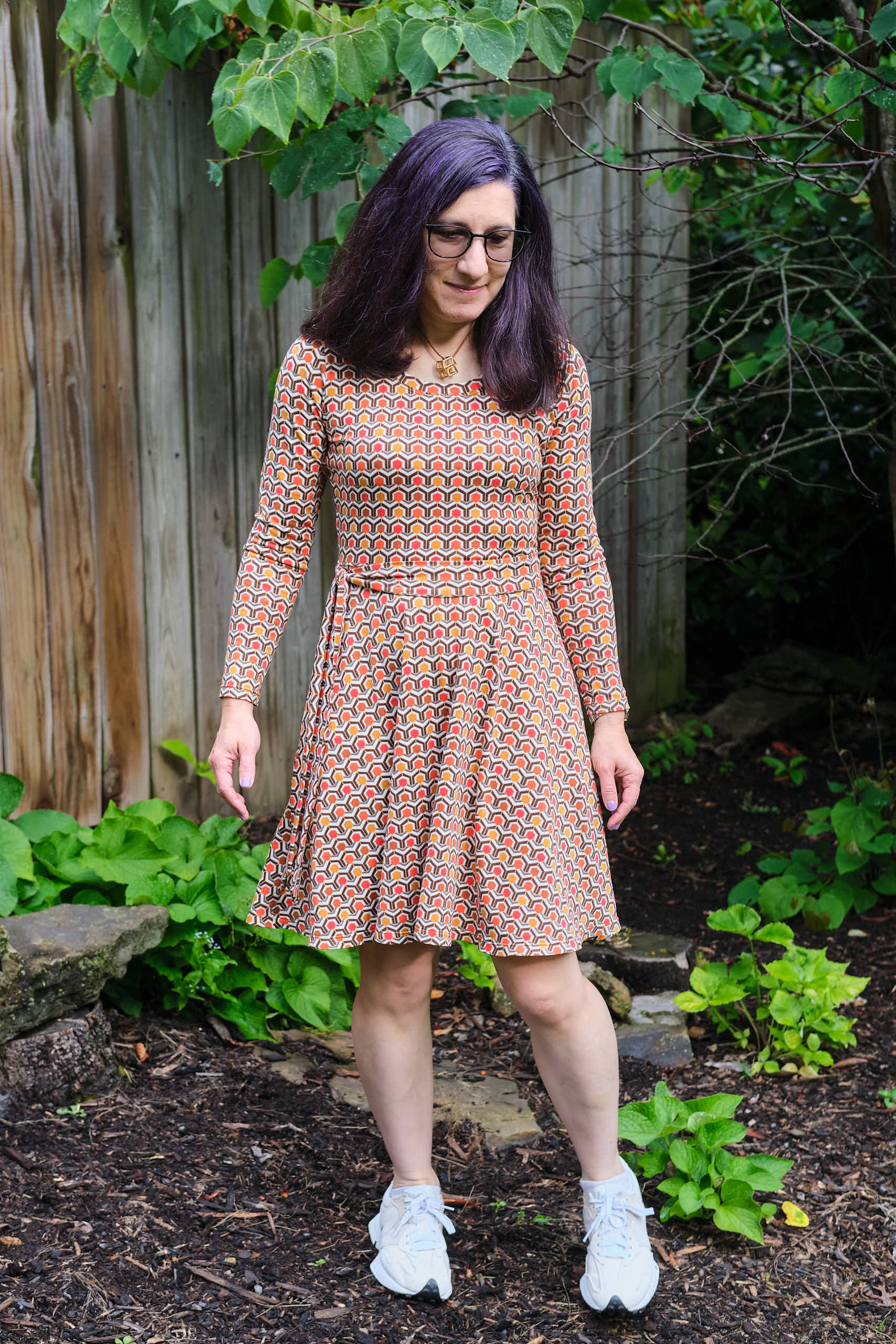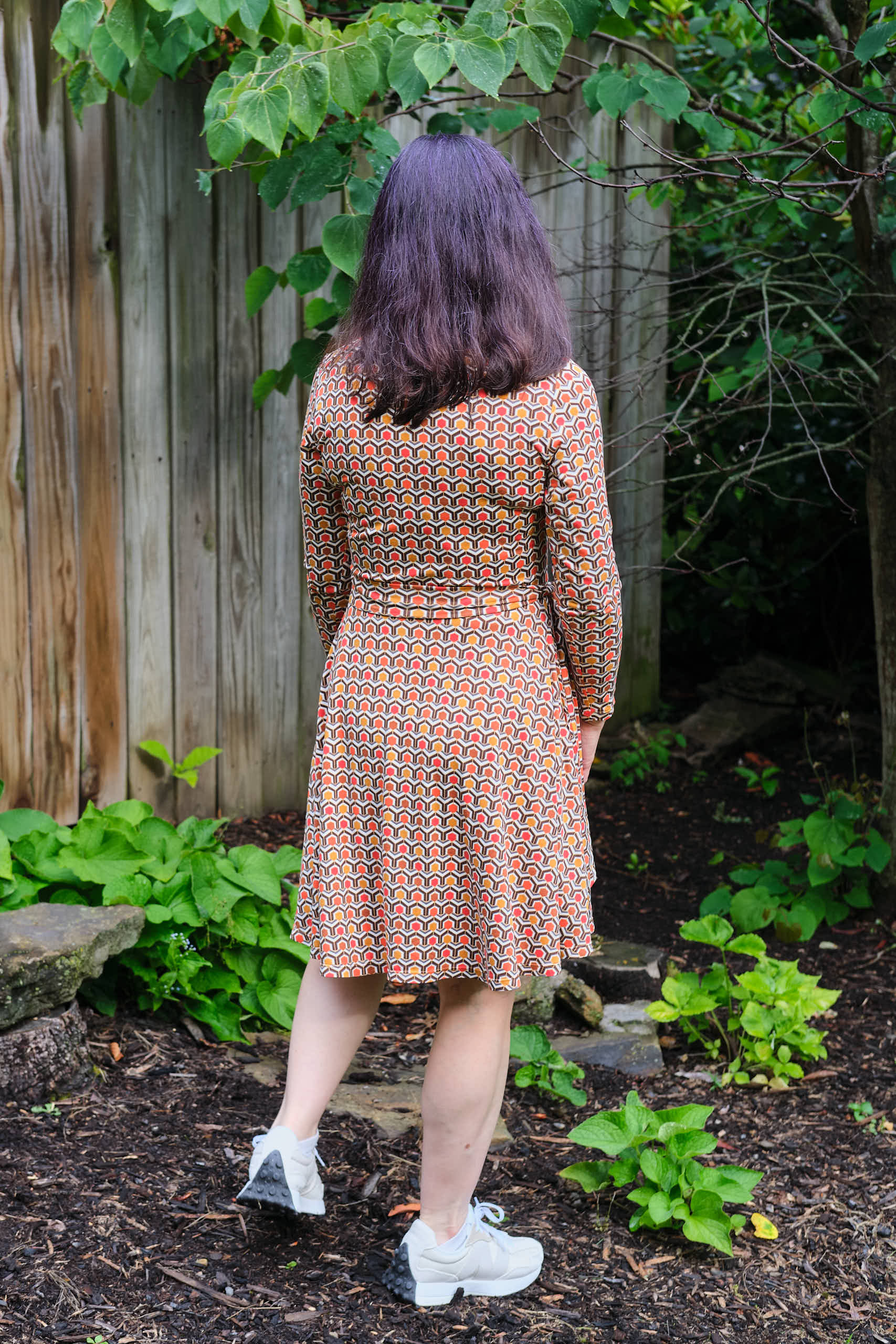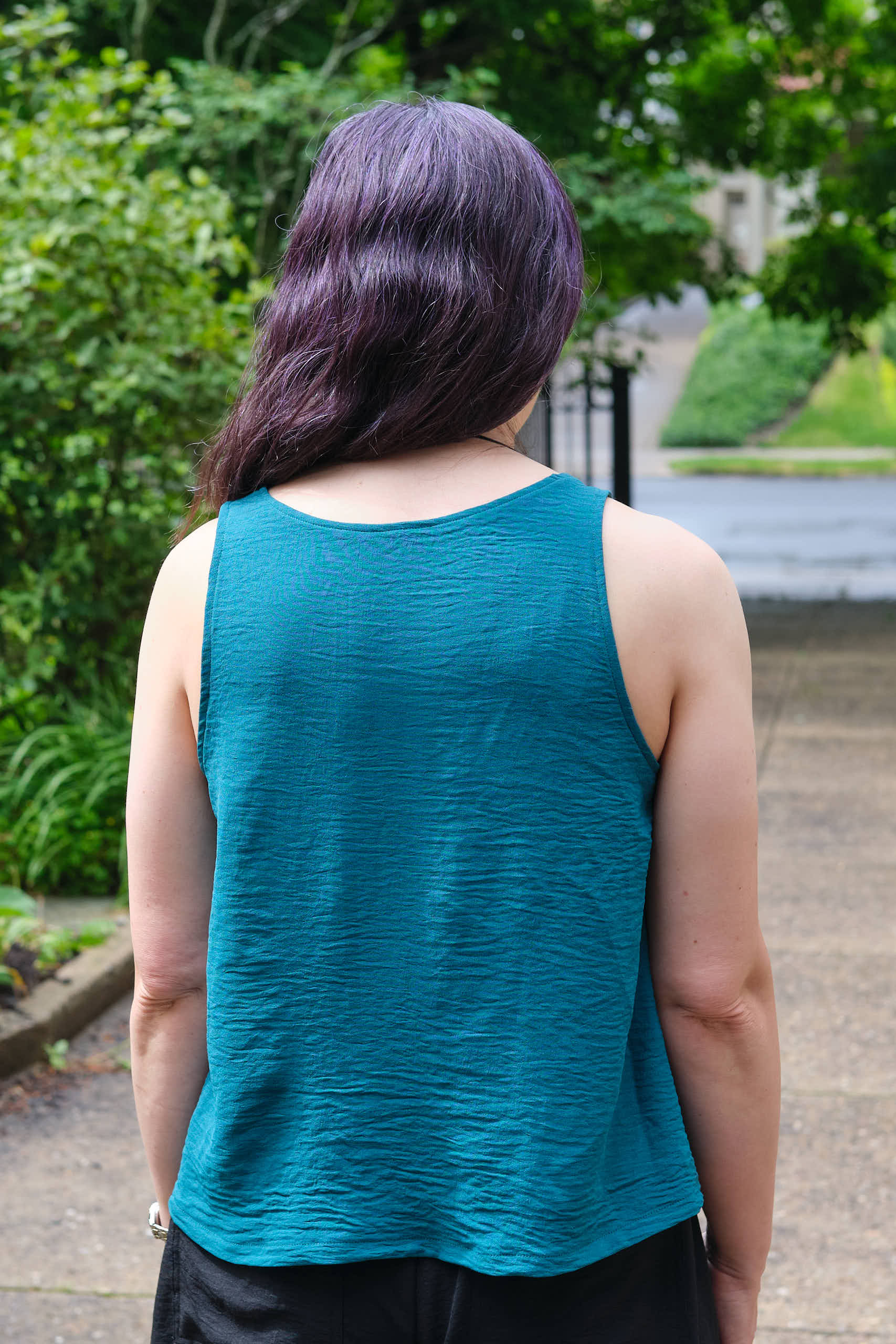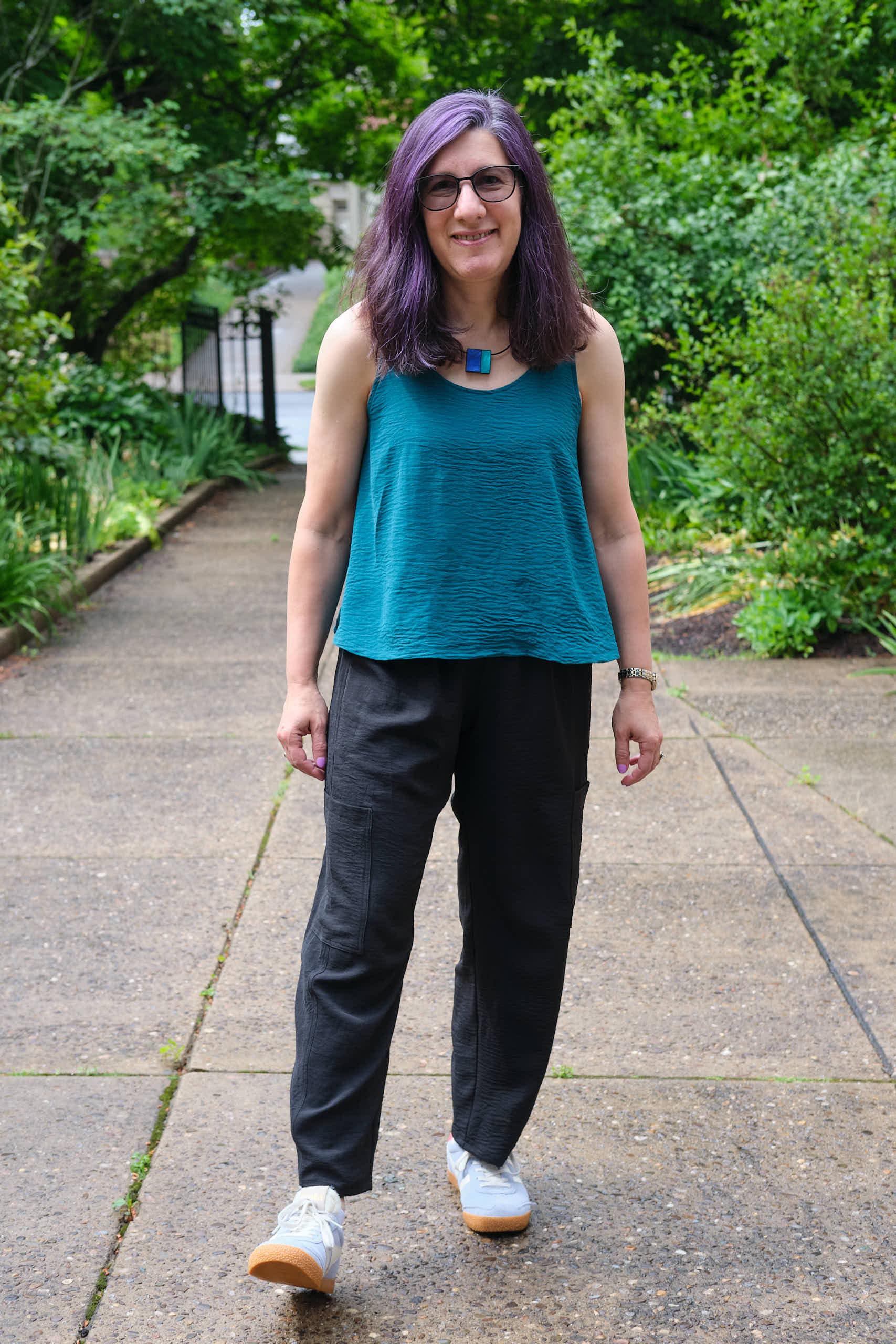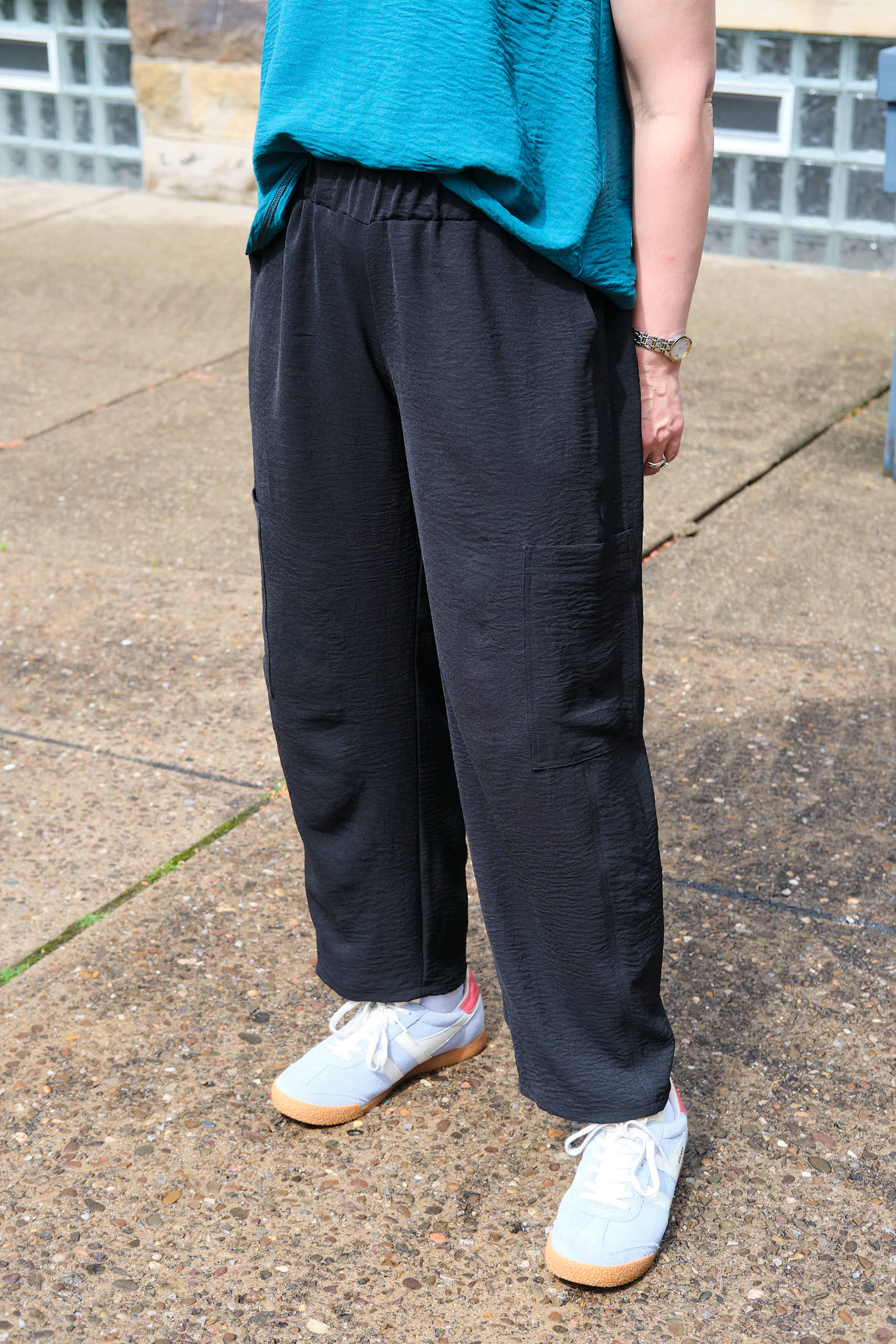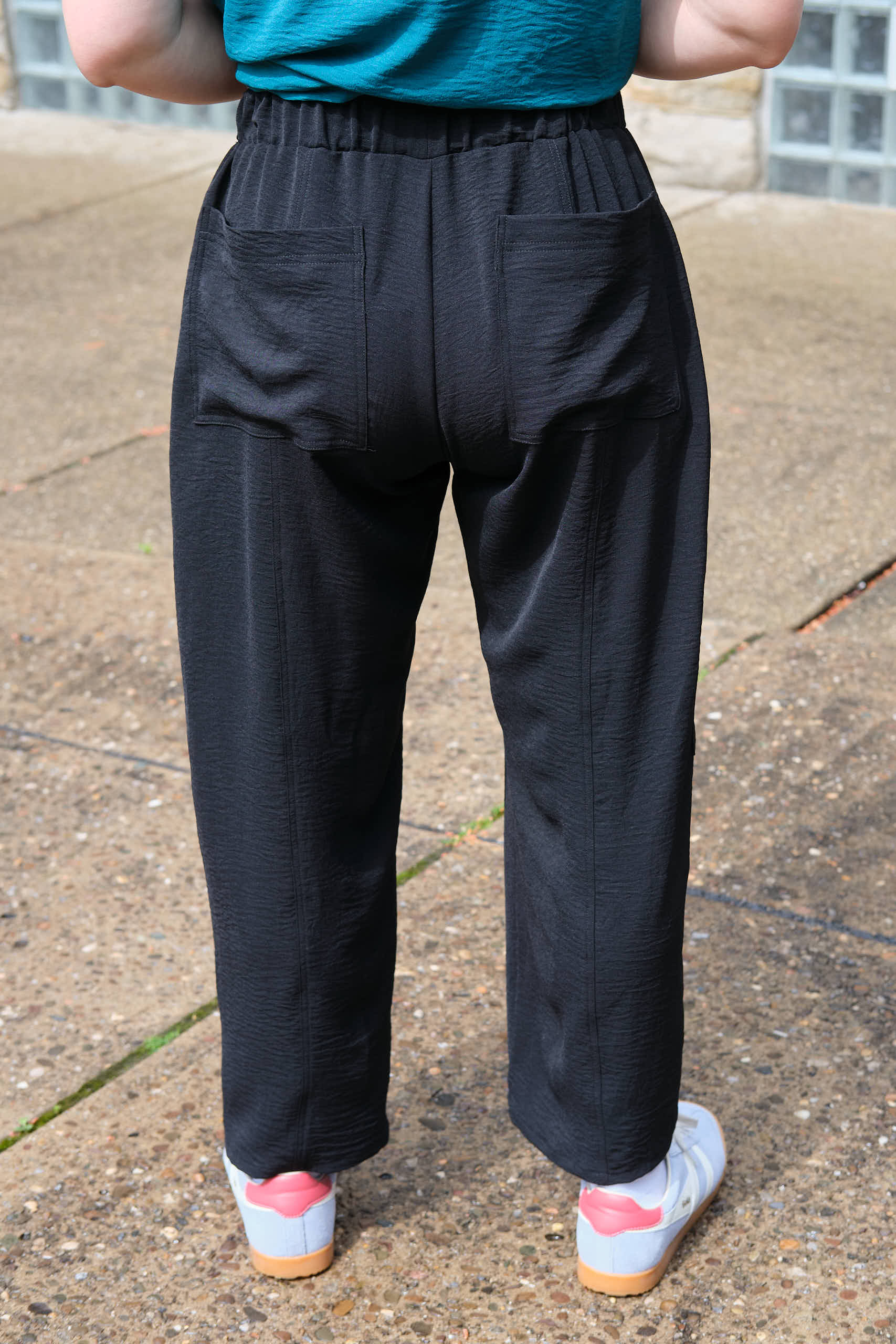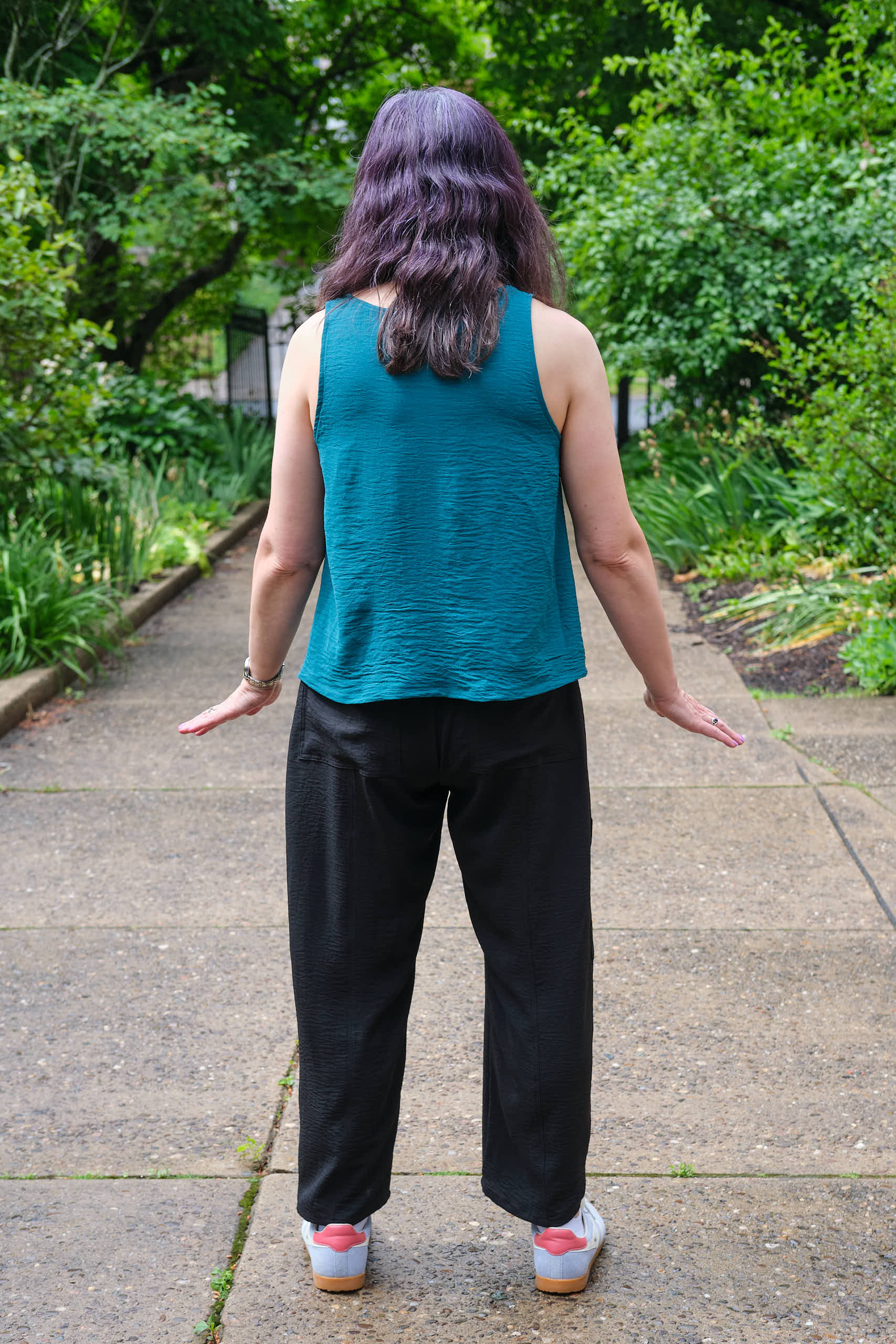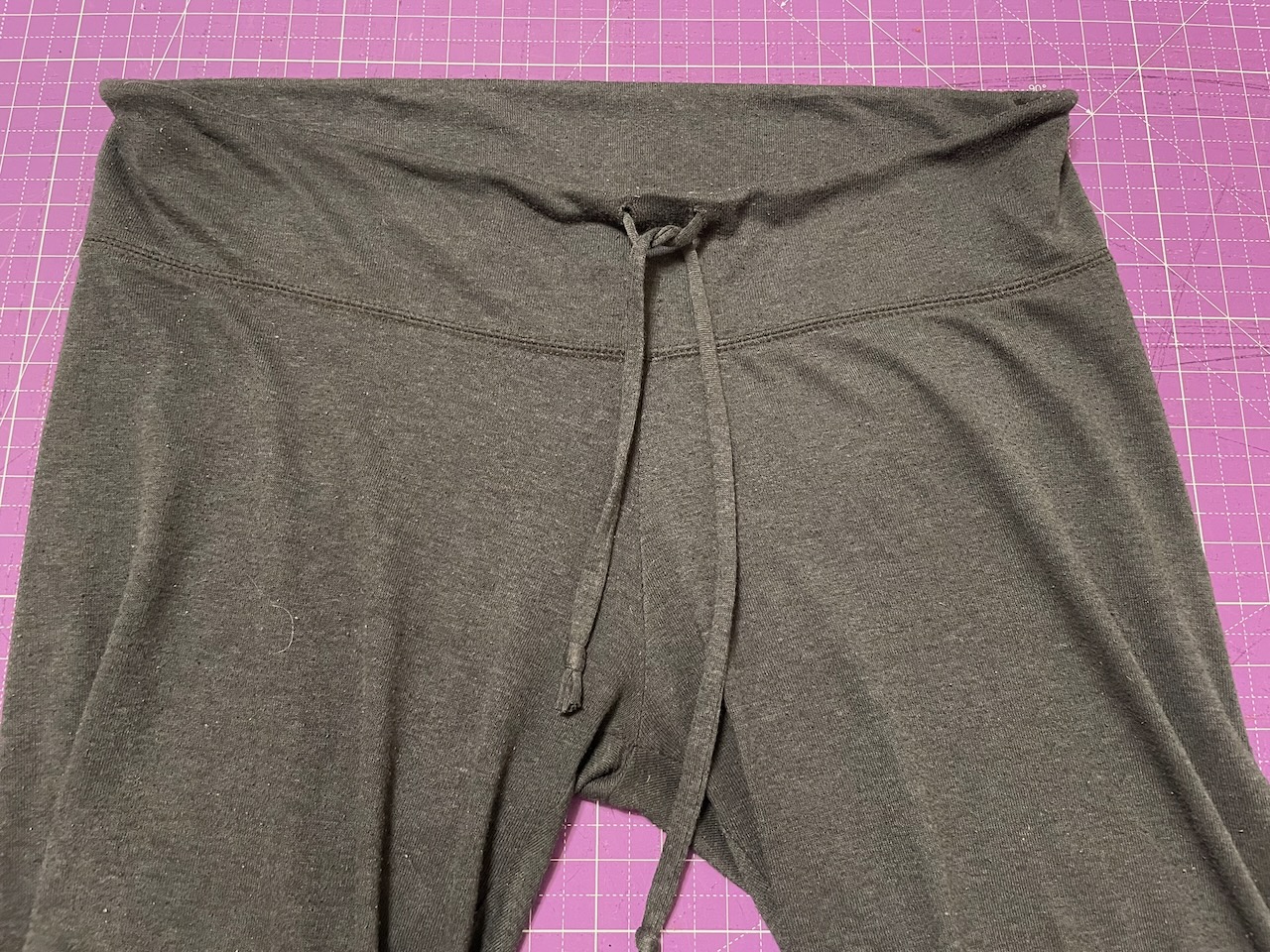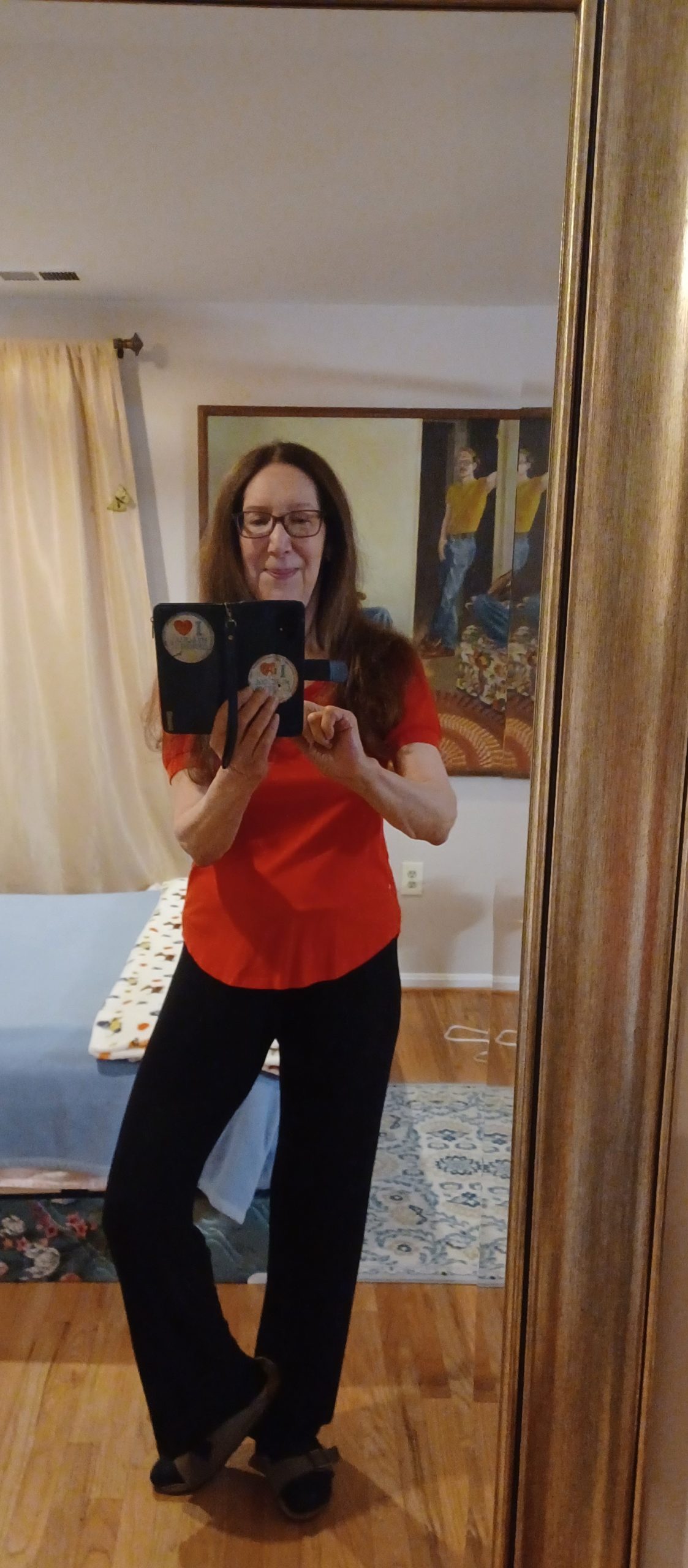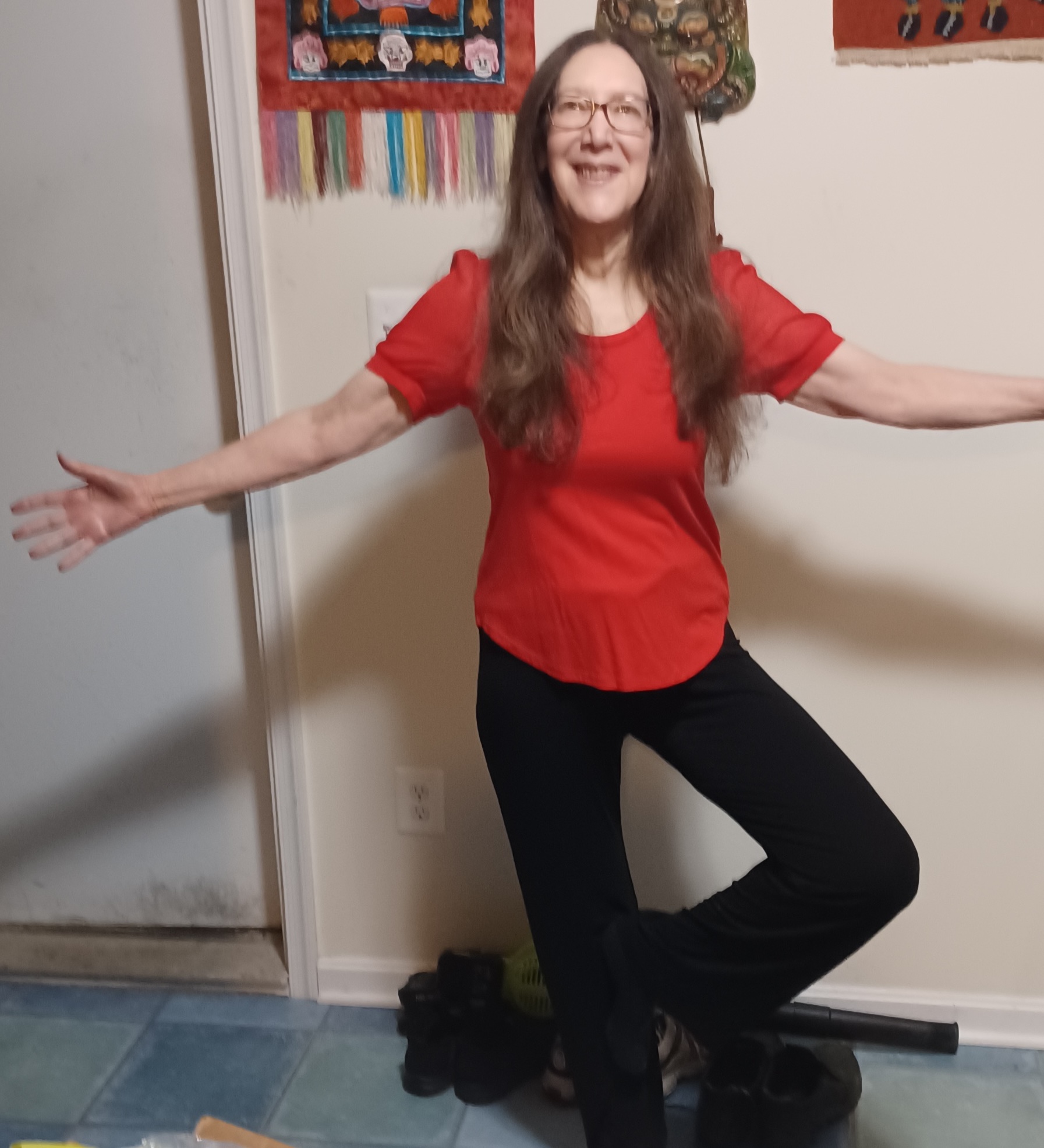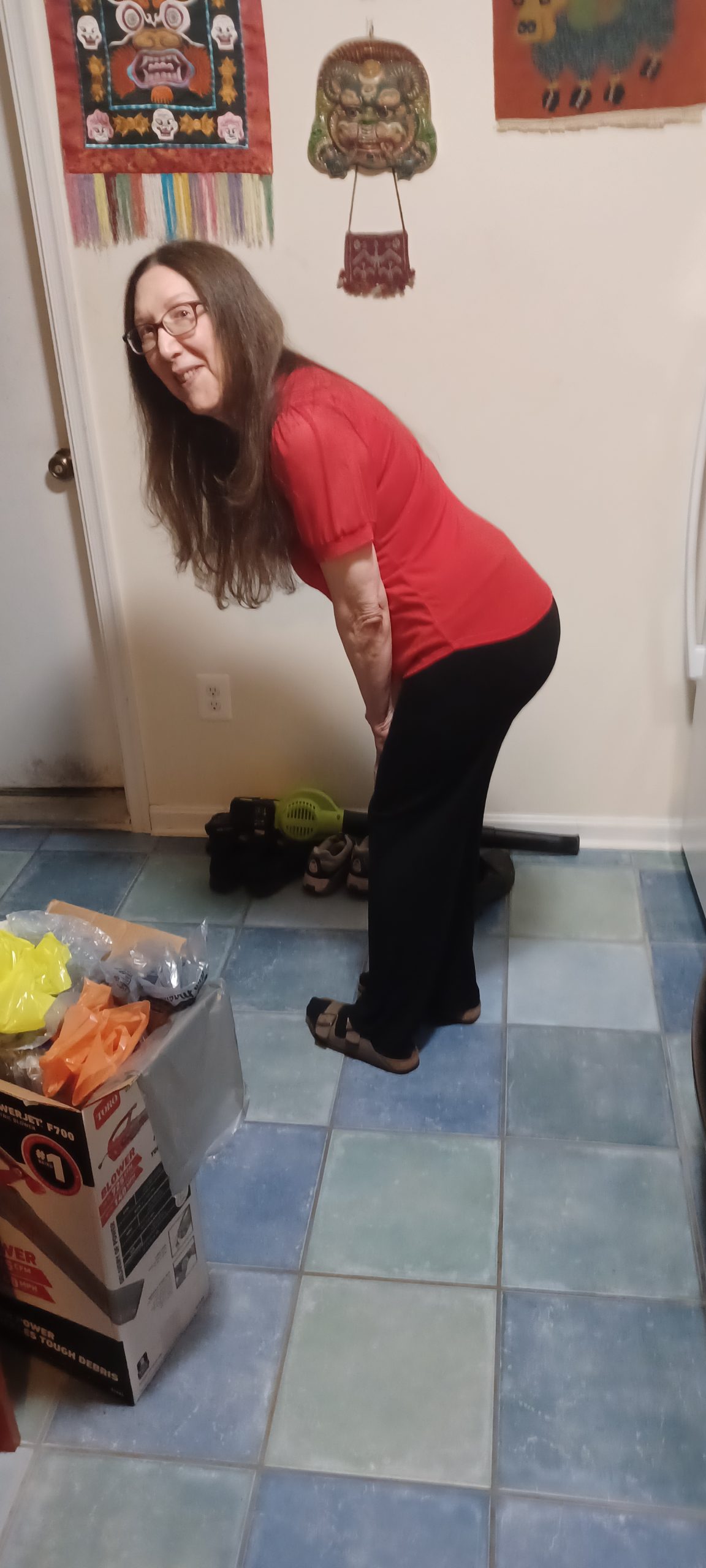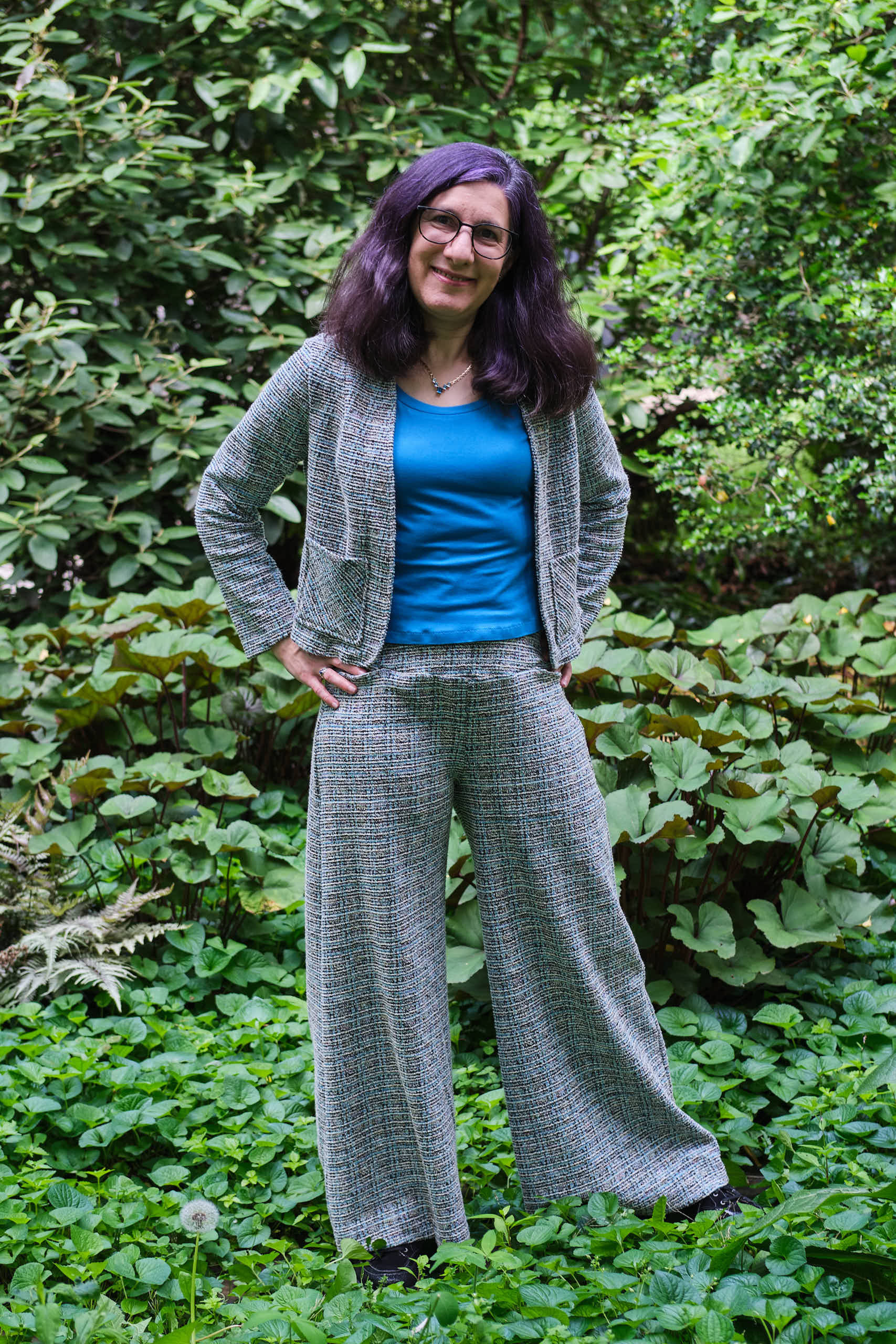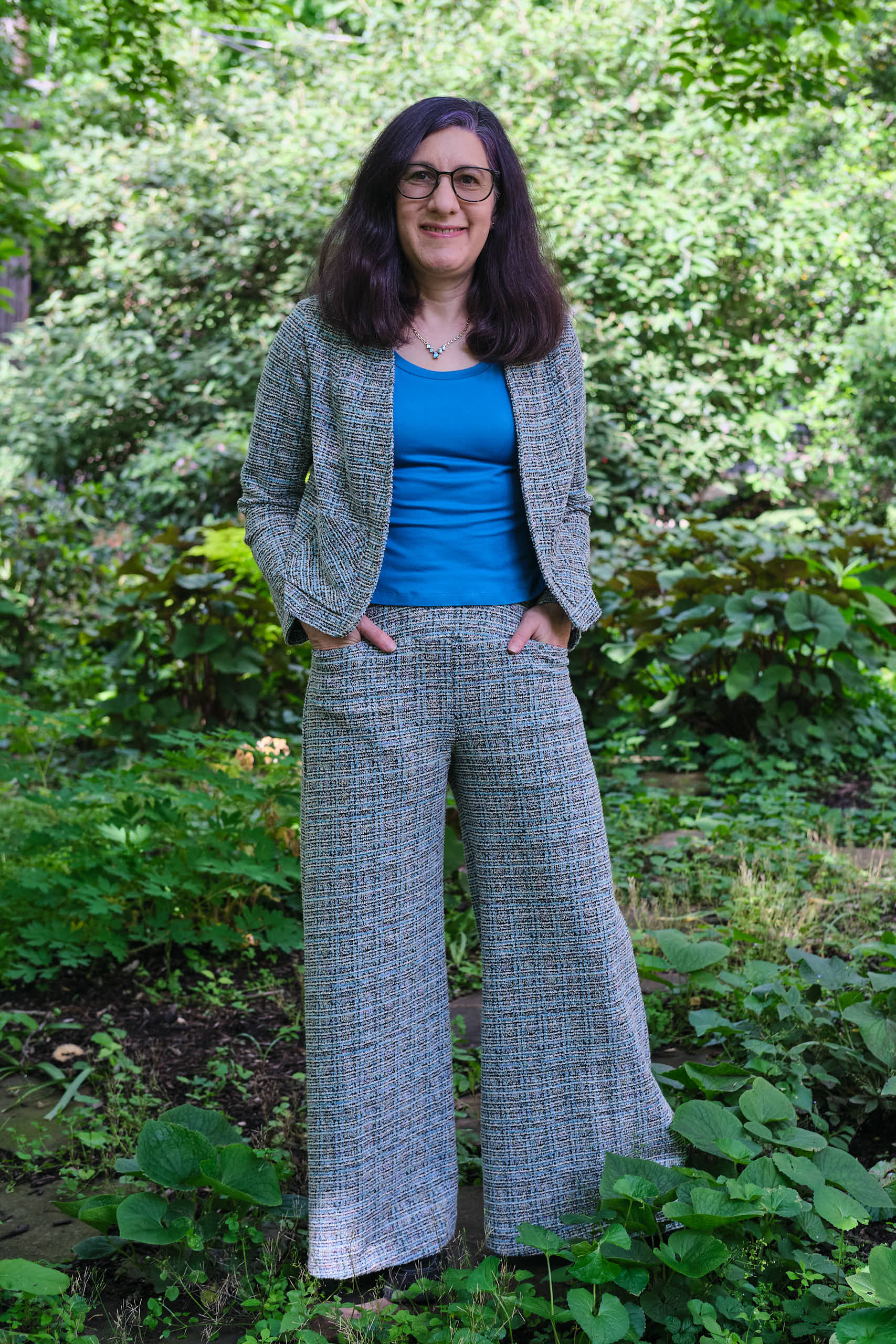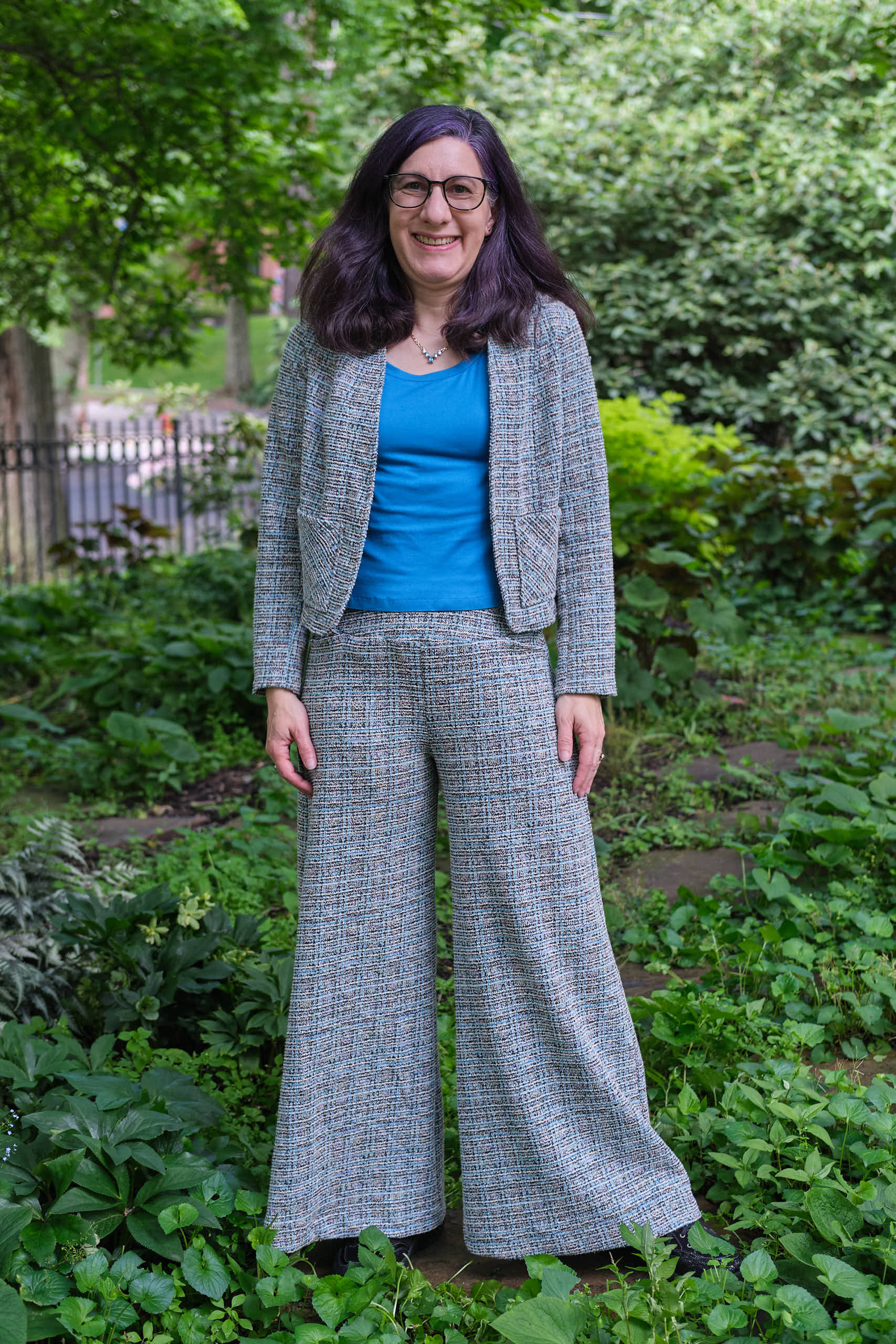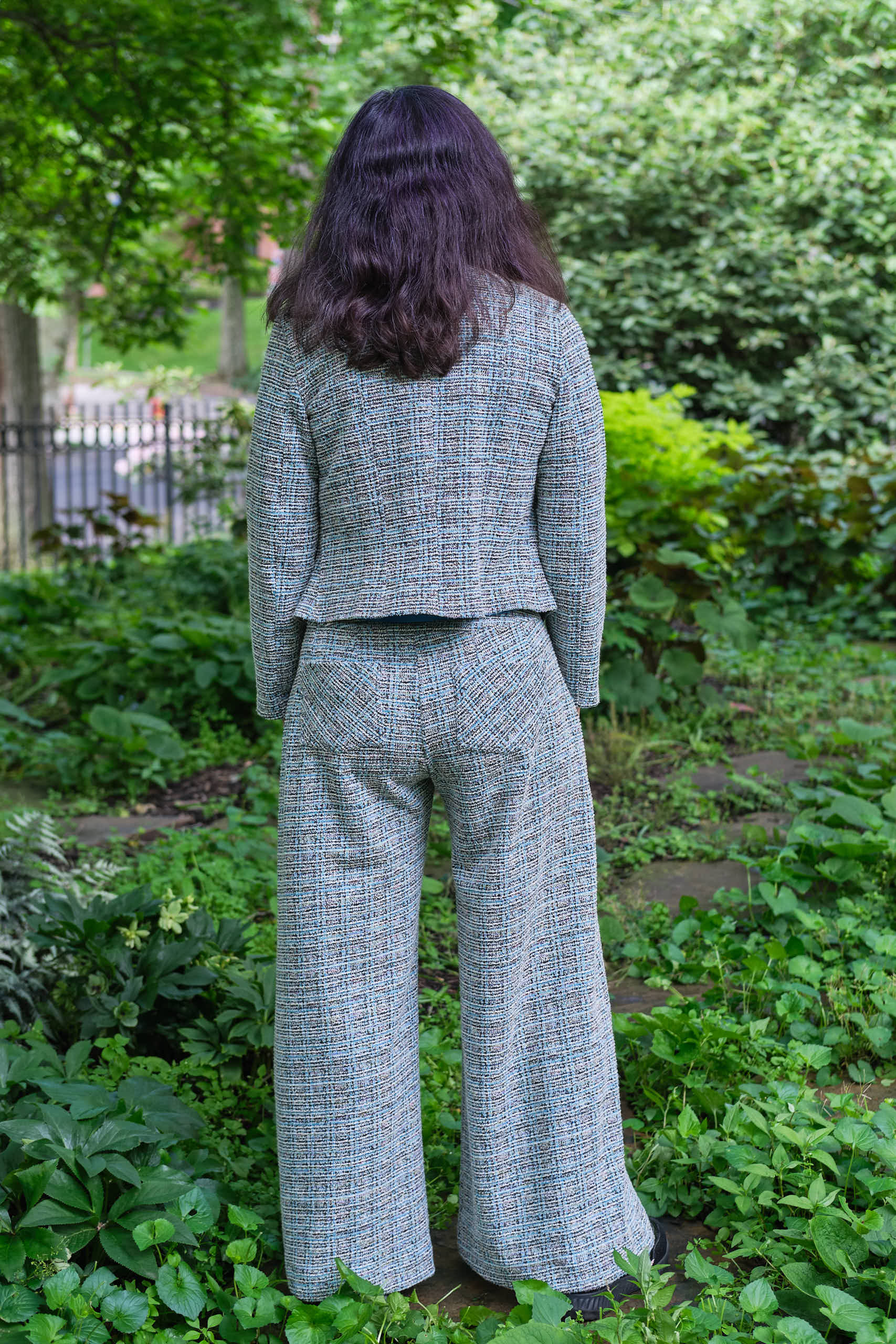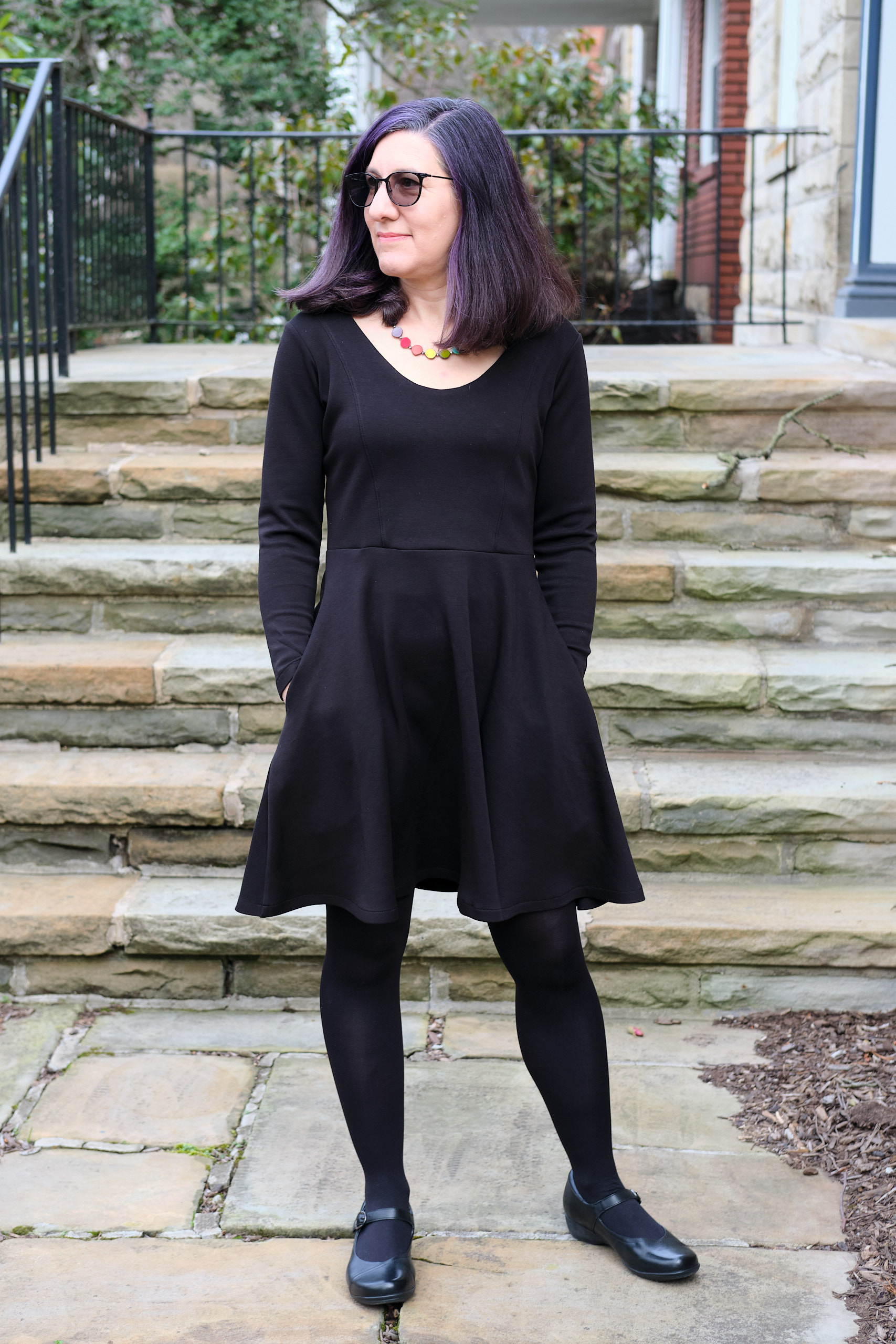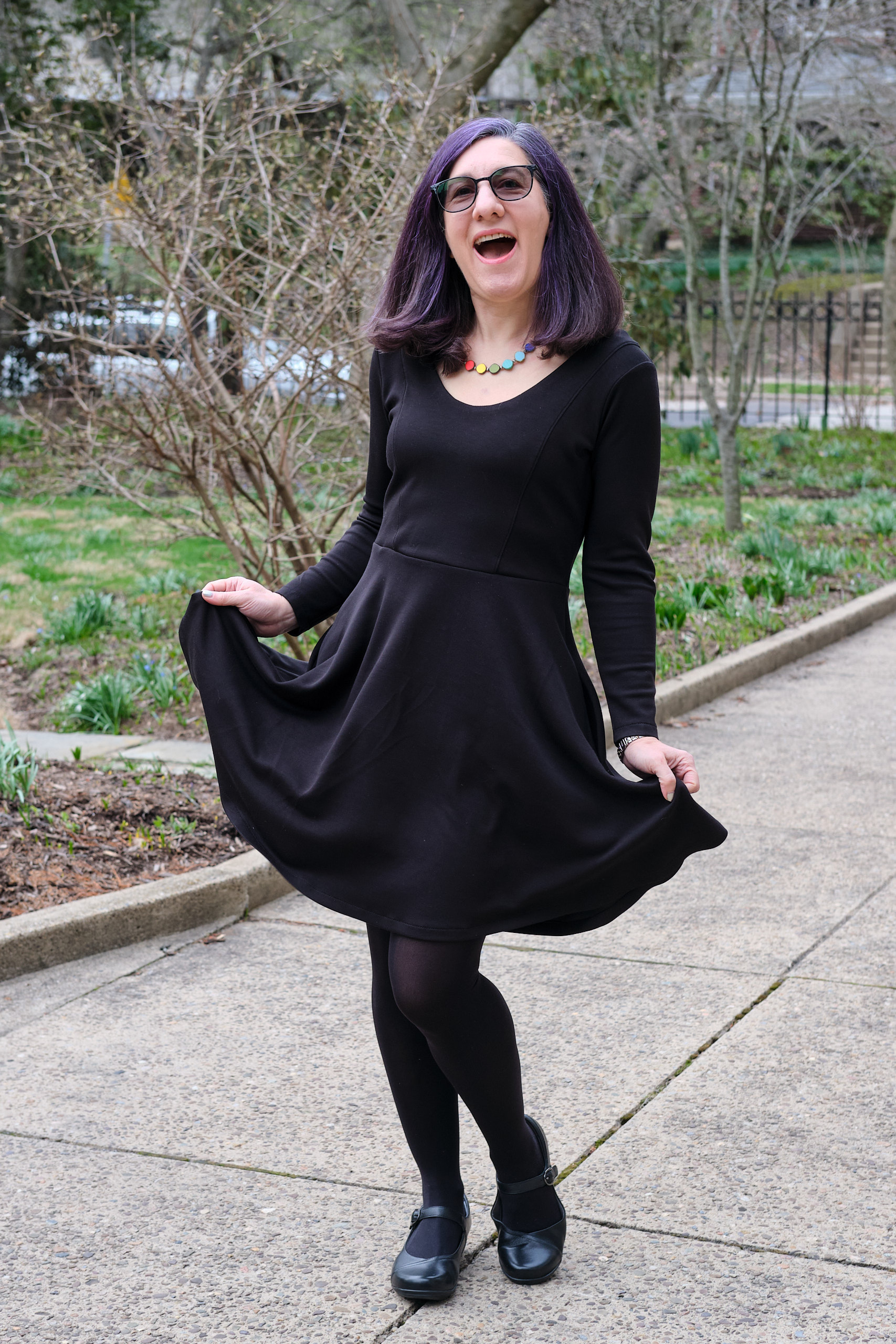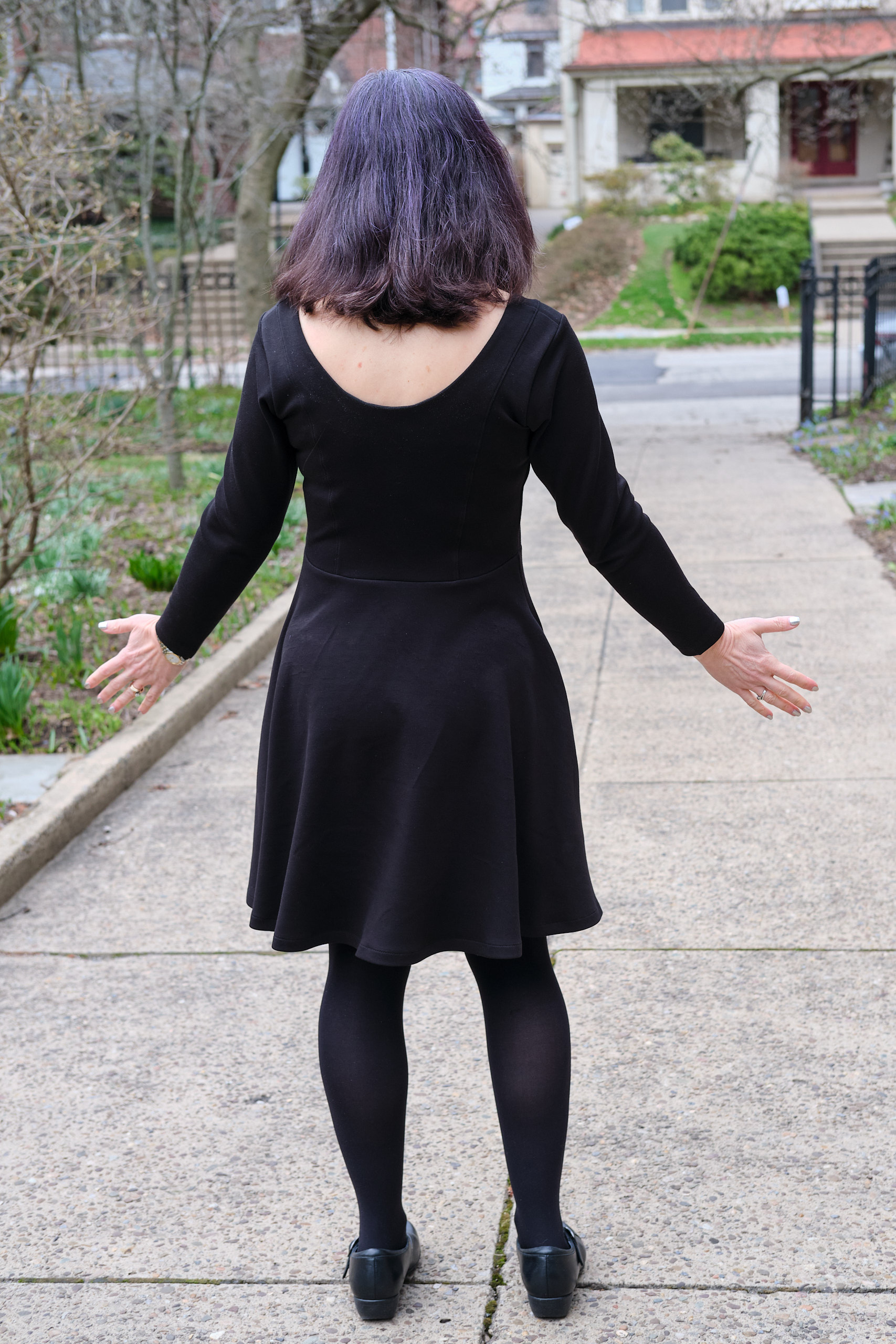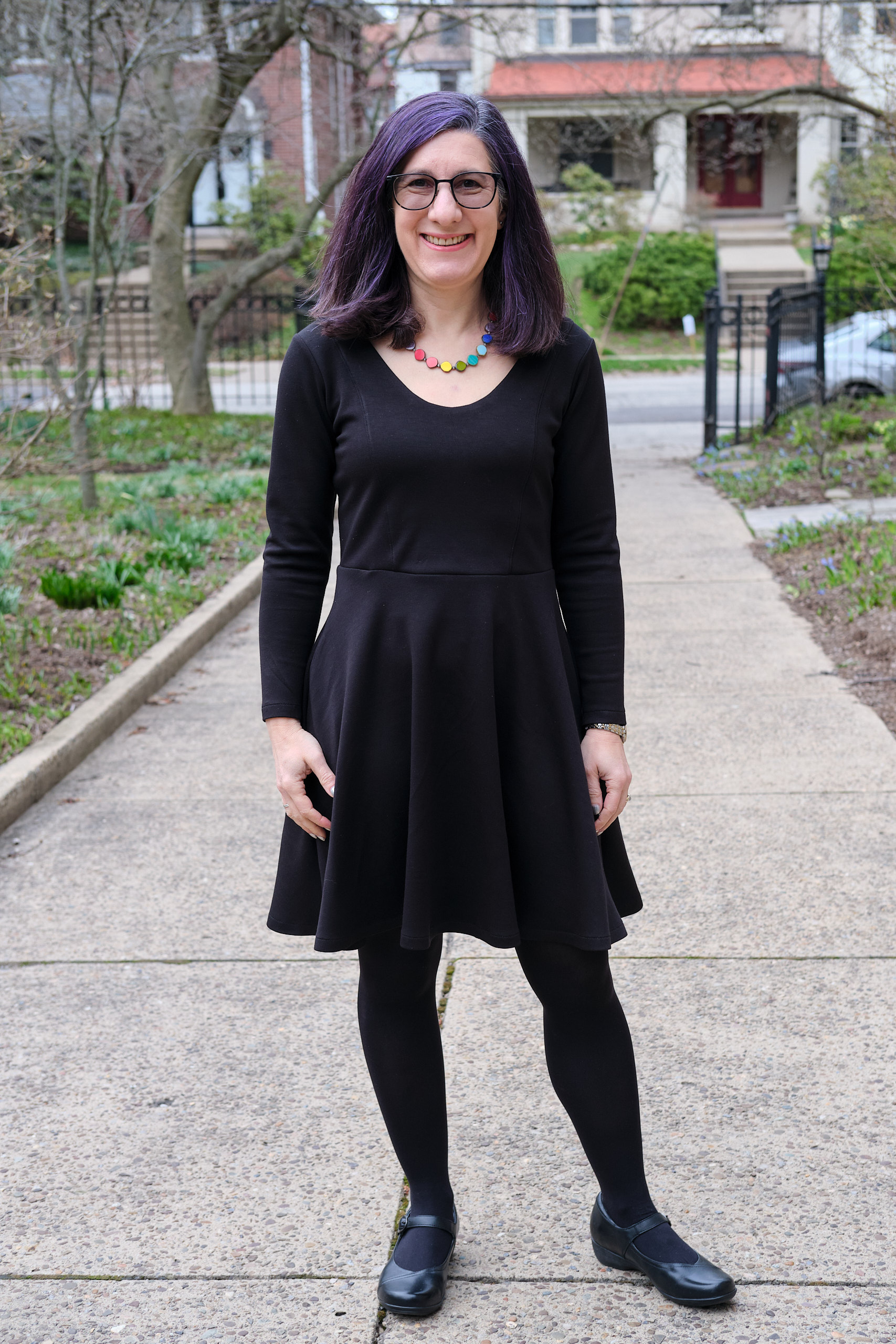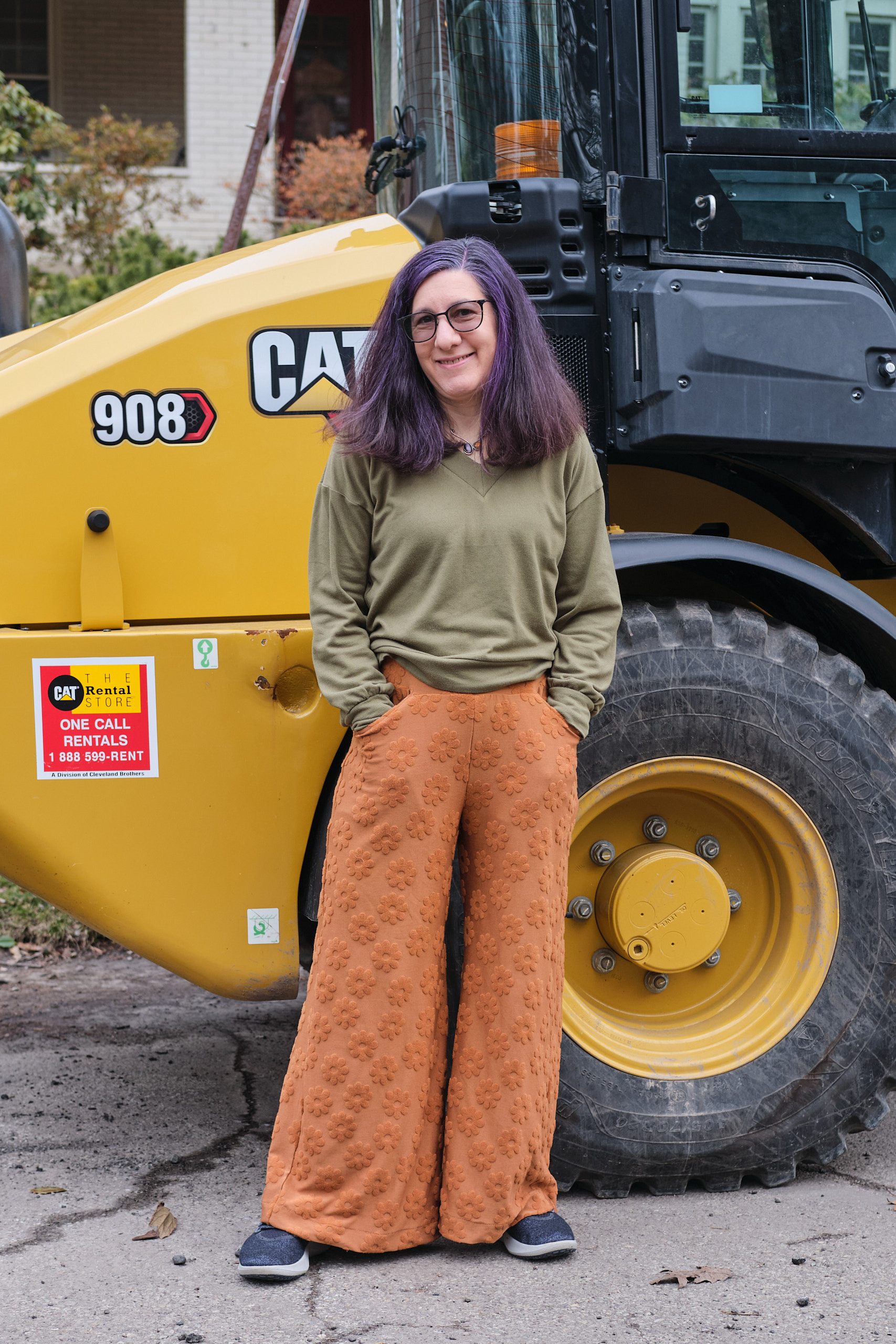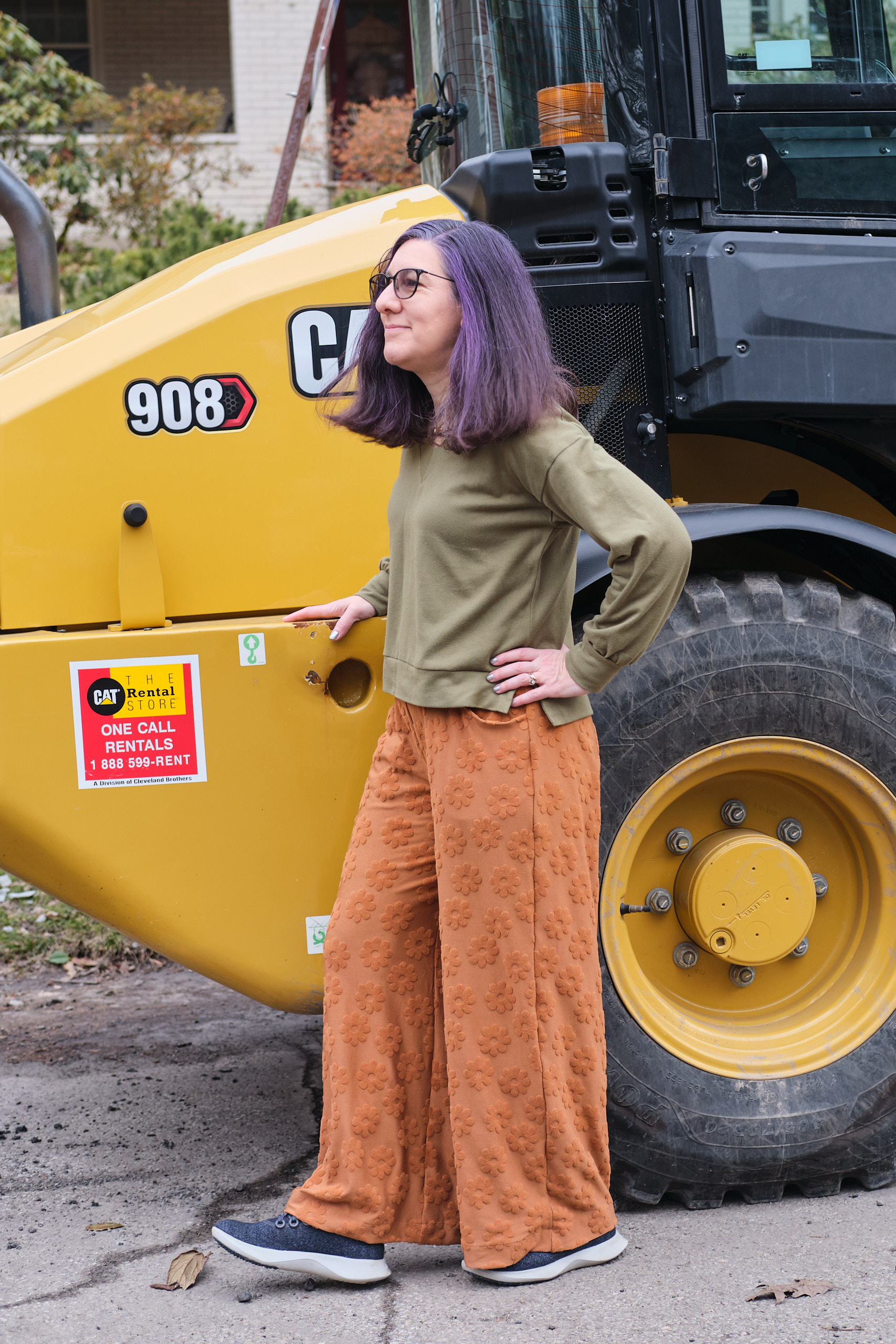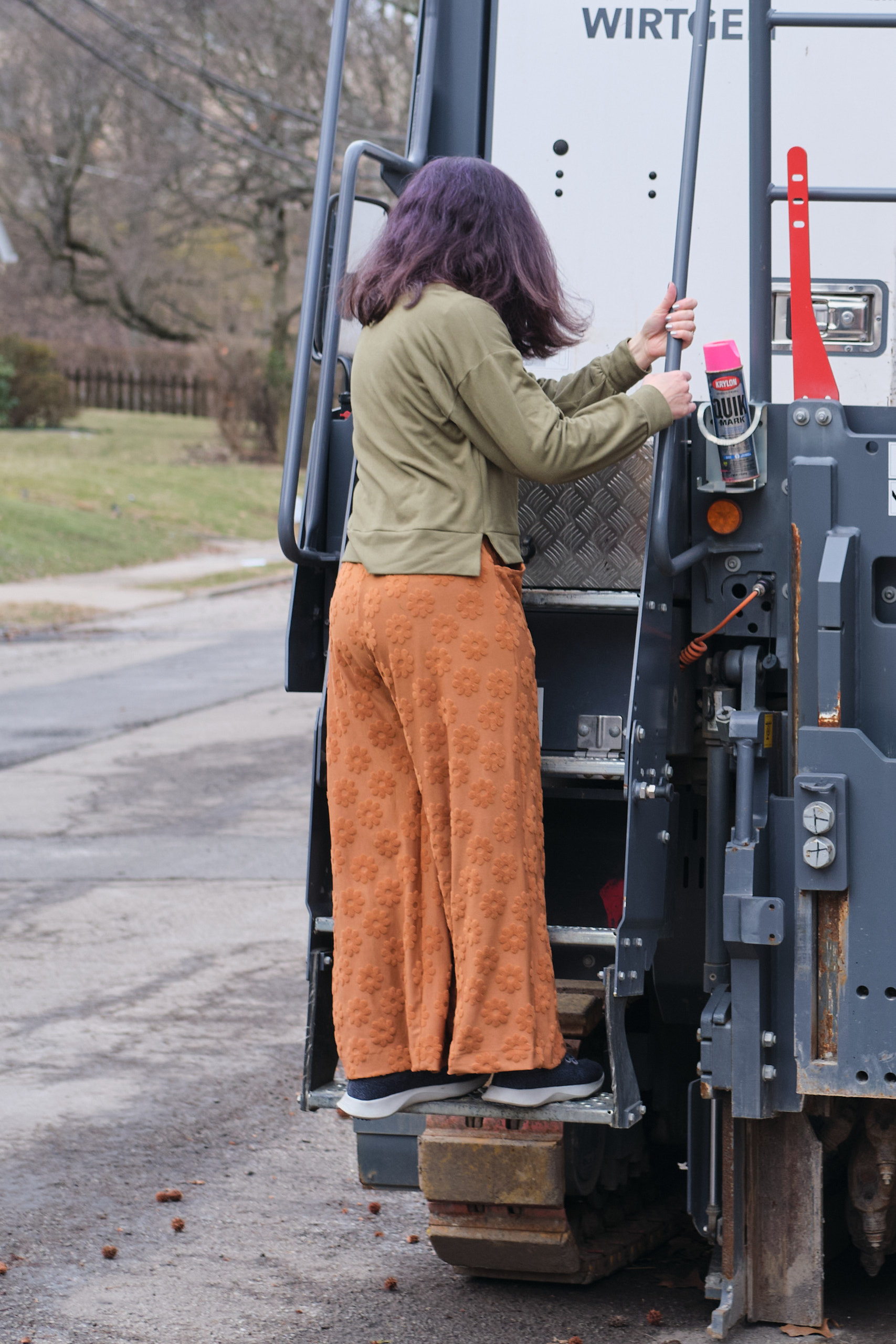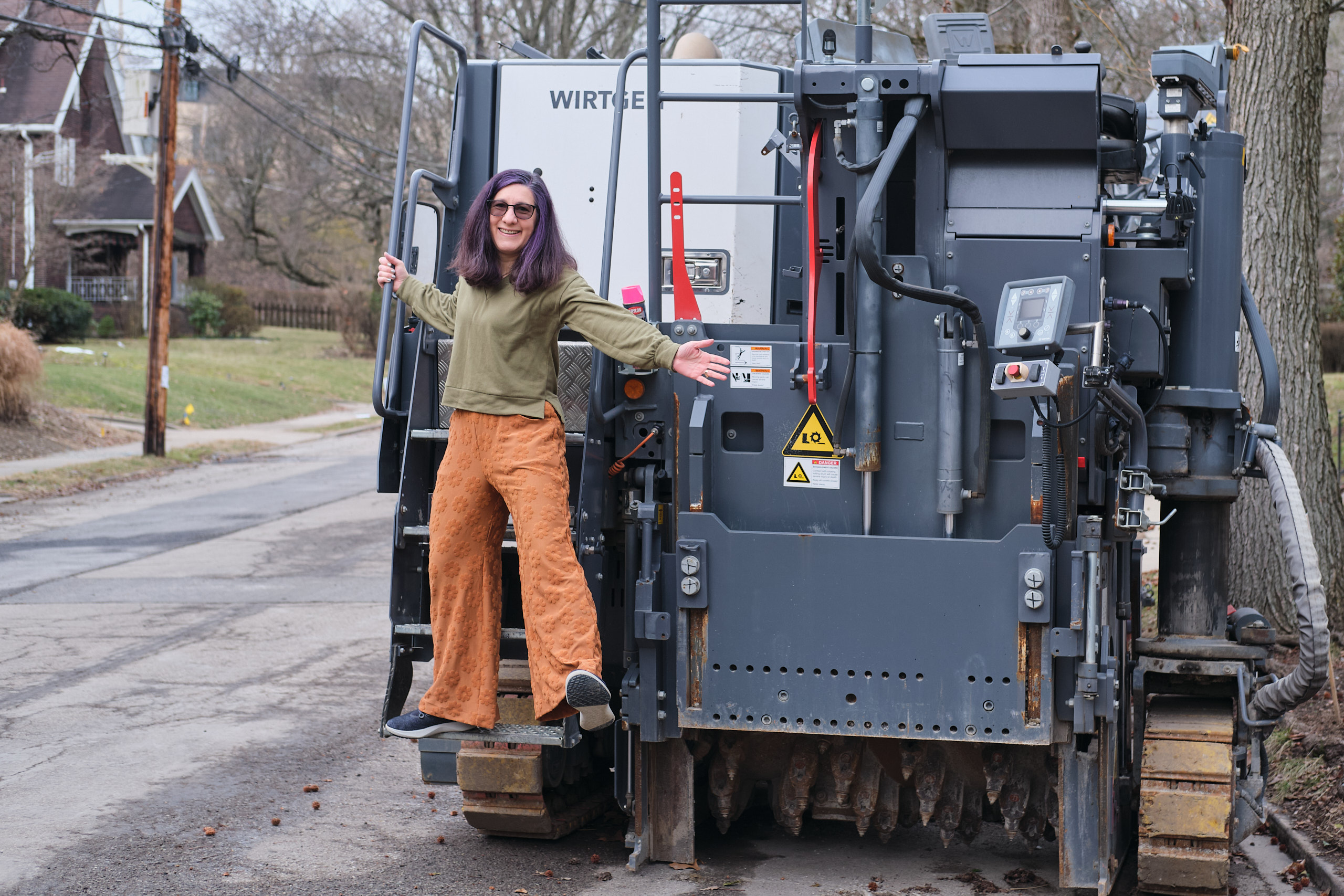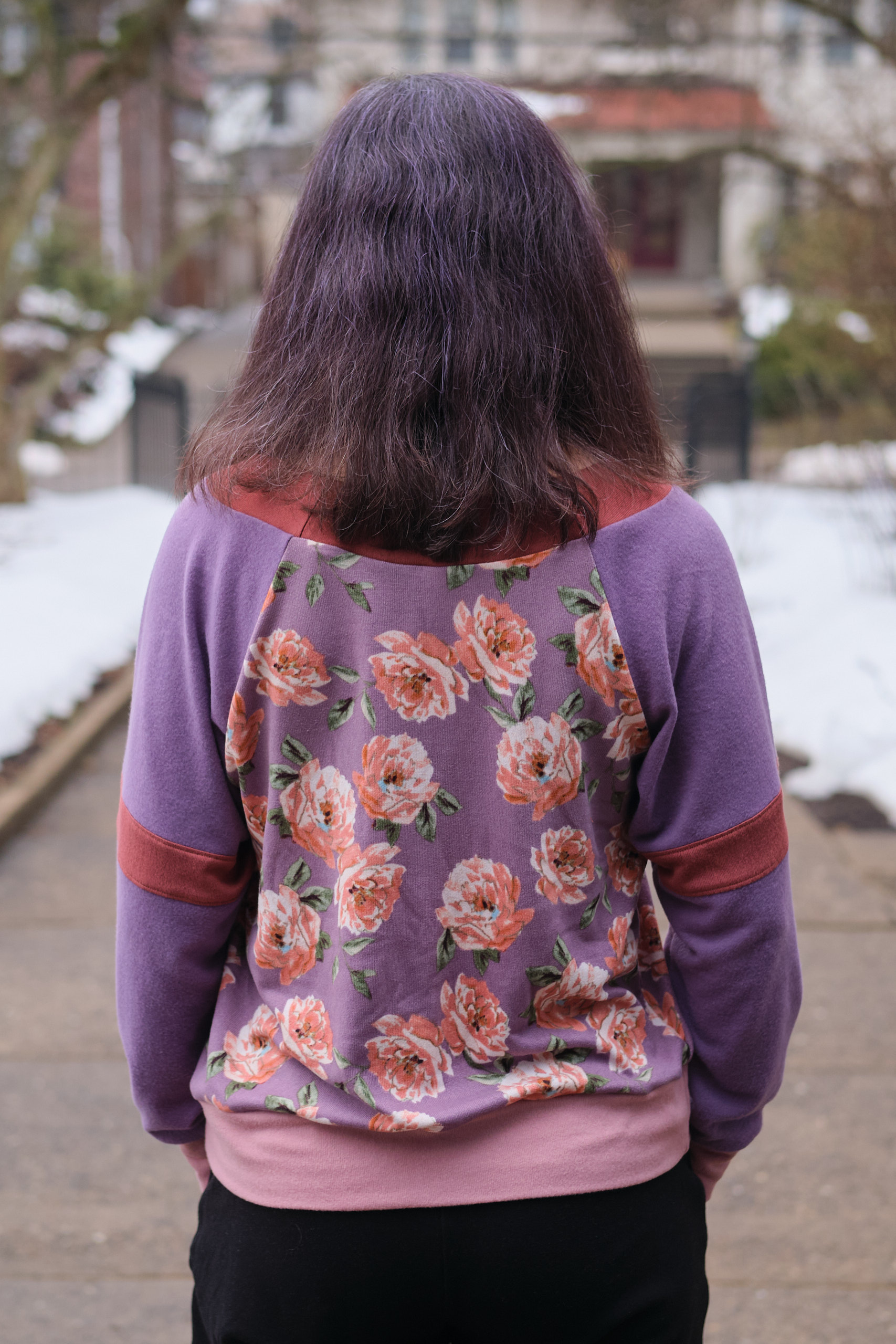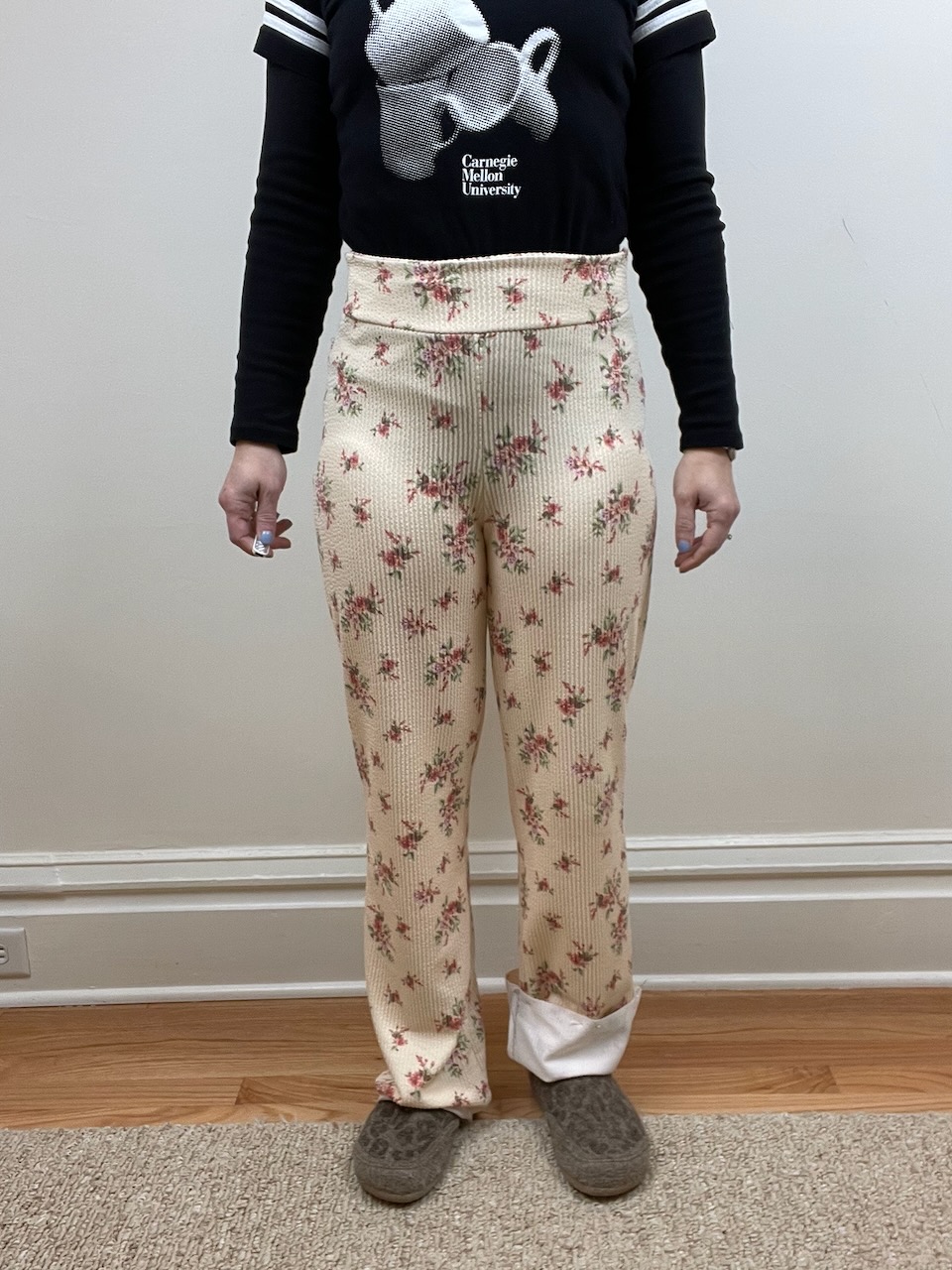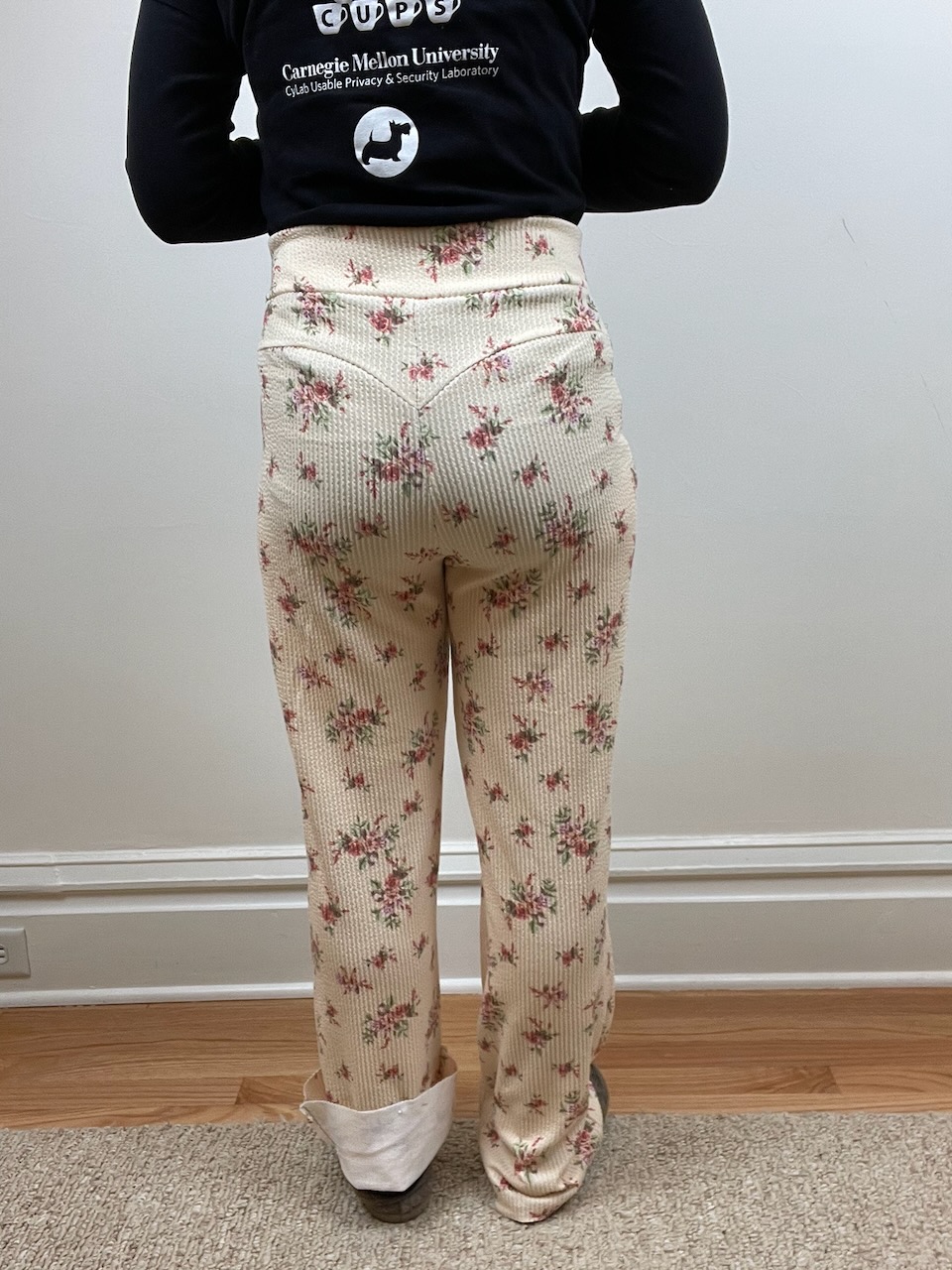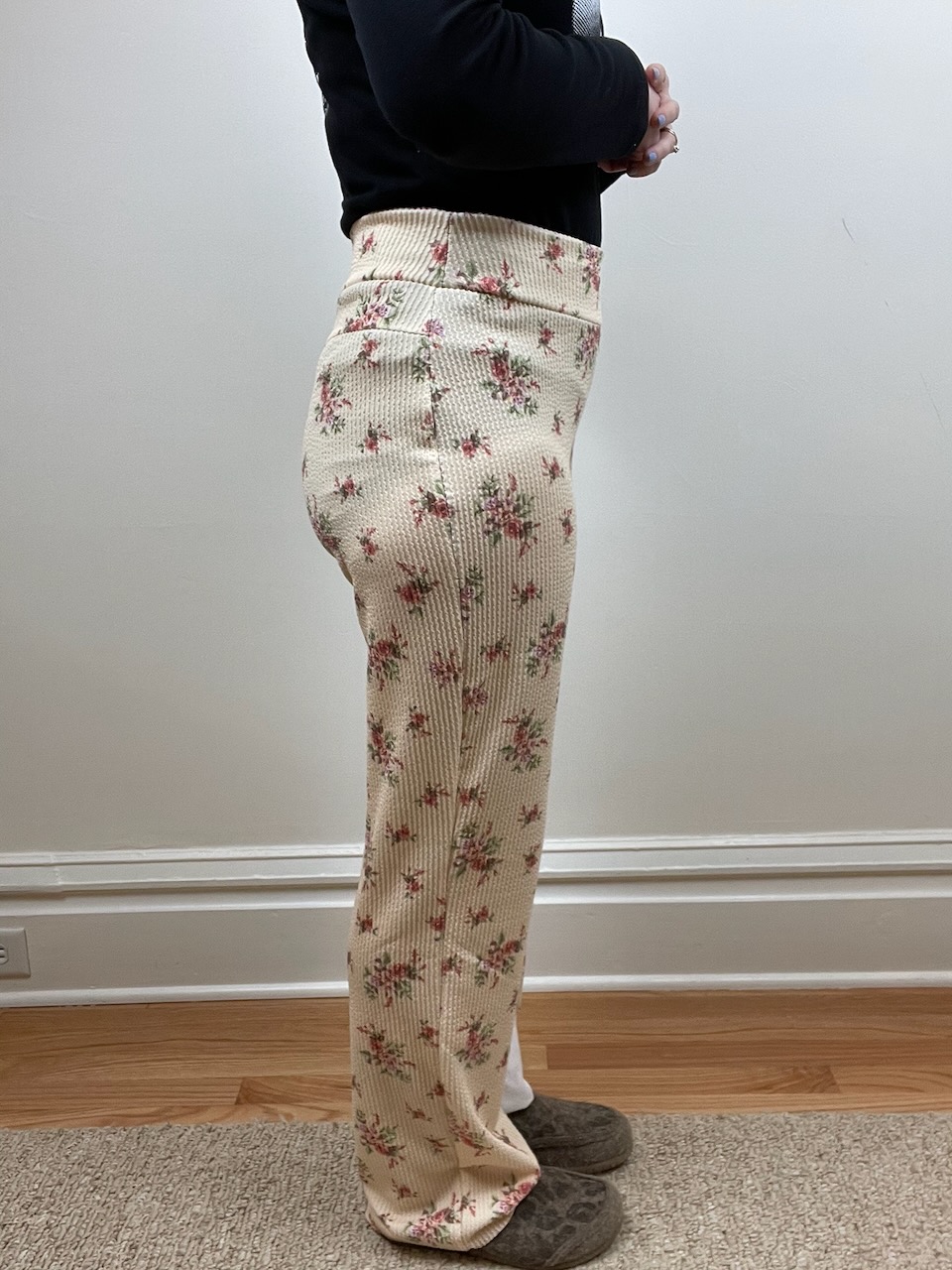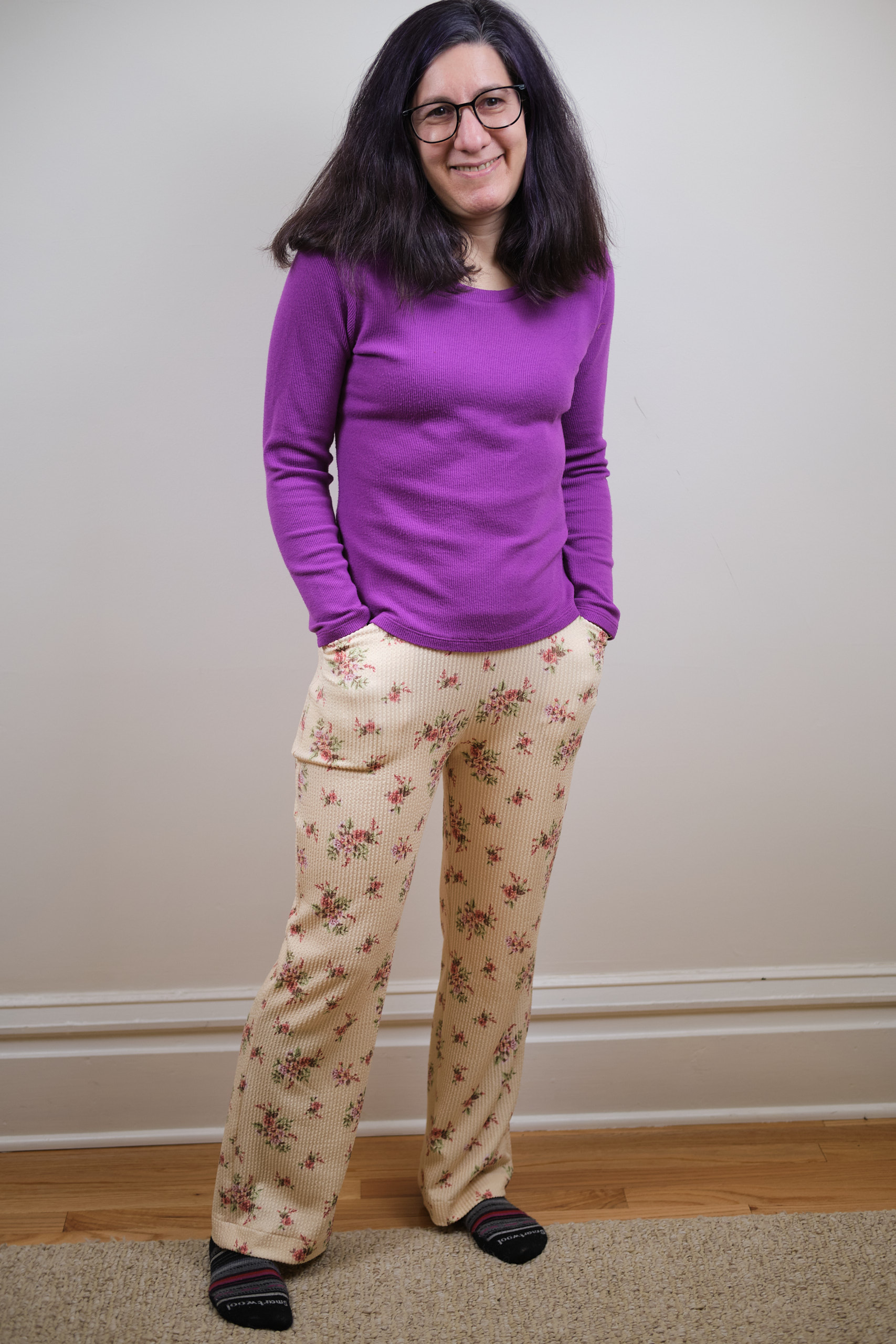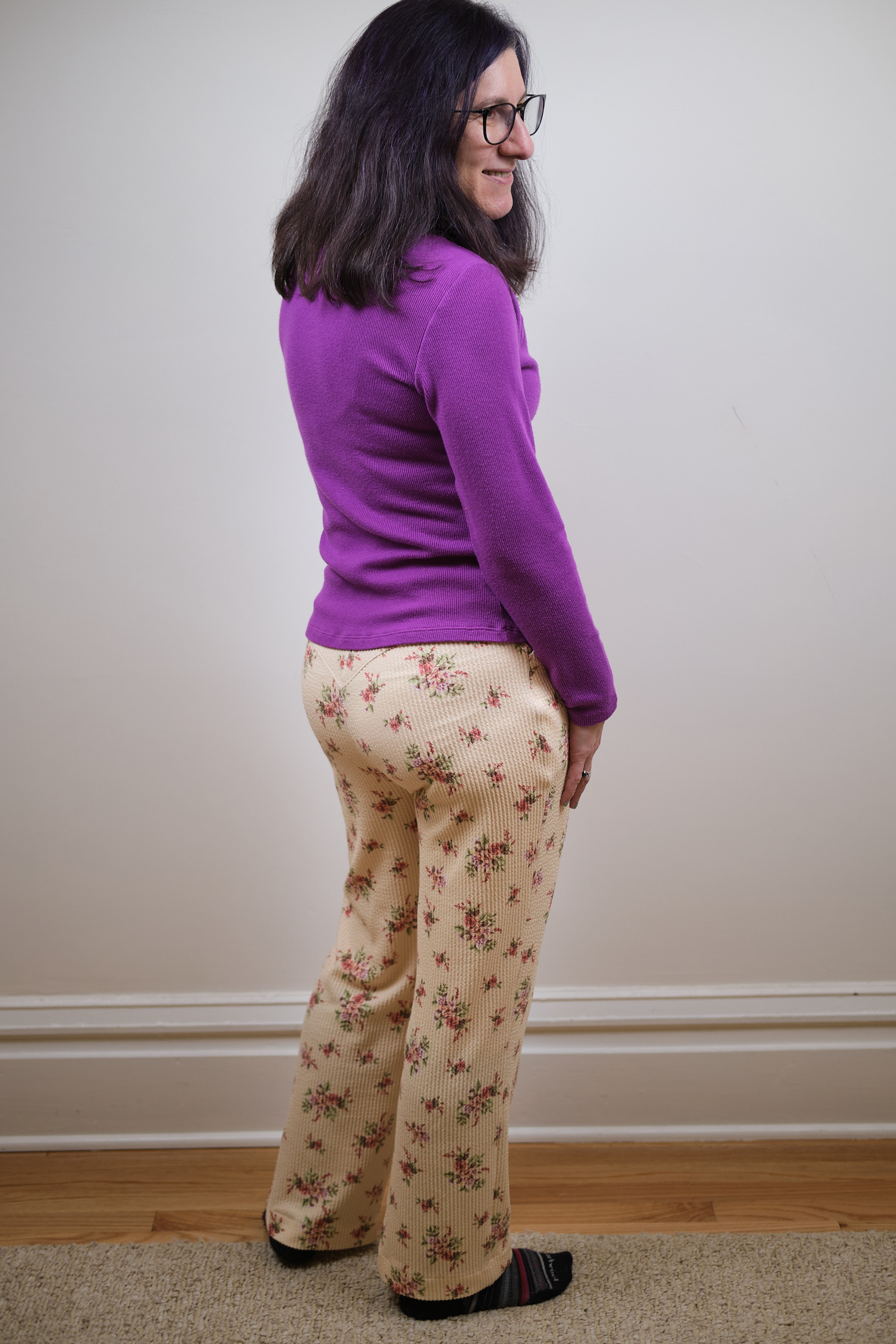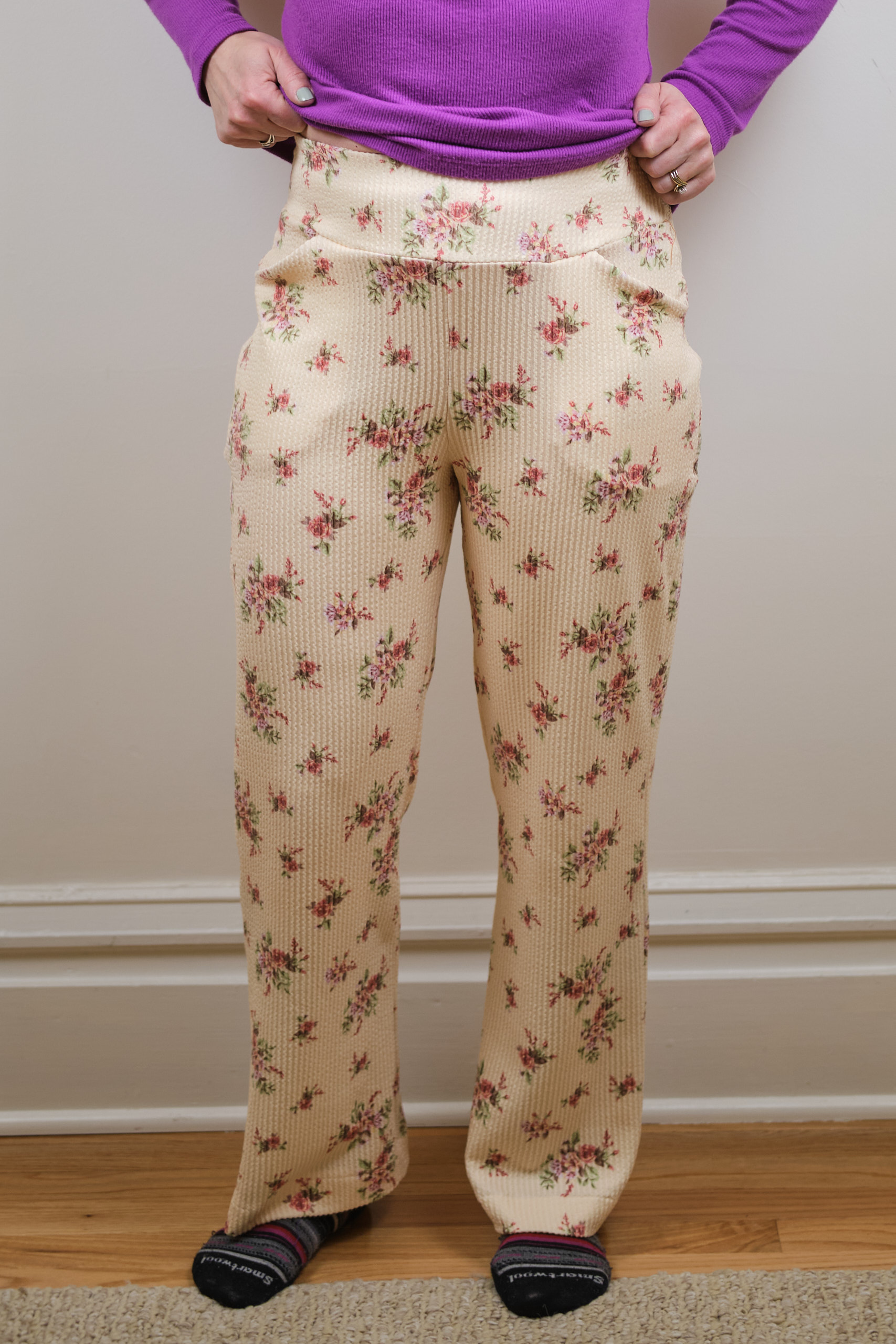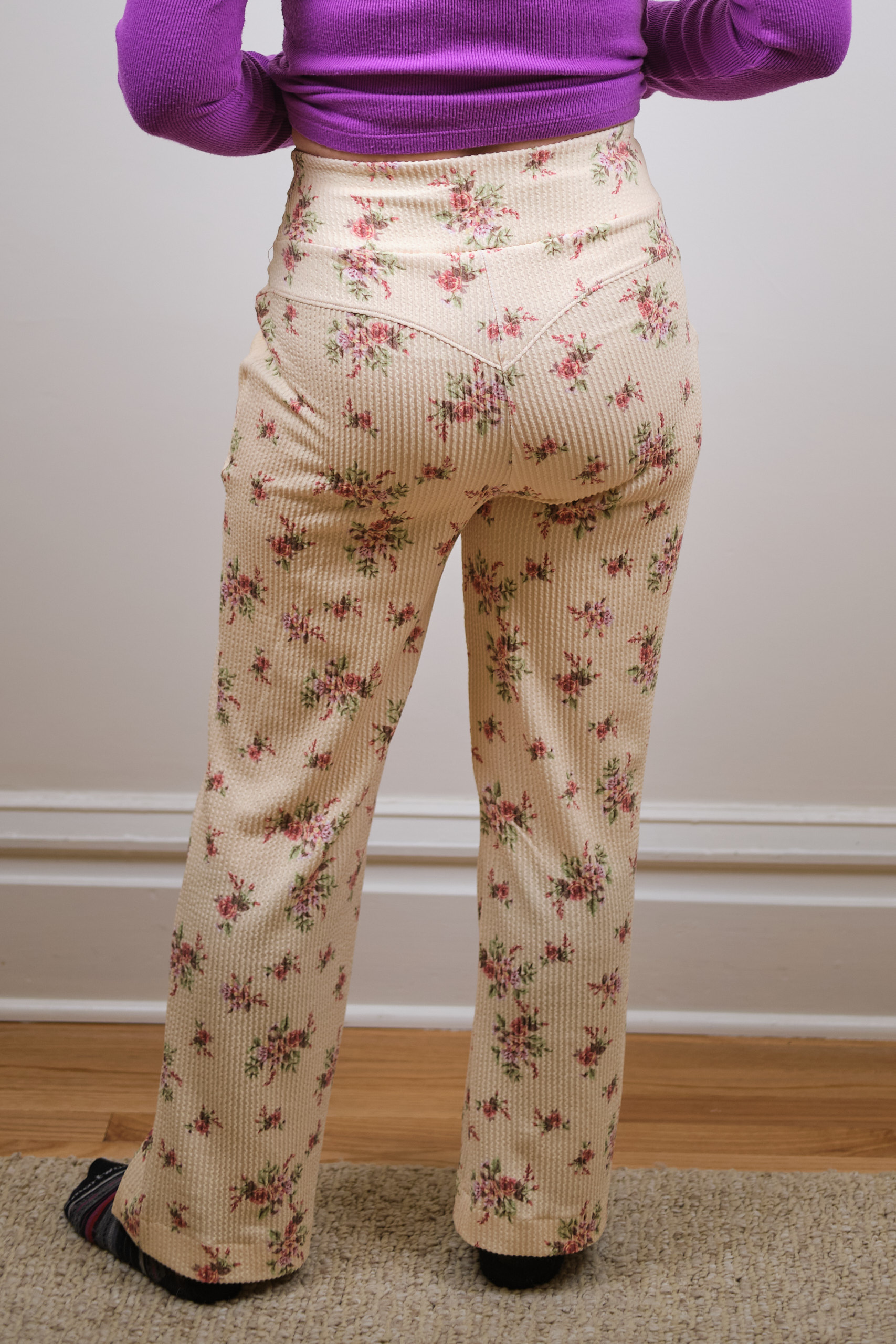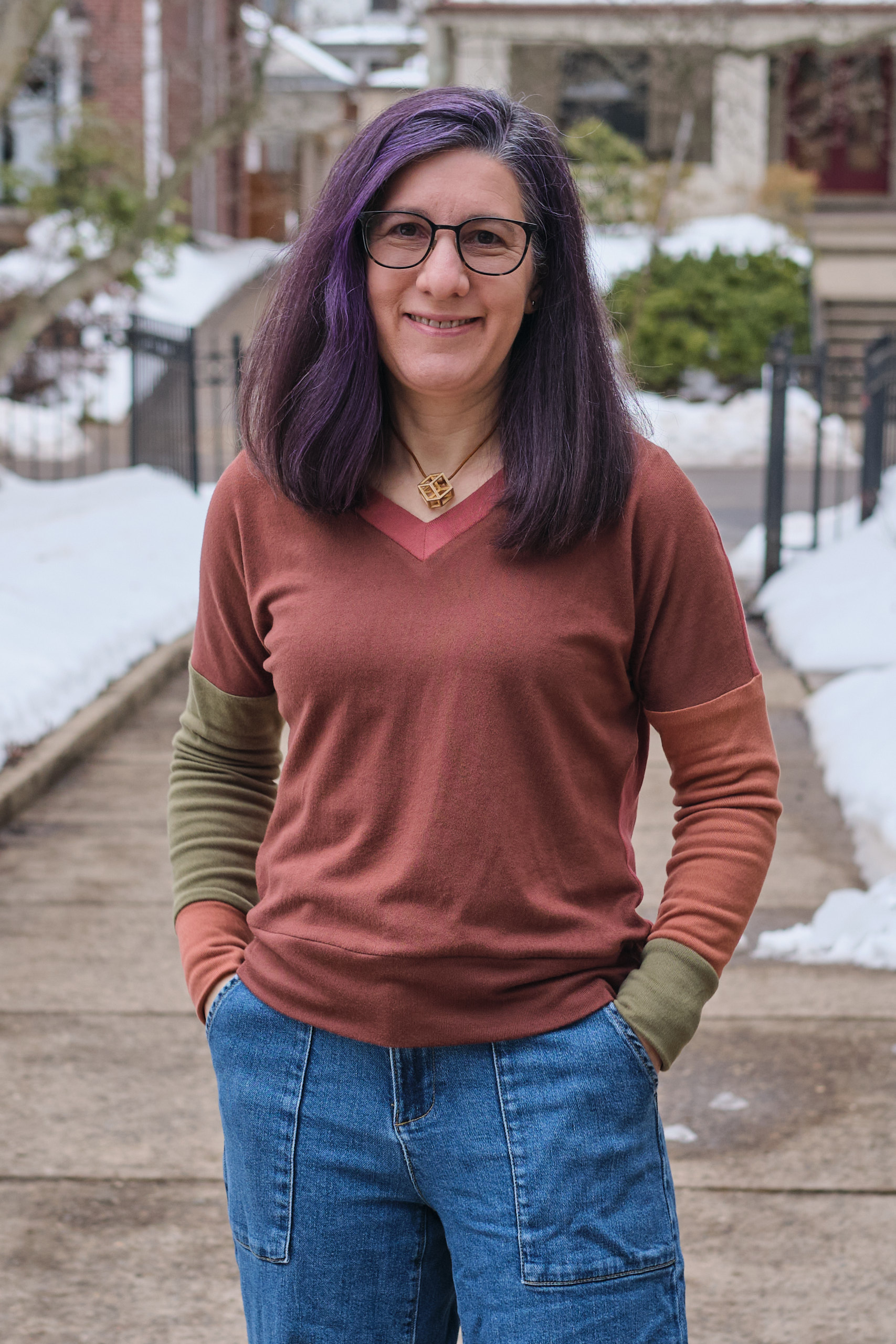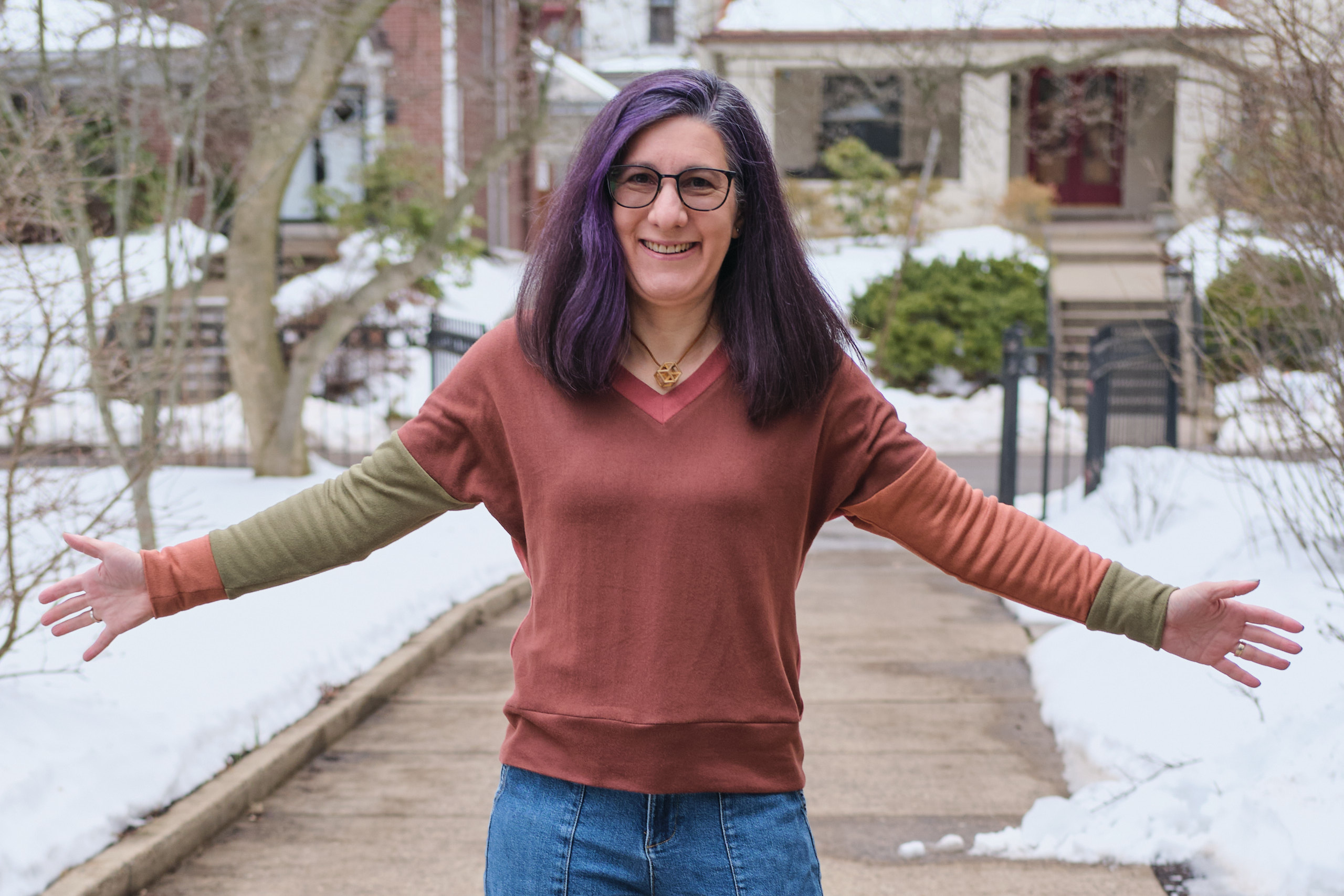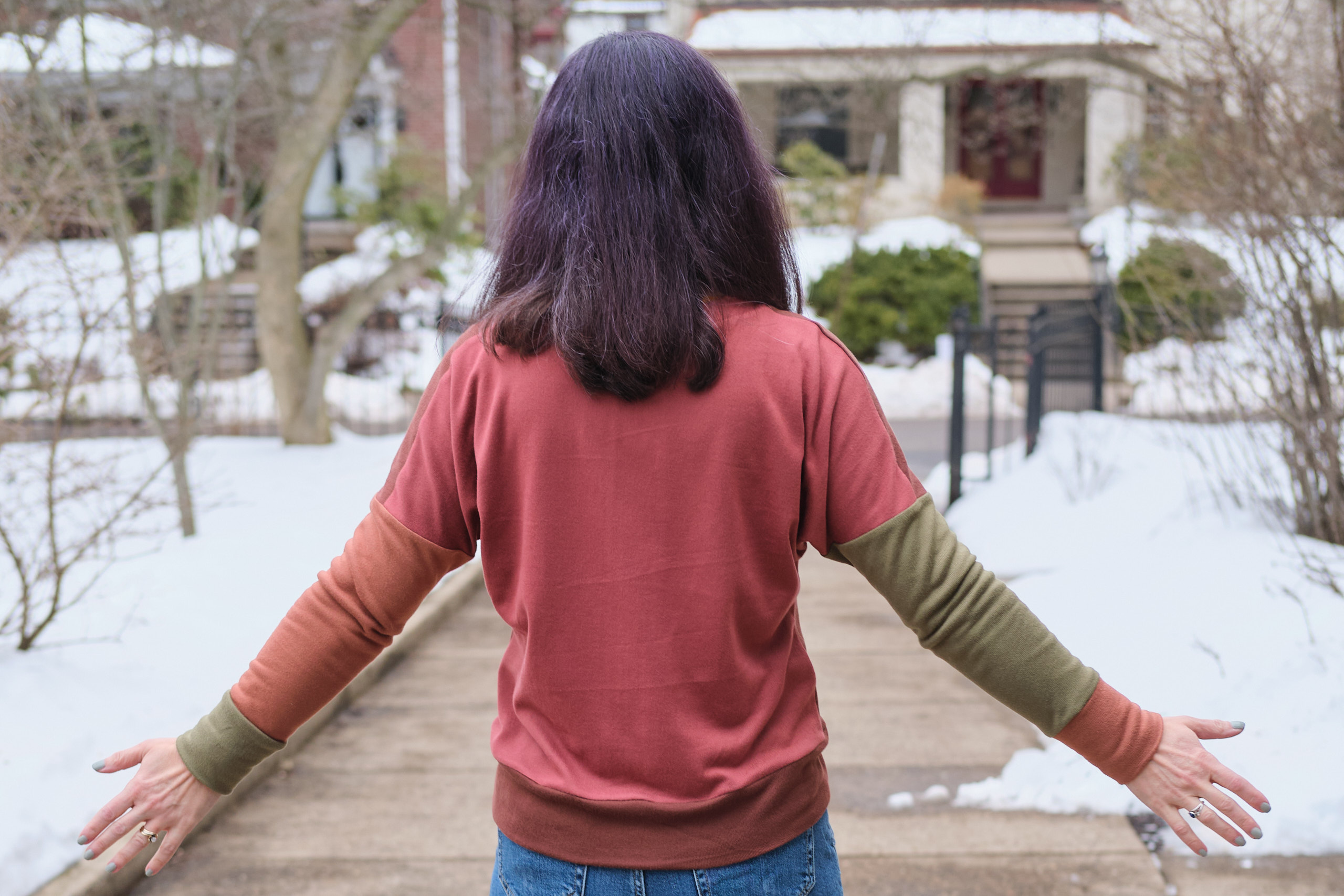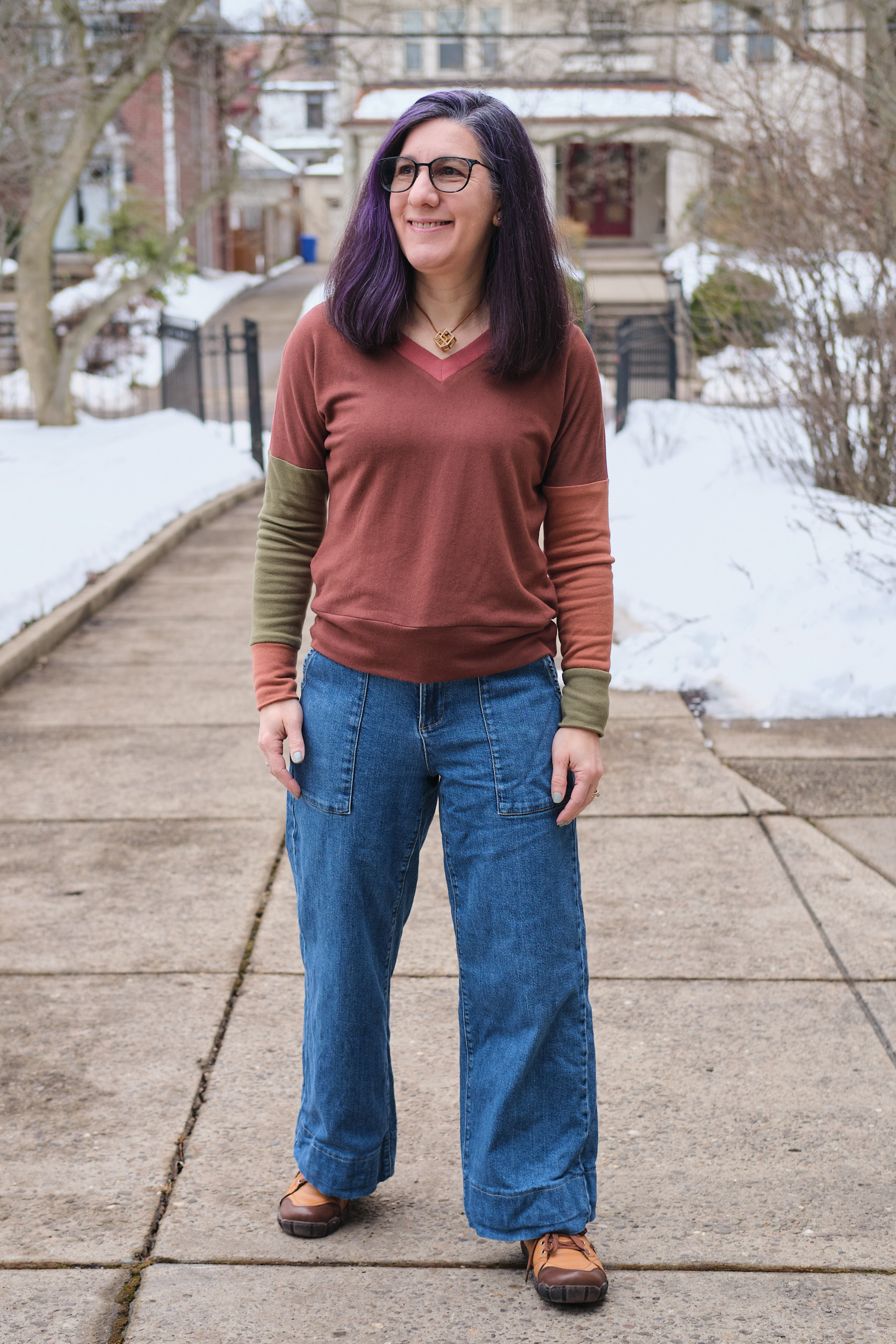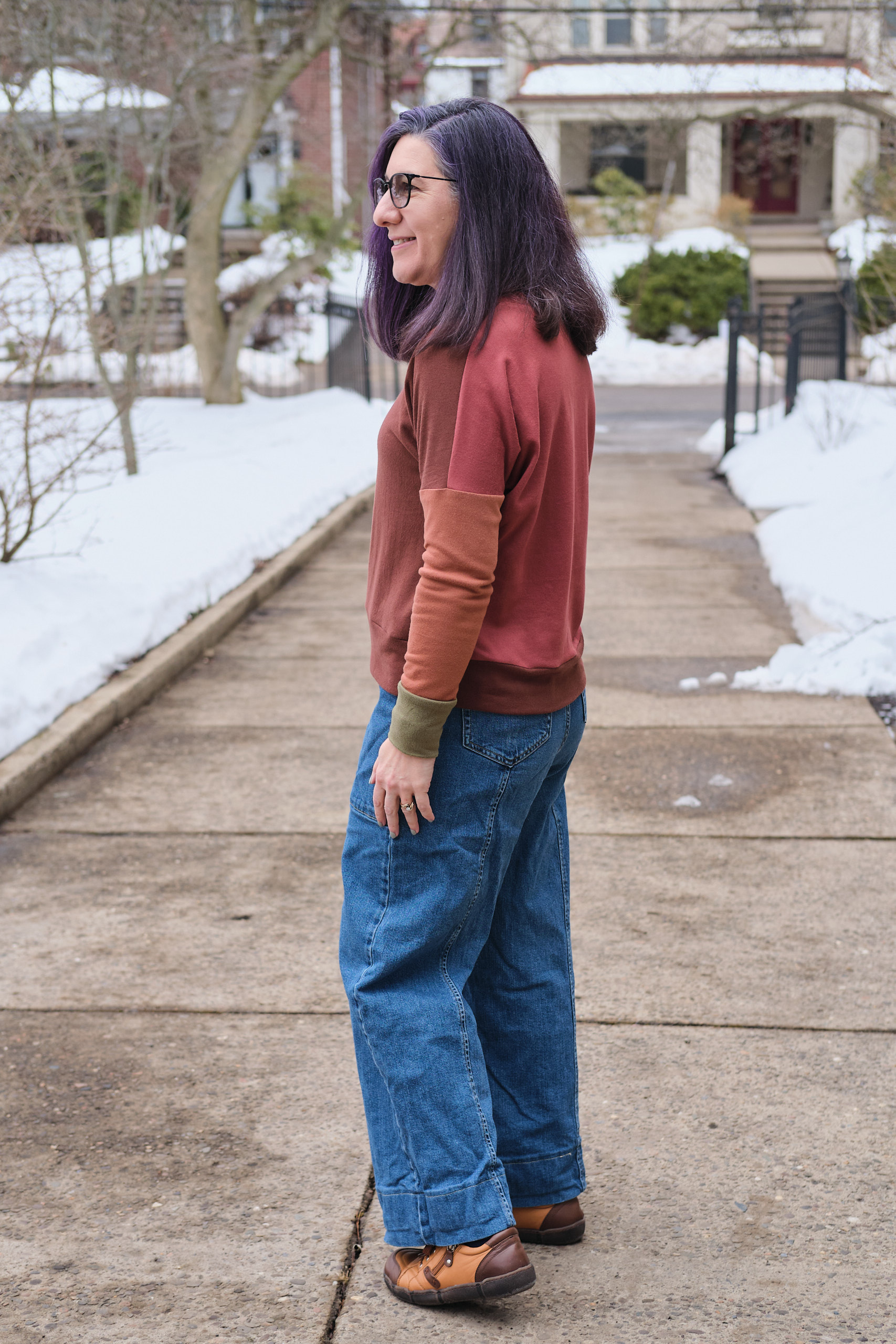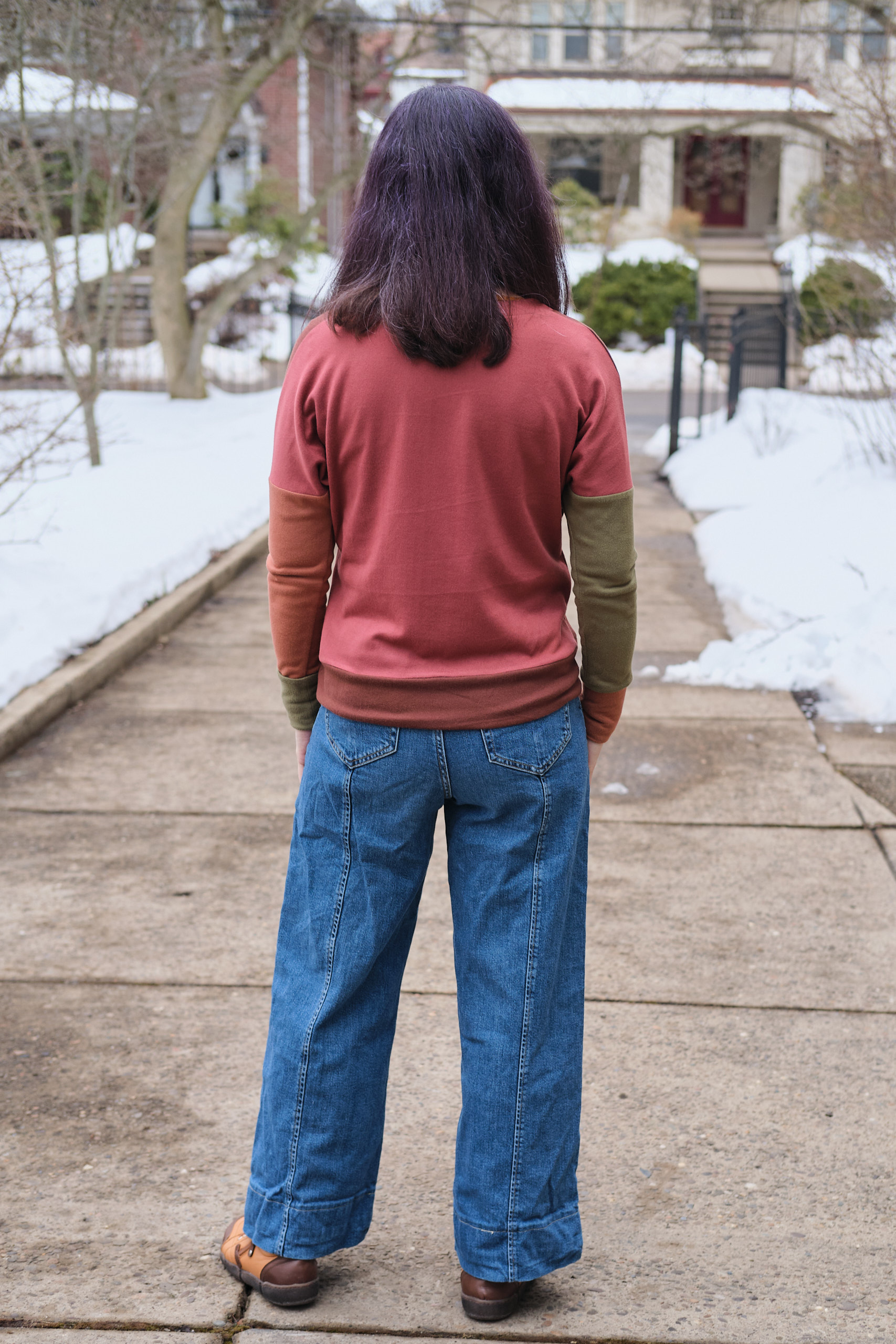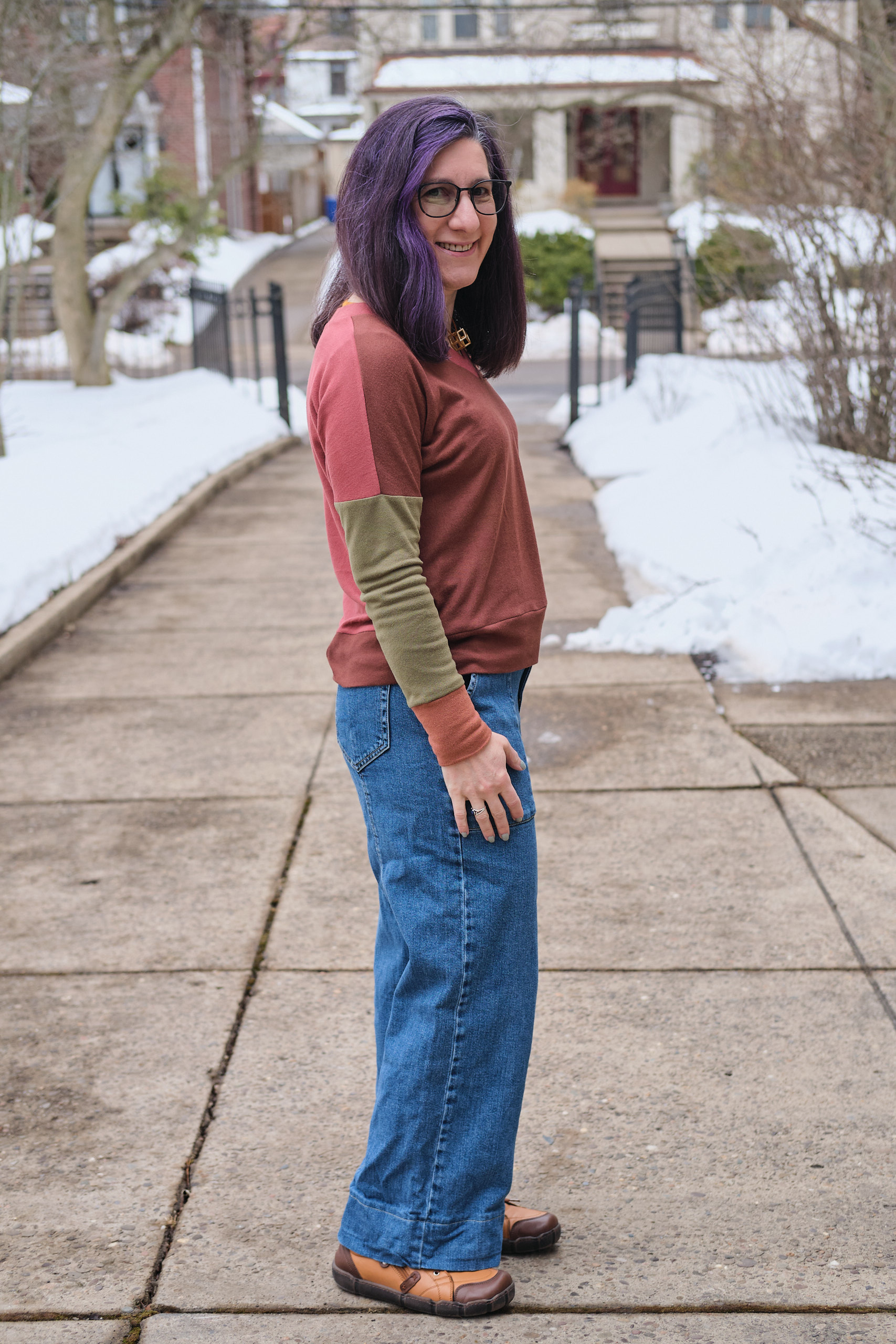
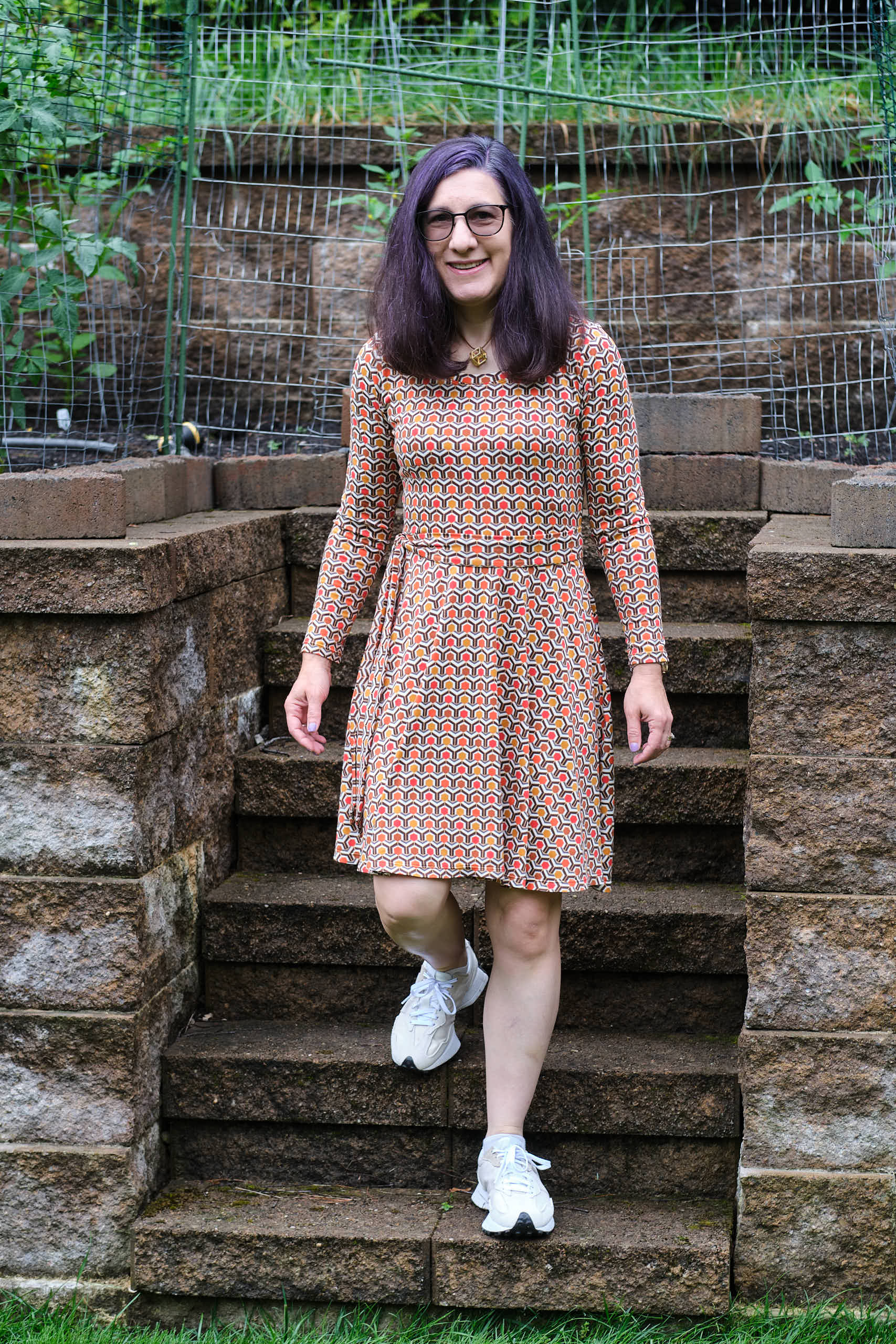
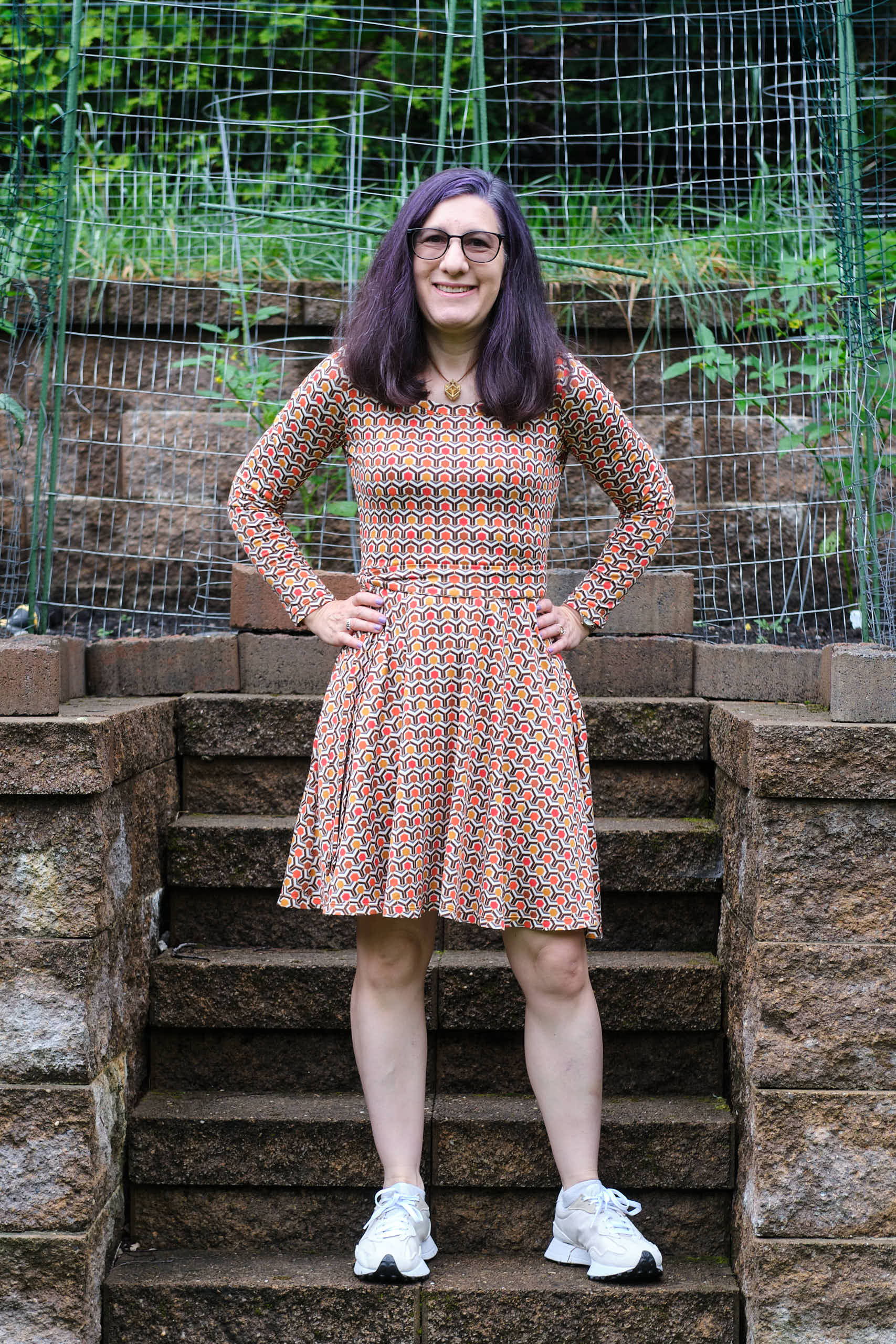
Joanne faux wrap knit dress with long sleeves, size P4, knee length, pockets modified so as not to attach to waist, made from 2 yards Sienna Versailles brushed hacci.
I saw an ad for a Merino wool wrap sweater dress in “terracotta” and was inspired to make my own, except in a faux wrap style (easier to deal with) and in a faux wool (easier to wash). And while I was at it, knee length (rather than midi length) and full length sleeves (rather than 3/4). I used two yards of Sienna Versailles brushed hacci, which I’ve used before for a Sweet Cheeks sweater. It is 5%Poly/5%Spandex, 200gsm, with 50% horizontal and vertical stretch. It is super cozy because it is brushed on the inside, which gives it a polished finish while being very comfortable to wear.
I selected the Sinclair Joanne faux wrap knit dress, size p4 knee length, which I’ve made before in ITY with flounce sleeves and as a “double faux” with a faux wrap skirt. There are other faux wrap knit dresses from other pattern companies, and maybe someday I will try one of those, but it is a very well-constructed and easy-to-follow pattern that fits me perfectly with no alterations, so why change?
I made this one exactly according to the pattern, except I modified the pockets so they attach only to the side seams and not the waist and made them a little deeper and sewed the openings up a bit so nothing falls out. I made the long sleeve version for the first time — the sleeve length is perfect. It is a fairly tight-fitting sleeve, so for a lower stretch fabric, I might cut it a little wider. I hemmed the sleeves with two rows of shallow zigzag. I skipped the hem tape and then regretted it. So I used my favorite knit hem tape before I zigzagged the bottom hem.
I made a simple narrow belt by cutting a 3″ strip across the width of my fabric, folding it horizontally, surging, turning it right side out, and sewing down the open end.
I wasn’t sure how this pattern would work in a sweater knit, and was especially worried that I would have to add a waistband to support the pockets. But it worked fine as is — I didn’t even have to add elastic to the waist. I used 1” fusible knit stay tape to reinforce the side seams around the pockets. Anyway, Joanne makes a great sweater dress!
I used to love wearing denim jackets, which seem to go with just about everything, but I’ve found their collars increasingly uncomfortable. So the thought of a collarless denim jacket in a bit dressier blazer style was appealing. Unfortunately, I seem to have already given away most of the discarded jeans in my household and those that I could find were either full of holes and paint spots or ridiculously skinny and thus had very little fabric to work with.
Last fall, when I was visiting my daughters in Boston, we went to a thrift shop and I asked them to help me find three pairs of inexpensive jeans I could cut up. I looked for jeans that were less than $10 a pair, medium-weight, slightly stretchy denim, in large sizes. I collected a pile of jeans that met these criteria and sorted them from lightest to darkest. Then I selected three pairs with distinctly different shades of blue that went well together. They were $6 each and with the $6 coupon I picked up on my way into the store, I paid a total of $12 for all three pairs.
I didn’t get around to working on the jacket project until New Year’s Day. First, I spent a lot of time debating the color placement and where to place each pattern piece. I decided to go with a symmetrical color arrangement and place the pieces from the darkest in the center to the lightest on the sleeves.
I previously spent a lot of time working out adjustments to the size 4 hip length version of the jacket pattern to fit me better. These worked great on my grey and magenta ponte jackets so I used the same pattern file I had already prepared with all of these adjustments: small-bust adjustment (performed by redrawing the inner curve on the side-front pieces to have less of a contour and then shortening the center front pieces to match the length of the new curve), sloped-shoulder adjustment (3/4 inch), round-back adjustments (two 5/8-inch adjustments near top and bottom of arscye), back neckline lowered by about 3/4 inch, bottom hem and sleeves shortened by 2 inches. The only thing I did differently was using the jeans pockets rather than the pattern pocket pieces and using the normal pattern facings rather than the wider facings I used previously. There’s always a risk that a pattern fitted with one type of fabric won’t fit right when cut from a very different type of fabric. Thankfully, my denim version seems to fit pretty much the same way as the ponte.
I carefully cut out all the pieces, making sure to pair pieces from the left and right legs of each pair, cut at approximately the same height on the leg. I accidentally cut one of the front side pieces too short and wasn’t going to be able to cut a piece of a similar color at the full size so I just cut the missing part and spliced them together. I knew most of this seam would be under a pocket and hardly noticeable.
Rather than using the pocket design included in the pattern, I decided to use the rear pockets from one pair of jeans. I carefully unpicked them and removed all the top stitching. Unpicking pockets from jeans is mostly easy as they are attached with a chain stitch that easily unravels – except for the corners, which are thoroughly attached with a bartack and require some effort and a bit of elbow grease to remove. I ended up using most of the legs of all three pairs of jeans. There is still a little bit of leg fabric and seat fabric that might be used for other projects that can use smaller pieces.
I also spent some time studying the stitching on different brands of jeans and denim jackets to see what color top stitching thread is used and where the top stitching is placed. I also read some blog posts on jeans anatomy. Some jeans match the top stitching to the denim color, others use a light yellow gold, and still others a more orangy gold. I’m sure there are other variations too. I observed that most jeans top stitching is done in two parallel lines, and generally as a chain stitch. Of course, it can’t be done everywhere because once you close both sides of a pant leg or sleeve, it is no longer possible to topstitch. Thus, one side is topstitched while the leg or sleeve is still open and the other side doesn’t get topstitched. I noticed that jackets don’t usually have topstitching on the side seams, but there is no practical reason not to do it so I decided to do it anyway.
I threaded my sewing machine with 30 weight polyester topstitching thread in a golden orange color that I thought would nicely “pop” against the blue denim. After some tests on denim scraps, I decided I would use the topstitching thread for piecing as well so as to avoid lots of thread changes. I set a slightly longer-than-normal stitch length of 3. I did not opt for chain stitching as that would have required lots of resets on my serger. I found I could achieve the parallel topstitching lines by stitching very close to the seam with my edge foot with the needle shifted 3 clicks, and then a quarter inch over using my quarter-inch quilting guide foot. I threaded the serger with four spools of regular polyester overlocking thread in a similar color as the topstitching thread.
The pieces of the jacket were easy to sew together and the topstitching looked awesome. It took a while as I stitched most seams four times: first I joined the fabric with a 3/8-inch seam allowance on my sewing machine, then I cleaned up and overlocked the edges (without trimming fabric, just stray threads) on my serger, then pressed the seam with steam, then I sewed the two parallel lines of topstitching. It was a lot of work, but also somewhat meditative to sew.
The facing pieces were more problematic. I debated whether the fusible interfacing was needed and also whether I should make the facing out of denim or a lighter fabric. I eventually opted for denim with the fusible interfacing, as recommended in the pattern instructions. I cut the facings as the pattern specified and did not make them wider as I had with the last two jackets. I had previously had trouble using non-stretch interfacing with stretchy ponte knit fabric. This time I didn’t think that would be a problem since I was using woven fabric. However, the denim I used has a bit of stretch. I don’t fully understand how it happened, but after fusing the interfacing onto the facings and sewing the three facing pieces together, the facings ended up slightly longer than the jacket front pieces they were supposed to attach to. I decided to sew them on anyway and figured I could trim the bottoms. But I noticed as I was sewing with the interfacing side on the bottom, the jacket was stretching to match the size of the facings. But I could see if I was not careful it would stretch too much. With some careful flipping and a bit of unpicking I was eventually able to get the jack front and facings to match each other. This was a complete trial and error approach and not the ideal way to do it. There are some very thick layers where the interfaced pieces join. I’m still not sure what approach would have been better, but probably not what I did. Nonetheless, it all came together, I was able to iron it all flat, and it looks fine. I top stitched across the shoulder seam, which helped hold the facing in place. The pockets also ended up holding the facing down and so far I haven’t had the problem I had with the ponte jackets where the facing doesn’t lie flat and requires gluing.
I followed the pattern steps a bit out of order and sewed the whole jacket together before I started working on the sleeves. The order really doesn’t matter and I just wanted to be able to try it on without the sleeves and see how it was coming together. The sleeves went together easily. I topstitched the outer sleeve edge. I was also able to easily set the sleeve heads into the armscye without any need for ease stitches. I sewed a 3/8-inch seam on my sewing machine and then overlocked the edges of the armscye. I then topstitched all the way around the armscye. I hemmed the sleeves by folding under 1/4 inch and then again at 3/4 inch and top stitched.
The final step was adding the pockets. First I topstitched the top edge of the pocket where they had been previously topstitched (but I had removed all the thread). I tried on the jacket and pinned the pockets where I wanted them. Then I took off the jacket and measured carefully and repositioned slightly so they would be symmetrical. I followed the dark line from where the previous top stitching had been and top stitched a pair of parallel lines around the pocket edges. Then I pressed everything again and I was done!
The topstitching thread is heavy, and a bobbin doesn’t hold a lot of it. I had to reload my bobbin twice. I also used a lot of steam when pressing my seams. I lost track of how many times I had to refill my iron. I managed to get through the whole project without breaking a needle, which was good because I was using my last topstitching needle.
I’m really happy with how this came out and I know I will wear this jacket a lot! I’m modeling it here with my Boo & Lu Blizzard dress, but it also looks great with pants, and even jeans.
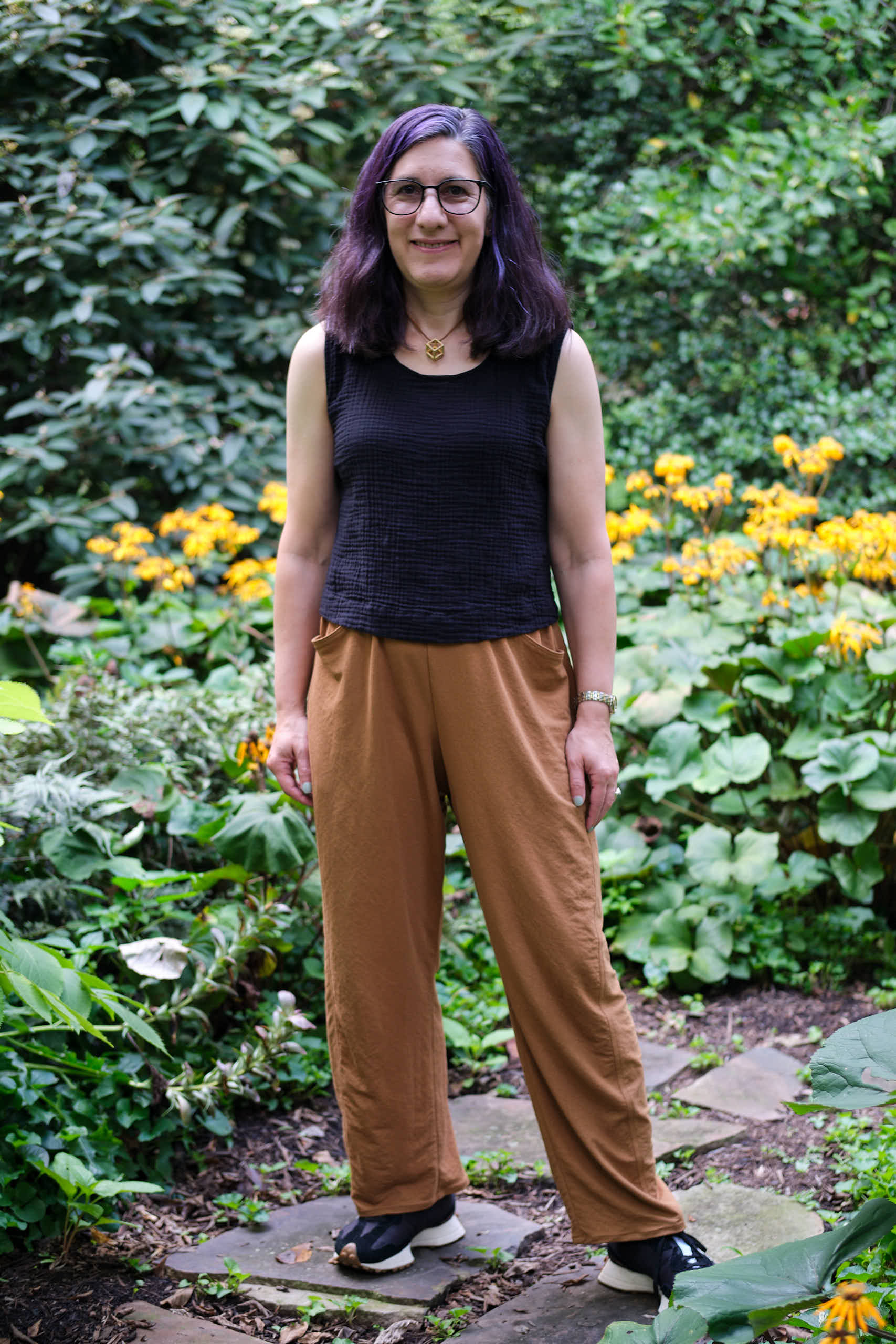
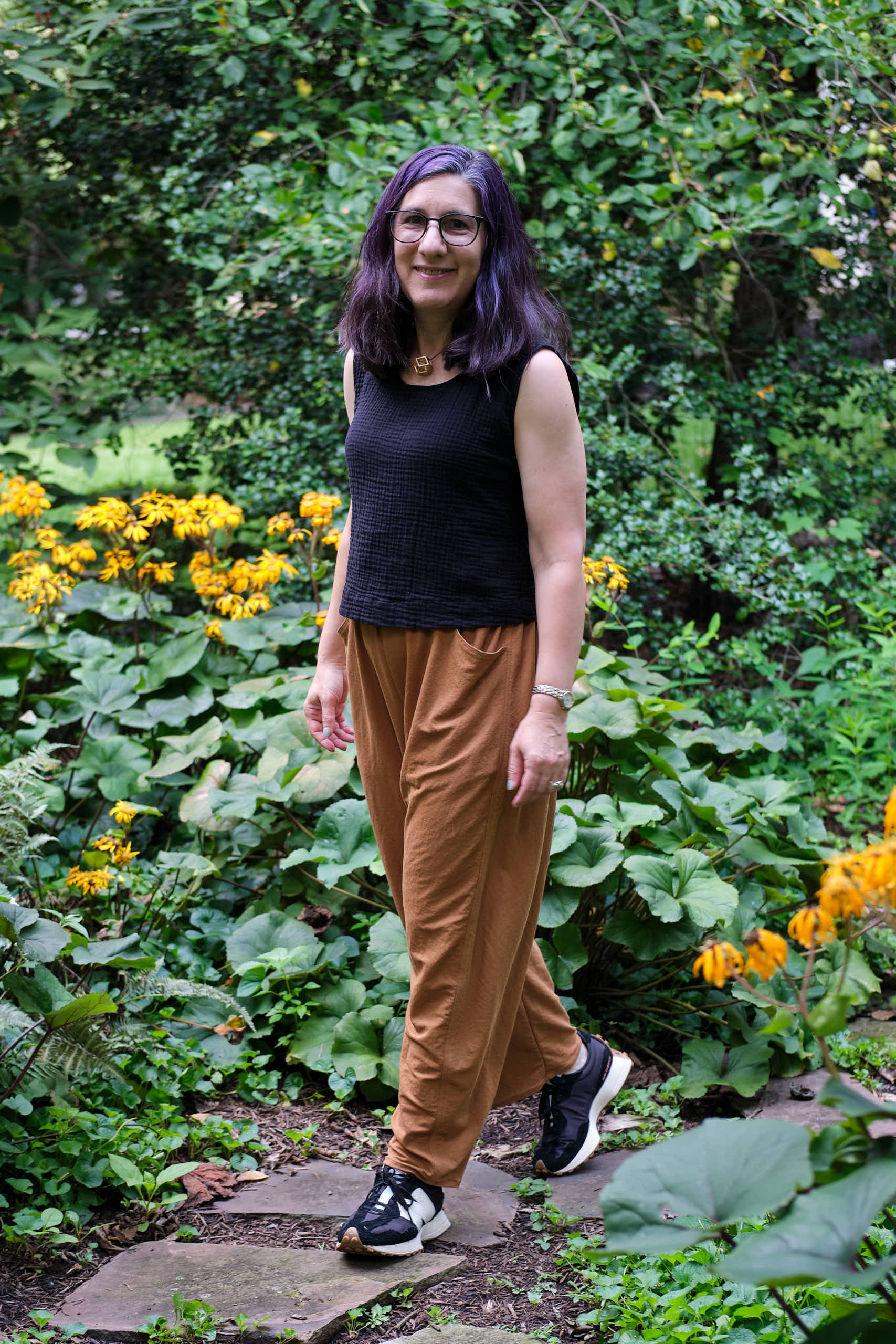
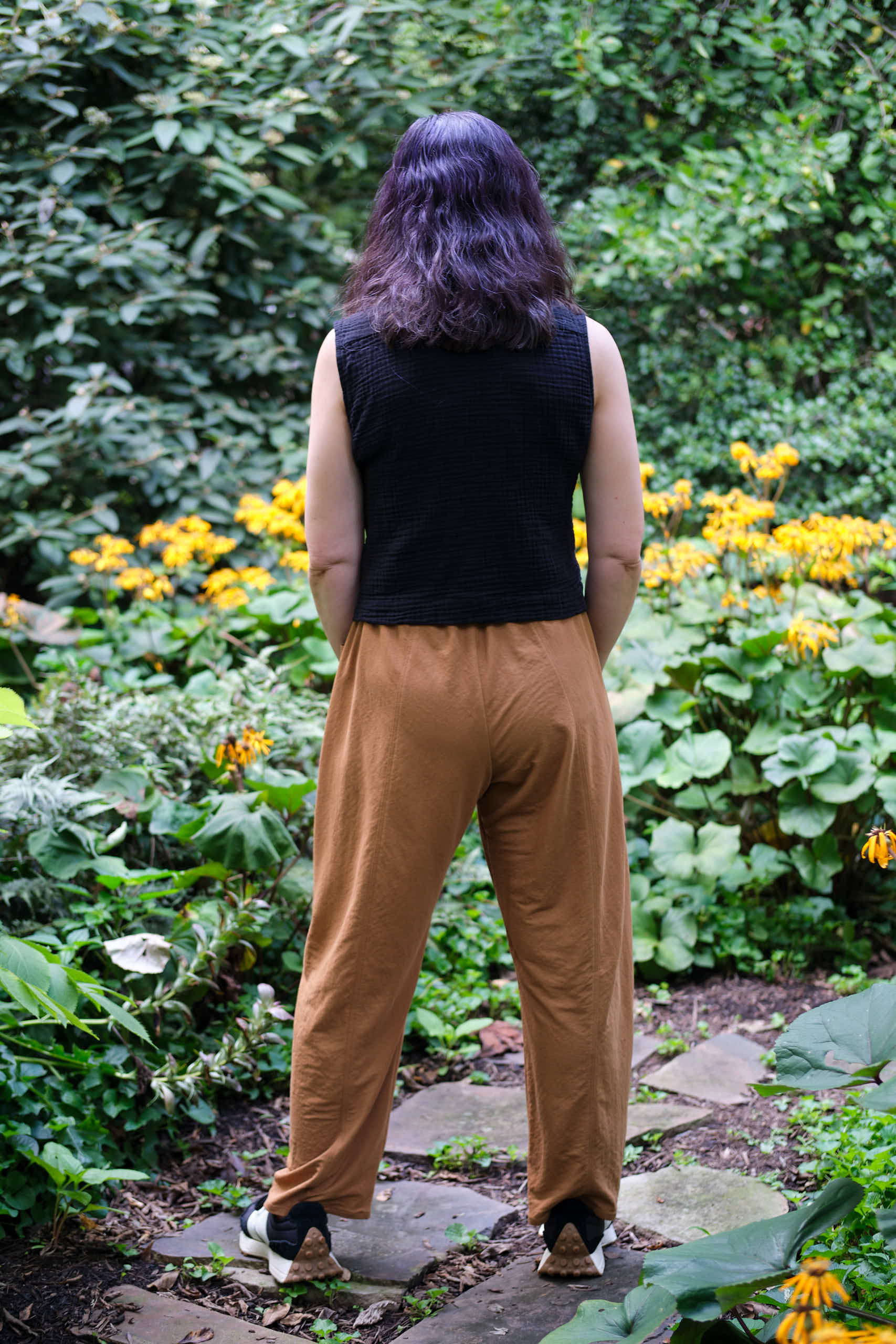
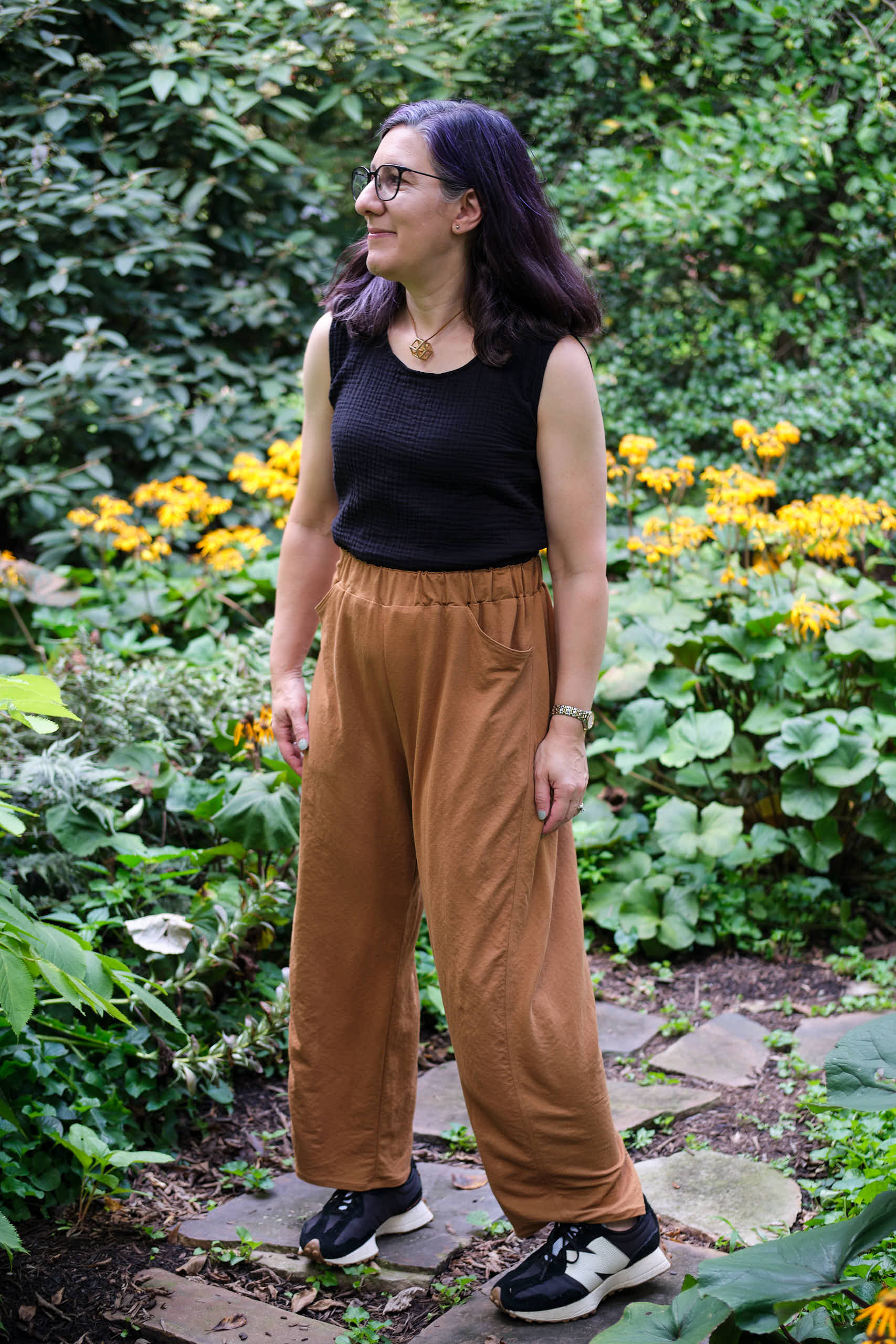
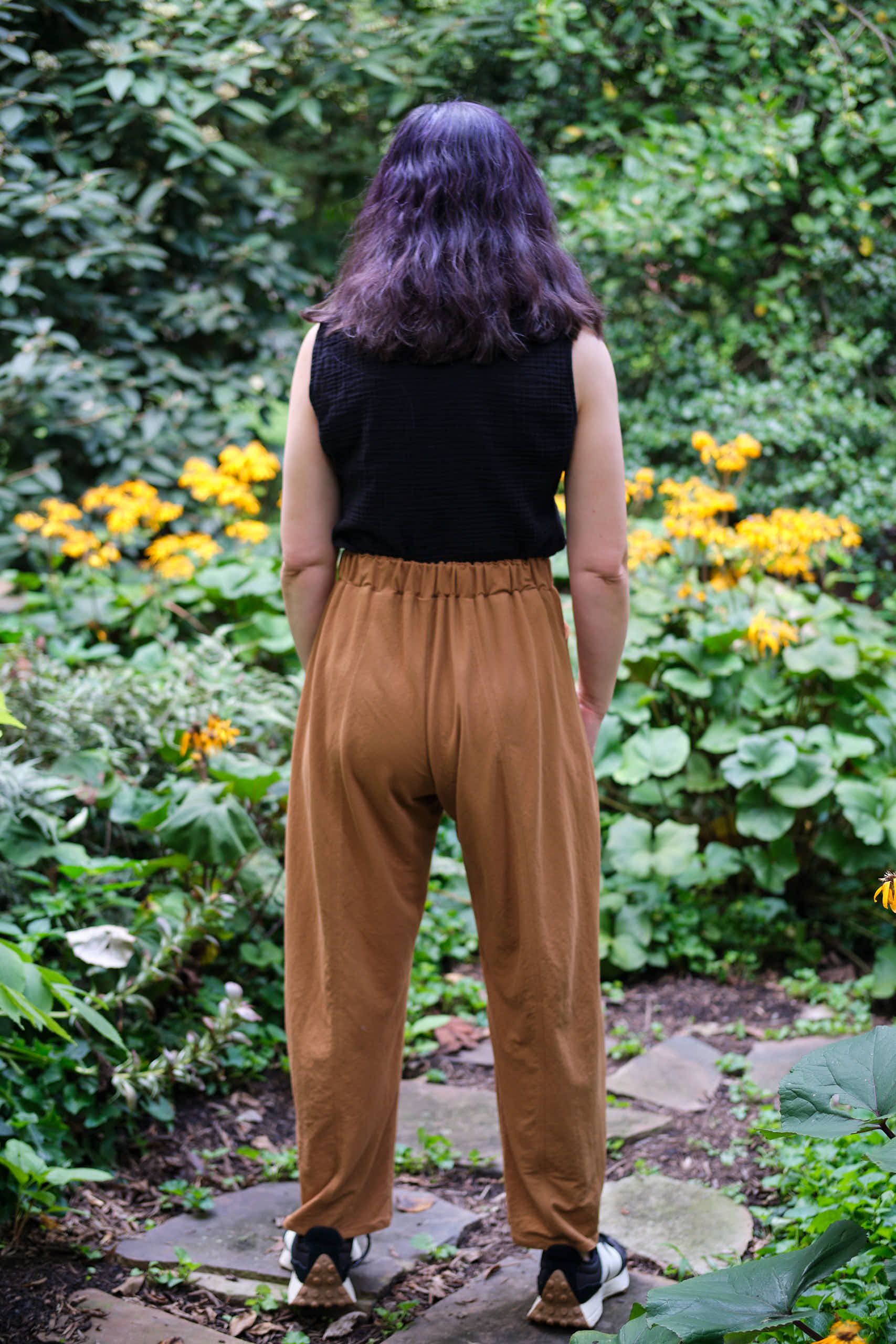
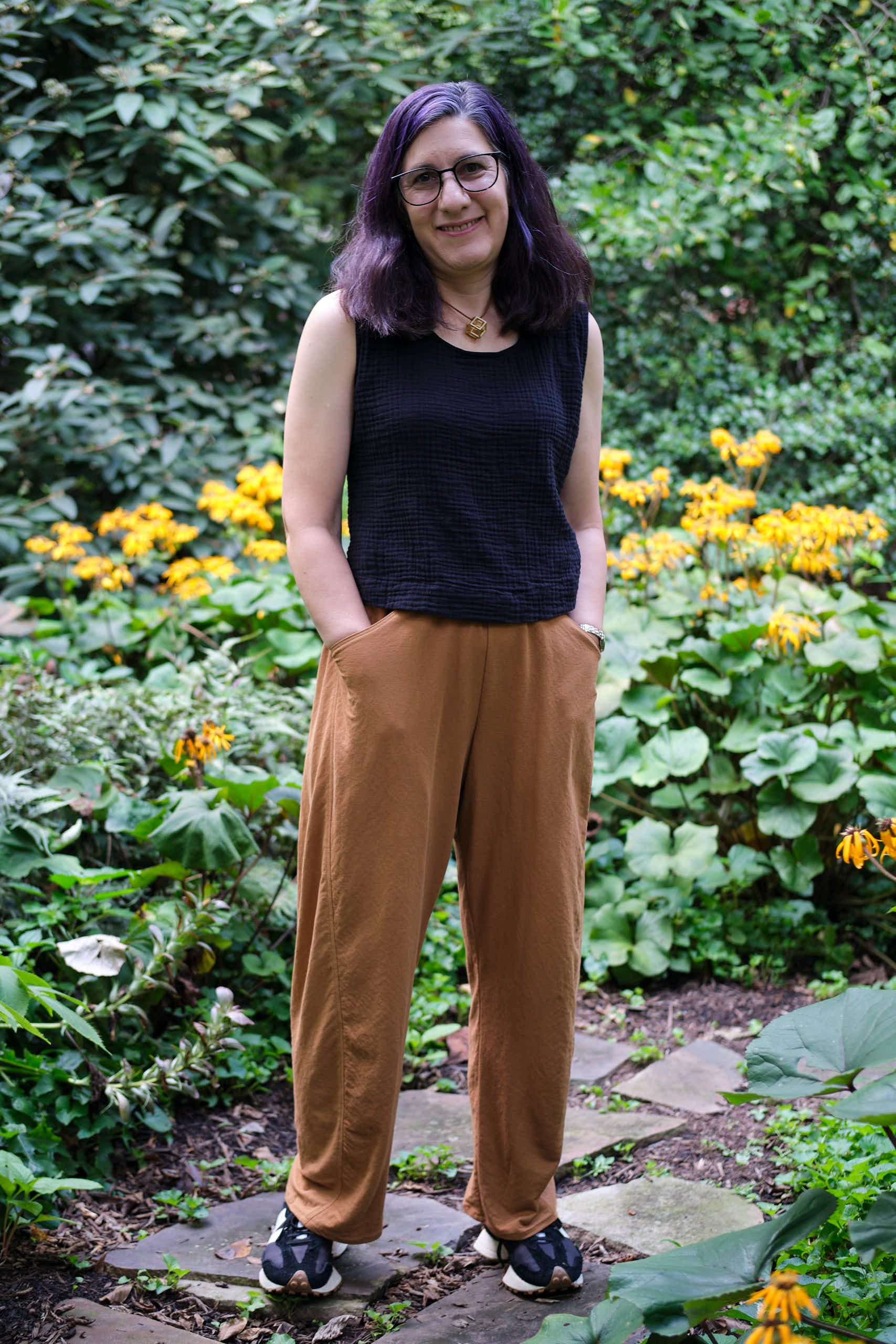
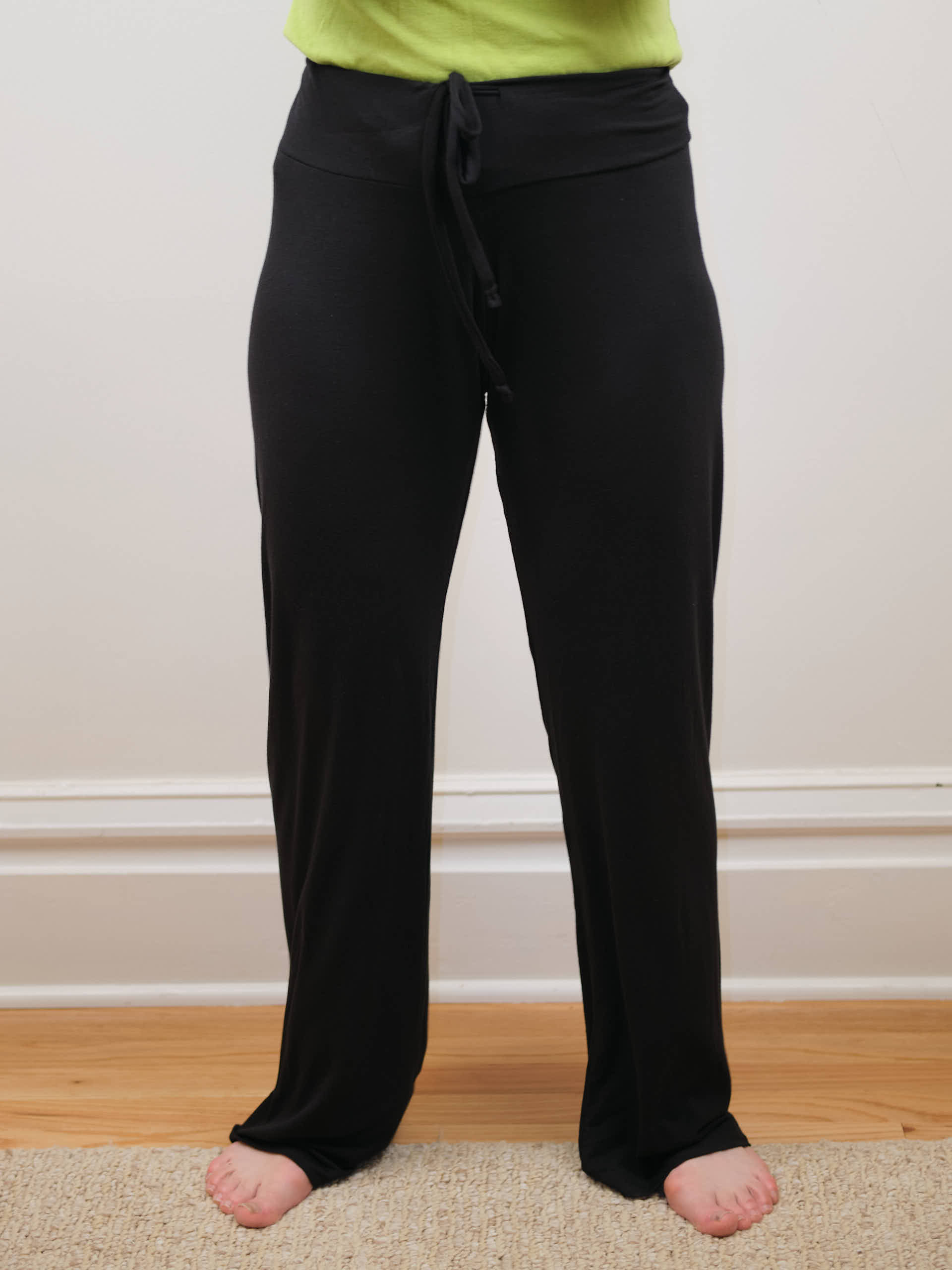
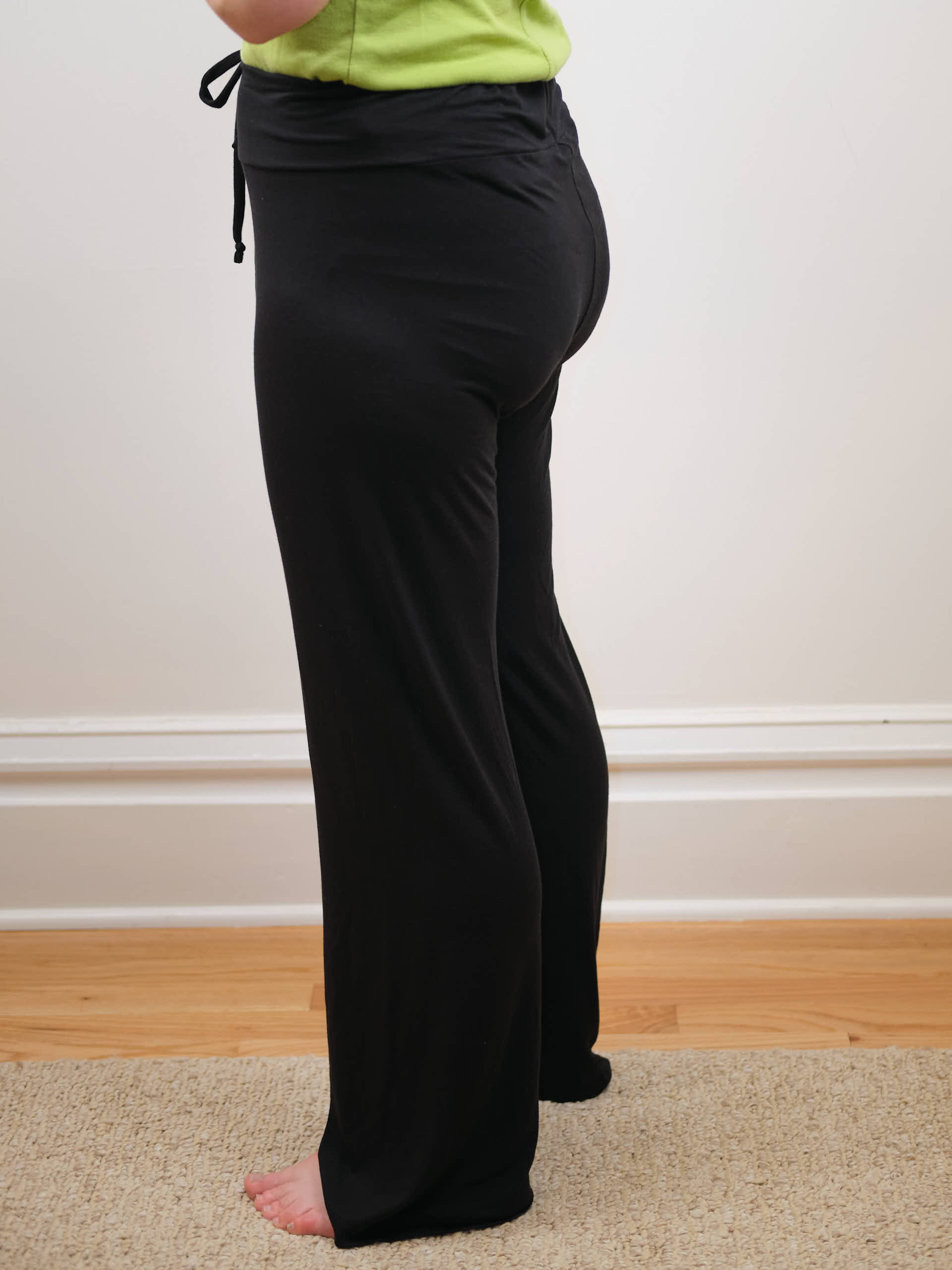
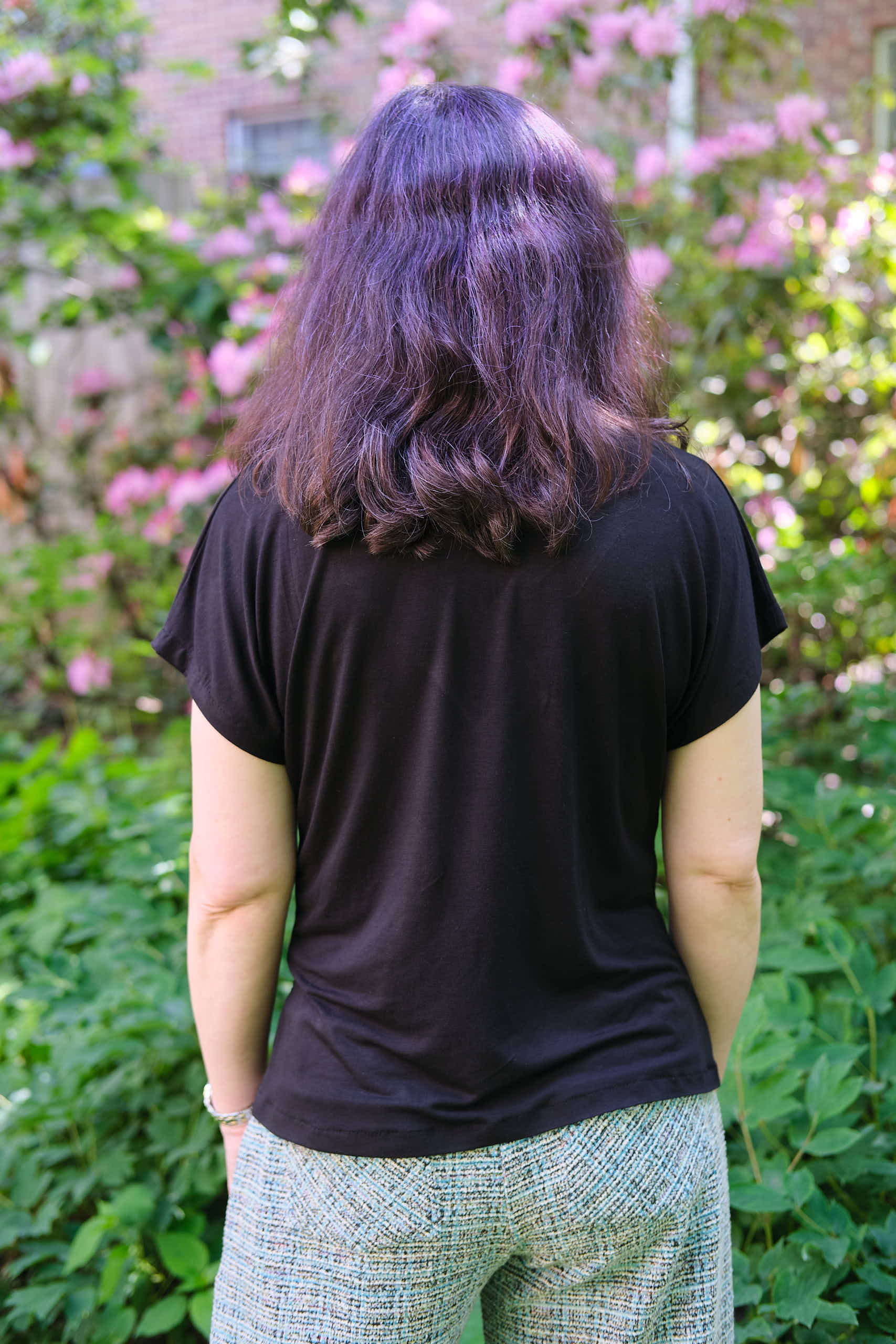
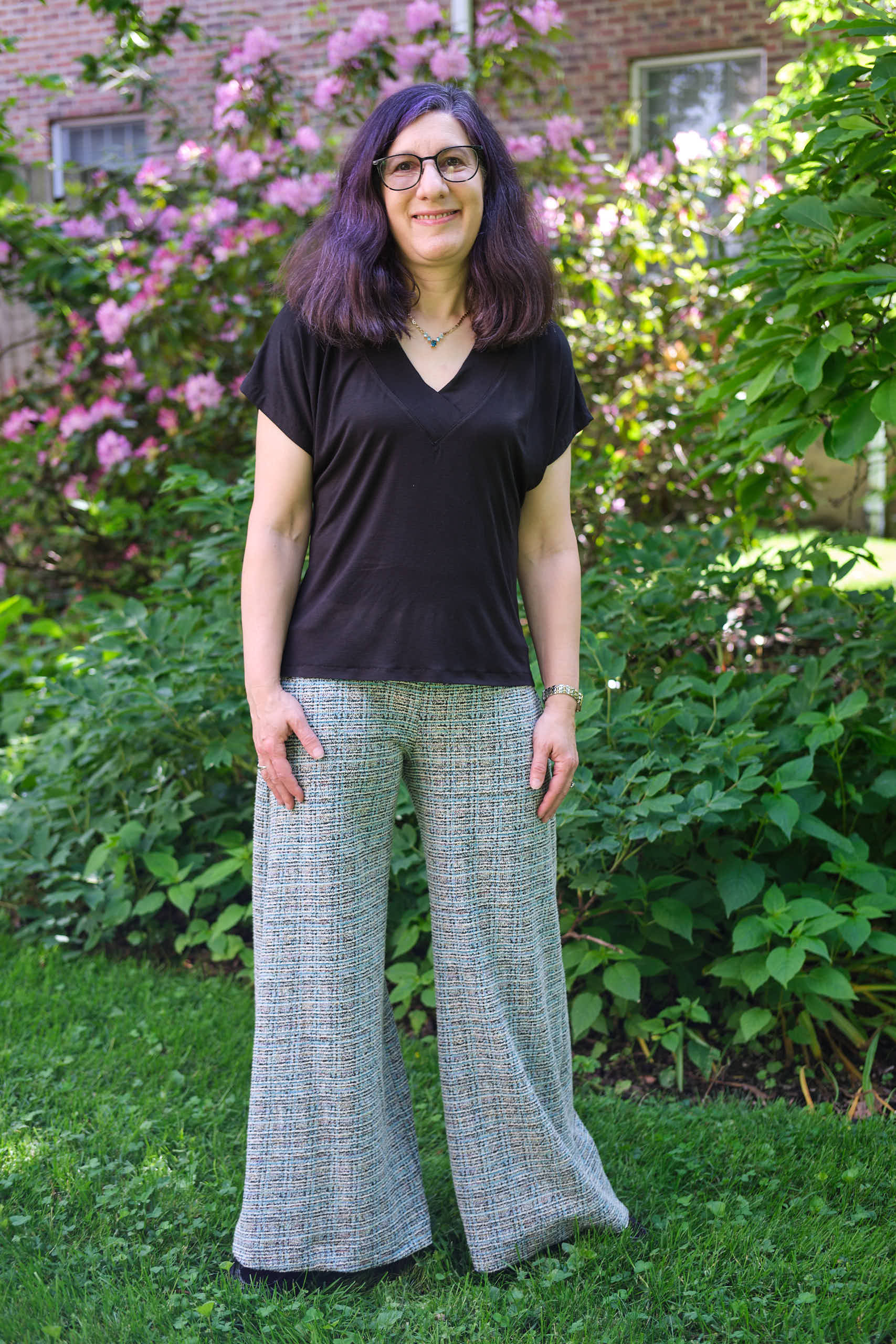
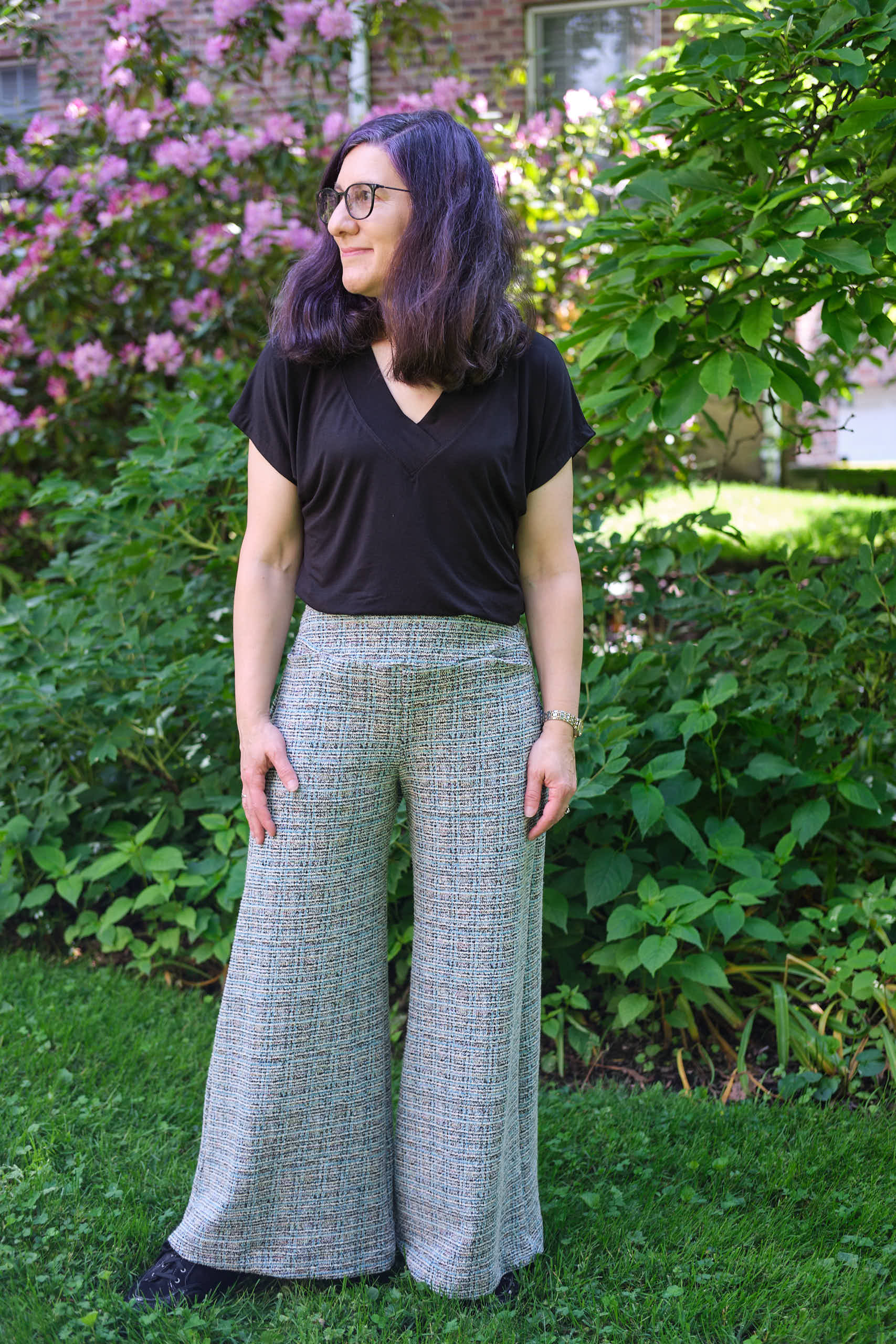
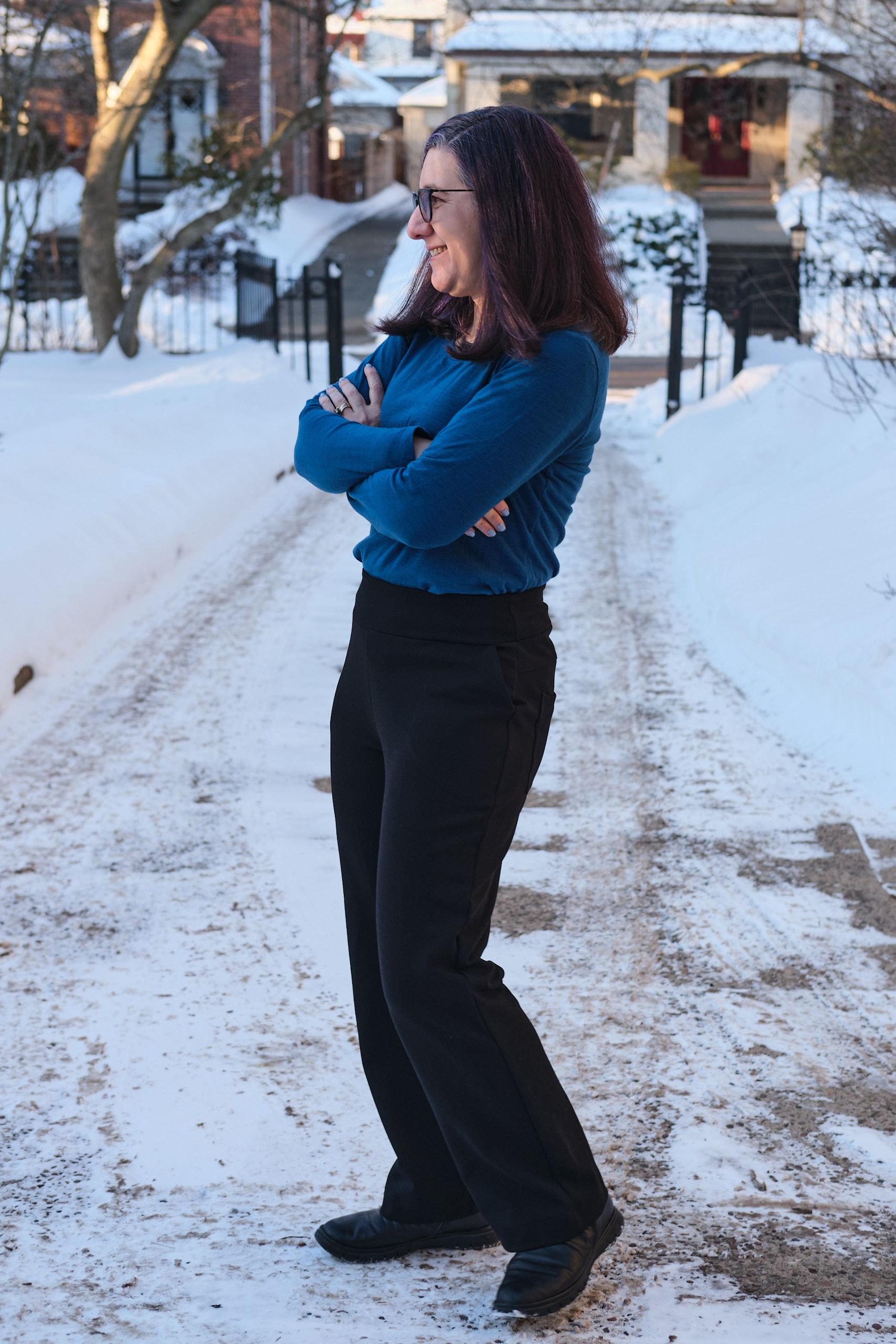
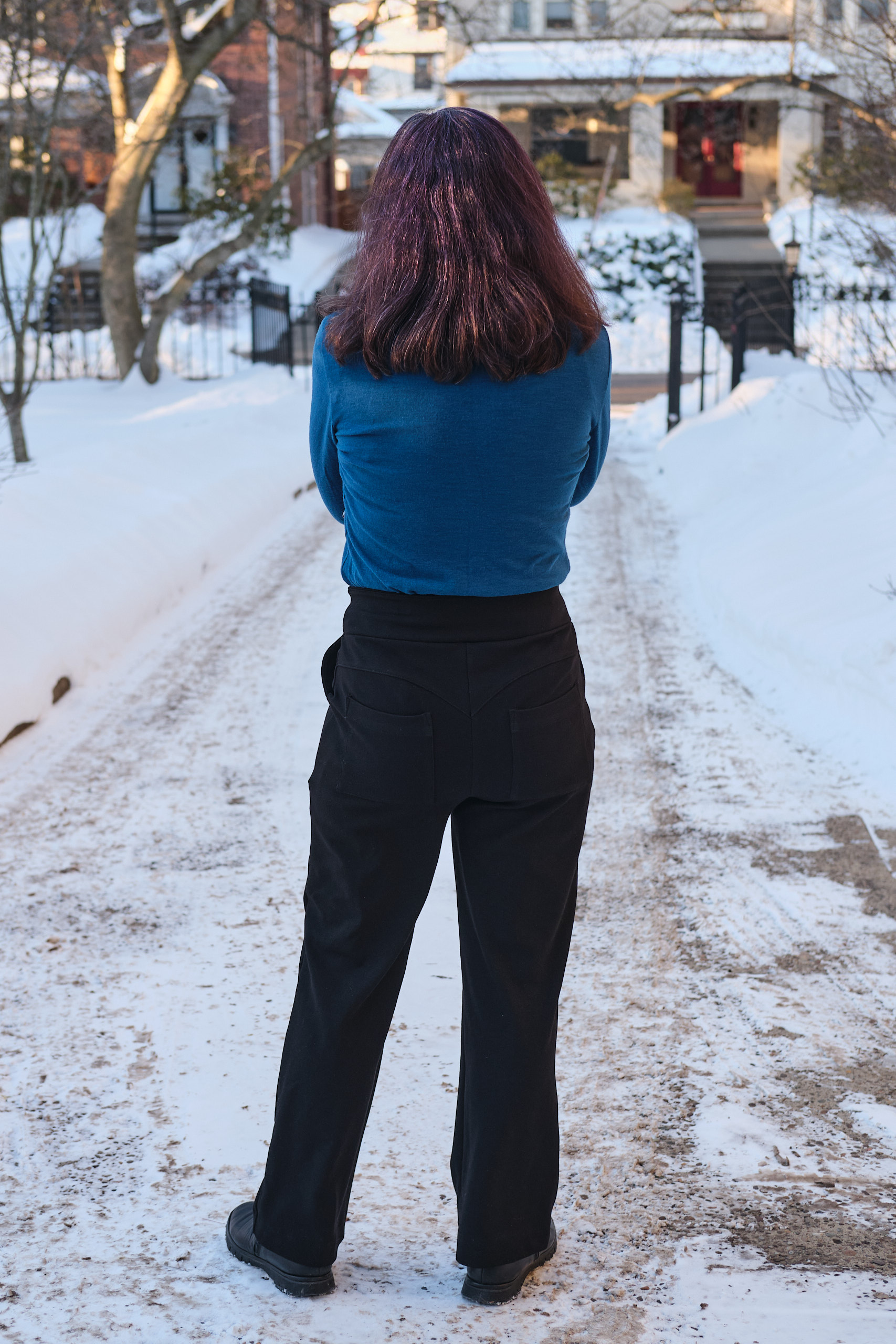
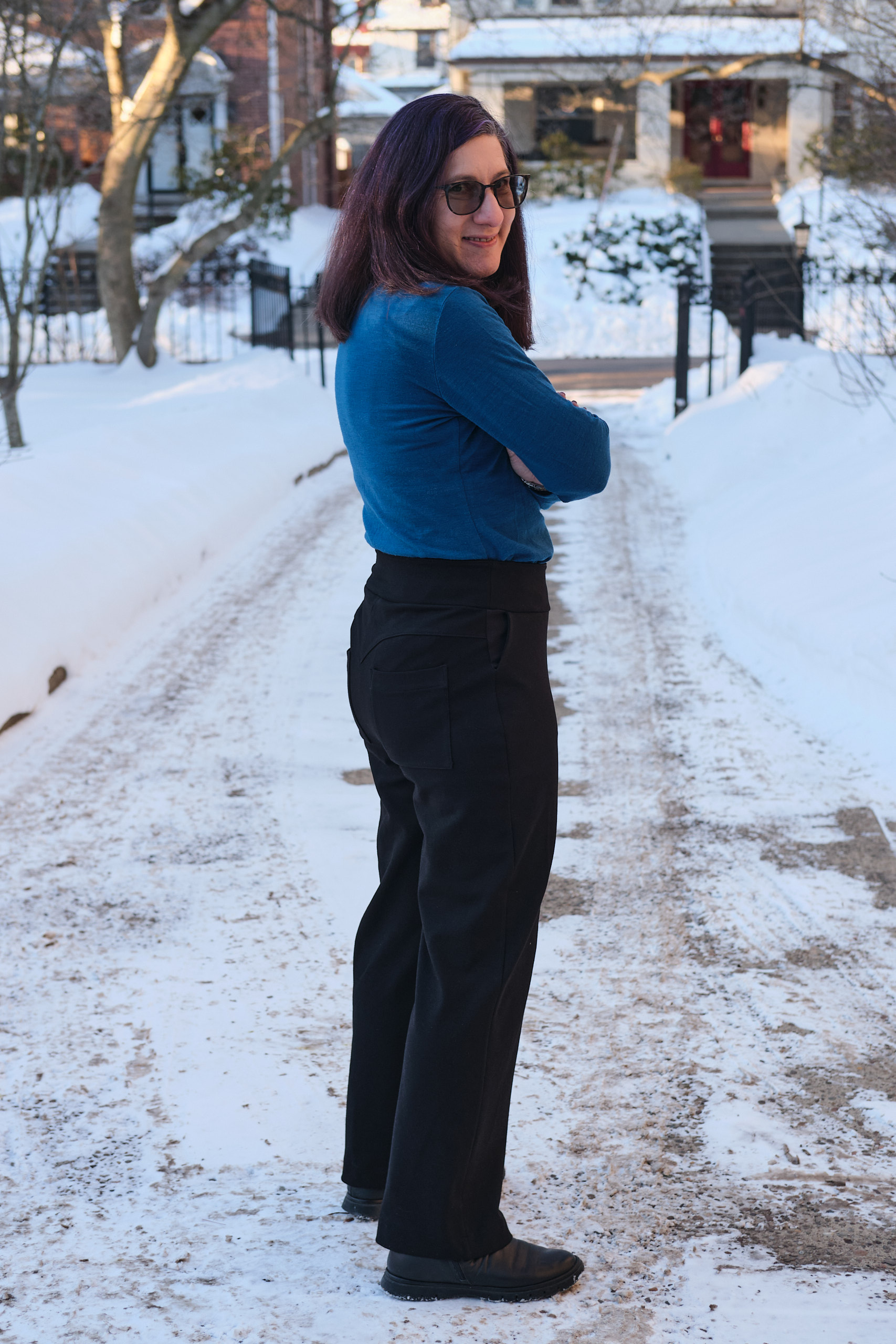
Pattern Emporium Walk Boldly pants with high rise and modified yoga waistband from PE Urban pants and jeans pockets with a straight diagonal opening from 2 yards black ponte designer deadstock, AU10.
My daughter loves her Pattern Emporium black Urban/Walk Boldly mashup pants! She asked for another pair and I delivered. These are pretty much the same as the ones I made for her in the past, except this time I used a super smooth designer deadstock ponte fabric (all ponte fabric is not created equally). I also accidentally cut the regular wide leg line rather than the extra wide walk boldly line on my pattern. I didn’t have enough of the deadstock ponte to recut it, and I didn’t want to make one leg out of the bit of regular black ponte I had leftover from the last ponte pants I made her. So I spliced on the extra boldness. It’s kind of like a tuxedo stripe. It looks fine and she doesn’t care. But she does wish I wouldn’t insist on taking her picture every time I sew her a new pair of pants.
My daughter who now won’t wear any pants I didn’t sew for her, bought herself a cheap woven-polyester, black, tiered maxi skirt on Amazon. It didn’t take long before she inquired whether I could make something like it for her, but not so cheap looking. I asked her to measure the length and circumference of the cheap skirt and take a look at the black fabrics in my stash. She thought the black cotton double gauze would work, which is great because I still have a lot of double gauze I purchased when it was on clearance two years ago.
I have previously made tiered skirts from quilting cotton by sewing together gathered rectangles of fabric. I thought I might actually use a pattern this time. I looked at tiered skirt patterns from my favorite pattern companies and purchased one that I decided not to use because it was based on curved rather than straight skirt pieces. I went back to my rectangle approach and used the pockets and gathering instructions from the Pattern Emporium Meet You There dress. I used this dress last year to make a dress from orange cotton double gauze, and really liked the instructions for gathering the tiers using clear elastic.
Gathering a large length of fabric using the traditional method of sewing long basting stitches, pulling the threads, and trying to distribute the gathers evenly is time consuming. With the elastic method, you cut your elastic just a bit bigger than the tier you want to attach your gathers to, and mark quarters and eighths. Then you mark the quarters and eighths on your big piece of fabric. As you sew you stretch the elastic and match the marks on the elastic with the marks on the fabric. When you let go of the elastic, it contracts and the fabric is perfectly gathered. Buy the pattern for a better explanation of this. I like to have marks every few inches, within what fits on the extended bed of my sewing machine. So for the largest tier I ended up splitting the quarters into thirds, and thus I marked twelfths rather than eighths.
I decide don the size of each rectangle based on the desired length and circumference. I made the bottom tier an inch longer to support a 1-inch hem and I made the top tier an inch longer so I could fold it under 1 inch and insert elastic. Here were the dimensions I used for two rectangles for each tier (6 rectangles total):
top tier: 14×22 middle tier: 13×35 bottom tier: 14×56
Each tier is roughly 1.6 times larger than the one above it. You don’t want a ratio much bigger than that or you will end up with an enormous bottom tier. I could have started with a wider top tier and reduced the ratio, resulting in more gathers at the waist, wider hips, and less gathering below — and still achieved the same bottom circumference.
I gathered and sewed the front and back separately, added the pockets, and then sewed the front to the back. Then I folded under the waistband and threaded in elastic. And finally, I hemmed the bottom.
In December, while travelling, I ventured into a mall for the first time in a long time, probably since last December. I don’t live near a mall that is all that convenient, and I think I’m just about over malls. I spent a lot of time wandering around malls in high school, and mall walking when I lived in New Jersey. Now I shop online or in neighborhood stores and make a large fraction of my clothes anyway. But the reason I mention all this is I found myself in a clothing store in a mall with one of my young-adult daughters as she was debating what size to buy in a plain white t-shirt when neither size she was considering fit her quite the way she wanted. I looked at the cotton Lycra t-shirt and sighed. “I could make you one of these that would fit you exactly the way you want,” I told her. So she left the store without the t-shirts.
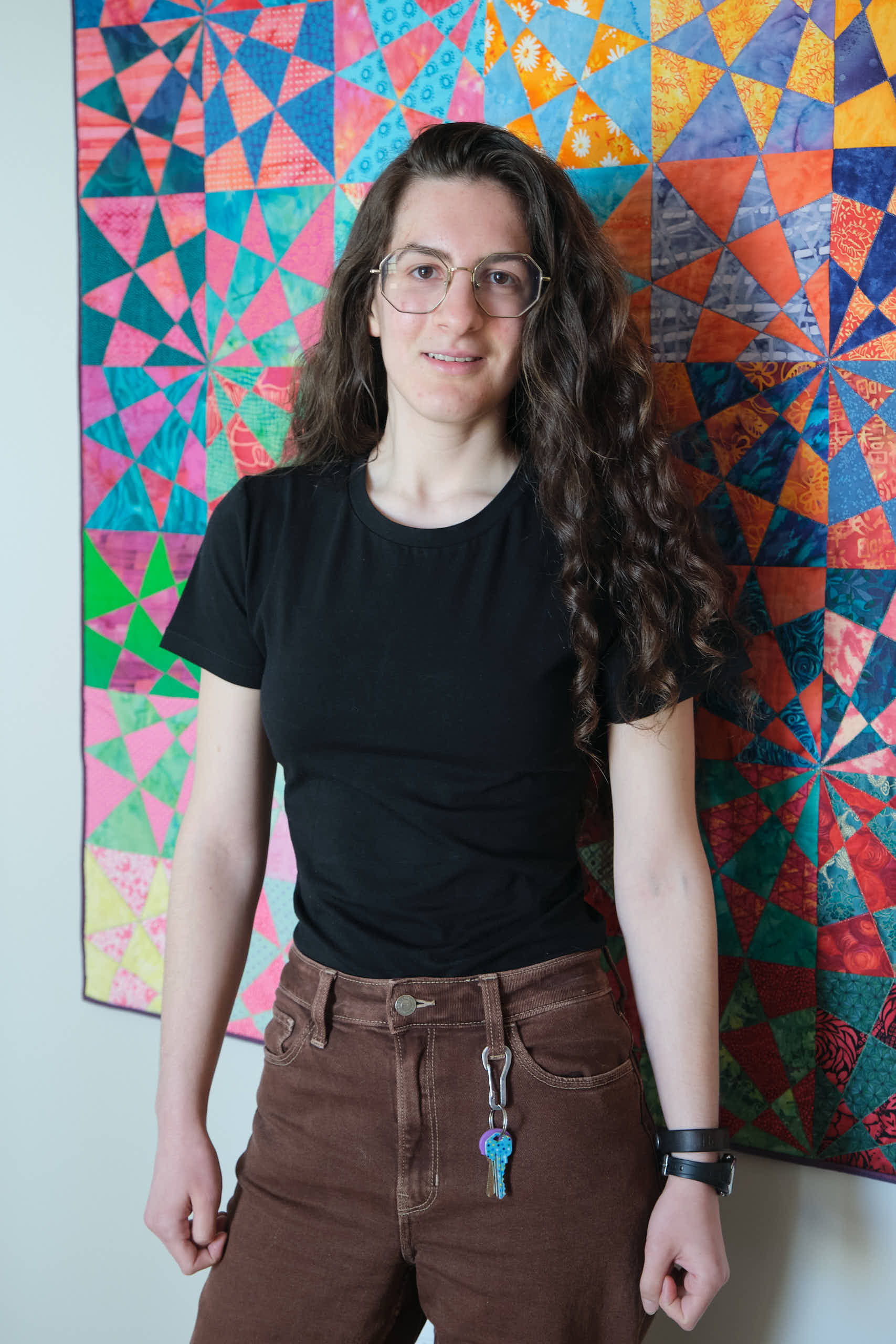
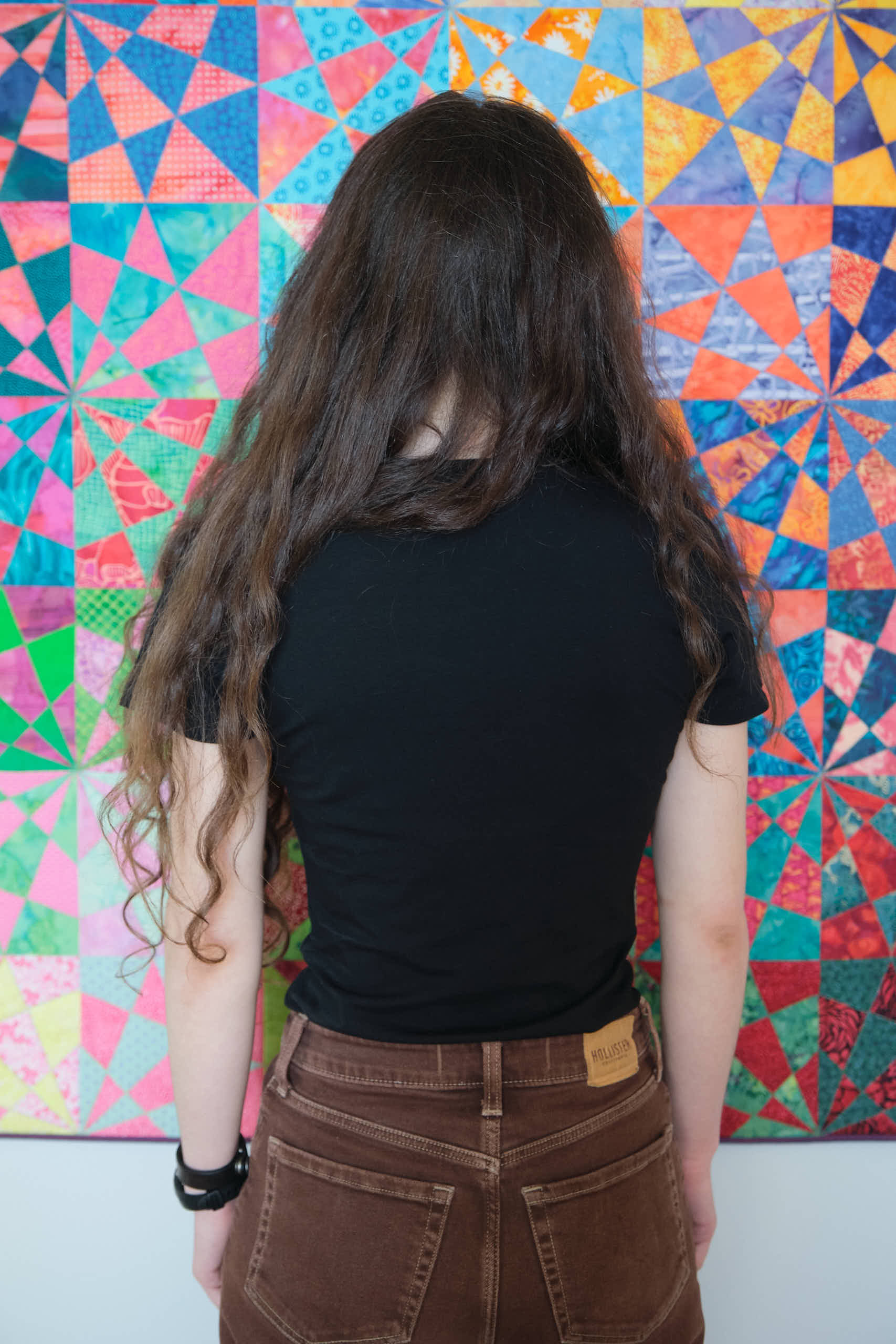
A week later, I showed her what cotton-lycra fabric I had in my stash. Sadly, I had no white, and not enough black for a shirt. But I had just enough sage green (left over from a cropped t-shirt for my other daughter) that I thought I could eke out a shirt for her. I discussed her shirt preferences and adjusted my Sinclair Bondi classic fitted t-shirt pattern for her. I cut a size 4 regular crew neck one-inch-above-hip length and graded it in from the bottom of the armscye to the hem for an even more fitted fit. After trying it on she asked for further grading. The end result fits her really well. Next time (after I order some black and white CL fabric) I will do a broad shoulder adjustment and then the shoulders will fit even better. She also asked for the crew neck opening to be raised half an inch, which is just her personal preference.
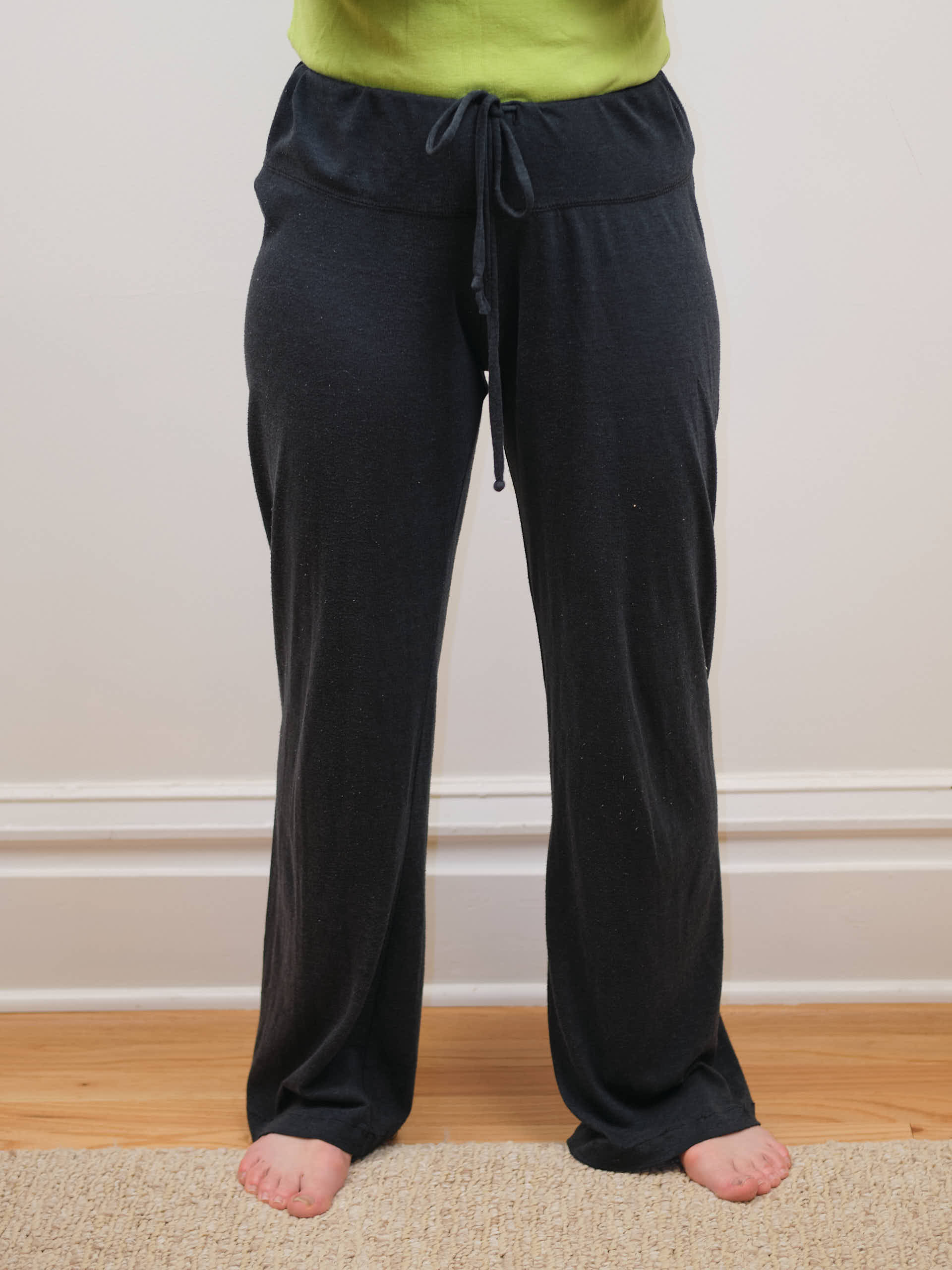
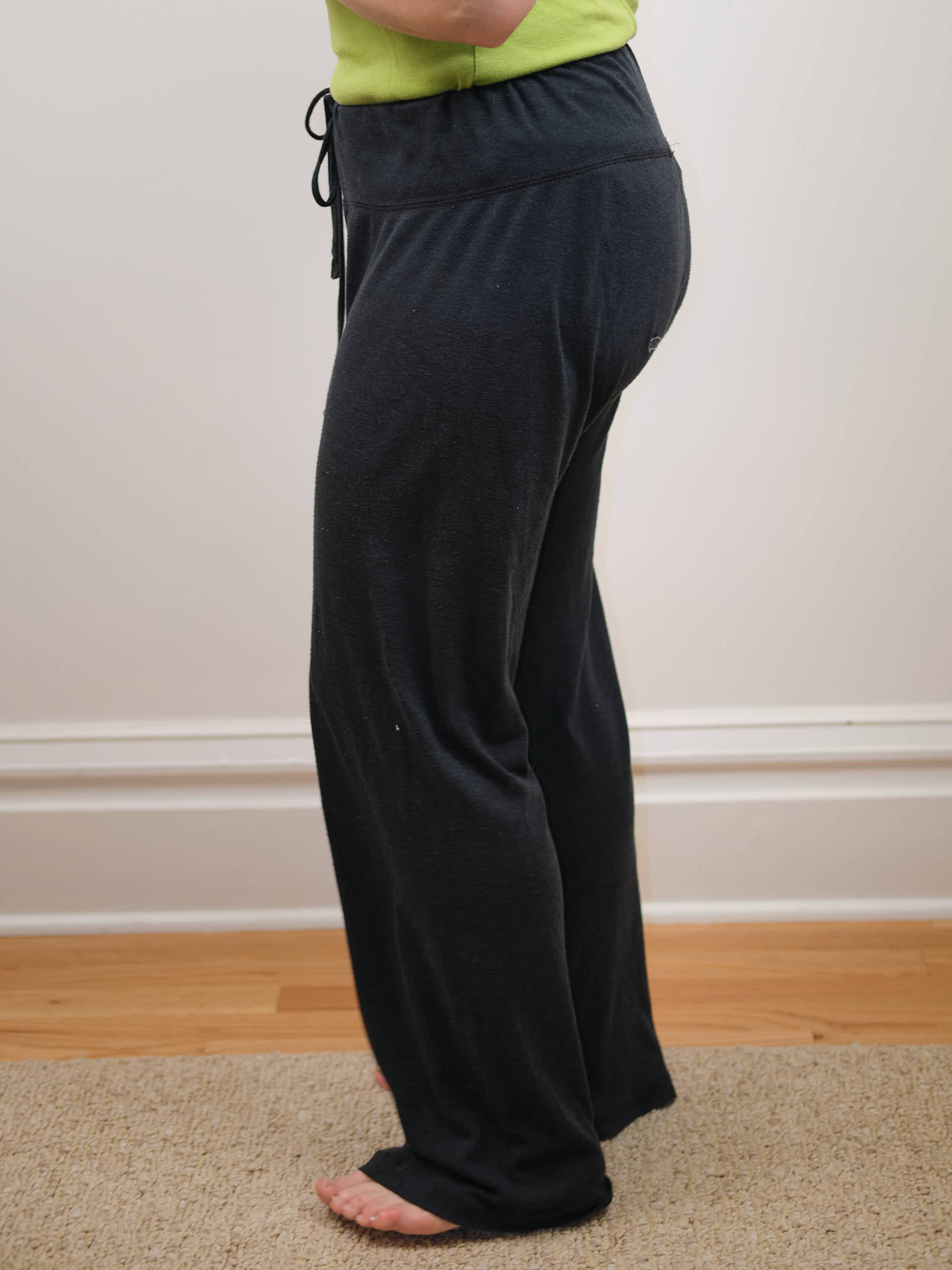
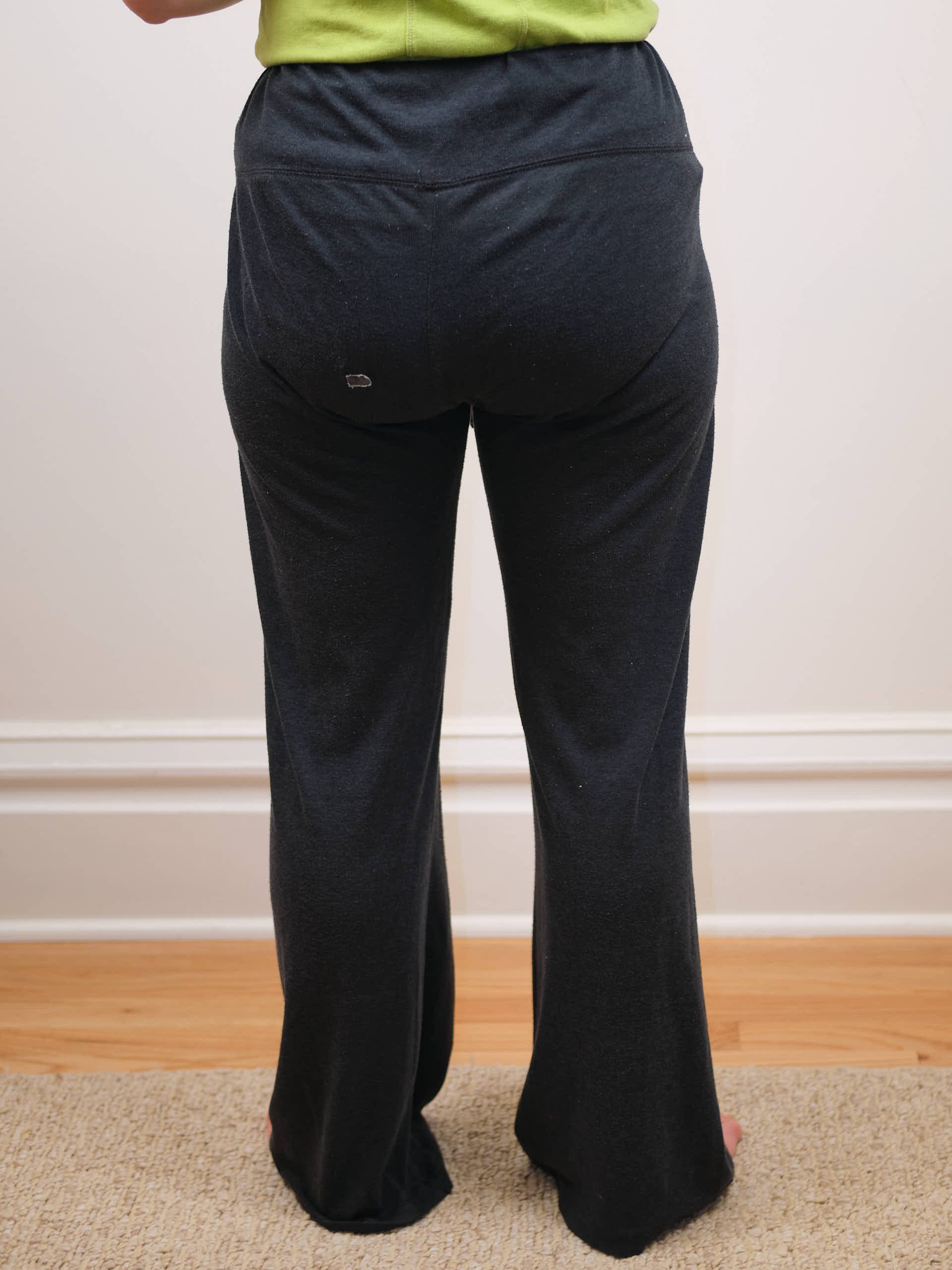
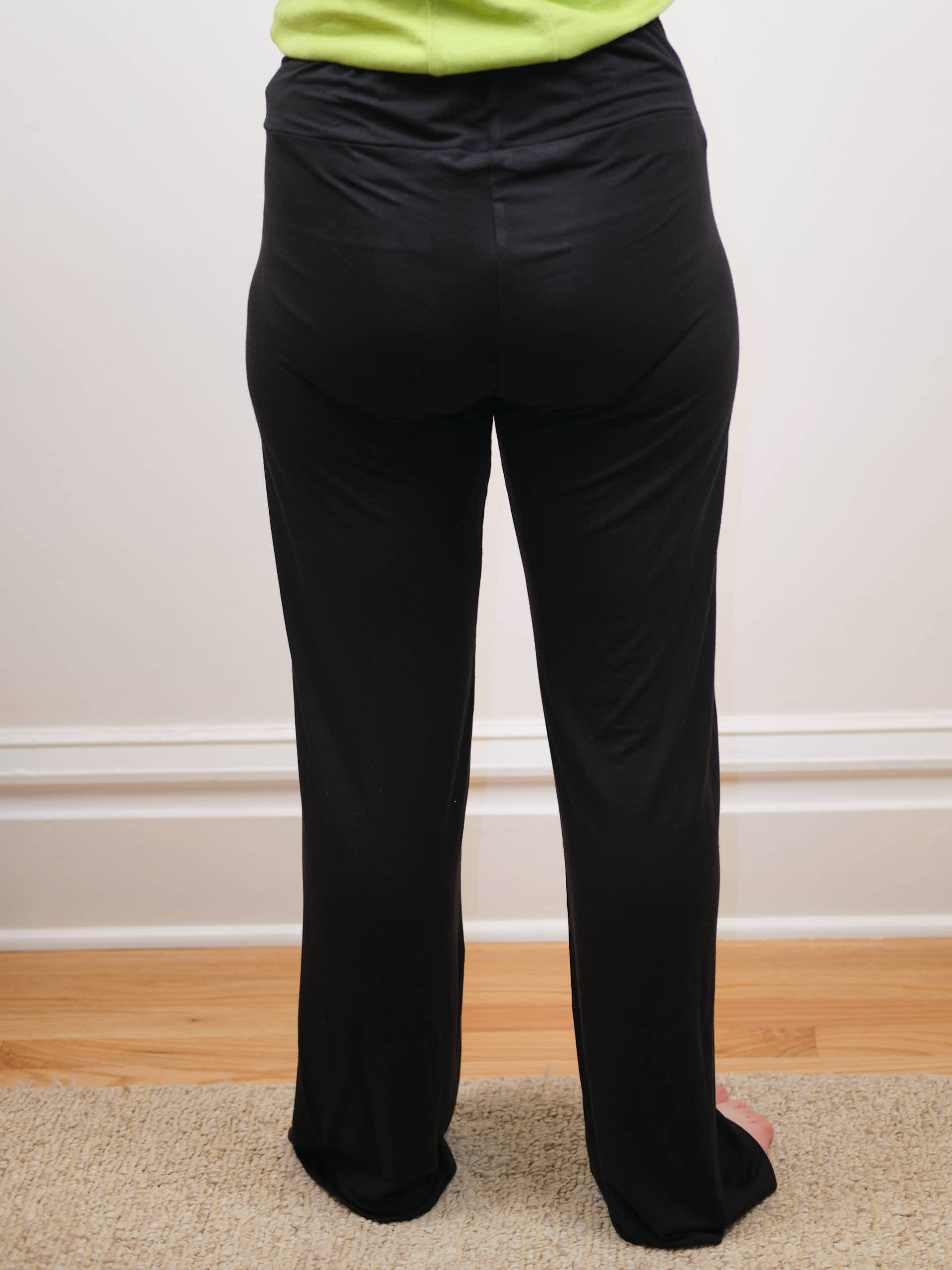
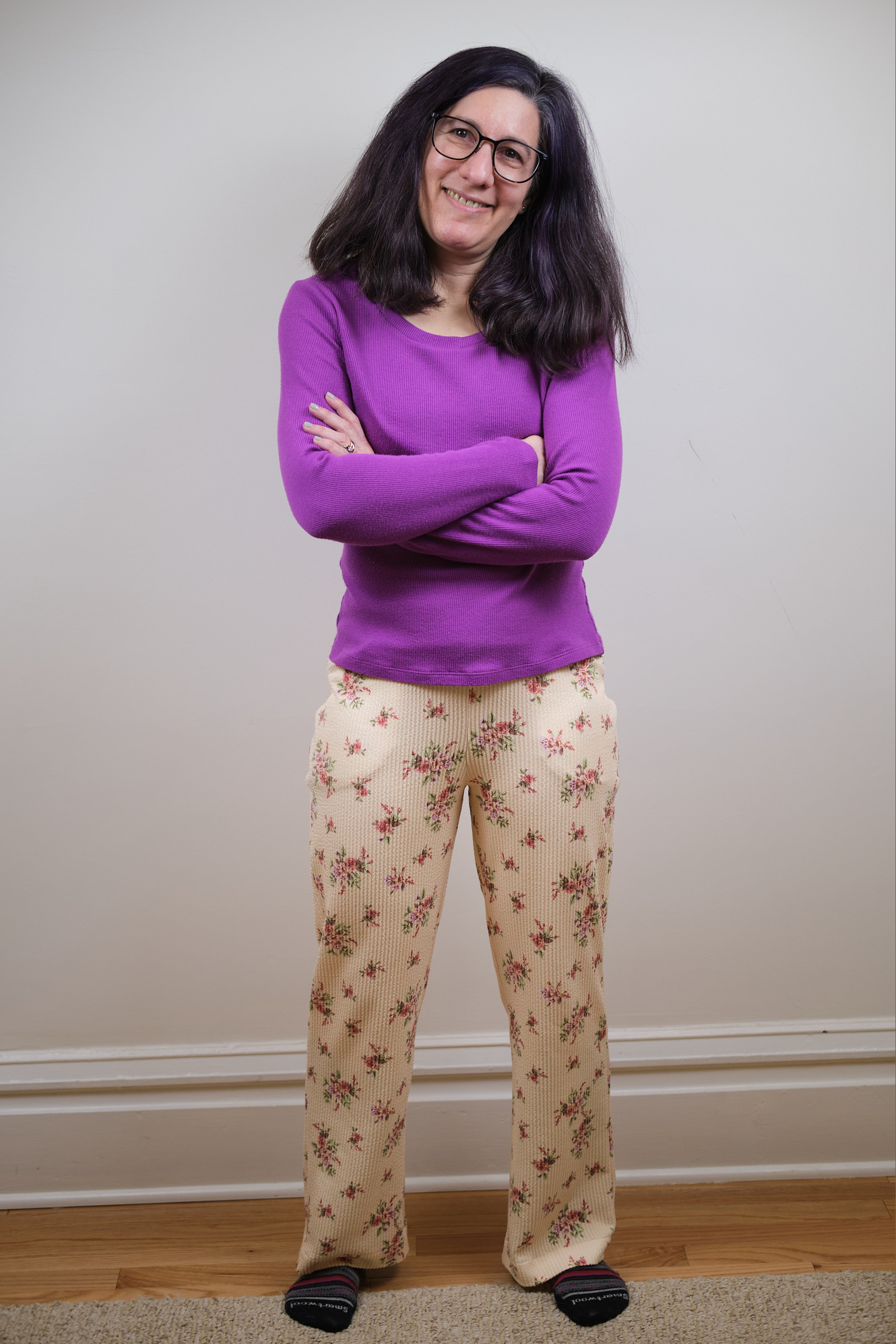
My daughter suggested I try a different fabric for her lightweight flowy pants and selected a 190gsm black athletic brushed poly jersey from Surge. The fabric is pretty stretchy, with 75% stretch in both directions. I was about to cut the Walk Boldly-Urban mashup again when she asked if I could make them with even wider legs. So I downloaded the Pattern Emporium Palazzo Pants pattern for stretch knits and decided to give it a try in the subtle flare version with the high waist and yoga waistband. She wears a size AU10, which the pattern says takes about 2.5 yards of fabric. Unfortunately, I had only two yards on hand, but since the stretch is the same in both orientations, I was able to rotate the pattern 90 degrees and lay out all the pieces on 2 yards of 58″-width fabric.
The Palazzo Pants pattern has many of the elements I’ve come to expect in other PE pants patterns. I love the fact that this pattern has so many options: both the yoga and elastic waistbands, high and low waist, multiple types of pockets, and two levels of flare. I typically mix and match elements from the Urban Pants collection and the Walk Boldly pants. It’s nice having everything here in one pattern. This pattern is similar to the Urban Pants/Walk Boldly combo, but with a lot more flare in the legs and no back darts.
I sewed the pattern as written with only one change: I stitched a row of 1/2-inch elastic inside the yoga waistband before I folded it in half. I find that if you put stuff in your pockets, the yoga waistband tends not to stay up on its own and needs the elastic for reinforcement. I could just use the elastic waistband, but I like how the elastic is stitched down and doesn’t twist and the band itself is less bulky. But both styles are nice. I cut the regular length of the pants and gave them a generous 2-inch hem to keep the stretchy fabric from dragging on the ground and getting stepped on (a 1-inch hem would have looked fine based on her height and the shoes she usually wears). I overlocked the bottom edge, folded it under, and sewed the hem with a shallow zigzag.
My daughter and I are both pretty happy with how the pants turned out. I’m sure I will be making these again. The subtle flare is quite flared enough. I usually raise the pocket openings of PE pants and I forgot to do that on these — I would probably do that in the future and might also add interfacing to the top edge of the pocket opening to keep it from drooping. (Pants modelled here with the color-blocked Sinclair Crew sweater I made her in a cropped version.)
Bonus picture below on New Year’s Eve. My palazzo-pants-wearing daughter is also wearing an Ellie and Mac Lakeisha top I made her two years ago.
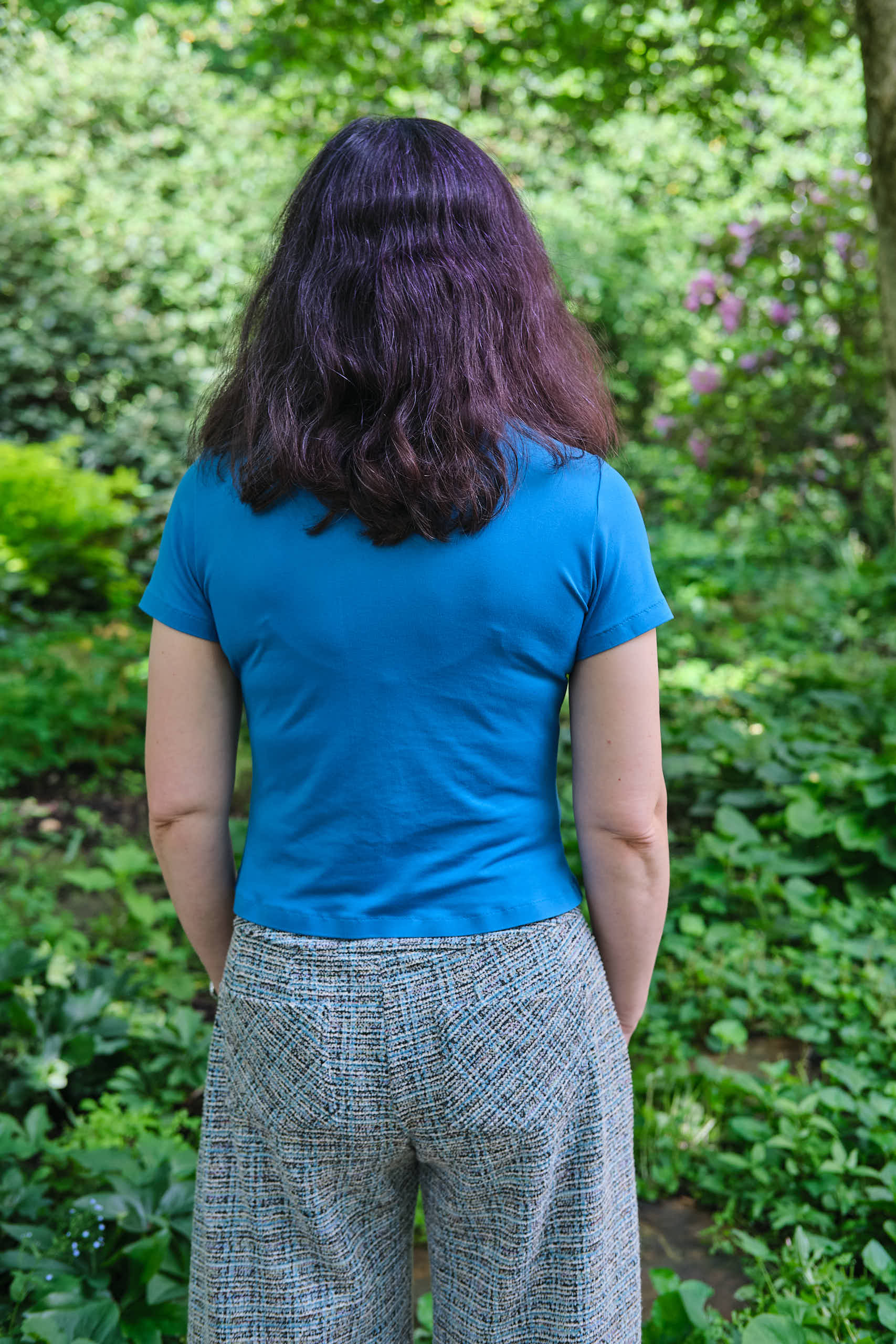
Sinclair Bondi classic fitted t-shirt 6p, screwp neck, broad and sloped shoulder adjustments, bishop sleeves with long cuff, 1.5 yards 160 gsm 2-way stretch dark grey polyester crushed velour.
I bought a yard and a half of dark grey polyester crushed velour last winter and thought it might make a nice dressy top. It’s a medium-weight 160 gsm all polyester with no spandex. I didn’t notice until I got it out to sew it that it was only 2-way stretch, not 4-way stretch.
Most knit patterns I own (and most that my favorite pattern makers sell) are designed for 4-way stretch knits. These are knits that stretch BOTH horizontally and vertically. They are in many ways easier to work with than 2-way knits that stretch only horizontally (or occasionally only vertically) and tend to be easier to fit and more forgiving. When sewing a fitted knit shirt, it is obvious that we want some significant stretch in the horizontal direction to go around the body. But it is also helpful to have at least a little bit of vertical stretch so that the top doesn’t get stuck and ride up around the bust. A lot of vertical stretch can be problematic on a dress as the waistband may get pulled down and the dress may not be able to support pockets. A loose-fitting garment (a typical cotton t-shirt, for example) doesn’t need stretch to fit, since it doesn’t really even try to conform to the body. Some garments get around lack of stretch by adding seams and darts to help the garment contour to the body. Generally, patterns designed for woven fabric do this.
So, I wanted to make a somewhat fitted top out of my 2-way stretch velour, and none of the fitted top patterns I own claim to be suited for 2-way stretch fabric. (Actually, one of my patterns claimed it was for 2-way stretch, but that turned out to be an error in the pattern description that I caught because all the photos of garments people made with the pattern seemed to be using 4-way stretch fabric. A lot of people assume 2-way stretch is stretch in 2 directions, but that’s actually not how the term is used.) I considered using a woven pattern but after too much overthinking I finally decided to throw caution to the wind and use my favorite Sinclair Bondi classic fitted t-shirt pattern and just size up one size. Actually, this was not a completely reckless thing to do as I have made a lot of Bondis and I have a good sense for how it fits and how to customize it for me. I recently had problems using a low-stretch fabric with a different knit shirt pattern, but sizing up one size seemed to make it work.
The crushed velour was a bit slippery to work with, it shed silver dust all over the place as I cut and sewed it, and the edges curled a bit. The fabric listing said to iron it only on the wrong side, but I recklessly ironed it any which way I could to get it to behave, and it doesn’t seem to be any worse for the wear. I positioned the pattern carefully so that the fabric nap would all go the same way, and when wearing the garment, it would feel smooth when running my hands from top to bottom. My youngest daughter recently ranted about how much she hates it when the nap runs the “wrong way,” and she doesn’t like the feel of the rough fabric against her skin. I wasn’t about to make that mistake!
Sizing up one size seemed to have done the trick and made the 2-way fabric work quite nicely with my 4-way stretch pattern. The shirt is comfortable to wear and mostly stays in place, especially when tucked in. The sleeve cuffs want to bunch up, probably because the nap is going the wrong way on the inside of the cuff — I suppose I could have turned them the other way and violated my daughters’ rule on the outside, or maybe added a seam so the nap would go the right way on both sides.
Anyway, it was good enough for my New Year’s Eve outfit, and I could even wear another shirt underneath since the weather was frigid. I also wore my Sinclair Cleo palazzo pants (also in stretch velour, but this one is a 4-way stretch). My daughters suggested I wear it with the chain belt I’ve had since high school, which apparently is fashionable again.
Sinclair women’s Crew pullover, hip length with banded bottom and tall cuffs – two in size 6P and one in 6T plus 4T cropped version, brushed cashmere rib
Sinclair men’s Crew pulloverhip length with banded bottom in size 38 short, 38 regular, and 34 short, brushed cashmere rib
Last year I made my son and his partner a pair of matching raglan shirts in two colors of Monaco rib knit from Mily Mae Fabrics using the Sinclair Demi and Tao patterns, and I had left over fabric so I made my daughters Sinclair Bondi shirts to match. It made for a nice family photo.
This year I planned in advance to make matching color block sweaters for the whole family. I bought 14 yards of brushed cashmere rib (220 GSM 68% Poly/28% Rayon/4% Spandex) from Mily Mae Fabrics when it was on sale for about $4 per yard. As it turns out, 8 yards would have probably been sufficient for the seven sweaters I made, but I didn’t know what color combinations I would use and you never know.
I selected the Sinclair Crew pullover top this year, which comes in both men’s and women’s cuts. I made one of each for myself and my husband and then went into assembly line production mode, cutting out several at a time and sewing each step on the whole bunch before I went on to the next step.
I made the Sinclair women’s Crew pullover, hip length with banded bottom and tall cuffs – two in size 6P and one in 6T. I also improvised a size 4T cropped version that was 4 inches shorter than hip length and graded to size 0 at the waist (for my college-student daughter who only wears cropped tops). I also made the Sinclair men’s Crew pullover hip length with banded bottom in size 38 short, 38 regular, and 34 short. I did not make any modifications to the pattern except for the cropped version.
This is a pretty easy pattern to sew, and with all the bands there was no hemming involved. These bands stretch gently to fit the fabric they attach to, no gathering needed. The fabric I used was also pretty easy to work with and I was able to sew everything together without any basting.
I made each sweater with a different color combination, and I also played with different approaches to color blocking. Mine has each sleeve a different color. I like them all, but I think my favorites are the ones with different color fronts and backs with the third color for the sleeves.
We did a crafty Christmas gift exchange at work, where we were each randomly assigned a colleague to make a gift for. I couldn’t ask my gift recipient for her size, as that would spoil the surprise. She is a lot taller than me, but my guess is she is otherwise a similar size. I decided I couldn’t make her anything too fitted without knowing her actual size, so I selected the Pattern Emporium Sweet Cheeks Roomy Sweater. This is a very oversized pattern. My correct size according to my measurements is AU 10. I made an AU 10 sweater in a heavy fabric, and it is a super comfy oversized sweater that would probably be fine sized down a size or two. I also made one sized down to a size AU 4 in the cropped length in a lighter weight brushed hacci sweater knit, and it fits just fine. I decided to size down only to an AU 8 for my friend and make the hip length. I also shorten the sleeves for me but I made the full length sleeves for my tall friend.
I love the Versailles brushed hacci sweater knit because it is brushed on the inside and feels very cozy. I bought more yardage in several colors last Fall when it was on sale for about $5 per yard. I decided to use the rosey mauve color (basically a pale pink) for my friend’s sweater.
My friend was surprised that I made something that fit her without measuring her, and especially that the sleeves were long enough. I don’t have photos of her wearing it, but here you can see it on a hanger and me trying it on.
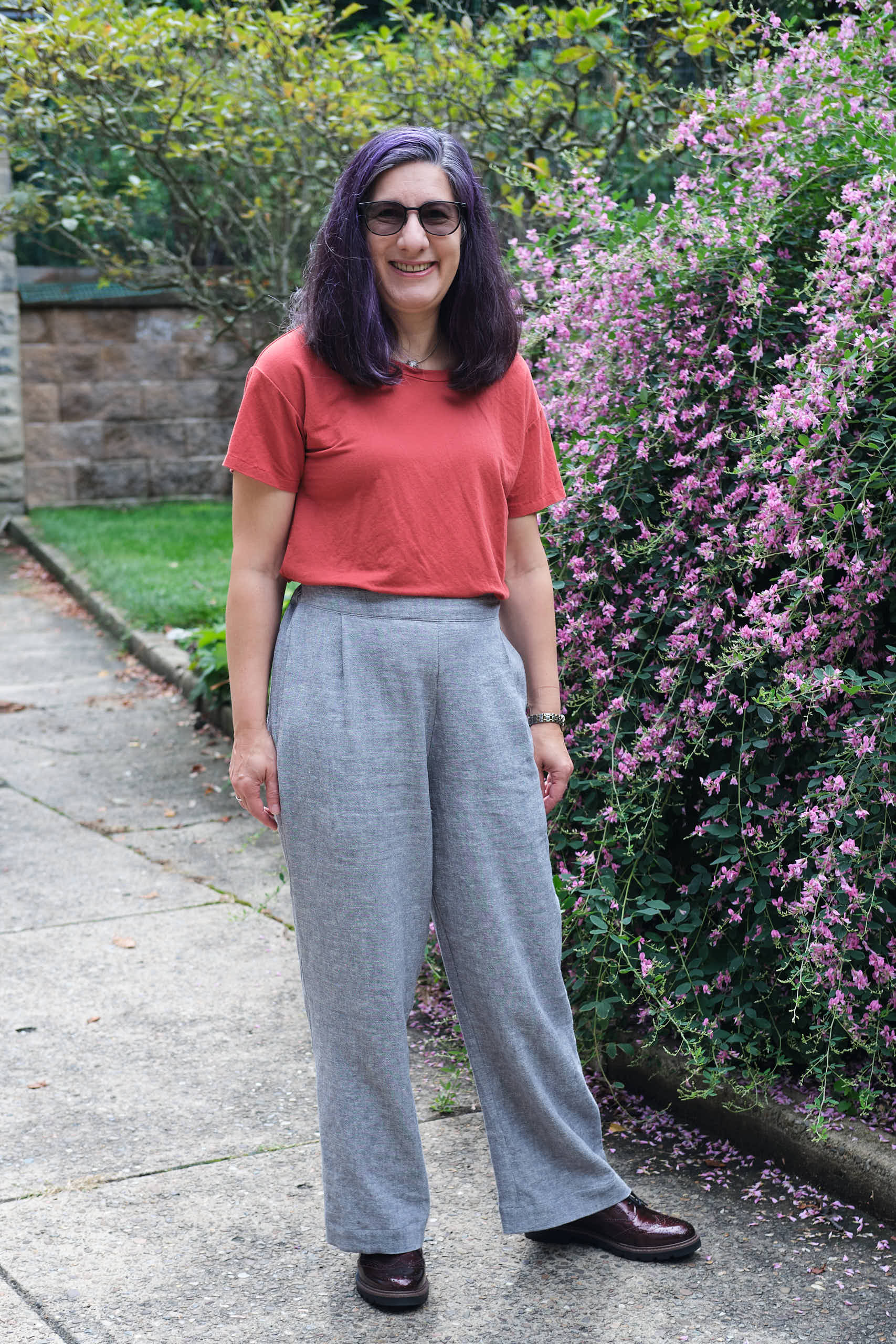
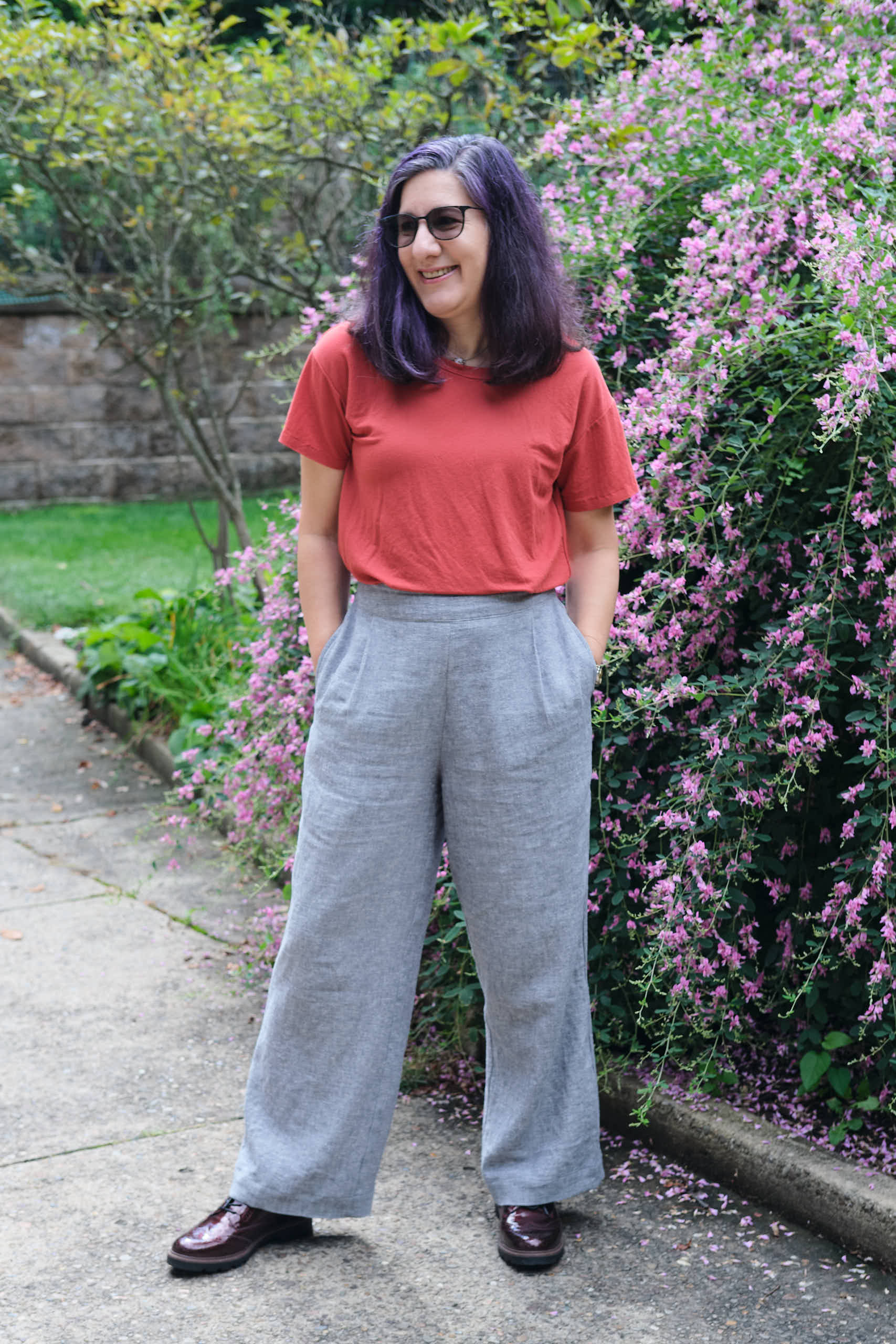
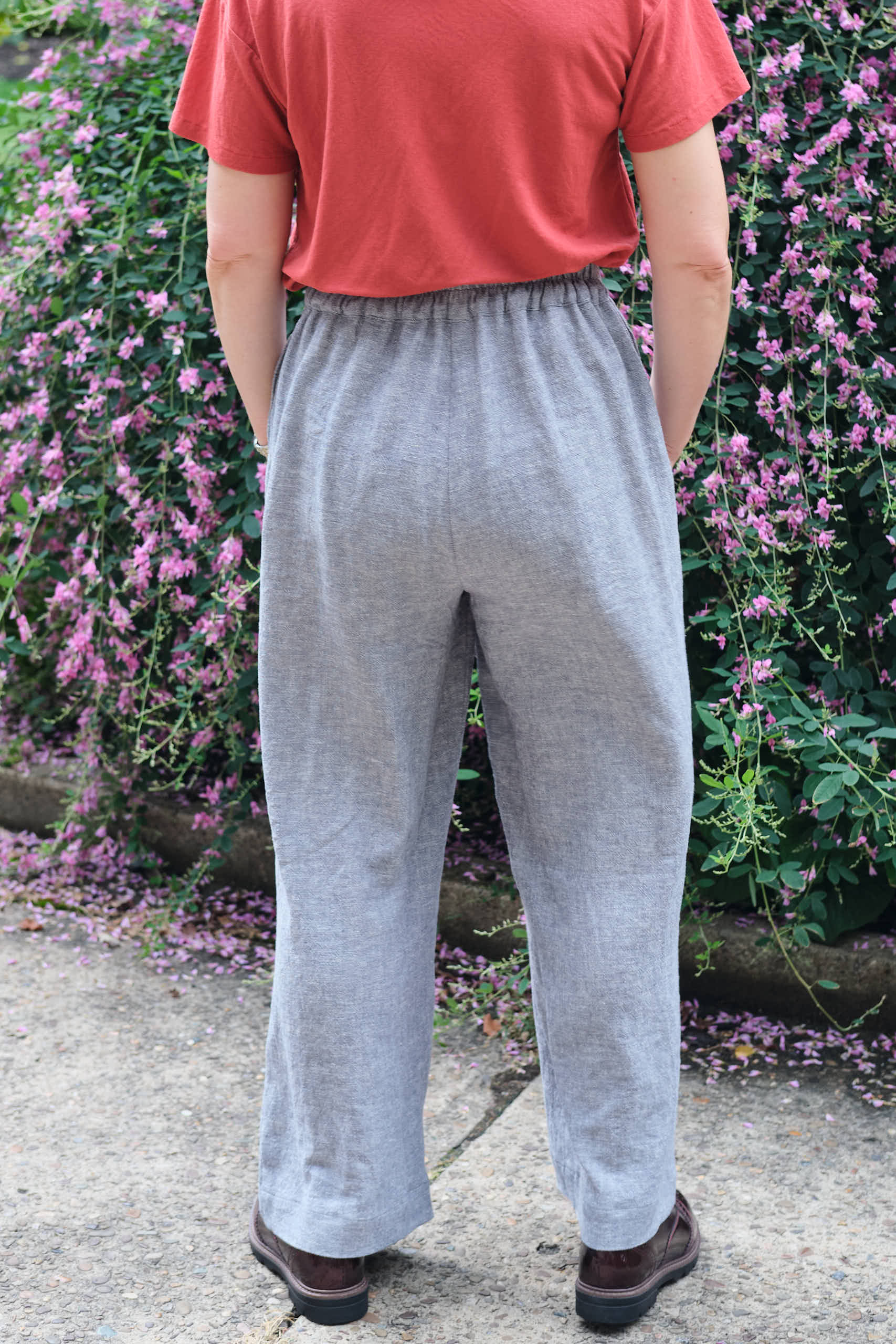
Pattern Emporium Walk Boldly pants with low rise and modified yoga waistband from PE Urban pants and jeans pockets with a straight diagonal opening from 2 yards black butter scuba, AU10, shortened 2 inches
I’ve made several pairs of mashed up Pattern Emporium Walk Boldly pants with modified yoga waistband from PE Urban pants, mostly for summer in light-weight LiKnit. When I heard about Mily Mae Fabric’s butter scuba I wanted to use if for some wide leg pants, but I didn’t manage to order any before it sold out. so when they restocked I grabbed some black butter scuba (and other colors too). The fabric is 50% Rayon/42% Poly/8% spandex with a decent amount of 4-way stretch. The right side of this fabric is brushed and has a soft, buttery feel. The wrong slide is smooth and a bit shiny.
When I cut out the fabric with my rotary cutter, it skipped in a few places and when I pulled the pieces apart, it created small runs. They’re hard to see but I know where they are, and next time I will be more careful and probably use a fresh rotary cutter blade. The runs did make me a bit concerned that the fabric could have a tendency to snag or pill, but I’ve washed it and worn the pants twice and so far so good.
I cut a size AU 10 with the waist graded in and shortened by 2 inches (and then hemmed 2 inches). I also lengthened the front and back crotch a tad. I added jeans-style pockets but instead of a curved pocket opening I cut the opening straight on a slight diagonal. The pocket openings sag a bit. I probably should have fused some interfacing to the top.
I cut the low-rise and made a contoured yoga-style waistband, effectively turning them into high-rise pants. I sewed 3/4-inch elastic at the top of the waistband between the layers and understitched it down. I used the scuba for both the inner and outer pieces. It is nice and soft with good recovery, but would not have been firm enough without the elastic (since I put stuff in my pockets and that tends to drag the waistband down). I might use a firmer athletic knit for the inner waistband in the future (as I have done on other pants).
These pants are very comfy to wear and have a nice drape: really nice dressy secret pajamas! They have a good weight to them without being overly warm or heavy, but warm enough to wear comfortably in ~40 degree F weather this week. I’m modeling them here with a PE Sweet Cheeks sweater in Versailles hacci sweater knit. I think they look good both tucked and untucked, and I’ve already worn them to work both ways.
Pattern Emporium Allure Bell Sleeve Top with plain sleeves size AU10, Wanderlust high scoop neck, hem shortened 3.5 inches, sleeves shortened 1 inch, 1.5 yard of 43″-wide ginger-red wool jersey knit.
Size AU 10, screwp neck, sloped shoulder adjustment, hem shortened 3.5 inches, short sleeves, <1 yard dusty olive cupro jersey.
Size AU 12, screwp neck, broad and sloped shoulder adjustment, hem shortened 3.5 inches, sleeves shortened 1 inch, <1 yard dusty olive cupro jersey.
I was quite pleased with my double-bell-sleeve Pattern Emporium Allure top, but wanted to try it with simple sleeves. The pattern comes with bonus plain sleeves that are slightly shaped for elbow curvature.
I have previously made quite a few long-sleeve knit shirts using the Sinclair Bondi pattern, which I like quite a bit and I think fits me really well (especially after I made a few minor adjustments). However, it is fairly fitted and I don’t think it works as well for fabric that doesn’t have a lot of 4-way stretch (although that hasn’t stopped me from using it with less stretchy fabrics, sizing up a size). For example, I noticed a lot of drag lines in the back when I used it with a low-stretch light-weight wool. Allure is semi-fitted, slightly less fitted than Bondi, so I thought it might work better for low-stretch jersey fabrics. When I put the two patterns on top of each other I could see that the Bondi size 6 and the Allure size AU10 are about equivalent. The Bondi is more fitted in the waist, flares out more at the hem, and is wider across the bust in the front. I normally make Bondi in size 4P, but size up to a 6P when using low-stretch fabric.
First, I made a plain-sleeve Allure in size AU10 from a lightweight 150 gsm, ginger-red hand-washable wool jersey knit fabric from Knitfabric.com. The fabric was advertised as having 25% stretch in each direction, but it seems to me it has more like 50% horizontal stretch and <25% vertical stretch. I used about a yard-and-a-half of 43″-wide fabric. I cut the hem about 3.5 inches shorter than the regular length, which is a good length on me for wearing a shirt untucked (which is mostly what I do), but long enough that I can tuck it in if I want to. I also did a sloped shoulder adjustment and shortened the sleeves by 1inch. I wanted a scoop neck, but knew from my previous Allure that I wanted it a little higher. So I used the front neck line from the Wanderlust dress high scoop neck and adjusted the size of the neckband accordingly. I hemmed the bottom and sleeves with a shallow zig zag stitch on my sewing machine after first folding and pressing it with knit stay tape.
I mostly liked the way this came out, but found the neckline still a little too low and wide in the front and too low in back for my taste. so for my next top, made from dusty olive cupro jersey from Surge Fabrics, I raised the front neckline about .75 inch and brought the sides in about .5 inch. I also brought the back neckline in about .5 inch and raised it to the same height as the back of the crewneck — similar to the “screwp neck” that I like with the Bondi pattern. I used less than a yard of 58″-wide fabric. This jersey cupro is 180gsm and advertised as having about 50% horizontal and 25% vertical stretch. The vertical stretch seems to me less than that. The fabric color is almost grey — the olive is very dusty. None of my green threads were a good match for this fabric so I ended up using steel grey. The curpo fabric is 65% modal and 35% poly and does not require any special care. It has a very silky feel. I coverstitched the hem, sleeves, and neckline with the steel grey thread.
The neckline came out exactly the way I wanted it on this one after I futzed with the length of the band (I basted it on, decided it was too tight, removed it and cut another one 1.5 inches bigger). But overall the top was too tight. I learned from past experience with a cupro jersey dress that it doesn’t stretch much and fits tight. The sleeves were uncomfortably tight on me. But I thought it would still work in this semi-fitted pattern. But it was too tight and had lots of drag lines. And when I raised my arms and put them back down the shirt stayed bunched up around the bust. It took less than a yard of fabric and I had started with two yards, so I decided to give this one to my daugter and try again.
It fit my daughter fine but the sleeves were too tight on her and not quite long enough (she is taller than me) so I turned them into short sleeves.
I made another Allure from the dusty olive cupro, this time size 12. I also added a .75-inch broad shoulder adjustment, in addition to the sloped shoulder adjustment — an adjustment I usually make with Bondi too. I used the screwp neck, shortened the hem by 3.5″ and shortened the sleeves by 1 inch.
This time the fit was very good. However, you can still see some drag lines at the shoulder, I think due to the lack of vertical stretch. I will definitely size up if I use this fabric again.The cupro fabric is an easy-care soft and silky fabric and has a nice drape, but it also seems to stick to itself and doesn’t smooth itself out without help, as you can see in these photos. We got the last photo below after a lot of smoothing. I think this is lovely fabric, but it doesn’t seem to work that well for a semi-fitted t-shirt. I think it works better in a dress because there is weight pulling it down. I think it would also work better with princess seams, in an oversized style, or even with a woven pattern. This one will be fine as a layering piece under a sweater or jacket.
At a Halloween party at work last year I got the idea of dressing up as Belka, the white standard poodle who roams around our office. I have been mulling this over in my mind for a year (am I obsessed?) and now finally my vision is a reality.
Originally, I was going to sew the whole costume, but I had trouble sourcing poodle fur fabric in a knit that would be comfortable to wear. I discovered I could buy inexpensive PJs/lounge wear already made in a suitable fabric. Actually, my first purchase of “white” lounge wear turned out to be off white with a cropped top, so I had to try again. The second attempt was about perfect, except the pants were too long and lacked pockets. I hemmed the pants and was able to use the hem I cut off elsewhere in the costume. I thought about adding pockets, but eventually settled on wearing a running belt with pockets under the loose-fitting top.
I spent way too much time pondering buying some white fluffy sneakers but ultimately decided I was unlikely to ever wear them again so I could just wear my regular white sneakers. Then I pondered how to make dog ears, tail, and possibly paws, and looked to the Internet for inspiration. I purchased a piece of white long-pile sherpa fleece, recommended for teddy bears. I looked at various hat patterns and ultimately decided that a hood might be better.
I had previously made a Sinclair Mojo Hood Scarf and noted that the pattern had instructions for adding ears to it. I decided to make just the hood part (not the scarf) and extend the cat ears from the pattern into dog ears. I cut up an old white t-shirt to prototype the hood. It seemed like it might work so I cut ears and hood pieces from the sherpa fleece and sewed the hood together with my serger using the t-shirt pieces as lining. It went together pretty well, but I was uncertain about how to keep it on my head. I considered adding the scarf after all, but then realized I could use the hem pieces I cut off of the pants as a turtleneck and attach them to the hood. After some trial and error and a bit of fine-tuning, I got the hood assembled. The ears don’t have quite the drape of real poodle ears, and my husband and I debated whether I should add a stiffener so that they would stay up. We agreed that the ears were cuter when pulled away from my head, but that isn’t actually how the dog in question looks.
I decided I needed a dog collar, so I ordered a buckle and strap kit with polyester webbing. I made a dog tag out of a piece of cardboard and some duct tape, and added a D ring that could attach to a leash.
The trickiest bit was the tail. I cut out a tail shape from two pieces of the fleece, sewed them together right sides facing, turned them inside out, and stuffed them with fleece scraps. But I got stuck on how to keep the tail attached to my backside, protruding out at a 90-degree angle and pointing up, not down. Gravity was not my friend here. I experimented with adding a piece of coat hanger for stiffness and attaching the tail to a piece of 1.5-inch elastic around my waist. Ultimately, I kept the coat hanger in the tail and also built a harness for the tail out of elastic and covered it with fleece. Two pieces of white elastic wrapped around my hips to keep the harness in place. The long top hides the elastic. It isn’t perfect, but it mostly works. If I were doing it again I think I would have started with a metal wire frame with a base and tail protruding at 90 degrees and then covered that with the fleece and attached it to the elastic.
Belka
I think the costume worked pretty well and was even reasonably comfortable to wear. I wore it all day at work and while walking around my neighborhood watching the trick-or-treaters. My students and colleagues enjoyed it and Belka didn’t seem to mind. Several people asked me whether she was confused by it. I think she was at first, but as soon as she sniffed me she knew it was me and she was unfazed.
Styla Vail Dress with long sleeves, size 6, sloped shoulder and swayback adjustment, knee length, sleeves and hem shortened by 2 inches, 2 yards of ponte.
The pockets and the darts were what drew me to the Styla Vail Dress, which has a higher neckline and a more fitted skirt than I usually wear. I thought about hacking the neckline or adding more swing to the skirt but decided to try the pattern as intended before making major changes. After looking at photos of the dress on the pattern company website and Facebook group, I decided I preferred the versions made from more substantial fabric so I made the dress out of about 2 yards of a red 58″-wide rayon/nylon/spandex ponte fabric that has a bit of body and weight to it. I did a half-inch sloped shoulder adjustment when I cut out the fabric. After basting it together, I added a half-inch sway back adjustment and shortened the sleeves and knee-length hem by 2 inches before hemming with a wide cover stitch.
Everything seemed to go pretty well until I started constructing the pockets. After attaching and understitching the pocket bags, I realized that the the pocket bags were not going to lie completely flat. I’m not sure exactly why, but I’m guessing the ponte stretched a bit as I was sewing the curved pocket openings. I tried steaming and pressing but never did get it completely flat. This became a problem again when I attached the bodice to the skirt. I basted and re-basted multiple times until it was close to smooth, and finally sewed it together with my serger and pressed it again. It’s not quite as perfect as I would like, but now they I look more closely at the Facebook photos I realize most of these dresses have minor pocket issues. When I tried the dress on I also noticed that the back facing is quite visible on me — there aren’t enough back photos on the website or Facebook group for me to see whether this is a common problem or not. I think this would be less noticeable with a print fabric or a lighter weight fabric, and perhaps I should have lined it with a lighter fabric rather than the ponte.
I’m still not completely happy with the pockets, and they only get worse when I load them up with my phone and wallet. Still, it is a comfortable dress to wear and I think it looks good on, despite my complaints. I might make this dress again, but if I do I would use a lighter facing, maybe extend the back facing to the waist, and try something different with the pockets. I think they might sit better if they were cut on a diagonal rather than a curve, and perhaps set the pocket openings at a less steep angle so the top of the pocket opening hits higher on the side of the dress. I would also consider splitting the front skirt piece into three and anchoring the pockets between the two seams, as I did with the modified Pattern Emporium Heartlight skirt I made for my daughter. I would align the seams with the front darts, which might look pretty good.
The best part about this dress is that if I wear it with a blazer, it looks almost like a suit. To play this up I might even make a matching blazer if I have enough red ponte left. The blazer also hides the pockets if it is long enough. Here I’m wearing my Boo & Lu Onyx pocket blazer in charcoal grey ponte.
Update: After wearing and washing the dress, I decided to go back and add topstitching around the neckline and on the pocket openings to keep the facings from shifting and having to be ironed every time I wash the dress. I used a shallow zigzag stitch on my sewing machine.
Pattern Emporium Allure Bell Sleeve Top with modern bell sleeves in short and long lengths, size AU10, less than a yard of ITY, scoop neck, shortened 5 inches.
I had some fabric leftover black and white ITY fabric from my double-faux wrap dress and decided to use it to make a double-bell sleeve top for my daughter for her birthday last month. I used the Pattern Emporium Allure Bell Sleeve Top pattern, a pattern I had previously used only to add bell sleeves to the Wanderlust dress. Allure comes with a wide range of sleeve options. I decided to use the modern bell style in short and long lengths and attach them to short sleeves. I cut size AU 10 with a wide scoop neck. The pattern falls at hip length, so for me I would make it 2-3 inches shorter to account for my short height. My daughter prefers shorter tops and she is only an inch taller than me, so I shortened it by 5 inches.
The pattern came together pretty quickly and I’m really happy with the results. I’m sure I’ll be making more Allure tops. For me I will shorten it less next time, use the sloped shoulder adjustment I used on the Wanderlust dress, and probably also uses the Wanderlust neck band, which is slightly less scooped. Here you can see me modeling it before I sent it to my daughter.
And here’s my daughter modeling it when I visited her last week. I wore it untucked, she preferred to tuck it in.
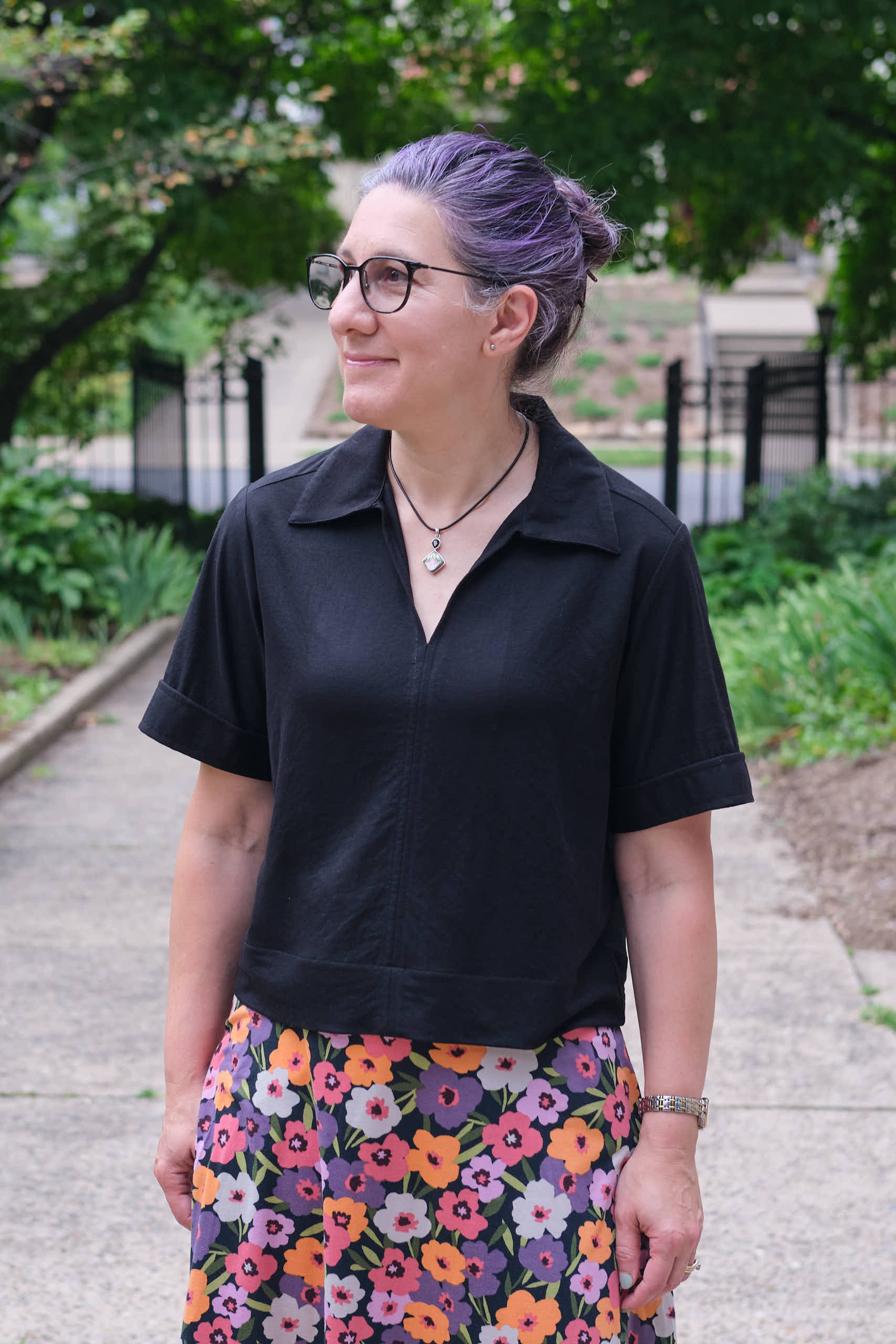
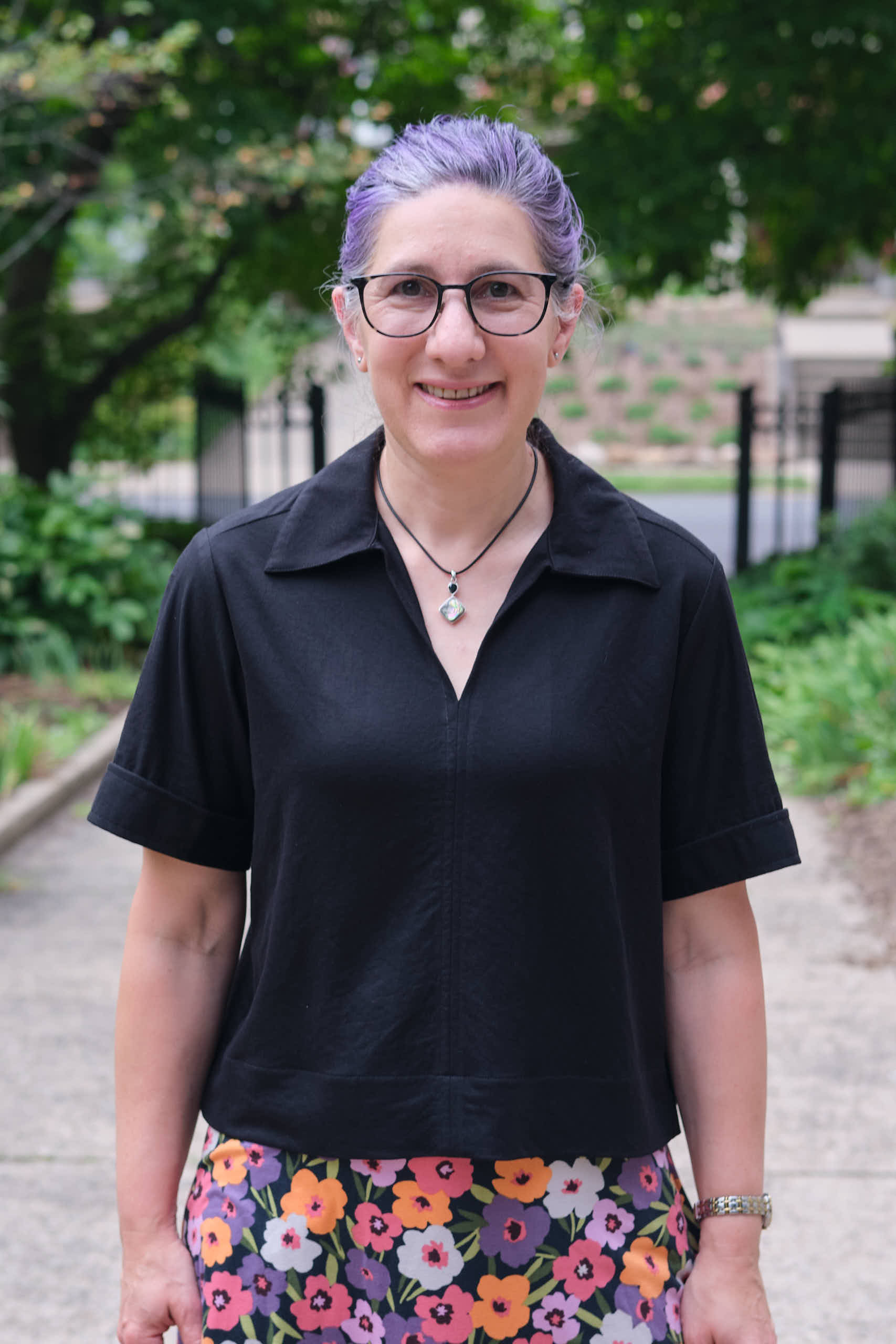
I made my lilac Be Mine and Spill the Tea mashup cap sleeve blouse as a simple, elegant summer top. So I decided to try the mashup again, but this time with the flared long sleeves from the Pattern Emporium Spill the Tea pattern. Although the size chart suggests that I am a size AU10, I sized down for all my Be Mine tops to an AU8, but they still seem a little big, so I decided to try an AU6 this time. I used the Mily Mae cobalt airflow polyester fabric this time – same woven crinkle fabric as the lilac top but a different color.
Once again, I sloped the shoulders and eliminated the front and back seam to keep this super simple. I also skipped the wide hem this time and serged the hem, and then folded it under a quarter inch twice and stitched it down with my quarter-inch edge foot. The flared sleeves were easy to assemble and attach. I shortened them by 1.5 inches before I cut them out, anticipating that I usually need to shorten sleeves unless it is a petite pattern. I sewed the whole thing together in a few hours one evening after dinner.
I like the sized-down fit, and didn’t have any problem getting it on or off. The flared sleeves aren’t as dramatic as the Be Mine balloon sleeves, but they still have plenty of drama, and they are easier to wear under a sweater. The top works both tucked and untucked.
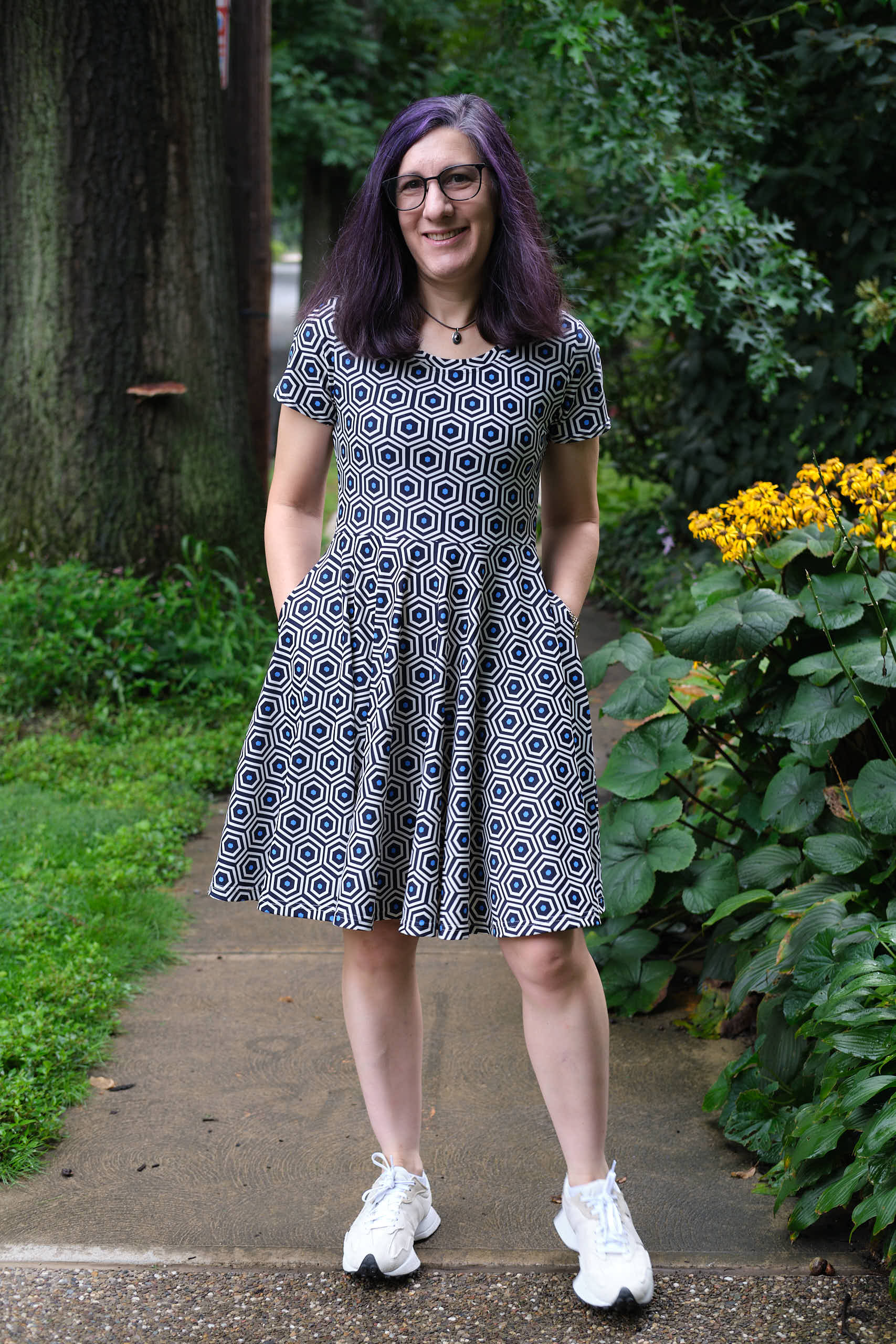
Boo & Lu Blizzard dress with half-circle skirt and raised V-neck instead of modesty panel, size 4, 2 yards ITY, bishop sleeves shortened 1.5 inch
No, it didn’t snow in Pittsburgh. Actually, the weather has been delightful and more like Summer than Fall. Nonetheless, it’s starting to feel a little bit like Fall. In anticipation of more Fall weather coming this week, I made a Boo & Lu Blizzard dress from the most Fall-like fabric in my stash, a lightweight leaf-print ITY fabric. This cracked leaves fabric from Surge Fabrics is more light and drapey than a typical ITY, and appears to be slightly brushed on the front of the fabric and smooth and silky on the back. Unlike most other ITYs I’ve worked with, the edges on this one tend to roll a bit.
When the Blizzard adult top and dress pattern was released last year, I really liked the knot-front detail, but was less excited about the modesty panel (to cover the plunging V) and the squared hem on the skirt. I decided to buy the pattern anyway, with the plan to alter it to suit my preferences. I cut a size 4 without the modesty panel and I cut the hem of the skirt using a regular half-circle skirt pattern (size 4P from the Sinclair Valley Skater skirt add-on pack, cut 1 inch longer than above-knee length). I used the bishop sleeves but shortened them by 1.5 inch at the lengthen/shorten line. I also added pockets using a self-drafted inseam pocket bag I’ve used on other skirts without waistbands (or if I don’t want to attach it to the waistband).
The knot detail looks complicated and it was a bit confusing to figure out. I was disappointed not to find a video demonstration. But I followed the instructions and photos in the pattern, and once I understood what I needed to do, it went together very quickly.
I assembled the dress and then tried it on before hemming to see whether I could wear it without the modesty panel. It was definitely wearable, but the knot hit a bit lower than I really wanted for a dress I planned to wear to work. I thought about sewing in a smaller modesty panel, but any modesty panel would break up the V-neck line. I realized if I pinched together the V about 1.5 inches above the knot I could raise the neckline and still have a V-neck. So I pinned it in place and then sewed it down. since my fabric was a fairly busy print, I just zigzagged it in place with black thread that you can hardly see on the finished dress. Had I not had fabric that would camouflage the seam so easily, I would probably have hand sewn it in place from the back.
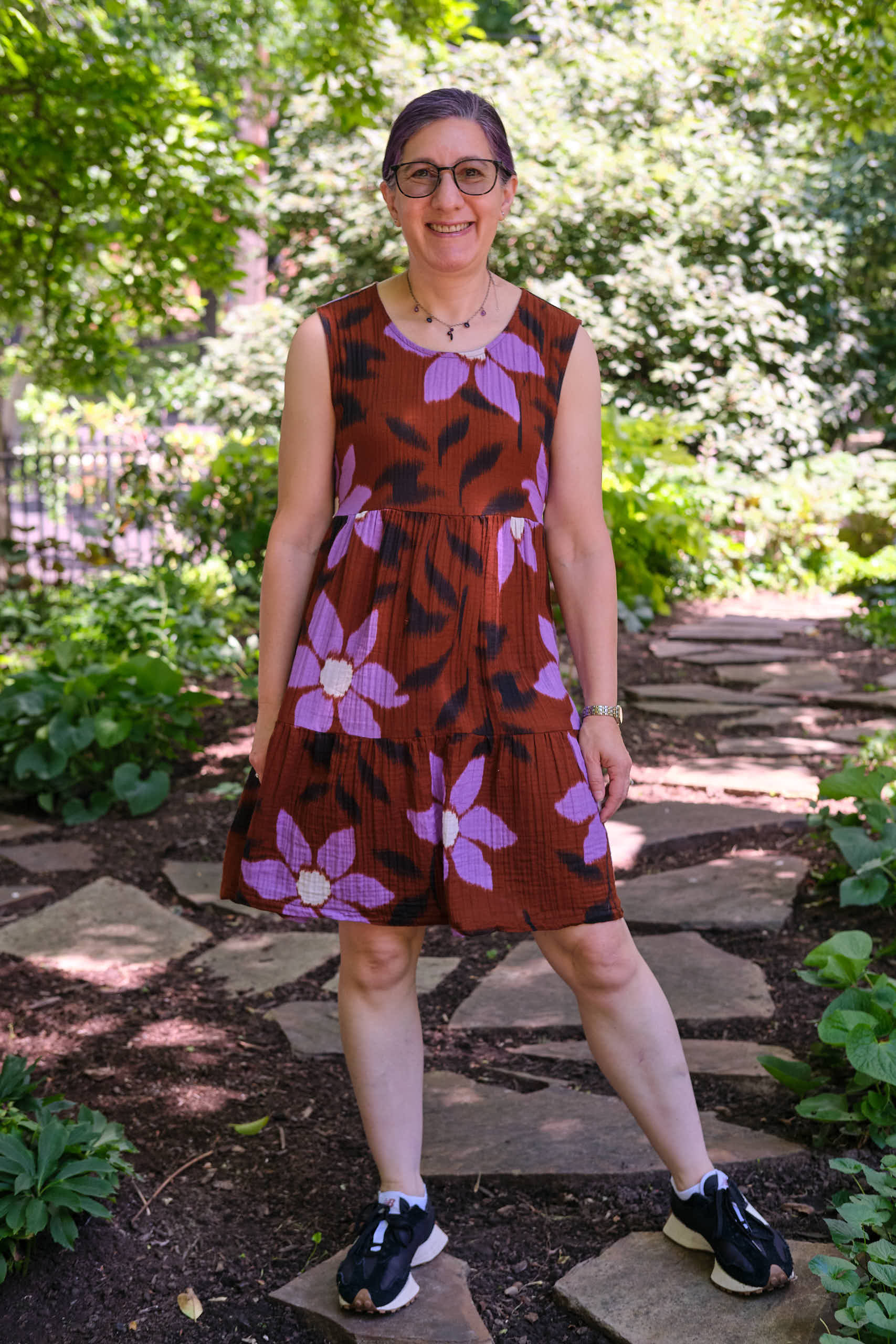
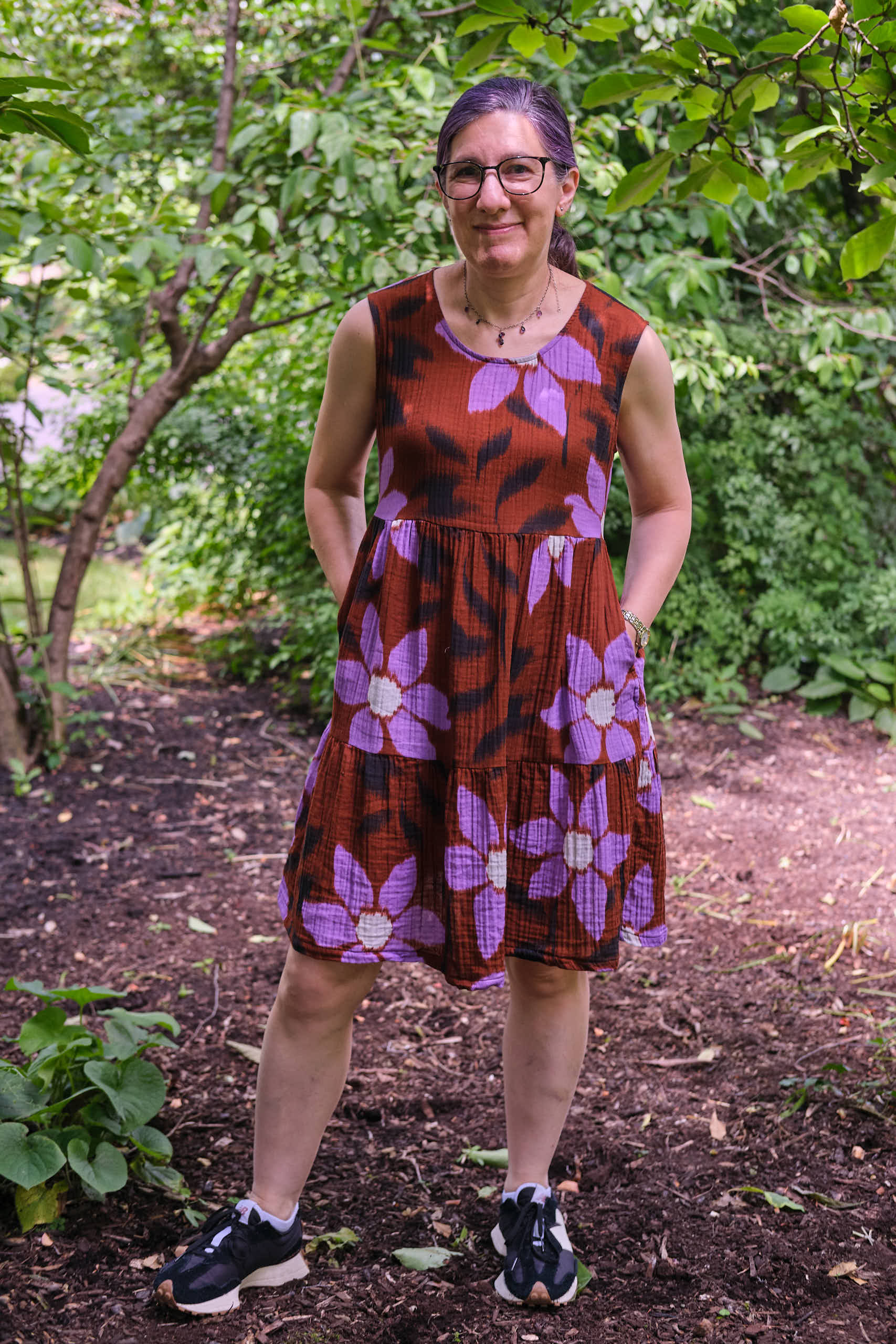
Most knit patterns I sew have 1/4-inch seam allowances, which means you can sew them with a serger without the need to trim the edges. This pattern has 3/8-inch seam allowances, which is sometimes used when you are supposed to serge the edges and then sew the seam with your sewing machine. But that is not what is suggested in the instructions so I just trimed 1/8-inch as I serged a 1/4-inch seam. It’s not a big deal, but not my preferred approach.
The bishop sleeves include a band at the wrist so no need to hem them. I used fusible seam tape to tack down a 5/8-inch hem seam and then zigzagged the hem on my sewing machine. Again, the fabric hides the zigzag so well that I didn’t bother cover stitching.
The dress bodice fits like a glove, which works well for this light, stretchy fabric. If I were sewing a heavier or less stretchy fabric, I would probably size up. I have a top I bought many years ago with a similar knot front design, but it is looser and has a center front seam. I’m pondering how to adjust this pattern to reproduce that look as well.
The dress looks great with tights and ankle boots. I’ll probably wear it with a black tie-front sweater when it gets cooler. I accessorized with an inexpensive leaf pendant that matches the fabric perfectly.
We had beautiful weather this weekend, and my photographer was willing to follow me around in search of leafy backdrops for a photoshoot, so I have lots of photos to share. We aren’t anywhere near peak leaf color here, but we still found some nice Fall backdrops.
I wanted to make a short-sleeve top to go with my magenta suit. I bought lots of polyester crinkle airflow woven fabric when it was on sale at Mily Mae and I thought the polyester lilac airflow would go well with the magenta. (Note, the airflow is advertised as non-stretch, but because of the crinkle texture, it actually does have a bit of stretch (which could, perhaps, allow sizing down a size). It’s actually fairly similar to the Surge Florence stretch woven that I used recently for a Spill the Tea top; the Florence is just a bit crisper.) I considered making another PE Spill the Tea top, but wanted something without ties. I love the look of the ties, but not futzing with them and having to keep them from getting in the way as I go about my day. I realized that the PE Be Mine Balloon Sleeve top has a very similar bodice to Spill the Tea and that the sleeves are interchangeable. The balloon sleeves are awesome, but don’t play well under jackets and sweaters (and there’s no point wasting a fabulous balloon sleeve under a sweater). So I thought I could get a more practical and layerable top for wearing with jackets and sweaters by putting the Spill the Teas cap sleeves on the Be Mine top bodice.
I cut a size AU 8 Be Mine bodice with a sloped shoulder adjustment and eliminated both the front and back center seam. I cut the regular length with the mid neckline and the wide facing. This was fairly quick to sew together without the center seams and no hemming, bands, or binding needed for the cap sleeves. The part that took the longest was the wide hem, which I think looks really nice on an untucked shirt and adds some weight to this light-weight fabric. But the wide hem is quite the process: it requires stitching, surging, trimming, understitching, folding, top stitching, and pressing between each of these steps. The simple hem option would have been much faster.
I’m pleased with how my top turned out. It looks good tucked or untucked, coming or going!
Joanne faux wrap knit dress with flounce sleeves, faux wrap flounce skirt from Flared skirts ADD-ON, size P4, pockets modified so as not to attach to waist, made from 3 yards of 60-inch-wide ITY (2 yards black, 1 yard white).
I recently made the Sinclair faux wrap flounce skirt for the Valley Skater dress and liked the results. I have long wondered about combining this skirt with the Sinclair Joanne dress, which has a faux wrap top. I figured if I had the the top and the skirt faux wrap meet at the waist it would look close to a real wrap dress.
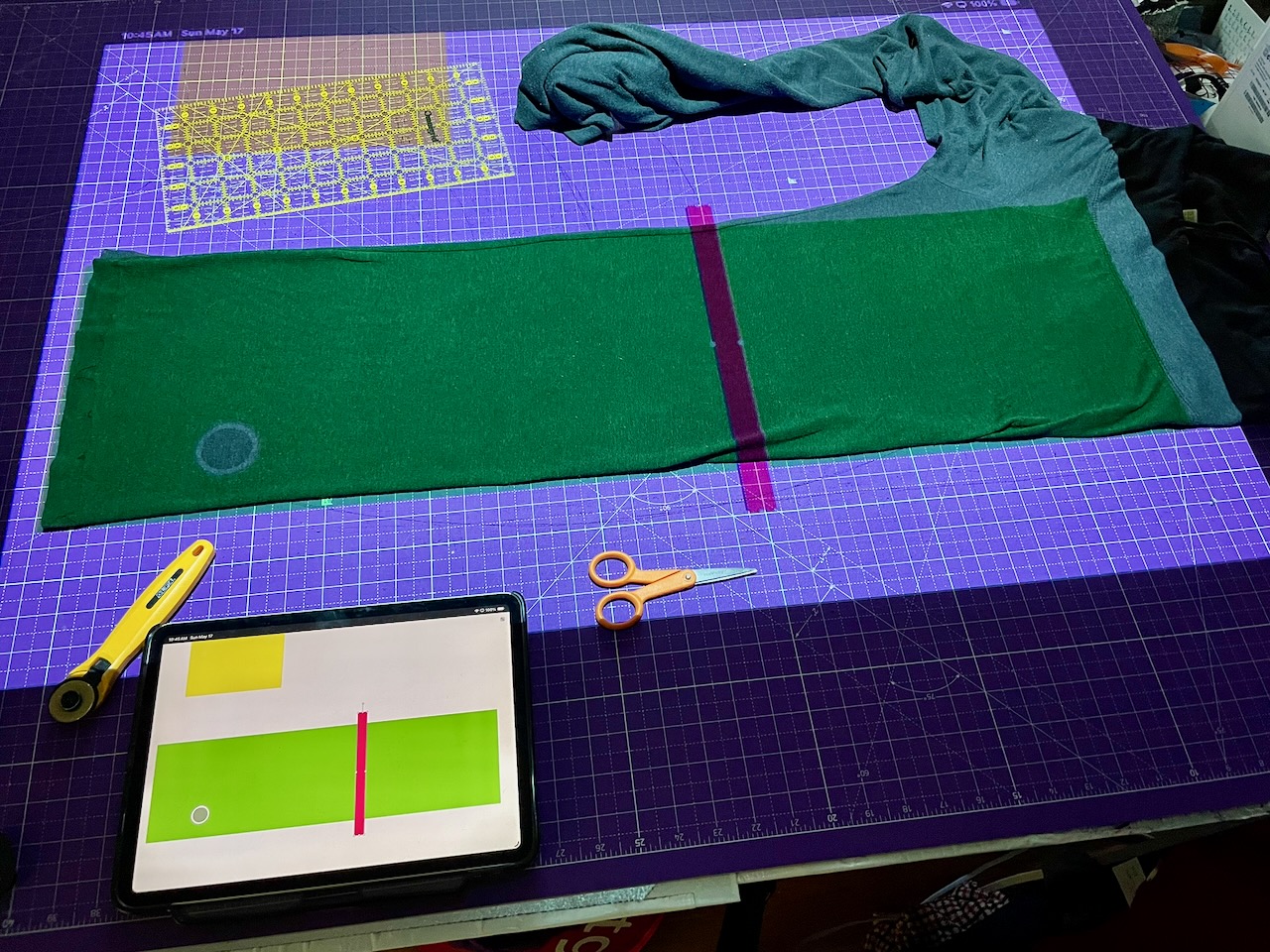
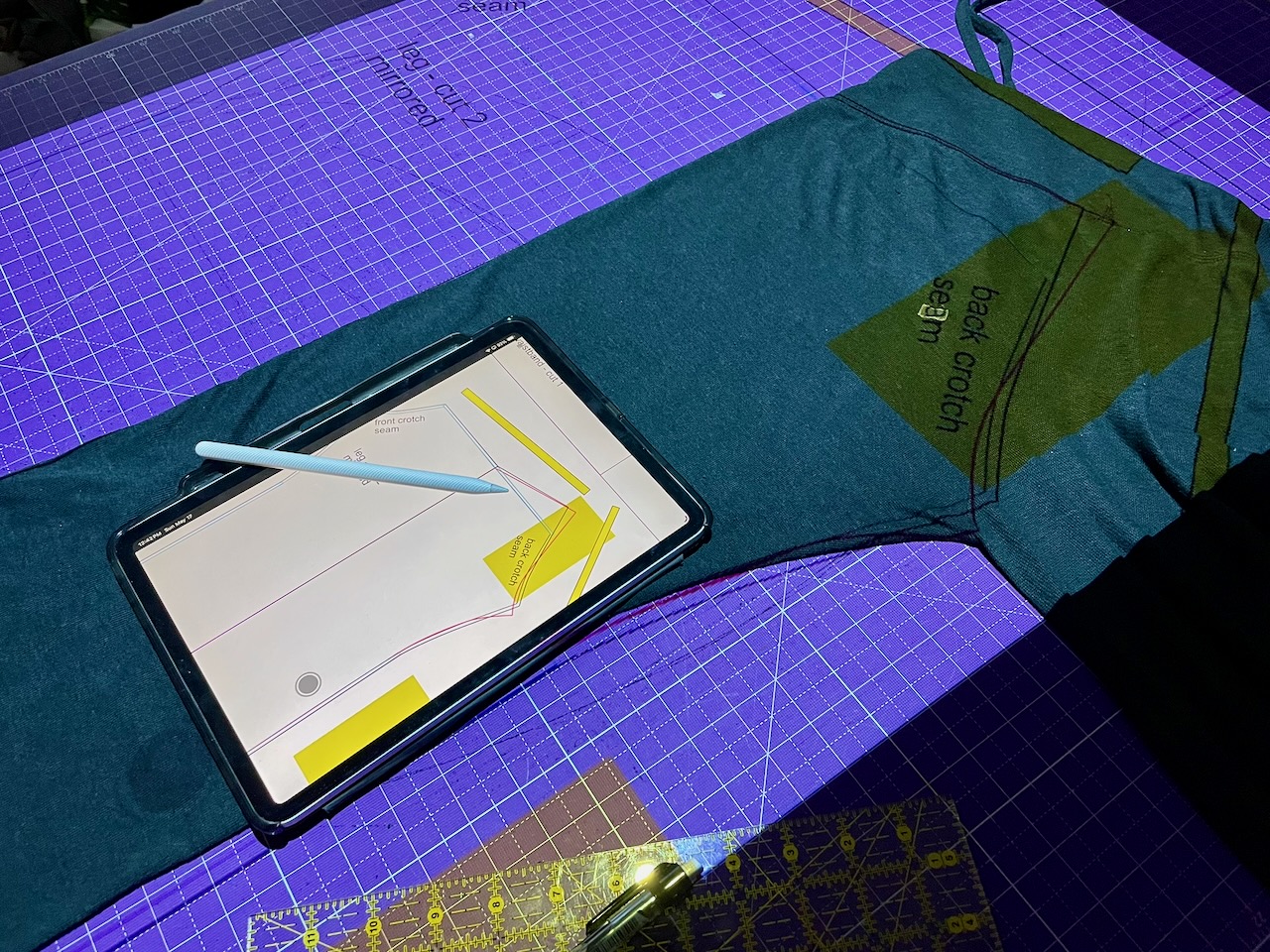
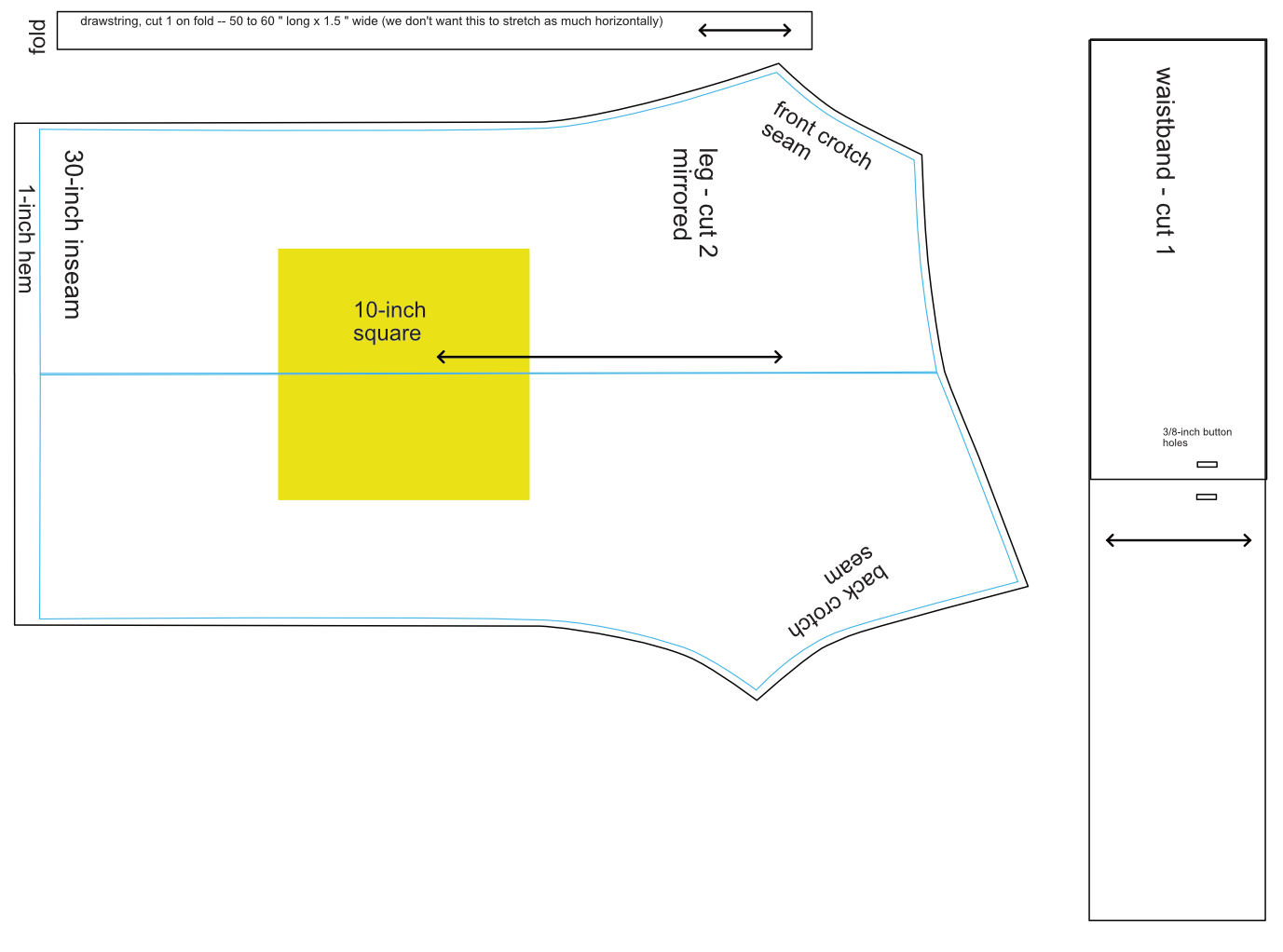
I made my first Joanne dress over two years ago, before I had a serger or a projector. It is an old Sinclair PDF pattern but it doesn’t actually have projector files. Fortunately, the A0 copyshop files work just fine as projector files. I copied the pieces for the flounce-sleeve top and the pieces for the add-on faux wrap flounce skirt into an Affinity Designer File and was ready to project and cut.
I had a vision for using a pair of coordinating fabrics for this dress that would highlight all the flounces. I selected coordinating black-on-white and white-on-black “heartstrings” print ITY from Surge Fabrics, which seemed perfect for the project.
I accidentally copied the wrong size Joanne top and didn’t realize it until it was mostly sewn together and I wondered why it was so big. So I took it apart and cut the pieces down to the correct 4P size. Other than that little mistake, the dress came together pretty easily. I took the time, as usual to add pockets. I modified them so they attach only to the side seams and not the waist and made them a little deeper and sewed the openings up a bit so nothing falls out.
Since I used ITY fabric that doesn’t curl or fray I was able to leave all the flounces unhemmed.
These two patterns pair well. I decided to add a 2-inch wide belt to help “sell” the wrap idea and make it look less faux. The pattern includes a narrow belt, but I made a wider belt by cutting two 2.5-inch wide strips across the width of my fabric and serging them right sides together with a small gap, turning right side out, and hand sewing the gap closed.
Overall, I’m pleased with the results. However, I’m a little disappointed that my coordinating fabrics actually blend together and the flounces are much subtler than expected. I still like it, but I hope to find coordinating fabrics with higher contrast and make another dress like this some day. Another fabric shopping opportunity!
I was intrigued on mulltiple levels when I read Rory Evans NYTimes Wirecutter article about how she found a dupe of her $410 jeans and turned them into shorts. So first of all, these must be really special jeans to be worthy of paying $410 for them. I am often the goldilocks of jeans purchases, so I can respect Rory’s satisfaction at finally finding the perfect jeans, especially perfect jeans with enormous pockets, high rise, and barrel legs. I want jeans with a high rise but a short length, pockets big enough that I can store my phone vertically below my hip crease, snug at the waist so they don’t fall down but enough room in the seat and legs that they are comfortable to wear all day and sit in for long periods of time. But although I could afford a $410 pair of jeans, I’m not sure I could bring myself to buy them. And I don’t love the styling of Rory’s dream jeans as much as she does. So instead I wait until Lands End puts my current favorite $90 pair of jeans on sale for half price and then alter them myself to closer to perfection. My most recent jeans purchases from Lands End were a pair of barrel-leg jeans with inadequate pockets that I extended and a pair of wide-leg jeans with decent pockets that I had to take the hem up nearly three inches. The wide-leg jeans look great as long as I wear them with a belt. The barrel-leg jeans are more of a casual look but don’t require a belt at all. Both are comfortable and seem to be holding up well. In both cases I invested less than $50 and about half an hour of my time for alterations.
But what really caught my attention about Rory’s article was that she had also been on a quest for jeans shorts, which I can also relate to. I have a few pairs of jeans shorts that look good on but I have stopped wearing them completely due to a combination of their inadequate pockets and not being all that comfortable to sit in. Instead I sewed myself a couple of pairs of elastic waist shorts, which are really in no way a substitute for classic denim shorts. At this point I’m sure I have the sewing skills to sew a pair of denim shorts or even full-length jeans, but I haven’t taken that plunge yet and I know that it will be a time-consuming experience and I likely won’t get the fit right the first time. So when Rory recommended hacking the legs off a $35 pair of jeans from Amazon that were somewhat of a dupe for her beloved jeans, it was an idea I could get behind.
Rory purchased a pair of the EVALESS Baggy Barrel Jeans from Amazon, cut off the legs, and hemmed them to create her perfect jeans shorts with pockets big enough to hold her water bottle. I figured they were worth a shot and I could always return them before cutting them up if they didn’t fit. I ordered a pair in size 4, Beau Blue for $31.99. The price has since gone up to $39.99. When they arrived I tried them on and the fit was indeed almost perfect. They are made of 65% cotton, 33% polyester, 2% elastane (spandex) and are super stretchy. The waistband stretches so they fit like a glove, but the waist is firm enough that they don’t fall down, and the cut is roomy enough that they are pretty comfortable to wear. The denim is lightweight (good for shorts in summer) and fairly smooth. The jeans look pretty good, but there are some flaws in the stitching and they don’t have rivets or other features of high end jeans. I’m not crazy about the way the knee darts are sewn, but that’s ok because I cut them off. They come with four enormous pockets. They are ankle jeans, but since I’m short they are full length on me. (Note, I tend to wear a size 2, 4, or 6 depending on brand. 4 is the smallest size these come in and it fits me fine. I think a 6 would probably also work for a looser fit, but I like the fit of the 4. I would not go any smaller even if they came in a 2. Because of the stretch most people could probably wear more than one size.)
I decided to make shorts with a 6-inch inseam so I measured and cut the inseam at 7 inches. Then I folded and pressed them up 1/4-inch and then again 3/4-inch. I stitched them with a straight stitch on my sewing machine from the inside about 1/8-inch from the folded edge.
I tried on my new shorts and they fit great! The pockets are incredibly large too — with storage like cargo pockets but without looking like you’re wearing cargo pockets. I like the back waist darts and I’ve been told they make my butt look good. I might even get more in other colors and maybe even another pair to keep as-is and wear as pants.
I tested Cassie V1 but was traveling when the V2 pattern released and didn’t get back until after the testing period was over. So here’s my V2, better late than never.
Cassie is a v-neck pattern for woven fabrics. In the original V1 pattern the neckline crossed over, but too many sewists complained about gaping, so the final V2 was switched to a v-neck without the crossover, but including a pair of cute notches. I decided to try the pattern in PyLos LiKnit, a stable knit fabric made from 55% Rayon/45% Nylon. It has about 25% stretch horizontally, but minimal vertical stretch. I treated it as a woven when I sewed. I think it behaved pretty well for this pattern, although it has a little bit more thickness than a woven and it stretches a bit, so it made it harder to get sharp points in the notches and a crisp V. However, the stretch also made the top more comfortable to wear and easier to get on and off.
I cut out a 4p AB cup top with long sleeves and made no pattern modifications. I top stitched all the optional places where it was suggested. My original attempt at sewing down the neck binding was a bit off and caused the v-neck to be uncentered. Fortunately it was pretty easy to unpick and resew (although looking at the finished product now I realize it still isn’t perfectly centered… oh well).
After I sewed the first sleeve on I tried it on and was disappointed to see the sleeve hanging well past my wrist. I’m used to sleeves that are too long on me, but was surprised the sleeve was too long on a petite pattern. Since this sleeve is gathered and the band added before you sew it to the garment, there is no opportunity to check the sleeve length before it is finished. I went back and looked at photos posted by other sewists and noticed that most opted for the 3/4 length rather than the long sleeve. It looks to me like the long sleeves in this pattern just run long. The sleeve bands took a while to construct and I didn’t want to take them apart. So instead I unpicked the sleeve head and cut two inches off the top of the sleeve head. I was able to mark my cutting line by using a ruler to draw dots every inch or so two inches from the top edge of the sleeve. Then I connected the dots. I cut along the line and reattached the sleeves. This time it worked much better. (Warning for other sewists, unless you have particularly long arms, if you sew the long-sleeve version you will likely need to shorten the sleeves!)
Overall, I’m happy with this top. This is not a style I normally wear, and it may be more difficult to layer than my typical long-sleeve tshirts. But it goes well with both wide and skinny jeans as well as black dress pants, and it should not require ironing. I really like this long-sleeve version (now that I shortened the sleeves) but I also like the sleeveless and 3/4 length versions other sewists made.